Summary
Understanding Tarot Cards: Origins and Contemporary Appeal
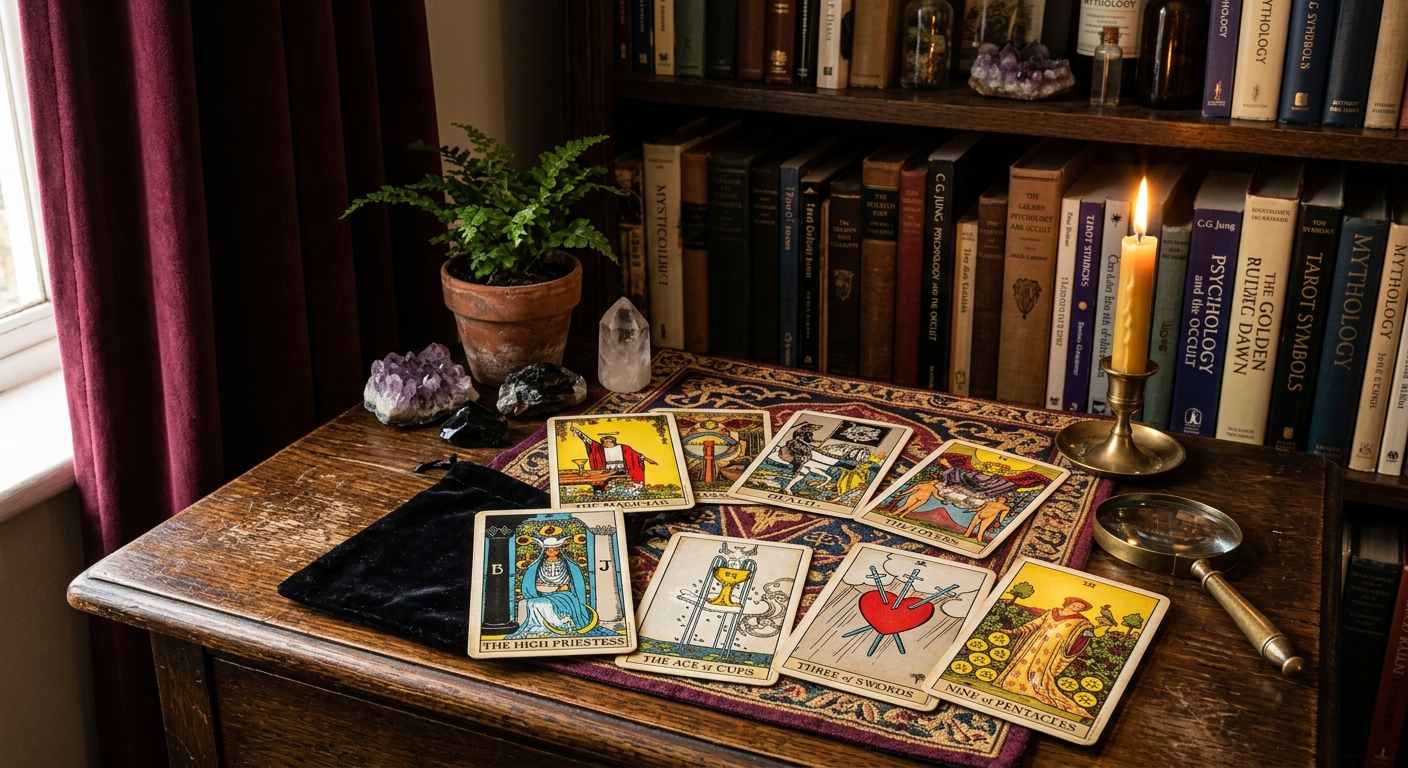
Tarot cards, originating in 15th-century northern Italy, consist of 78 illustrated cards that have transitioned from a game for nobility to tools for divination and personal reflection. Contrary to popular beliefs connecting them to ancient civilizations, historical records indicate their inception around the 1430s in Milan and Ferrara. The tarot deck is primarily divided into the 22 Major Arcana—representing spiritual themes—and the 56 Minor Arcana, reflecting daily life’s dynamics. These cards weave together elements from a variety of cultural and esoteric traditions, fostering uses that range from divination to self-exploration.
History
Tarot’s roots lie in 15th-century Italy, emerging during the Renaissance amidst the cultural currents of Humanism. Initially a parlor game, tarot developed into a unique deck distinct from standard playing cards. The early imagery blended Christian themes with classical motifs, reflecting social hierarchies. Over the years, particularly in the 18th century, the cards gained a mystical reputation, linked to ancient wisdom, astrology, and other esoteric traditions, reshaping their role in society.
Structure and Components
The traditional tarot deck comprises 78 cards, split between the 22 Major Arcana and the 56 Minor Arcana. The Major Arcana encapsulates archetypal themes essential to spiritual narratives, while the Minor Arcana illustrates the challenges of daily life. Each suit—swords, batons, coins, and cups—adds depth to the readings. The organizational structure allows tarot to function effectively as both a divination tool and a means for self-reflection.
Symbolism and Iconography
Tarot symbolism is steeped in cultural, religious, and artistic traditions, with its imagery reflecting moral and spiritual concepts from the Renaissance period. Early decks showcased figures from various societal backgrounds, intertwined with motifs from classical mythology and Christian iconography. As tarot spread through Europe, its imagery evolved to include popular cultural references while retaining its esoteric roots, enriching its significance across different cultures. Contemporary decks draw from this legacy, reflecting an expansive range of artistic and spiritual influences.
Uses and Applications
Today, tarot is primarily used for introspection and gaining insight, where users interpret cards based on their symbolic meanings within specific spreads. Initially a game, tarot transformed into a divinatory practice popularized in the 18th century. Modern practitioners approach readings variably, reflecting personal experiences and cultural backgrounds. Alongside divination, tarot offers a means for self-exploration, guiding users through personal dilemmas and transformations in life.
Modern Interpretations and Popularity
Modern tarot has shifted dramatically from its historical role, becoming a tool for self-exploration rather than purely a divination device. With diverse themed decks catering to varied interests, tarot’s accessibility has broadened, inviting individuals from all backgrounds to engage with its symbolic language. Contemporary practitioners often emphasize personal interpretation over traditional doctrines, allowing their readings to evolve alongside cultural shifts while maintaining a connection to historical practices.
Criticism and Skepticism
Debate surrounds the authenticity of tarot’s mystical claims and its effectiveness in predictions. Skeptics highlight tarot’s origins as a leisure game rather than a divinatory system and question the subjective nature of readings influenced by personal and cultural factors. Critics also note the lack of historical evidence for many claims associated with tarot’s mystical significance, urging users to approach readings with a sense of personal responsibility and an understanding of their subjective nature, rather than seeking definitive truths.
The content is provided by Sierra Knightley, 11 Minute Read