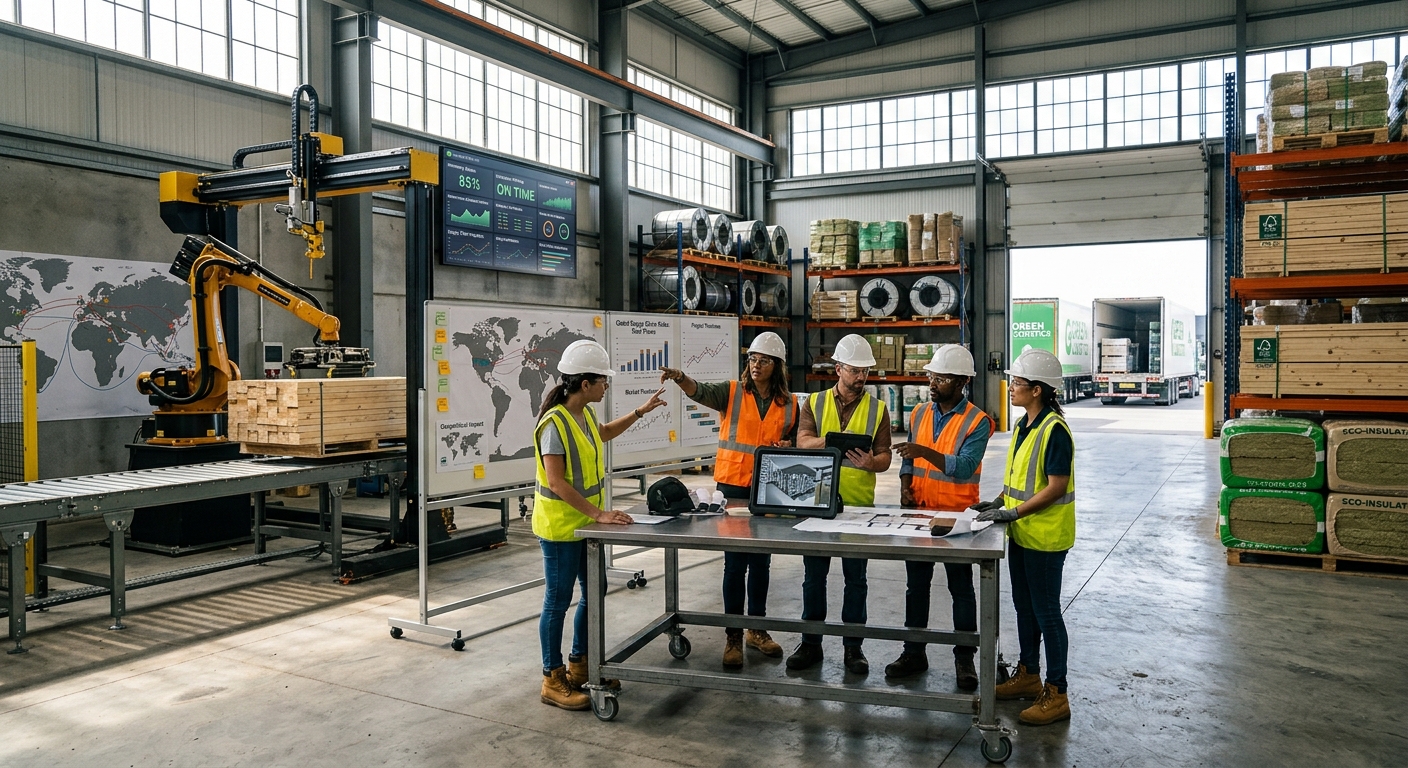
Summary of Construction Supply Changes
The construction supply industry is adapting to significant shifts driven by market demands, technological advancements, and global complexities. Companies face challenges such as geopolitical tensions and supply chain disruptions, which have increased the need for resilience and operational flexibility. As supply chain strategy takes on greater importance, leveraging technology becomes essential for navigating the costs and risks associated with global sourcing and procurement.
Technological innovations, including Building Information Modeling (BIM) and artificial intelligence, enhance supply chain visibility and collaboration. Automation improves logistics, optimizing both accuracy and safety on worksites. Sustainability practices are also gaining traction, with companies incorporating eco-friendly materials and adhering to certifications like LEED, despite the challenges related to costs and compliance.
Current Landscape of Construction Supply
The construction supply industry has experienced considerable volatility recently, necessitating strategic supply chain management focused on cost control and resilience. The multifaceted nature of construction supply chains demands effective collaboration among various stakeholders, from contractors to suppliers. Current challenges include persistent tariffs and supply instability, forcing companies to embed supply chain strategies within their operations to remain competitive.
Globalization has transformed sourcing from local to international networks, increasing access to specialized materials but also introducing risks that can affect project timelines and budgets. Recent challenges highlight the importance of adopting localized sourcing and advanced technologies to create more agile and resilient supply chains.
Key Trends Influencing Construction Supply
Several trends are reshaping the construction supply chain, emphasizing resilience, efficiency, and sustainability. Digital transformation is a major trend, with tools like BIM and cloud-based platforms enhancing project management and procurement processes. As these tools evolve, they facilitate better performance monitoring and reduce errors, improving overall supply chain efficiency.
Moreover, the need for supply chain resilience drives investments in flexible strategies and stronger partnerships. Companies that prioritize effective supplier relationships are better positioned to manage risks and adhere to project timelines.
The focus on sustainability continues to grow within the industry, with organizations adopting eco-friendly materials and practices to mitigate environmental impact. This transition towards green practices often impacts project design and sourcing decisions, reinforcing the notion that sustainability is integral to modern construction.
Stakeholder Impact from Emerging Trends
The shifts in the construction supply chain significantly affect stakeholders, including contractors, suppliers, and design teams. Contractors are increasingly implementing optimization strategies to address risks associated with market volatility and natural disasters, focusing on diversifying their supplier bases and leveraging automation to ensure timely material delivery.
The industry faces ongoing workforce challenges, with a pressing need for skilled labor. Employers are emphasizing technological tools and clear career advancement opportunities to attract and retain talent. Even with rising automation, maintaining a stable workforce remains crucial for operational efficiency.
Sustainability advocates among designers prioritize eco-friendly materials and circular design principles, underscoring the importance of resource efficiency during the design phase. Many companies are now developing solutions that optimize waste reduction and promote sustainability throughout the project lifecycle.
Challenges and Strategic Opportunities
The construction industry confronts significant challenges, such as ongoing supply chain disruptions due to inflation and increased material costs. These factors complicate project delivery, often leading developers to revise project scopes and timelines. Additionally, the shifting economic landscape, marked by rising interest rates and fluctuating inflation, creates affordability concerns in residential markets.
However, these challenges also present opportunities for innovation. Digital transformation is enabling companies to boost efficiency and competitiveness through enhanced project management solutions and proactive risk mitigation strategies. Collaborative planning and robust stakeholder engagement will be fundamental in building resilient supply chains while minimizing unnecessary complexity.
Sustainability is both a challenge and an opportunity, as the construction industry’s reliance on high-carbon materials faces increasing scrutiny. Companies are incorporating new technologies and sustainability certifications to align with regulatory standards and market expectations, leveraging public policies to encourage wider adoption of these initiatives.
Future Directions for Construction Supply Chains
The future of construction supply chains is set for transformative shifts as firms adapt to technological advancements and sustainability imperatives. Infrastructure investment is anticipated to grow, influenced by lessons from past challenges. As digital tools continue to evolve, they will improve project outcomes by enhancing accuracy and reducing waste, which will also support worker safety and efficiency through real-time monitoring.
Sustainability will remain crucial as companies adopt new materials and technologies to minimize environmental impacts. Streamlined procurement processes utilizing advanced technologies will facilitate better visibility and accountability throughout the supply chain. Additionally, resilience strategies must address diverse risks to ensure continuity amid uncertainty.
Despite the challenges, the construction industry is well-positioned to evolve by adopting innovations that promote robust, sustainable supply chains. Firms that embrace these developments will not only enhance their competitiveness but also respond effectively to the growing demands of infrastructure development in the coming years.
The content is provided by Sierra Knightley, 11 Minute Read