Summary of Government Reactions
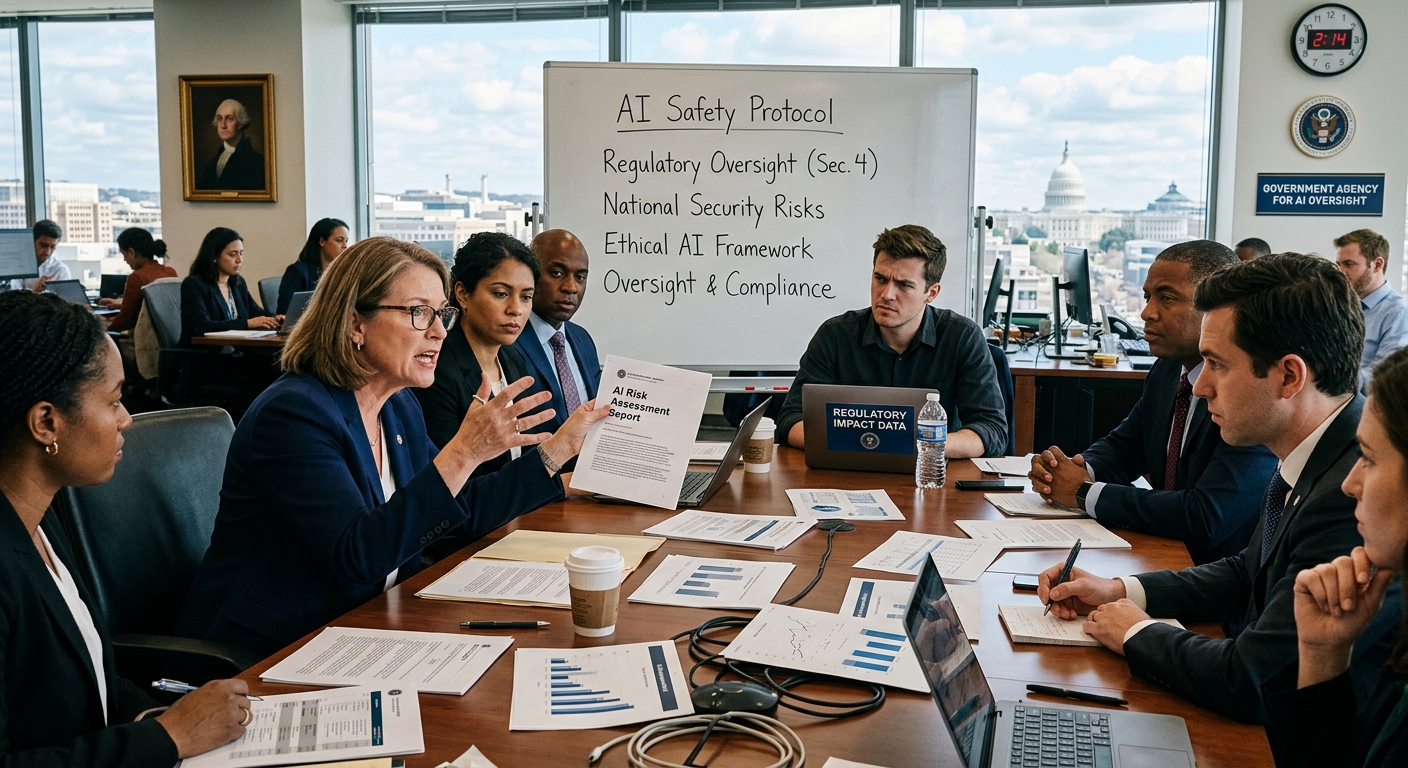
The reactions of governments to Anthropic’s safety warnings highlight critical discussions surrounding AI regulatory oversight, innovation, and national security. Notably, Anthropic has advocated for stringent safety protocols and transparency in AI development, pushing for the power to block unsafe deployments and to increase public accountability through risk assessments. Yet, despite these measures, the U.S. government has implemented restrictive actions, such as export controls that limit access to Anthropic’s AI models and supply chain risk designations impacting federal contracts. This dynamic raises important questions about how to balance innovation with security while ensuring the regulatory framework is clear and fair.
Anthropic’s AI Safety Philosophy
Anthropic focuses on developing reliable AI systems, particularly addressing the safety challenges posed by frontier technology. The company champions transparency in AI deployment, pushing for clear regulatory frameworks that empower governments to enforce safety standards effectively. Collaboration with U.S. agencies illustrates their commitment to evidence-based policy, although government restrictions, such as limiting foreign access to their models, spotlight ongoing struggles to reconcile innovation with national security concerns.
Timeline of Recent Developments
Recent significant developments in AI policy unfolded in November 2023, beginning with the U.S. issuing an Executive Order on AI, followed by international discourse at the G7 and a UK summit on AI safety. Amid these shifts, Anthropic has expressed firm support for transparent oversight, although critiques have arisen regarding the inconsistency of government actions with their call for transparency. Especially concerning has been the U.S. directive banning certain uses of Anthropic’s models, inciting dialogue around the nature of government authority in regulating AI technologies. As Congress examines the implications for revenue and operational dynamics of AI contracts, the landscape continues to evolve, illustrating the challenges of managing AI safety amidst competitive pressures.
Government Actions and Implications
The stringent U.S. government response to Anthropic’s safety measures has introduced procurement restrictions and policy debates regarding national security and risk management. Key actions include designating Anthropic as a supply chain risk entity, which barred military contractors from using their models and prompted government-wide scrutiny. These measures introduce uncertainty for contractors relying on Anthropic’s technologies, as any contractual obligations must now align with federal acquisition regulations under the new oversight framework.
Risk Assessment and Mitigation Strategies
To navigate the risks associated with AI development, various assessment frameworks have been proposed to manage the complexities of advanced systems. A foundational strategy involves comprehensive evaluations against defined risk categories, with the aim of fostering industry transparency and accountability. By adopting rigorous pre-launch testing and maintaining ongoing evaluations of model safety, AI developers can identify potential threats proactively, which aligns with broader goals of ensuring responsible innovation and public safety in AI technology.
Anthropic’s Commitment to Transparency
Anthropic’s risk reporting highlights a commitment to transparency and comprehensive safety evaluations, enhancing the overall safety profile of its models. This includes advocating for industry-wide regulations that necessitate public disclosures of safety practices. By proposing a safety classification system based on risk assessment levels, Anthropic aims to ensure that AI technologies undergo proper scrutiny before deployment, underlining the need for government authority to enforce compliance and deterrent measures against unsafe AI developments.
Responses from the AI Community
The AI safety community has responded variably to Anthropic’s measures, emphasizing the necessity of ongoing investigation into advanced AI systems while also criticizing some of the company’s restrictions that may impede transparency. There is consensus on the need for government intervention in establishing safety standards, which allows for broad accountability across AI developers. As discussions continue about balancing safety regulation with industry innovation, the community advocates for transparent practices to foster public trust and engagement in AI safety governance.
Political and Public Reactions
Reactions to Anthropic’s safety warnings have been politically charged and complex, evolving from initial concerns about AI safety issues to broader apprehensions, such as the potential for Autonomous Misalignment. Political responses, particularly during the Trump administration, have added layers of tension, reflecting how safety measures can become entangled with partisanship and policy debates, potentially hindering open dialogue and collaborative engagement among stakeholders.
Analysis of Regulatory Responses
The government’s reaction to Anthropic’s warnings signifies an ongoing struggle around the appropriate scope of regulatory authority and the balance between safety and innovation. As the regulatory landscape evolves, significant initiatives like the Executive Order on AI and the International Code of Conduct illustrate a commitment to AI governance, yet pose questions regarding how these regulations affect the industry and public trust. There is a visible shift towards a more disciplined federal approach to technology procurement, which aims to enforce higher safety compliance without stifling innovation.
Impact on Anthropic’s Operations
Anthropic’s focus on safety has inadvertently led to intensified scrutiny, raising concerns over business implications, particularly with federal clients. Dependency on government contracts means that restrictions may hinder their operational viability and investor confidence, complicating transitions for entities reliant on their technologies. Despite these challenges, Anthropic continues to engage with government partners to navigate compliance and innovation, advocating for transparency and robust safety regulations to foster accountability in AI development.
Key Takeaways for Future Governance
The dialogue surrounding Anthropic’s safety warnings and government reactions stresses the importance of transparency in AI governance. The incident emphasizes the need for a balanced approach that considers ethical implications while promoting innovation. Policymakers are called to craft nuanced frameworks that ensure public safety while addressing diverse regulatory challenges inherent in AI technologies, highlighting the necessity for collaborative efforts between governments and the AI industry to ensure responsible development practices.
The content is provided by Avery Redwood, 11 Minute Read