Understanding Greek Mythology’s Symbolism
The exploration of Greek mythology symbolizes complex ideas of human nature, ethics, and metaphysical questions. Myths, initially carried through oral tradition before being documented in works like Homer’s Iliad and Odyssey, reflect themes like transformation, love, and betrayal, while divine figures embody abstract qualities. Each god and mythological creature serves as a vehicle for philosophical reflection, informing ethical lessons and the nature of virtue throughout history.
Historical Context of Greek Myths
Greek mythology transitioned from oral to written forms, with sources like the Iliad and Odyssey capturing pivotal stories of gods and heroes. Influenced by neighboring cultures, these myths evolved, intertwining with ritualistic practices and social norms across various historical periods, notably the Archaic, Classical, and Hellenistic eras. This dynamic cultural backdrop shaped the narratives and significances, linking them to the collective identity of ancient Greeks.
Thematic Symbolism in Myths
Central themes in Greek mythology include transformation and love, often illustrated through characters overcoming trials. Each Olympian deity embodies specific traits—like Athena’s wisdom and Ares’s warlike nature—enhancing moral and philosophical understanding. The symbolism associated with these characters enriches the stories, positioning them as allegories that explore the complexities of human existence and ethical conduct.
Divine Symbols and Mythological Creatures
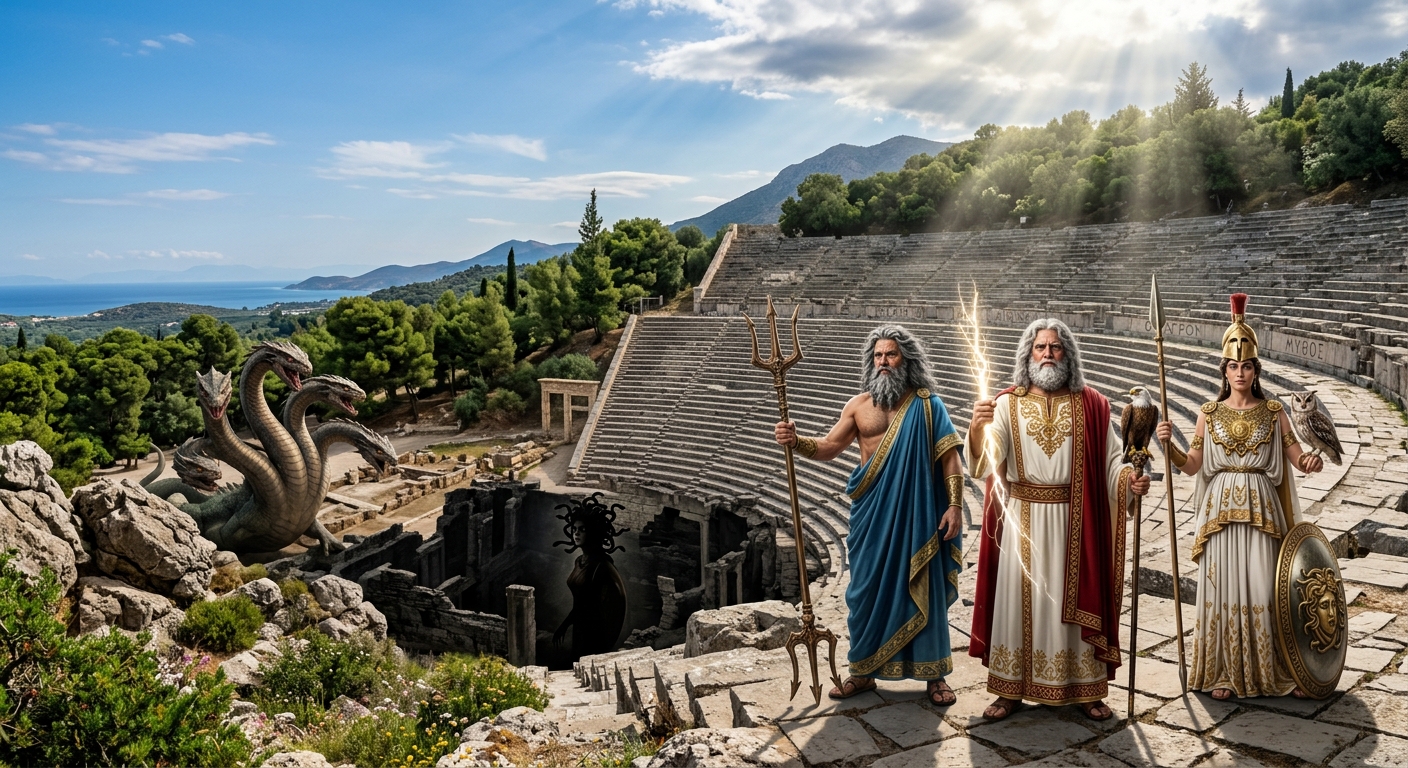
Specific symbols represent Greek gods, such as Zeus’s thunderbolt reflecting divine power or Athena’s aegis depicting protection. Creatures like the Hydra and Medusa not only pose challenges for heroes but also symbolize broader human fears and struggles. These mythological elements serve to convey deeper meanings, providing insights into the human condition and the nature of divine influences in the world.
Cultural Significance and Historical Influence
The symbolic elements of Greek mythology played a crucial role in shaping cultural values, reflecting societal beliefs and ethical norms. Artifacts, such as vase paintings, visually narrate these myths, serving both decorative and educational purposes. Consequently, the rich symbolism has continued to influence artworks, literature, and philosophies throughout history, demonstrating the myths’ lasting relevance in shaping artistic expression and societal ideals.
Philosophical Perspectives on Mythology
Philosophers like Plato and Aristotle approached myths as tools for moral and ethical exploration, aiming to reconcile the narratives with rational thought. Allegorical interpretations allowed these ancient thinkers to extract deeper meanings from the myths, addressing concepts of ethics and the nature of existence. Their integration of mythological symbolism into philosophical discourse laid the groundwork for critical inquiry and reflection, further enriching the understanding of human experience.
Modern Relevance
In contemporary contexts, Greek mythology retains its significance through its symbolic meanings and archetypes, being applicable in psychology and various forms of art. Figures from these myths continue to represent universal themes, resonating in modern narratives and artistic expressions. This enduring relationship highlights the capacity of Greek mythology to adapt and remain relevant, ensuring its role as a framework for understanding complex human experiences today.
The content is provided by Sierra Knightley, 11 Minute Read