Summary
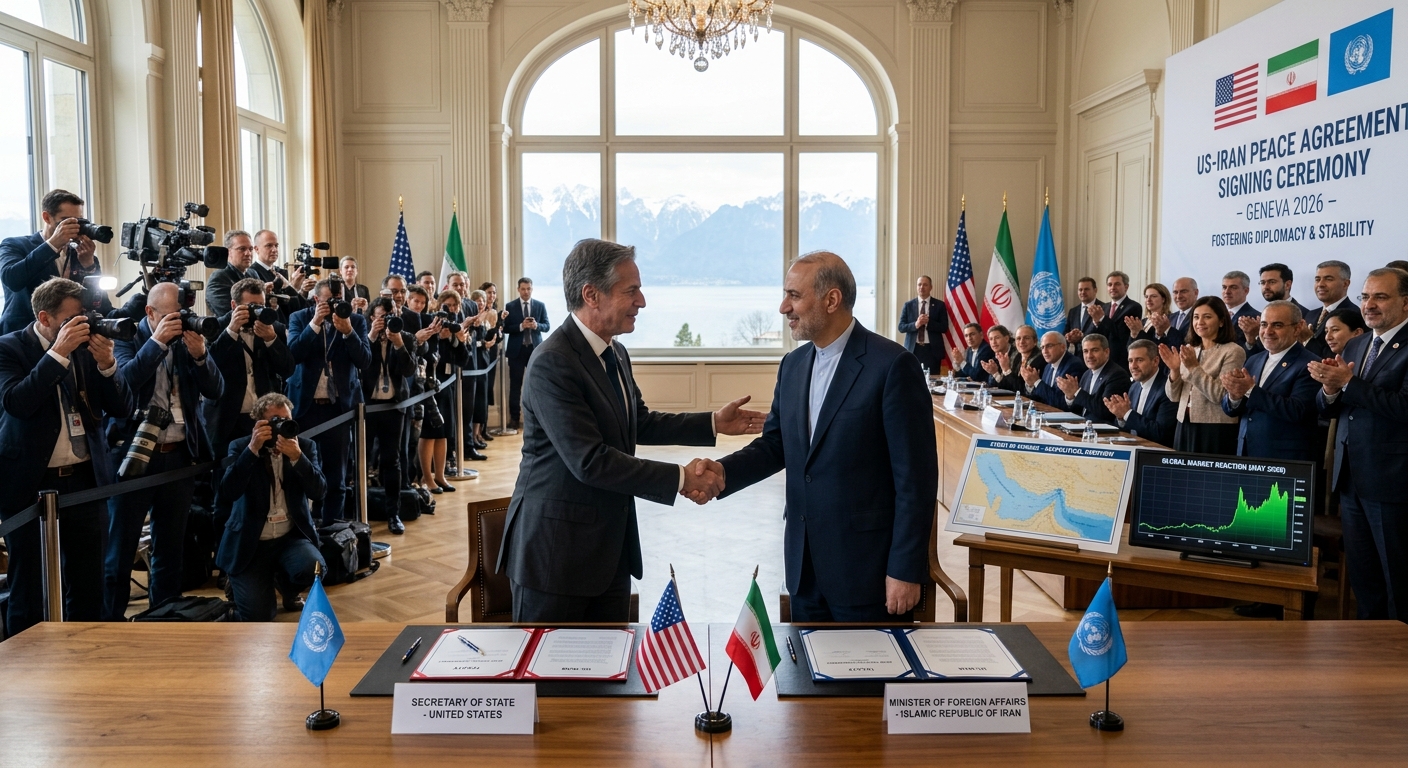
The 2026 US-Iran Peace Agreement, announced in mid-June 2026, seeks to end long-standing hostilities and its impact on global markets. Key features include a permanent ceasefire, lifting sanctions on Iranian oil exports, and releasing approximately $24 billion in frozen assets. A central focus is the reopening of the Strait of Hormuz, vital for global energy supply, which had been closed for months due to conflict. The agreement also involves strict monitoring of Iran’s nuclear program through the International Atomic Energy Agency (IAEA). Despite the optimism, distrust persists between the U.S. and Iran, and challenges remain for sustained implementation.
Background
US-Iran relations have significantly deteriorated since the 1979 Iranian Revolution, marked by military confrontations and economic sanctions aimed at curbing Iran’s nuclear ambitions. The 2015 Joint Comprehensive Plan of Action (JCPOA) attempted to limit Iran’s nuclear program but collapsed in 2018 when the U.S. withdrew. The Strait of Hormuz has been a critical point of conflict, essential for global oil shipments, where tensions have caused significant disruptions in supply. Recent diplomatic efforts culminating in a draft peace agreement signal a potential shift toward stability, enhancing hopes for normal shipping activities in the strait.
Details of the Peace Agreement
The agreement is a significant step toward ending prolonged conflict, including an immediate ceasefire and the suspension of sanctions on Iranian oil sales. Key components of the deal involve robust IAEA monitoring of Iran’s nuclear program, including continuous inspections and necessary modifications to nuclear facilities to prevent weapon development. Although negotiated under considerable distrust, the pact received international support, aiming to establish a framework for future diplomatic engagements and economic collaboration. The deal’s successful implementation is seen as critical for stabilizing both regional and global markets.
Negotiation Process
Multiple diplomatic rounds involved both U.S. and Iranian representatives amid escalating regional tensions. The talks faced setbacks due to attacks on Iranian infrastructure but continued with various mediators like Pakistan and Qatar playing crucial roles. Iran presented several proposals seeking security guarantees and reparations while aiming to halt U.S.-Israeli military actions against its interests. The international community welcomed the agreement, emphasizing the need for reliable commitments regarding Iran’s nuclear activities, establishing a foundation for lasting peace.
Immediate Market Reactions
The announcement of the peace agreement prompted a quick positive reaction in financial markets, reflected by rising stock indices and reduced oil prices. The anticipated reopening of the Strait of Hormuz alleviated previous concerns over energy supply disruptions, contributing to a robust rally in Asian markets. Despite this enthusiasm, caution remains among investors due to unresolved details regarding nuclear provisions and future trading environments, which will be influenced by upcoming central bank meetings and overall market volatility.
Economic Implications
The peace agreement’s implementation could significantly impact global energy markets, potentially restoring normal shipping through the Strait of Hormuz, which had been closed for months. This change has already led to a decline in oil prices and optimistic trends across broader financial markets. However, ongoing uncertainties regarding the sustainability of these trends, particularly with pending negotiations and the impact of central bank policies, mean that investors are cautiously optimistic while monitoring developments closely.
Political and Diplomatic Outcomes
This peace agreement signals a notable diplomatic achievement, aimed at restoring stability in the Middle East. It includes commitments to secure navigation in the Strait of Hormuz and a permanent cessation of hostilities, particularly in Lebanon. While the international community lauds the deal as a key step toward resolving conflicts, challenges such as verification of nuclear activities remain critical for maintaining trust and ensuring compliance moving forward.
Future Prospects
While optimism persists about restoring normal operations and alleviating geopolitical tensions, uncertainties about the agreement’s full implementation remain. The timeline for resuming oil trade and addressing existing complexities in nuclear protocols will significantly influence global market dynamics. The IAEA’s role in monitoring will be vital, but unresolved issues surrounding Iran’s past nuclear activities may hinder long-term compliance. Political tensions persist, necessitating careful observation of the geopolitical landscape to sustain progress toward lasting peace.
The content is provided by Jordan Fields, 11 Minute Read