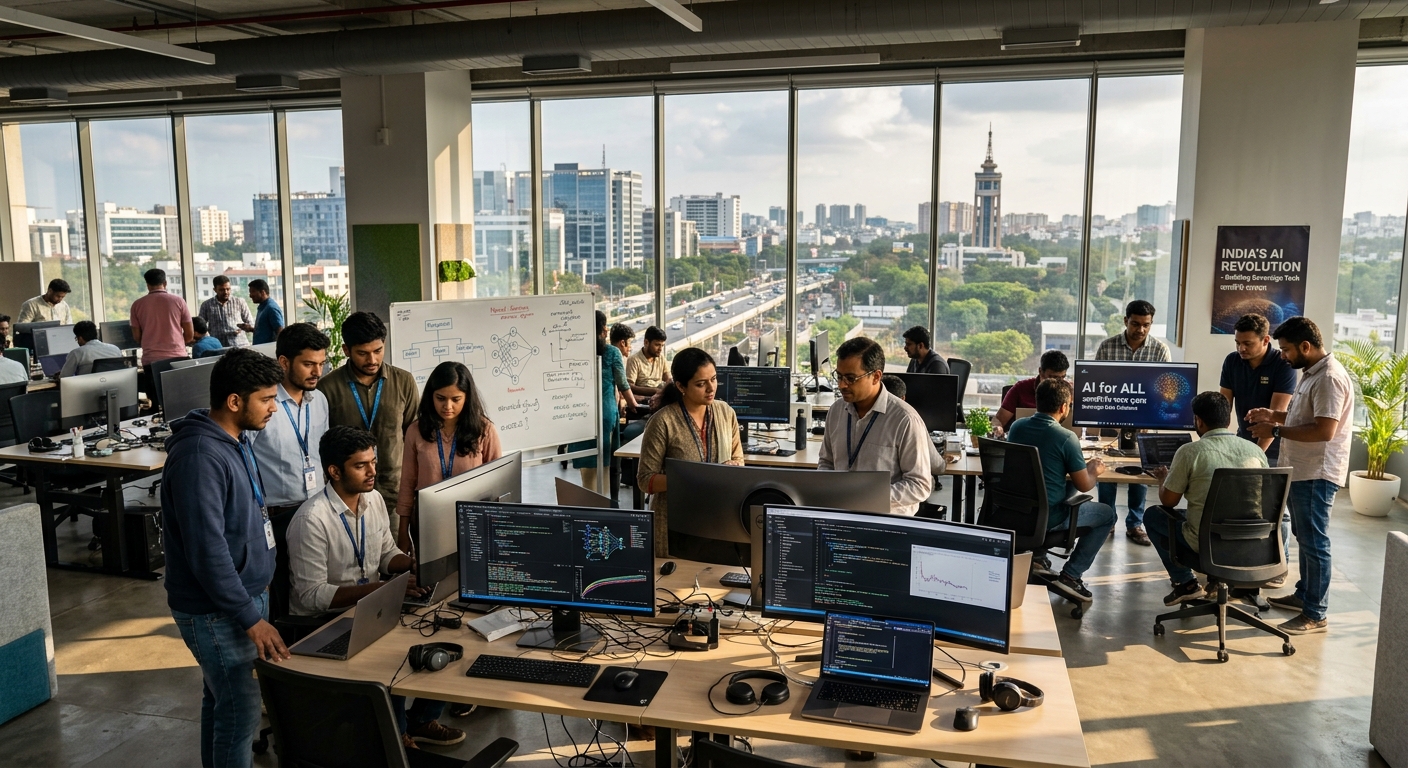
Summary of India’s AI Landscape
India has swiftly become a crucial market for advanced AI technologies, ranking second to the U.S. for companies like Anthropic and OpenAI. With its substantial developer pool and growing AI adoption in sectors such as education and healthcare, India is integrating AI solutions rapidly. However, a significant challenge arose in June 2023 when U.S. export controls limited access to Anthropic’s advanced models for Indian users, sparking debates about technological sovereignty, cybersecurity, and the implications of reliance on foreign AI platforms.
In response, India is increasing efforts to bolster domestic AI capabilities through government initiatives aimed at promoting local innovation and reducing dependency on foreign technologies. The strategy emphasizes creating AI tailored to local languages and contexts, thus balancing global integration with national security. Industry leaders stress the need for transparency, competitive research and development, and adaptation to geopolitical dynamics to ensure a resilient AI ecosystem in India.
Current Challenges in AI Access
The U.S. government’s export-control directive has limited Indian access to Anthropic’s advanced models, impacting not just users but also talent mobility within multinational firms. This restriction complicates compliance and raises concerns that it may weaken India’s cybersecurity efforts, leaving critical infrastructure more vulnerable. Experts warn that the situation emphasizes India’s reliance on foreign AI technology, highlighting the urgent need for developing independent technological capabilities.
Industry leaders advocate for a shift towards indigenous solutions, suggesting that without reducing dependence on foreign technologies, India risks jeopardizing its strategic interests and long-term innovation prospects. Navigating these restrictions requires a reassessment of partnerships and investment in local AI resources to ensure continuity and growth in the sector.
Opportunities for Growth and Self-Reliance
Despite the challenges posed by access limitations, India’s AI landscape presents significant growth opportunities. The restrictions may act as a catalyst for fostering local innovation and self-reliance. India has a wealth of technical talent and established digital infrastructure, which can be leveraged to scale domestic AI development. This situation encourages industries to pursue higher-paying AI roles and enhance workforce skills.
Government initiatives aimed at generating large anonymized datasets and fostering collaborations among startups, private sector companies, and public institutions can accelerate AI adoption across various sectors. A focused marketplace model could improve access to resources and encourage the development of AI tailored to local needs. The push towards AI sovereignty aligns with India’s goals to safeguard data and promote economic development, thereby strengthening its technological position.
Strategic Government and Industry Collaborations
The Indian government, alongside industry stakeholders, is actively reshaping its approach to AI in light of recent challenges. Initiatives launched ahead of significant industry summits focus on building digital public infrastructure that supports AI growth by enhancing compute capacity and dataset accessibility. These frameworks are designed to ensure that AI solutions meet local development needs in crucial sectors like healthcare and agriculture.
While progress is being made, the journey towards AI independence encounters hurdles such as inconsistent development outcomes and foreign reluctance to share technology. Therefore, calls for policy reforms to fortify the domestic AI ecosystem emphasize the need for competitive benchmarking and transparent evaluations of technological capabilities. Cultivating homegrown AI development can mitigate dependence on foreign solutions and enhance India’s resilience to external pressures.
Looking Ahead: Balancing Challenges and Opportunities
India’s AI future is at a pivotal point, shaped by both significant challenges and burgeoning opportunities. The restrictions on advanced AI model access have heightened the urgency for developing independent domestic capabilities while also opening new avenues for innovation. A strategic focus on nurturing local talent, building robust infrastructure, and fostering homegrown AI solutions is key to navigating the complexities of the global AI landscape and ensuring India’s technological sovereignty.
The content is provided by Sierra Knightley, 11 Minute Read