
Andrew Yangs Bold Vision: Revolutionizing the Cost of Living as the Next Startup Goldmine!
Summary
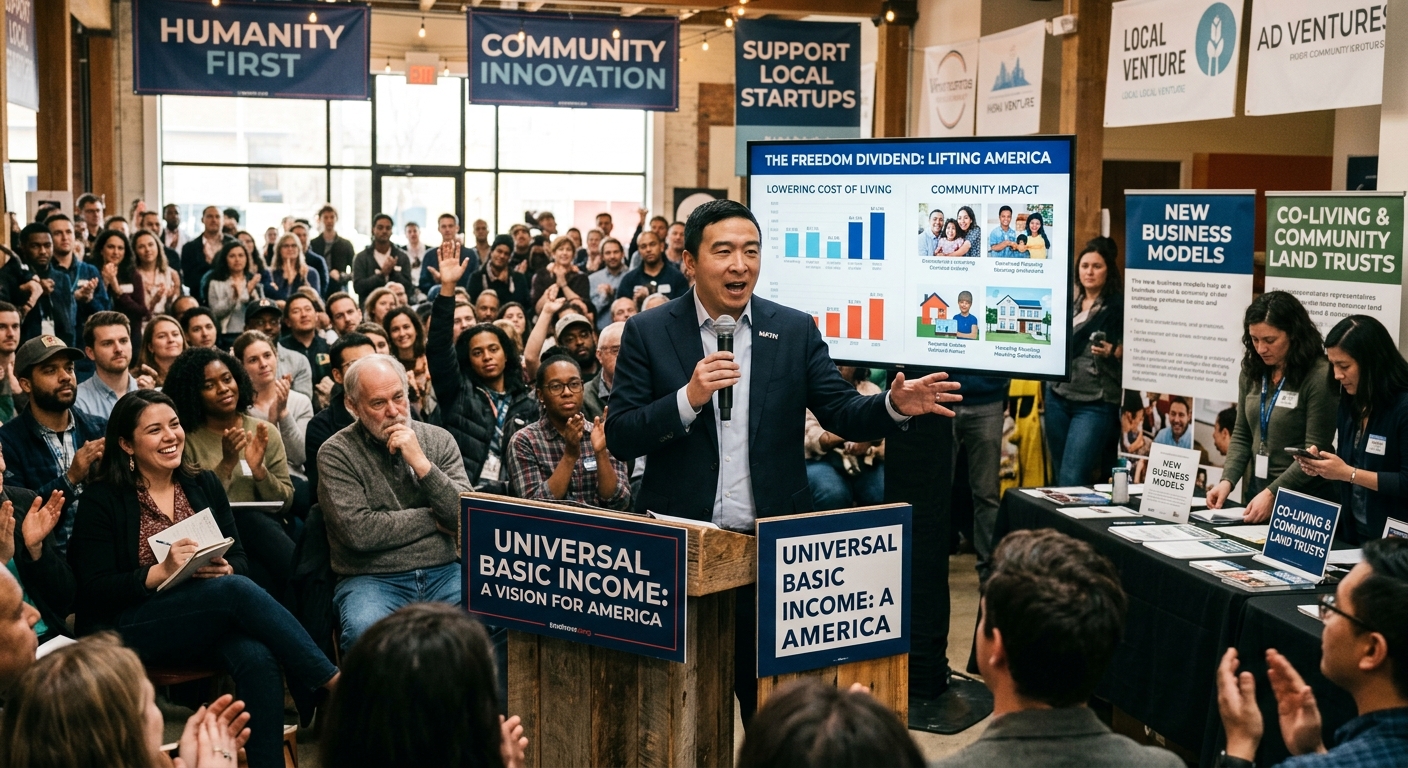
Andrew Yang presents a transformative approach to addressing the cost of living in the United States through universal basic income (UBI) and innovative business strategies. His flagship proposal, the “Freedom Dividend,” aims to provide every adult American with $1,000 monthly, a measure he believes would alleviate economic insecurity from automation, stimulate growth, and expand the labor force. Beyond financial support, Yang advocates for startups that prioritize affordability, transparency, and value for consumers, particularly in housing and essential services, to tackle the pressing issues of economic inequality.
Background
Yang’s career began at Phillips Exeter Academy, leading to multiple entrepreneurial ventures after earning his degrees. He founded Ventures for America, a nonprofit aimed at fostering economic opportunities in urban areas by connecting graduates with startups. His rise to prominence in advocating UBI came during his 2020 presidential campaign, driven by a vision to counteract job displacement from technological advancements by offering cash support to meet basic needs and stimulate local economies.
The Bold Vision
At the core of Yang’s vision is the “Freedom Dividend,” a UBI initiative designed to empower every American adult financially. This proposal addresses job displacement due to technology and encourages individuals to invest in their education or businesses. Yang posits that this model could significantly grow the economy while suggesting a value-added tax (VAT) to help fund it and integrate existing welfare programs to streamline costs, although critics highlight concerns over its feasibility and financial sustainability.
Implementation Strategies
Yang envisions a startup ecosystem that prioritizes consumer benefit through transparent pricing and innovative models. Highlighting examples such as Cost Plus Drugs, he encourages new ventures to minimize consumer costs through efficiency. Combined with UBI, his strategies aim to create a safety net while allowing individuals the agency to improve their economic conditions. For housing, Yang supports measures like Community Land Trusts, advocating for policy changes that enhance access to affordable options and cater to diverse living arrangements.
Impact and Reception
The impact of Yang’s proposals, particularly UBI, has garnered attention as seen in programs like Stockton’s Economic Empowerment Demonstration, which reported improvements in quality of life among participants. While economists note potential benefits such as reduced healthcare and poverty costs, they also caution about reliance on high-cost funding, creating a mixed reception. Some see potential for broader adoption of UBI, but alternative methods of income support are being explored as well.
Challenges and Criticisms
Despite its potential, Yang’s vision faces substantial challenges. The scale and cost of implementing UBI remain contentious, with estimates suggesting a $3 trillion annual price tag that raises concerns about tax implications. Critics question the ability of UBI to effectively foster economic security or labor participation and emphasize that many household expenses require targeted innovations, not broad cash distributions. Additionally, the venture capital environment poses challenges to startups focused on cost-savings instead of rapid growth.
Future Prospects
Yang foresees a shift in the startup landscape from profit maximization to improving consumer welfare and reducing living costs as the primary goal. He believes that addressing essential expenses will be crucial as economic pressures from technology intensify. Inspired by successful business models like Cost Plus Drugs, Yang’s vision challenges conventional approaches and highlights the necessity of rethinking economic structures to focus on affordability and sustainable consumer value.
The content is provided by Avery Redwood, 11 Minute Read