Summary
**Unexpected Twist: Trump Shares AI-Generated Image Posing as the Pope** is a controversial incident that occurred in May 2025, when then-former U.S. President Donald Trump posted an AI-generated image depicting himself as the pope. The image, shared on multiple social media platforms including Truth Social, Instagram, and X, showed Trump in traditional papal vestments, raising significant public and media attention due to its timing just days before the Vatican’s conclave to elect a new pope following the death of Pope Francis.
The image sparked polarized reactions, with supporters often treating it as humor or political theater, while many Catholics and religious organizations condemned it as disrespectful and offensive, especially given the solemnity of the papal mourning period known as Novemdiales. The Vatican chose not to comment directly but acknowledged the sensitivity surrounding the image during conclave briefings. The incident exemplified the challenges posed by AI-generated synthetic media in political and religious contexts, raising concerns about respect, misinformation, and the ethical use of emerging technologies.
This event occurred against a backdrop of rapidly advancing generative AI technologies, which have enabled the creation of highly realistic but fabricated images and videos, often difficult to distinguish from genuine media. The proliferation of such synthetic content has triggered widespread debate about its potential for misuse, particularly in political propaganda and disinformation campaigns, leading to legislative efforts and voluntary industry accords aimed at mitigating related harms.
The controversy highlighted broader legal and ethical issues surrounding AI-generated media, including copyright infringement, the weaponization of synthetic images, and the societal implications of blurring lines between reality and fabrication. Experts and policymakers continue to grapple with how to balance technological innovation with the need for transparency, respect for cultural and religious sensitivities, and protection against manipulation.
Background
The use of AI-generated images in political contexts has become increasingly prevalent, particularly during recent election cycles. These images often feature highly realistic depictions of public figures in fabricated scenarios, such as the pope holding a water bottle or political leaders in unusual attire. Despite occasional visual inconsistencies—like distorted hands or unnaturally sharp skin textures—many viewers have been fooled into believing these images are genuine.
The proliferation of such images reflects a broader concern about the blurring line between facts and constructed narratives, an issue with philosophical roots in Western thought. According to Matthew Barnidge, a professor specializing in online news deserts and political communication, the challenge lies in distinguishing objective truth from deeper, manipulated versions of reality. This difficulty is compounded by the widespread use of AI-generated deepfakes not only for political propaganda but also as tools for disinformation in various conflicts, such as the war in Ukraine, and for personal attacks or blackmail against everyday individuals who lack resources to combat such misuse.
Technological advances have facilitated the creation of lifelike talking head videos and images from minimal input data, such as a single photo or even a painting. For example, computer scientist Chenliang Xu and his colleagues demonstrated this by animating a looping video of the Mona Lisa, highlighting both the capabilities and challenges of deepfake technology. However, Xu emphasizes that detecting deepfakes remains a complex task due to the need for extensive training data, with politicians and celebrities being easier targets due to the abundance of publicly available images.
Generative AI tools, including image generators like DALL-E, Midjourney, and Stable Diffusion, have sparked a mix of excitement and apprehension. Their rapid advancement has prompted the development of countermeasures such as the Glaze tool, which cloaks artistic works to prevent their styles from being replicated by AI. Additionally, AI-generated voices have reached a level of accuracy sufficient to deceive official identification systems, affecting industries such as voice acting.
In the political realm, numerous operatives across the ideological spectrum have acknowledged experimenting with generative AI in their campaigns, while also expressing concern over its potential abuse by less ethical actors. This has led to voluntary accords among technology companies aimed at combating election-related deepfakes.
The Incident
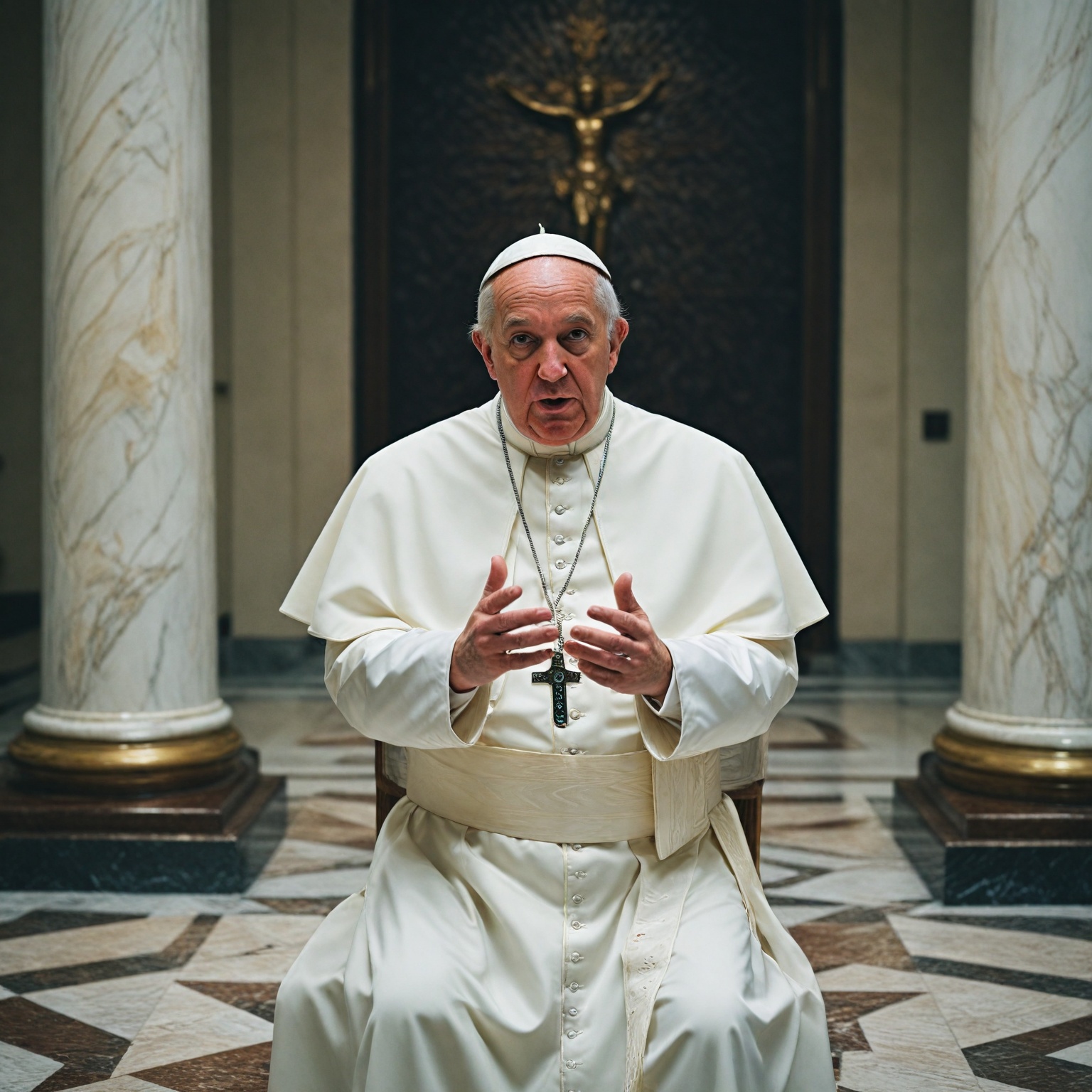
In early May 2025, President Donald Trump posted an AI-generated image depicting himself as the pope on several social media platforms, including Truth Social, Instagram, and X. The image showed Trump dressed in traditional papal vestments—a white cassock with a crucifix around his neck—and raising his index finger in a solemn gesture. This post came just days before the Vatican’s conclave convened to elect a new pope following the death of Pope Francis.
Trump shared the image without any accompanying commentary, and it was subsequently reposted by the White House’s official Instagram and X accounts. The timing of the post coincided with Novemdiales, the nine-day period of mourning observed by the Catholic Church after the passing of a pope, intensifying the controversy surrounding the image.
The AI-generated depiction sparked a mixed reaction. Some supporters viewed it as a joke, with individuals like Debbie Macchia, a Jewish Trump supporter, emphasizing that it was “clearly joking” but expressing concern about any disrespect toward the papacy. Conversely, many Catholics and religious groups found the image offensive and disrespectful, especially given the solemnity of the period and the deep reverence for the papal office in Italy and worldwide.
The incident also highlighted broader concerns regarding the misuse of artificial intelligence technologies. Experts warned about the potential for AI-generated images and deepfakes to be weaponized for spreading disinformation and manipulating public perception, especially in politically charged contexts. The Trump image became a notable example of how generative AI could blur the lines between reality and fiction in political communication.
Public and Media Reaction
The AI-generated image of Donald Trump depicted as the Pope sparked a highly polarized reaction from both the public and media. On social media platforms such as X and Truth Social, the image drew instant outrage, particularly from Catholics and conservative Republicans who viewed it as a blatant insult and mockery of their faith. A group identifying as “pro-democracy conservative Republicans fighting Trump & Trumpism” condemned the image, emphasizing the solemnity of the papacy and the disrespect shown by associating Trump with the pontiff’s regalia. The Vatican, while declining to comment directly on the image during briefings about the upcoming conclave, acknowledged the sensitivity surrounding the matter, noting the significance of the papal office to Catholics worldwide, especially in Italy.
Among public figures, Senator Lindsey Graham expressed both enthusiasm and recognition of resistance to the idea of Trump as the next pope, urging supporters to remain steadfast despite criticism. Conversely, Democratic activists and commentators described the image as an example of immature or disrespectful political theatrics. Some media voices defended the post as humor, downplaying complaints as coming largely from atheists or those outside the Catholic faith. However, Catholic organizations such as the New York State Catholic Conference labeled the image as mockery, and calls for more respectful treatment of religious symbols were voiced.
The White House rejected allegations that the image was intended to mock the papacy, with press secretary Karoline Leavitt affirming President Trump’s respect for Pope Francis and his support for Catholic values and religious liberty. Despite these assurances, concerns arose about the broader implications of using AI-generated imagery in political and religious contexts. Experts highlighted the lack of regulation or standards governing the creation and dissemination of such synthetic media, warning about the potential for misinformation and societal harm. Dr. Elinor Carmi, a lecturer in data politics and social justice, described the incident as indicative of wider issues related to unchecked technological integration into public discourse without adequate oversight.
Furthermore, the episode drew attention to the potential consequences of blending AI technology with sensitive political and religious subjects, underscoring the need for greater awareness and ethical considerations in the use of synthetic media during highly charged events such as the papal conclave.
Analysis of AI Generation and Authenticity
The proliferation of AI-generated images, particularly those created using advanced generative models like DALL-E, Midjourney, and Stable Diffusion, has sparked significant concerns regarding their authenticity and potential misuse. These models operate within a rapidly evolving technological landscape described by some commentators as a “storm of hype and fright” due to their increasing sophistication and the challenges they present in detection and control. AI-generated content can be convincingly realistic, often making it difficult for both the public and automated systems to distinguish between genuine and synthetic media.
Efforts to mitigate the misuse of AI-generated images have led to the development of protective tools, such as Glaze, which employs cloaking techniques designed to prevent AI systems from accurately replicating the style of original artworks. However, the challenge of detecting AI-generated deepfakes remains formidable. Detection methods rely heavily on large, well-labeled datasets differentiating fake from real images, which require extensive human involvement to curate. Moreover, detection algorithms often struggle to generalize across different types of deepfake generation methods, meaning new or unknown models can evade current detection systems.
Political contexts have seen a notable rise in the use of AI-generated images for propaganda purposes, especially during election cycles. Political operatives have acknowledged experimenting with generative AI for campaign strategies, despite apprehensions about the same technologies being exploited by less ethical actors to spread misinformation. The use of deepfakes to distort political narratives or influence public opinion poses a significant threat to democratic processes and public trust.
Beyond political arenas, everyday individuals face risks as AI-generated images could be weaponized to create fake, incriminating content for purposes of bribery, humiliation, or defamation, often without the resources to counter such abuses. This underscores the pressing need for continued research and development of more robust detection technologies and ethical frameworks governing the creation and dissemination of AI-generated media.
Impact and Implications
The incident involving the AI-generated image posing as the Pope highlights the growing concerns around the use of synthetic media in political and social contexts. The technology underlying these images, often referred to as deepfakes, has evolved rapidly from its initial applications in entertainment and adult content to more insidious uses, including political manipulation and disinformation campaigns. This evolution poses significant risks to public trust in media, as convincingly realistic but fabricated images and videos can easily deceive viewers, potentially influencing opinions and electoral outcomes.
The proliferation of AI-generated images on social media platforms, particularly during politically charged events such as election cycles, underscores the weaponization of these tools for propaganda purposes. The ease of generating high-quality synthetic content lowers the barriers for bad actors to create misleading or false narratives, complicating efforts to maintain an informed electorate. As the technology improves, traditional cues used to identify deepfakes—such as unnatural movements or image inconsistencies—are becoming less reliable, further increasing the potential for deception.
Beyond political arenas, the misuse of AI-generated images raises broader ethical and societal concerns. These include violations of artistic ownership and copyright, as many AI models are trained on vast datasets of online images without consent or compensation to original creators. Moreover, ordinary individuals may become targets of fabricated incriminating images used for coercion, humiliation, or blackmail, highlighting vulnerabilities that extend beyond high-profile political figures.
In response, intelligence agencies and experts have issued warnings about the potential use of deepfakes and similar machine-learning technologies by adversaries to undermine democratic institutions and manipulate public discourse. The widespread adoption of generative AI in political campaigns, both for legitimate purposes and malicious intent, introduces a complex dilemma for candidates, regulators, and the public alike as they navigate the challenges posed by synthetic media in the digital age.
Legal and Ethical Considerations
The viral spread of the AI-generated image posing as Pope Francis has highlighted significant legal and ethical challenges surrounding the use of artificial intelligence in creating synthetic media. One primary concern is the question of artistic ownership and copyright infringement, as many AI image generators have been trained on vast datasets of online images without obtaining permission or providing compensation to the original creators. This practice has already led to class action lawsuits against AI developers.
In addition to copyright issues, the ethical implications of such AI-generated content have become increasingly apparent, especially in the political arena. The proliferation of synthetic images during election cycles raises fears about disinformation and the potential weaponization of AI tools by bad actors to spread misleading or false information. Experts have noted that these images, despite sometimes having visual inconsistencies such as distorted features or unnatural textures, can still convincingly deceive many viewers online. This misuse has prompted bipartisan legislative efforts, with over a third of U.S. states enacting laws aimed at regulating artificial intelligence in politics and combating election-related deepfakes.
The offensive nature of the specific AI-generated image depicting Pope Francis also brought forth ethical concerns related to respect for religious figures and communities. The image was met with outrage, particularly from Catholic groups and certain political factions, who viewed it as a mockery of their faith. The Vatican refrained from commenting officially on the image, though it became a subject of discussion during the daily conclave briefings, indicating the sensitivity and seriousness of such portrayals within religious institutions.
The content is provided by Blake Sterling, 11 Minute Read