
Summary
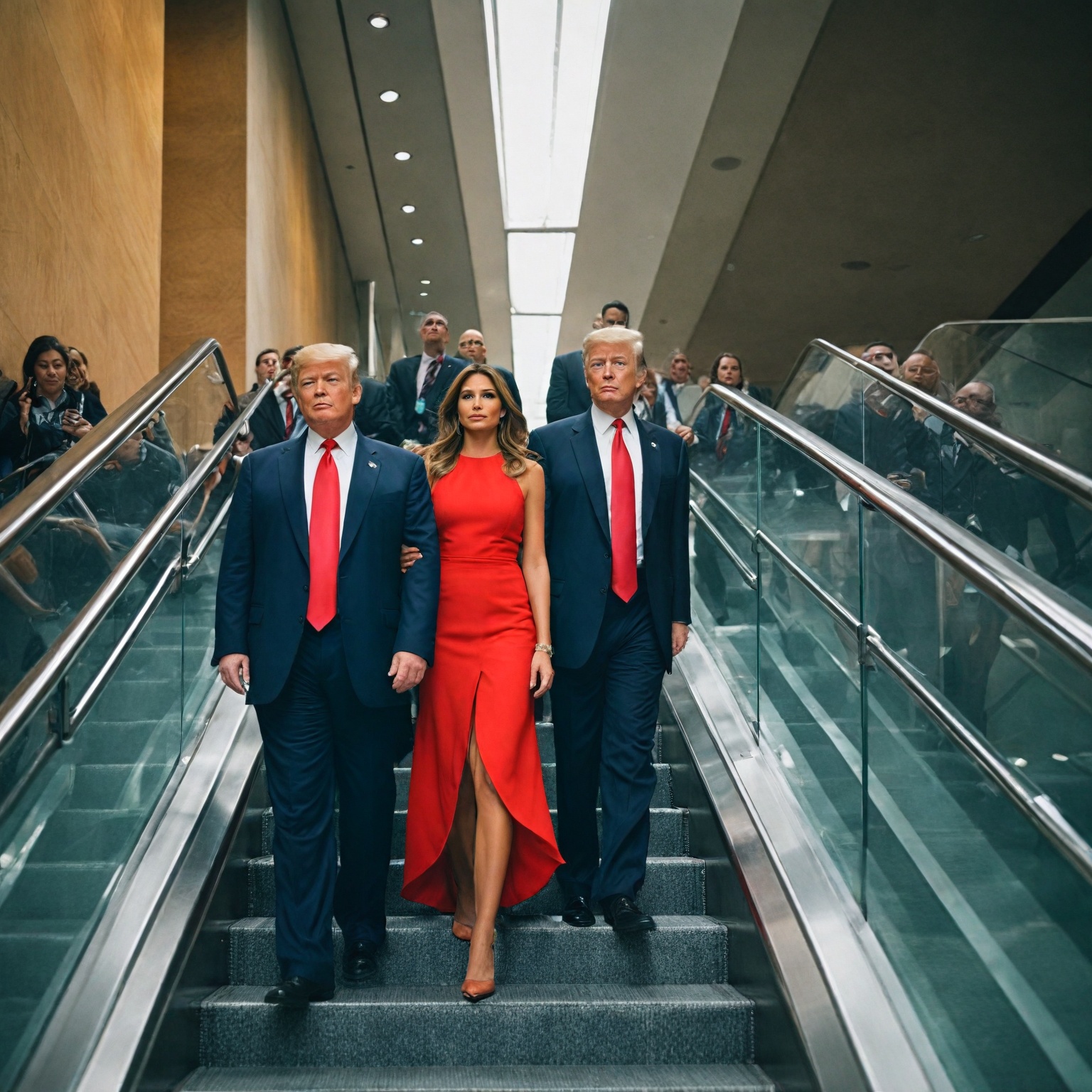
During former President Donald Trump’s arrival at the United Nations General Assembly in 2023, an escalator abruptly stopped while he was ascending, leading to widespread attention and controversy. Trump and his administration quickly alleged that the incident was a deliberate act of sabotage intended to humiliate him, a claim supported publicly by White House press secretary Karoline Leavitt and U.S. Ambassador to the UN Mike Waltz. Alongside the escalator malfunction, Trump experienced teleprompter failures and audio issues during his speech, which he collectively described as a “triple sabotage” orchestrated against him at the UN.
The United Nations conducted a swift investigation, concluding that the escalator’s emergency stop was triggered unintentionally by a White House videographer who had been moving backward on the escalator while filming the President and First Lady. UN officials maintained that the teleprompter and audio problems were due to technical and human errors unrelated to any deliberate interference by UN staff. Despite the UN’s findings, the Trump administration continued to assert suspicions of intentional disruption, framing the incident as emblematic of broader institutional hostility toward the former President.
The episode, colloquially known as “escalatorgate,” quickly became a focal point of media coverage and political debate, highlighting tensions between the United States and the United Nations. It underscored the challenges of managing high-profile diplomatic events amid heightened political polarization and raised questions about security and protocol at international forums. The incident also sparked commentary on the role of the UN and the politicization of routine technical malfunctions within the context of Trump’s often contentious relationship with multilateral institutions.
Overall, the escalator stoppage and associated technical difficulties at the UN General Assembly illustrated a rare but highly public diplomatic incident marked by contrasting narratives: the US administration’s claims of sabotage versus the UN’s findings of accident and error. This clash contributed to ongoing debates about the state of international diplomacy during Trump’s presidency and its aftermath.
Background
During President Donald Trump’s arrival at the United Nations General Assembly, an unexpected incident occurred when an escalator abruptly stopped functioning. The halt took place as the President was ascending, drawing immediate attention from those present and viewers worldwide. Following the event, White House press secretary Karoline Leavitt suggested on Fox News that the stoppage was part of a deliberate plot intended to humiliate President Trump. The President himself strongly condemned the incident, describing it as “triple sabotage” and calling for all security footage related to the escalator, especially the emergency stop button, to be preserved for investigation. He also confirmed that the U.S. Secret Service was involved in examining the matter. U.S. Ambassador to the UN, Mike Waltz, supported the call for an official inquiry, deeming the occurrences “unacceptable” and emphasizing that the United States would not tolerate threats to its security or dignity at international forums.
In response to these allegations, the United Nations conducted a one-day investigation into the incident. UN spokesperson Stéphane Dujarric reported that a technician identified the cause as an inadvertent triggering of a safety feature by a White House videographer who had been standing backward on the escalator while filming the President. The UN noted that such safety mechanisms are designed to halt escalator movement to prevent accidents, implying that the stoppage was unintentional rather than a deliberate act. This explanation contrasted with the initial claims of sabotage made by the President and his administration.
Incident Overview
During President Donald Trump’s arrival at the United Nations General Assembly, a series of technical malfunctions occurred, drawing widespread attention. As the president and First Lady Melania Trump attempted to ascend an escalator inside the UN headquarters, the escalator suddenly halted due to a built-in safety mechanism being triggered. A subsequent investigation by the United Nations revealed that the safety function was inadvertently activated by a White House videographer who had moved ahead of the presidential couple to document their arrival and likely caused the mechanism to stop as he traveled backward up the escalator steps.
Following the escalator incident, President Trump encountered further difficulties during his speech to the General Assembly when the teleprompter initially failed to operate. Although the teleprompter was restored toward the end of his address, the president publicly described these technical issues—including both the escalator and teleprompter mishaps—as “a real disgrace”. Trump also commented that these problems might have made his speech more interesting than it otherwise would have been.
The incident unfolded within the context of the UN General Assembly’s 80th session, which convenes annually from September through part of January to address global issues under the leadership of the Assembly president or the UN secretary-general. The unexpected halting of the escalator and the teleprompter malfunction during such a high-profile event highlighted the challenges of live international diplomacy and media coverage.
Allegations of Sabotage
During his visit to the United Nations General Assembly, President Donald Trump accused the UN of orchestrating a deliberate “triple sabotage” involving a stopped escalator, a teleprompter malfunction, and audio issues that disrupted his address. Trump described the sequence of events as “not a coincidence” but a coordinated effort intended to humiliate him, demanding an immediate investigation into the matter. He referred to the incident as a “REAL DISGRACE” and suggested that these technical failures were “very sinister events”.
The first issue involved the escalator on which Trump descended upon entering the UN headquarters. Trump claimed it abruptly stopped, causing embarrassment. However, UN officials contended that the escalator’s safety mechanism had been accidentally triggered, most likely by a White House videographer moving backwards on the escalator while recording Trump’s ascent. The UN’s chief spokesman, Stephane Dujarric, stated that data from the escalator’s control unit indicated a safety stop rather than sabotage.
Regarding the teleprompter failure, the UN pointed out that the White House delegation was responsible for operating the device, implying that the malfunction was not due to UN interference. Finally, Trump alleged that the audio during his speech was compromised, claiming that attendees could only hear his remarks through interpreters’ earpieces and that even his wife, Melania Trump, was unable to hear him properly. He maintained that these three incidents collectively amounted to an intentional disruption orchestrated by the UN.
Despite the UN’s explanations attributing the mishaps to technical glitches and human error, Trump remained adamant that the incidents constituted a targeted attempt to undermine him. The episode, popularly dubbed “escalatorgate,” became a notable diplomatic incident marked by contrasting narratives between the US President and UN officials.
Official Responses and Investigations
Following the incident where the escalator carrying President Donald Trump and the First Lady abruptly stopped during their arrival at the United Nations General Assembly, official responses and investigations quickly ensued. The White House press secretary, Karoline Leavitt, suggested in a Fox News interview and on social media that the stoppage might have been an intentional act or “sabotage.” She emphasized that the Secret Service was investigating the matter and asserted that if any UN staffers were found to have deliberately caused the incident, they would be held accountable and potentially fired.
The United Nations responded by conducting a prompt investigation into the matter. Stéphane Dujarric, spokesperson for UN Secretary-General António Guterres, explained that the inquiry revealed the escalator’s safety function had been inadvertently triggered. The cause was identified as a White House videographer who had run ahead of the President and First Lady to document their arrival and most likely activated the safety mechanism designed to prevent accidents.
Despite the UN’s findings pointing to an accidental trigger, President Trump and the White House maintained their suspicions of deliberate interference. Trump publicly described the event as part of a series of “very sinister” occurrences at the UN, calling it “triple sabotage”. Meanwhile, Leavitt echoed concerns that some UN personnel might have deliberately stopped the escalator as a form of protest or obstruction, referencing previous jokes reportedly made by UN staff about inconveniencing the President upon his arrival.
The Secret Service confirmed its involvement in the investigation, underscoring the seriousness with which the incident was treated from a security standpoint. Overall, the official responses combined a formal UN inquiry attributing the event to an accident with ongoing White House assertions of potential intentionality, reflecting contrasting interpretations of the escalator stoppage.
Public and Media Reaction
Following the incident at the United Nations where President Trump encountered multiple technical difficulties—including an escalator stoppage, teleprompter failure, and audio issues—public and media responses were swift and varied. Video footage capturing the audience’s immediate reactions showed chuckling and surprise as Trump humorously remarked about receiving “a bad escalator and a bad teleprompter” from the UN. Despite the lighthearted tone of his comments during the speech, the situation quickly escalated into a matter of political controversy and conspiracy theories.
White House press secretary Karoline Leavitt amplified the issue by suggesting on Fox News that the escalator malfunction was not accidental but an intentional act of sabotage. She stated that the Secret Service was investigating the event, and she vowed to seek accountability if UN staff were found responsible for “trying to trip up – literally trip up – the president and the first lady of the United States”. Leavitt also shared messages on social media supporting this theory, adding fuel to the online spread of conspiracy claims.
Fox News personalities, including Jesse Watters, echoed these accusations, with Watters describing the escalator stoppage as a deliberate attempt to endanger the president and first lady, emphasizing the potential harm that could have occurred. Meanwhile, political figures weighed in on related issues: House Majority Leader Steve Scalise and National Republican Congressional Committee Chairman Richard Hudson connected recent violence against ICE officers to broader political rhetoric, underscoring a tense and polarized political climate.
On the international stage, after the incident had drawn attention, the General Assembly proceeded with speeches from leaders of significant Muslim-majority countries, such as Indonesia’s President Prabowo Subianto and Turkey’s President Recep Tayyip Erdoğan, marking a swift return to the scheduled diplomatic agenda.
Political and Diplomatic Implications
The incidents that occurred during former President Donald Trump’s visit to the United Nations headquarters, including escalator malfunctions, teleprompter failures, and audio issues, quickly became politicized and sparked diplomatic tensions. Trump attributed these technical problems to deliberate sabotage, a claim echoed by Mike Waltz, the US ambassador to the UN, who described the incidents as “unacceptable” and symptomatic of deeper institutional dysfunction posing serious safety and security risks.
Trump’s allegations further fueled debates about the effectiveness and relevance of the UN Security Council. While the former president boasted of having ended seven “unendable wars” without UN assistance, critics argued that such claims ignored the broader complexities of international conflict resolution. Brazilian President Lula criticized the Security Council’s veto power as undermining the organization’s purpose, calling it a “tyranny” that sabotages the UN’s mission. Meanwhile, UN Secretary-General António Guterres acknowledged the challenges facing multilateralism and the institution’s pillars of peace and prosperity, urging for continued relevance despite growing structural obstacles.
In response to Trump’s accusations, the UN Secretary-General promptly initiated a thorough investigation into the events. Stephane Dujarric, spokesperson for Guterres, confirmed that the UN had received formal correspondence from the US mission and expressed willingness to cooperate fully and transparently with US authorities to determine the cause of the incidents.
These events also unfolded against a backdrop of intensified political rhetoric. Trump’s broader discourse at the UN included sharp criticisms of European immigration policies, climate change initiatives, and local leadership, notably targeting London’s mayor Sadiq Khan. Additionally, Trump and his administration politicized other security incidents domestically, such as the shooting at an Immigration and Customs Enforcement office in Dallas, framing it as a consequence of left-wing demonization of law enforcement.
Together, these developments underscored a period of strained relations between the United States and the United Nations, marked by accusations of sabotage, institutional critiques, and broader geopolitical discord. The incident highlighted not only the technical vulnerabilities of high-profile diplomatic events but also the increasingly contentious political environment surrounding international cooperation and security.
Aftermath and Legacy
Following the unexpected halt of the escalator during President Donald Trump’s arrival at the United Nations General Assembly, a one-day investigation was promptly conducted by the UN. The investigation concluded that a White House videographer, who had been moving backwards up the escalator to document the First Couple’s entrance, likely triggered the escalator’s safety mechanism unintentionally. UN spokesperson Stéphane Dujarric clarified that the incident was accidental, emphasizing the videographer’s role in setting off the escalator’s emergency stop.
Despite the findings, President Trump publicly described the event as part of a series of deliberate sabotages, which also included a malfunctioning teleprompter during his speech. He called the incidents “a real disgrace” and demanded an immediate and thorough investigation, urging that all security footage—especially recordings related to the emergency stop button—be preserved for review. The Secret Service was reported to be involved in the inquiry.
Echoing the President’s concerns, U.S. Ambassador to the UN Mike Waltz condemned the events as “unacceptable,” stressing that the United States would not tolerate threats to its security or dignity in international forums. The episode, colloquially dubbed “escalatorgate,” has since become emblematic of the tensions surrounding Trump’s appearances on the global stage and has left a lasting impression as an unusual diplomatic incident marked by suspicions of sabotage despite evidence to the contrary.
The content is provided by Harper Eastwood, 11 Minute Read


