
Summary
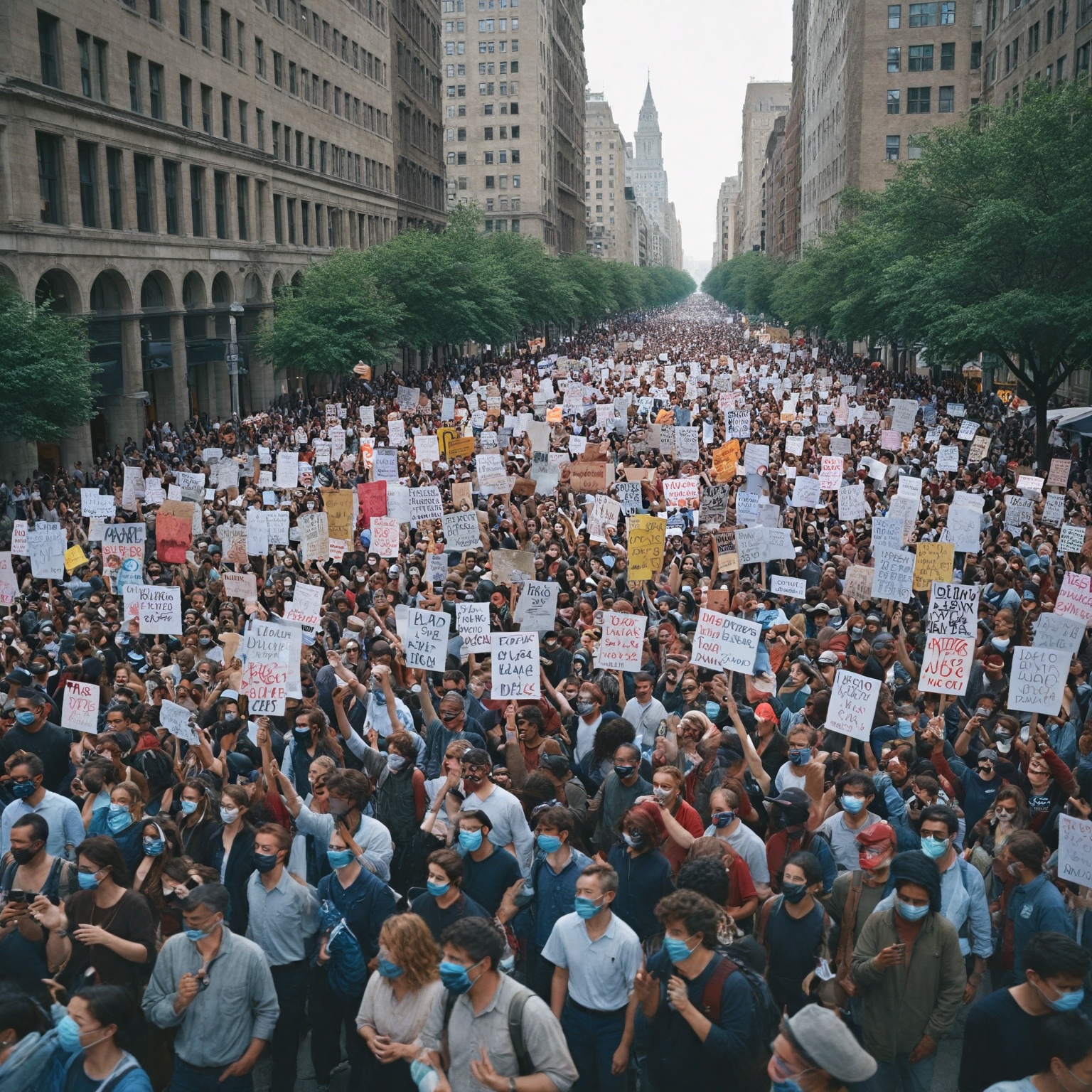
Massive anti-Trump protests have been a defining feature of the United States’ political landscape since the mid-2010s, emerging in response to Donald Trump’s campaign rhetoric, electoral victories, and presidential policies. These widespread demonstrations have taken place in streets, parks, and plazas across all 50 states and numerous cities worldwide, mobilizing millions of participants concerned about immigration policies, civil rights, climate change, and threats to democratic norms. The largest single-day protest, the 2017 Women’s March, drew millions nationwide and set the tone for an ongoing movement characterized by grassroots activism and diverse coalitions.
Organized by a mix of established groups such as Indivisible, MoveOn, and Black Lives Matter alongside decentralized grassroots networks like the 50501 coalition, the protests have employed a variety of tactics, including rallies, marches, walk-outs, and petitions. Social media platforms have played a critical role in rapid mobilization and information sharing. While most demonstrations have remained peaceful, there have been occasional clashes involving vandalism, arrests, and confrontations with law enforcement, raising debates about protest tactics and governmental responses.
The protests have voiced opposition to key Trump administration policies such as the 2017 travel ban, family separation at the border, and perceived erosion of civil liberties, with emphases on defending immigrant rights, racial justice, and environmental protection. These demonstrations have also spurred legislative backlash, as some states introduced anti-protest bills criticized for infringing on constitutional rights, and have prompted heightened security measures including deployment of National Guard troops in certain cities.
Despite internal challenges and political polarization, the anti-Trump protest movement has energized grassroots political engagement and shaped public discourse on issues central to American democracy. However, its long-term impact remains uncertain, with analysts drawing parallels to past large-scale movements that galvanized public attention but struggled to sustain lasting institutional change.
Background
The widespread anti-Trump protests in the United States emerged as a response to various aspects of Donald Trump’s political career, including his campaign rhetoric, electoral victory, inauguration, alleged sexual misconduct, and key presidential actions such as the 2017 travel ban and the aggressive family separation policy implemented in 2018. These protests took diverse forms, ranging from rallies, demonstrations, and marches to walk-outs, business closures, and petitions. While the majority of these protests were peaceful, there were instances of vandalism, assaults on Trump supporters, and some protesters being charged with rioting.
The largest organized protest occurred on January 21, 2017, the day after Trump’s first inauguration, during the Women’s March. Millions participated across various cities, making it the largest single-day protest in U.S. history when considering each city’s contribution. Grassroots organizations like Indivisible and SwingLeft played significant roles in mobilizing protesters at the local level, with many individuals integrating protest activism into their daily lives.
Concerns voiced by protesters often centered on potential losses of rights for Muslims, particularly in response to Executive Order 13769—commonly referred to as the travel ban or Muslim ban—and for the LGBT community. The mid-2010s protest movements, including those opposing Trump’s 2016 election, also influenced state legislatures to propose anti-protest bills, many of which were criticized by the ACLU as unconstitutional. By mid-2017, at least 20 states had introduced or publicly discussed legislation aimed at curtailing protest tactics and increasing penalties for certain protest activities, primarily driven by Republican lawmakers.
Protests were not limited to large Democratic-leaning cities but also spread to smaller communities across the country. Some efforts were highly coordinated by grassroots campaigns, such as those growing in California. However, tensions occasionally escalated, as seen in a brawl on the Hollywood Walk of Fame between Trump supporters and protesters, with subsequent symbolic actions involving Trump’s star on the Walk of Fame.
The pattern of protests continued beyond Trump’s initial presidency. Following his victory in the 2024 presidential election, a new wave of protests erupted in response to his second term. Protests also took place during his presidential campaigns, frequently targeting his rallies and political positions. The movement echoed earlier social protests in its use of public spaces like parks and streets, with chants about issues such as abortion rights and homage to figures like the late Supreme Court Justice Ruth Bader Ginsburg, a progressive icon.
Despite the occasional violence linked to anarchist elements, which alienated some potential supporters, the anti-Trump protests demonstrated significant organizational capacity and grassroots mobilization. However, the long-term political impact of these protests remains uncertain, similar to previous movements like Occupy Wall Street that mobilized large crowds but struggled to sustain a broader political movement.
Organization and Planning
The massive anti-Trump protests across the United States have been characterized by a blend of grassroots activism and coordination among established organizations. Although there is no formal entity known as “50501” with nonprofit status or centralized leadership, several existing activist groups have stepped in to provide logistical and strategic support to grassroots demonstrators. For example, Political Revolution offers an event finder for 50501 protests, while other nonprofits provide activist training and resources. By early April, 50501 activists had become a key driving force behind the national “Hands Off” protests, collaborating with prominent organizations such as the ACLU, Indivisible, MoveOn, Color of Change, and the Women’s March. Indivisible co-founder Ezra Levin described 50501 as a “very legitimate, organic, grassroots group of folks” noted for their remarkable “energy”.
Established activist groups have played significant roles in organizing rallies that cover a broad range of issues including abortion rights, gun violence, racial justice, and economic concerns such as healthcare and Social Security. Events are often coordinated to focus attention on pocketbook issues, aiming to broaden the movement’s appeal beyond political opposition to Donald Trump’s administration. These protests have included a variety of tactics from marches with handmade signs to community service-oriented actions such as food drives, teach-ins, and volunteering at shelters. Demonstrations have taken place nationwide—from Anchorage, Alaska, to Palo Alto, California—sometimes targeting specific figures associated with the Trump agenda, such as Elon Musk, whose role as a Trump adviser has drawn criticism.
Local governments and communities have responded differently to the anticipated protests. Cities like Seattle, known for a history of public protest, have pledged to resist federal cooperation with agencies like ICE in response to anticipated crackdowns from the Trump administration. Officials within the administration, including Russell Vought, one of the architects of Project 2025, have publicly considered deploying the Insurrection Act to use military forces to quell potential uprisings against administration policies.
The anti-Trump resistance is not confined to the United States alone; international communities have also expressed opposition. Some foreign governments, such as China and Turkey, have issued travel warnings to their citizens about the potential for violent protests and increased xenophobic incidents in the U.S.. Many protests have been facilitated by social media platforms, which have allowed rapid organization and wide dissemination of information. Women have played prominent leadership roles in both organizing and volunteering across many protests and related efforts.
A diverse coalition of organizations has been involved in sponsoring or promoting protests, including MoveOn.org, the People for Bernie Sanders, the Muslim Students’ Association, Assata’s Daughters, the Black Student Union, Fearless Undocumented Alliance, and Black Lives Matter. These groups have worked in tandem to organize high-profile protests, such as those held in conjunction with major political events and rallies. While some claims of paid protesters have circulated, investigations have found no substantiated evidence supporting such allegations.
Event timings and formats vary widely, with protests occurring throughout the day and across numerous locations. Nationally coordinated protest maps and listings have helped participants locate events, underscoring the decentralized yet interconnected nature of the movement. Large-scale mobilizations have also prompted legal challenges, such as a lawsuit filed by the Partnership for Civil Justice Fund concerning protests near the Trump Hotel.
Major Events and Demonstrations
Massive anti-Trump protests have taken place across the United States in numerous cities, parks, and plazas, involving hundreds of thousands of participants advocating against various policies and actions associated with the Trump administration. These demonstrations have been marked by their scale, geographic reach, and diversity of causes, as well as the involvement of both established organizations and spontaneous public participation.
One of the largest events stretched nearly 20 blocks along Fifth Avenue in Manhattan, New York City, where tens of thousands gathered. Simultaneously, thousands flooded Daley Plaza in Chicago, and tens of thousands surrounded the Washington Monument in the nation’s capital. In Atlanta, police estimated a crowd of over 20,000 marching to the statehouse. Organizers claimed that more than 600,000 people had signed up to participate nationwide, with events also taking place in U.S. territories and multiple global locations. The protests in New York featured a range of participants, including individuals like Melissa Jackson, a former special education teacher advocating for students with disabilities.
Beyond the initial protests, a wide variety of causes were represented, from opposition to Trump’s immigration policies to concerns about healthcare, Social Security, gun violence, and racial justice. These rallies were planned in all 50 states, with images from smaller cities such as St. Augustine, Florida, Salt Lake City, Utah, and Frankfort, Kentucky, showing dense crowds. Many of these demonstrations were organized by groups like Indivisible and MoveOn, who had previously led protests on abortion rights and racial justice during Trump’s first term. The aim was to shift public focus toward economic issues, particularly pocketbook concerns affecting average Americans.
Several large-scale coordinated protests have occurred throughout the years. On February 5, 2025, a coordinated effort known as 50501 (“50 protests, 50 states, one day”) saw demonstrations held primarily in front of state capitol buildings nationwide. These protests targeted policies associated with Trump, Elon Musk, and Project 2025. In addition to these organized actions, the wider public has also shown strong engagement by holding protests during non-political events, such as the Super Bowl, illustrating the breadth of opposition to the administration.
Following Trump’s re-election, protest activities intensified, including large gatherings on November 6 in cities like San Jose, Berkeley, Cleveland, Chicago, New York City, and Philadelphia. These protests addressed issues such as border militarization and the Gaza conflict. Internationally, protests were also held on the day of Trump’s inauguration in cities including London, Brussels, Mexico City, and Manila. In Canada, sports fans expressed dissent by booing the U.S. national anthem at games, and solidarity protests against Trump’s tariffs and comments on statehood were held in front of U.S. diplomatic missions.
Protests have taken various forms, including rallies, marches, walk-outs, business closures, and petitions. While most have remained peaceful, there have been instances of clashes with law enforcement, including the use of tear gas and pepper spray in response to some protesters throwing projectiles. Some protesters have faced criminal charges related to rioting. Despite these incidents, the overwhelming majority of protests have been non-violent and organized in support of marginalized communities, including Muslims affected by the travel ban, the LGBTQ+ community, and immigrant populations.
Notable localized events include a peaceful march of approximately 2,000 people in downtown Los Angeles on International Migrants Day in 2018, protesting immigration, environmental, and healthcare policies. Students across universities such as the University of Virginia, Michigan State University, and Oberlin College also organized climate rallies and anti-fascism protests during Trump’s second administration. Additionally, protests in West Hollywood in 2025 addressed concerns over executive orders, federal spending cuts, and deregulation under the combined leadership of Trump and Elon Musk’s Department of Government Efficiency (DOGE).
In the international arena, a major rally in Trafalgar Square, London, attracted reportedly over 100,000 attendees, including UK opposition leader Jeremy Corbyn. The movement’s presence has also been felt through social media under hashtags such as #Anti-Trump and #NotMyPresident, fueling widespread engagement and ongoing activism.
Messages and Demands
The massive anti-Trump protests across the United States conveyed a broad spectrum of messages and demands, reflecting widespread discontent with the policies and actions of the Trump administration. Central to the demonstrations was a call to defend democracy and uphold the Constitution in the face of what organizers described as government overreach and authoritarian tendencies. Protesters voiced opposition to Trump’s domestic and international policies, including immigration enforcement measures, climate change denial, and cuts to social and public health programs.
A significant theme among demonstrators was resistance to immigration policies perceived as harsh and unjust, with protests highlighting the separation of families and the targeting of immigrant communities. Activists staged sit-ins, blocked immigration offices, and held rallies under slogans such as “Protect Migrants, Protect the Planet,” emphasizing the intersection of immigration rights with broader social justice concerns. Many protesters expressed fear for vulnerable groups, including transgender individuals facing reduced protections, and immigrants threatened by deportation actions.
Climate change and environmental policy were also prominent issues, with many rallies organized by groups like the Sunrise Movement to demand urgent climate action and to oppose the administration’s plans to delete climate data and silence scientists. Students and activists at universities and cities nationwide highlighted the administration’s disregard for science and environmental stewardship, linking their protests to a larger movement defending scientific integrity and diversity.
Economic justice and opposition to perceived favoritism toward wealthy elites featured heavily in the protests. Chants such as “Hey hey, ho ho. Trump and Musk have got to go!” and “The people, united, will never be divided” reflected frustration with policies seen as benefiting the rich at the expense of ordinary citizens, as well as anger toward figures associated with deregulation and government workforce reductions. Demonstrators called for the preservation of research and public services, expressing fears about cuts to social security, public health agencies, and protections for marginalized groups.
Protest slogans and social media campaigns played a vital role in uniting participants, with hashtags like #Anti-Trump and #NotMyPresident capturing widespread rejection of Trump’s legitimacy and agenda. Chants including “Not my president” and “We don’t accept the president-elect” underscored a refusal to accept the administration’s authority and policies. Protest leaders and political figures, such as Senator Cory Booker, emphasized the importance of strategic goals, coalition-building, and connecting protest movements to broader political mobilization.
Underlying many protests was a deep concern that a continued Trump administration would erode democratic checks and balances, stifle dissent, and undermine the foundations of American democracy. Organizers warned that such outcomes would have lasting detrimental effects on political freedoms and civil rights. The diversity of participants and issues reflected an expansive coalition united not only in opposition to Trump but in defense of democracy, social justice, and environmental sustainability.
Protest Tactics and Methods
Anti-Trump protests across the United States have employed a wide range of tactics and methods to express dissent, organize supporters, and draw attention to various political and social issues. These tactics include both peaceful demonstrations and more confrontational actions, often coordinated by grassroots organizations and local activist groups.
Many protests have involved large gatherings in public spaces such as streets, parks, and designated protest sites along event routes, where demonstrators have waved signs, chanted slogans like “Not my president” and “We don’t accept the president-elect,” and voiced opposition to policies perceived as threats to minority and marginalized groups, including Muslims and the LGBTQ+ community. Social media has played a significant role in organizing and mobilizing participants, with hashtags such as #Anti-Trump and #NotMyPresident facilitating communication and coordination among protesters.
Non-violent methods have been predominant, with the majority of demonstrations reported as peaceful. Protesters have engaged in human chains, blocked entryways to event venues, and chained themselves to barricades in attempts to disrupt Trump-related events or gatherings of his supporters. However, there have been instances of violence and clashes between protesters and supporters or law enforcement. In some cases, masked protesters have thrown rocks and chunks of concrete at police, who have responded with crowd control
Timing and Political Context
Massive anti-Trump protests have been a recurring feature of the United States political landscape since the mid-2010s, particularly following the 2016 presidential election of Donald Trump. These demonstrations have often been motivated by opposition to Trump’s policies and rhetoric, as well as broader concerns related to immigration, racial justice, and social equity. Early protests included large-scale gatherings on significant dates such as Presidents’ Day 2017, which saw coordinated events nationwide under slogans like “Not my president” and “We don’t accept the president-elect” . The movement also gained momentum on social media platforms through hashtags such as #Anti-Trump and #NotMyPresident, helping to mobilize supporters across the country.
The protests have spanned a range of issues and political moments, including reactions to Trump’s declaration of a national emergency to fund the southern border wall in 2019, as well as responses to his false claims of electoral fraud after the 2020 presidential election, which he lost to Joe Biden. Following the 2024 election, when Trump was again elected president after defeating Vice President Kamala Harris, protests re-emerged in cities like San Jose, Berkeley, and Cleveland, demonstrating ongoing public discontent with both major political parties .
The political context of these protests is marked by deep polarization and efforts by both grassroots organizers and established political groups to channel opposition into mass demonstrations. Key organizations such as Indivisible and MoveOn played prominent roles in organizing rallies during Trump’s first term, aiming to shift the focus toward economic issues like healthcare and Social Security, alongside civil rights and gun violence . These efforts reflect a broader strategy by protest leaders to build coalitions and sustain long-term political engagement, drawing inspiration from historic movements such as the civil rights era .
In response to the protests, some Republican lawmakers proposed legislation aimed at restricting protest tactics and increasing penalties, a move criticized by civil liberties advocates as unconstitutional . Meanwhile, members of the Trump administration anticipated continued civil unrest, with figures like Russell Vought advocating for the possible use of the Insurrection Act to deploy military forces against demonstrators if deemed necessary . This anticipation underscored the tense and often confrontational environment in which these protests have unfolded, highlighting the intersection of grassroots activism and governmental responses within the highly charged political atmosphere of recent years .
Public and Political Reactions
Massive anti-Trump protests across the United States have elicited a wide range of public and political reactions, highlighting deep divisions and the intensity of opposition to the Trump administration. Several prominent political figures and organizations have voiced their discontent. Notably, Senator Cory Booker (D-N.J.) delivered a 25-hour speech protesting Trump administration policies, symbolizing the determination among lawmakers to challenge the president’s agenda.
The Trump administration’s response to the protests has been forceful, with the deployment of thousands of National Guard members and Marines in cities like Los Angeles amid clashes during immigration raids. This presence escalated tensions and led to violent confrontations, including the use of crowd-control munitions by law enforcement to disperse demonstrators. Local leaders criticized the administration’s approach, with city officials and the governor expressing concerns that the National Guard’s presence was inflaming an already volatile situation.
Public demonstrations have included a variety of chants and slogans expressing frustration with the Trump presidency, such as “Not my president” and “We don’t accept the president-elect,” which reflect the protesters’ rejection of the administration’s legitimacy and policies. These movements, often organized through social media under hashtags like #Anti-Trump and #NotMyPresident, have drawn participants advocating for the rights of minorities, immigrants, and other marginalized groups.
The escalating government response to these protests echoes earlier discussions about suppressing urban resistance, with concerns raised over the use of unidentified federal law enforcement officers to confront demonstrators. In response to such tactics in 2020, the American Civil Liberties Union (ACLU) helped enact legislation requiring federal officers to display identifying information during protests, signaling ongoing debates about civil liberties and government accountability during public demonstrations.
While established organizations have played significant roles in leading these protests, a large portion of the mobilization and participation has come from the wider public, including actions at non-political events like the Super Bowl. This broad engagement illustrates the widespread and diverse opposition to Trump’s policies and governance style.
Underlying many of these protests is a critique of what some view as elite partisan leadership exploiting identity politics and institutional influence to wage cultural and political warfare in America. This fusion of identity politics with institutional power has been identified as a driving force behind the intensity and persistence of the protests.
Impact and Aftermath
The massive anti-Trump protests that swept through streets, parks, and plazas across the United States had a multifaceted impact on the political and social landscape. While many of the protests were peaceful and largely non-violent, they significantly energized grassroots activism and brought renewed attention to concerns over civil rights, immigration policies, and threats to democratic norms. The involvement of local organizing groups such as Indivisible and SwingLeft helped sustain a broad-based movement that extended beyond major metropolitan areas to smaller cities nationwide, embedding protest activity into the lives of many participants.
Despite isolated incidents of violence between opposing demonstrators, which drew bipartisan condemnation, the overwhelming majority of protests remained peaceful and focused on raising awareness about issues like the Muslim travel ban and protections for LGBT communities. This widespread, sustained activism reflected a deep dissatisfaction with the Trump administration’s policies and rhetoric, with many participants viewing their efforts as a long-term endeavor requiring patience and perseverance, rather than expecting immediate political victories.
The protests also served to mobilize previously disengaged segments of the population, demonstrating a significant expansion of political engagement beyond traditional activist circles. Large-scale demonstrations coinciding with high-profile events, such as the Super Bowl, illustrated the movement’s capacity to intersect with broader cultural moments and reach diverse audiences. Furthermore, the visible presence of American flags—sometimes displayed upside down—highlighted a complex discourse around patriotism and national identity, with some protesters explicitly rejecting the appropriation of national symbols by Trump supporters.
Institutional responses to the protests included heightened security measures and rhetoric about quelling urban resistance, signaling the administration’s contentious relationship with street-level dissent. The broader political implications of the movement’s persistence were evident in the growing involvement of elected officials, such as Senator Cory Booker’s extended speech against Trump policies, underscoring the protests’ influence on legislative discourse.
Looking forward, the long-term effects of these protests remain uncertain. While some harmful policies enacted during the Trump administration may be reversed by subsequent leadership, the protests highlighted deeper concerns about executive overreach and the erosion of democratic checks and balances. The grassroots nature of the movement, characterized by decentralized organization without formal institutional structures, suggests a continuing, evolving resistance that could shape political activism and discourse in the United States for years to come.
The content is provided by Avery Redwood, 11 Minute Read


