Summary of the Controversy
The legal dispute concerning the Trump administration’s attempt to rename the John F. Kennedy Center for the Performing Arts serves as a critical example of executive overreach and the protection of federally designated memorials. The administration’s moves, which included altering the center’s name to “Trump-Kennedy Center,” prompted widespread criticism and legal challenges, notably from Representative Joyce Beatty, who argued that such changes required congressional approval under federal law. Ultimately, a federal ruling deemed the renaming illegal, necessitating the removal of Trump’s name within 14 days, emphasizing the need for legislative authority in defending the integrity of national memorials.
Legal Framework and Background
The Kennedy Center’s naming rights are protected under federal law, which assigns Congress exclusive authority over its designation as a memorial to President John F. Kennedy. This legal framework became crucial when the Trump administration attempted to rename the center after appointing loyalists to its board. Representative Joyce Beatty’s lawsuit highlighted that the board’s actions violated established statutes, igniting the legal battle that culminated in a federal judge’s ruling against the renaming effort.
Key Events Leading to Name Removal
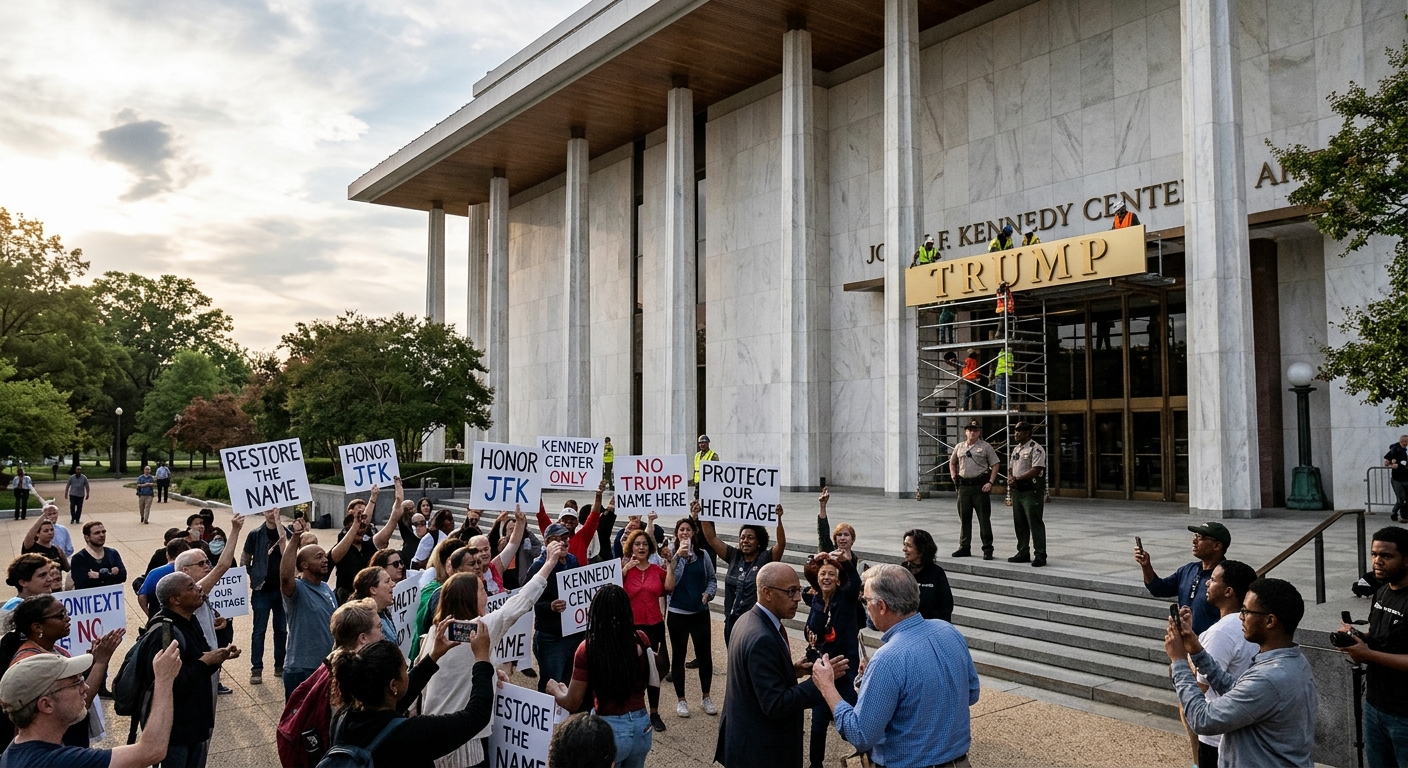
The Board of Trustees’ vote in December 2025 to rename the center sparked immediate backlash due to federal statutes regulating memorials. Despite new signage being installed, critical political and legal responses emerged, including condemnation from Congressional leaders and proposed legislation to reinforce protections against unauthorized changes to the center. A lawsuit filed by Representative Beatty led to a decisive federal ruling, underscoring that changes contrary to the memorial’s designation were unlawful, thus confirming the integrity of the original naming.
Removal Process and Compliance
The federal judge’s order mandated the removal of Trump’s name within 14 days, highlighting its illegal status. As compliance began, crews faced challenges but ultimately secured its removal in the early morning hours, accompanied by directives from the center’s legal team to revert back to its original name. The systematic effort to erase Trump’s name illustrated adherence to legal frameworks governing landmark protections, resisting political manipulation of cultural institutions.
Public and Political Reactions
The removal process incited varied responses, including public support for returning the center to its original name and critiques of Trump’s influence over the institution. Lawmakers actively involved in the legal challenges, such as Joyce Beatty, reflected a broader objection to politicization of memorials. The incident reignited national conversations about how institutions manage controversial legacies, encapsulating divided opinions surrounding Trump’s presidency and related naming rights issues.
Context and Implications
This controversy is situated within a wider dialogue about historical figures and the legacies they leave in public symbols, as similar renaming debates emerge across the nation. Drawing parallels with movements to address contentious symbols in public spaces, the Kennedy Center case emphasizes both legal protections against unilateral renaming and the political maneuvers potentially involved. The judicial ruling not only reaffirmed the legality of existing statutes but also highlighted the need for Congressional oversight regarding cultural institutions, questioning the precedent for future renaming efforts.
The content is provided by Harper Eastwood, 11 Minute Read