Summary
India, as the world’s leading mango producer, boasts over 1,500 varieties, with premium cultivars like Alphonso, Kesar, Banganapalli, and Dasheri shaping both local consumption and international demand. Recent efforts to enhance mango exports, particularly to markets like the UAE, the US, and the EU, have been supported by government initiatives and advancements in cultivation technologies. However, challenges such as high freight costs and stringent regulations continue to hinder optimal export growth, despite rising global demand and strategic diversification efforts.
Historical Context
India’s cultural and agricultural heritage with mangoes dates back centuries, showcasing a variety of regional preferences that influence local consumption patterns. The country has steadily increased mango production, bolstered by state-level initiatives and improved compliance with international export standards, facilitating growth in markets like the US. However, India’s commitment to protecting its agricultural sector poses challenges in balancing domestic interests with expanding export initiatives, particularly amidst evolving global trade dynamics.
Mango Production in India
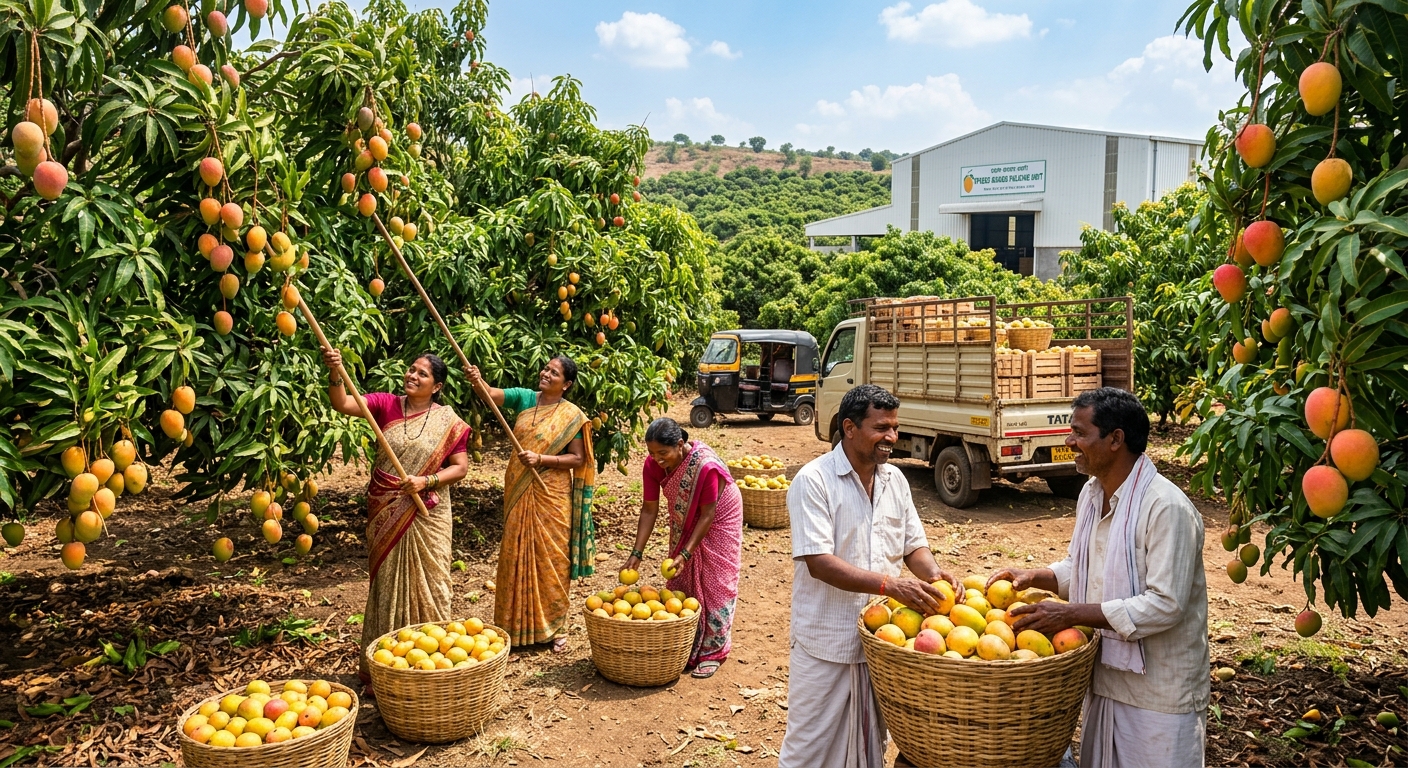
India is renowned for its range of mango varieties, producing millions of metric tons annually, with continuous growth expected through enhanced agricultural practices. Premium varieties, especially Alphonso and Kesar, contribute significantly to production and export, renowned for their flavor and quality. Innovations like hybrid development and improved cultivation techniques are crucial in addressing traditional challenges, although climate variability remains a persistent concern for consistent quality and yields.
Mango Export Landscape
The growth of India’s mango export sector is fueled by the country’s diversification into key markets and an increasing focus on international standards. The UAE leads as a major export destination, while the US remains vital amid ongoing trade negotiations. India exports mangoes in various forms, including fresh fruit and processed products, with premium varieties commanding high demand globally, reflecting evolving consumer preferences.
Challenges in Mango Export
Several hurdles undermine the potential of the mango export industry, including logistical inefficiencies, high freight costs, and complex regulatory requirements. Infrastructure gaps and climatic influences, such as unpredictable weather patterns, further complicate efforts to ensure consistent quality. Addressing these challenges is essential for exporters to enhance competitiveness and maintain reliable supply chains in the face of growing international demand.
Government Policies and Support Mechanisms
The Indian government supports mango production and export through financial assistance, infrastructure subsidies, and promotional initiatives aimed at boosting visibility in international markets. Agencies like APEDA play a pivotal role by facilitating quality compliance and exporting processes. Future prospects suggest a need for comprehensive policy frameworks that promote sustainability and profitability, reflecting the evolving landscape of global agricultural trade.
Cultivation Techniques and Technological Advancements
Advancements in mango cultivation are essential for improving productivity and sustainability. Techniques such as Ultra High Density Planting (UHDP) significantly increase yields while addressing labor efficiency. To support these innovations, integrated policies focusing on sustainable practices will be key in enhancing overall mango production and securing market access.
Opportunities for Expansion and Growth
The Indian mango export industry is well-positioned for growth, driven by rising global demand and strategic government support. With initiatives aimed at increasing cold storage and logistics capabilities, India’s competitive edge in the export market is being strengthened. Diversifying markets and promoting mangoes as a high-quality global brand can further enhance export opportunities, tapping into the continuously evolving culinary preferences of international consumers.
Future Prospects and Strategic Recommendations
Looking ahead, the mango export sector’s growth will depend on aligning agricultural policies with sustainable practices. Continued government efforts to negotiate favorable trade agreements, along with the establishment of frameworks for quality control and farmer support, will be critical in ensuring long-term resilience. Innovations in supply chain management and adherence to international standards will be vital for maximizing India’s position in the global mango market while addressing both existing challenges and future opportunities for expansion.
The content is provided by Blake Sterling, 11 Minute Read