BRICS Embraces the Indore Declaration: India Takes Charge of Seed Rights and Digital Agriculture
Summary
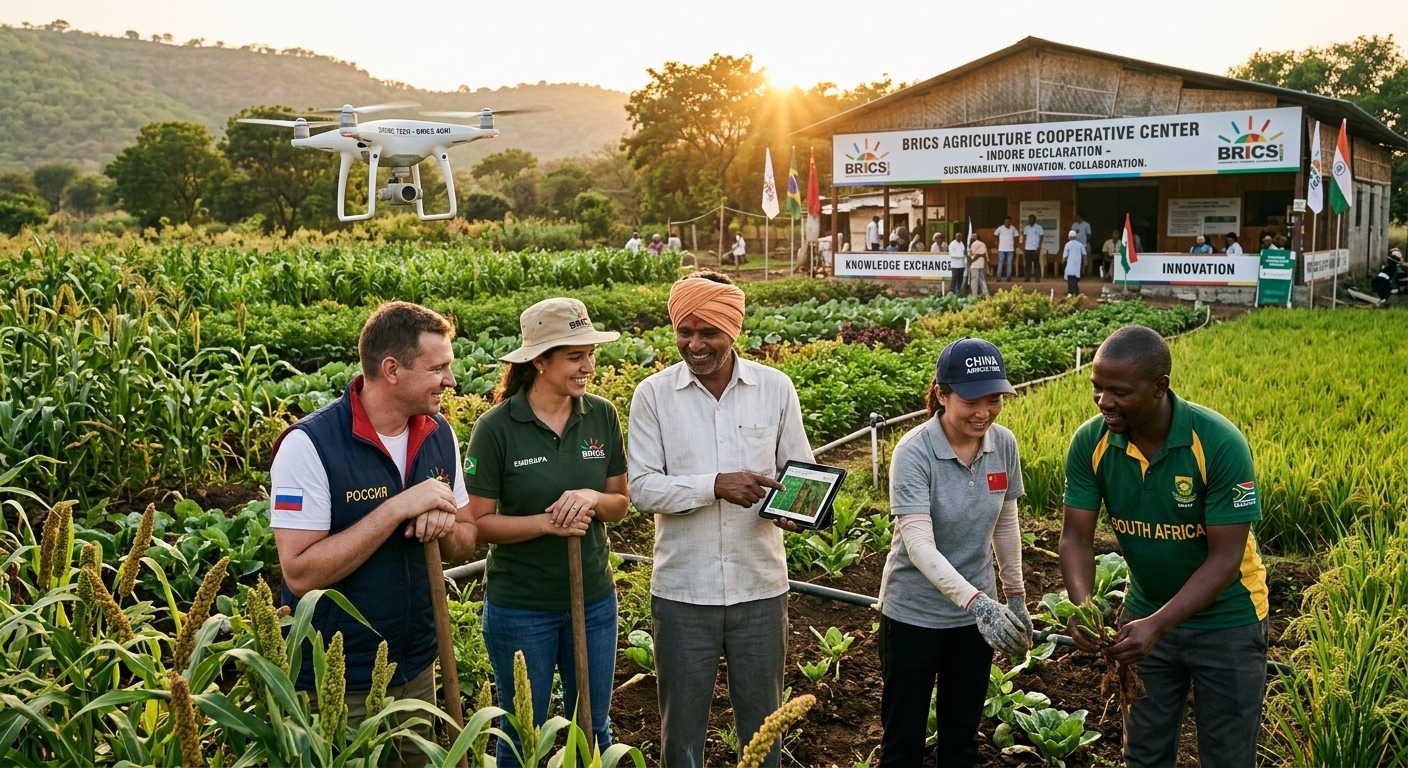
The Indore Declaration, adopted by BRICS nations—Brazil, Russia, India, China, and South Africa—during the 2023 Agriculture Ministers’ Meeting in India, emphasizes enhancing food security, promoting sustainable farming, and empowering smallholder farmers. Key initiatives include the establishment of the BRICS Network of Centres of Excellence on Agro-Ecology and Regenerative Agriculture and a Global Forum on Farmers’ Rights in Seed Systems. India’s leadership is crucial, driving the agenda toward innovative agricultural cooperation despite challenges in technological access and financial barriers, highlighting the need for effective participation of farmers in implementation.
Key Initiatives Under the Indore Declaration
The Indore Declaration introduces transformative initiatives aimed at fostering agricultural sustainability and farmer empowerment. A flagship initiative, the BRICS Network of Centres of Excellence on Agro-Ecology and Regenerative Agriculture, focuses on joint research and knowledge sharing, promoting regenerative practices and reduced reliance on chemicals. Another major initiative, the BRICS Network on Digital Agriculture, aims to integrate advanced technologies like AI and IoT to enhance agricultural productivity and climate resilience. Additionally, the Global Forum on Farmers’ Rights in Seed Systems addresses the protection of farmers’ rights and indigenous seed conservation, emphasizing the significance of traditional knowledge.
Implementation Efforts
Implementation of the Indore Declaration focuses on enhancing agricultural sustainability and farmer welfare through coordinated initiatives. These include establishing networks for research and knowledge transfer, with India’s Indian Institute of Farming Systems Research leading the agro-ecology efforts. Digital agriculture is also prioritized, with platforms for AI and data-driven solutions for improved farming efficiency. Ongoing collaboration within the BRICS Agricultural Working Group ensures unified policy-making and aligns member nations on international agricultural issues. However, challenges such as the financial burden on farmers and infrastructural gaps in technology adoption persist.
Challenges and Criticisms
While the Indore Declaration sets out ambitious goals, various challenges impact implementation. Financial hurdles hinder farmers from adopting advanced technologies, which could slow the benefits intended by digital agriculture initiatives. Balancing intellectual property rights with traditional farming practices presents another challenge, as enforcement of farmers’ rights remains complex. Moreover, variations in member nations’ agricultural capacities and political landscapes complicate cohesive policy-making. Critics also raise concerns about the potential prioritization of corporate interests over the needs of smallholder farmers within the BRICS framework.
Future Directions
The Indore Declaration’s future agenda aims to enhance resilience, innovation, and sustainability in agriculture among BRICS nations. Initiatives promoting climate-smart farming, mechanization, and digital integration are central, targeting growth in agricultural technology and capacity building. Collaborative networks established under the declaration foster joint research and knowledge exchange, positioning BRICS as a model of sustainable agricultural development. Enhanced participation of farmers will further ensure the alignment of initiatives with community needs, creating a food-secure future that is resilient to global challenges.
The content is provided by Sierra Knightley, 11 Minute Read