India Increases Russian Oil Purchases: Notable Rise in Crude Imports from Moscow in May!
Summary
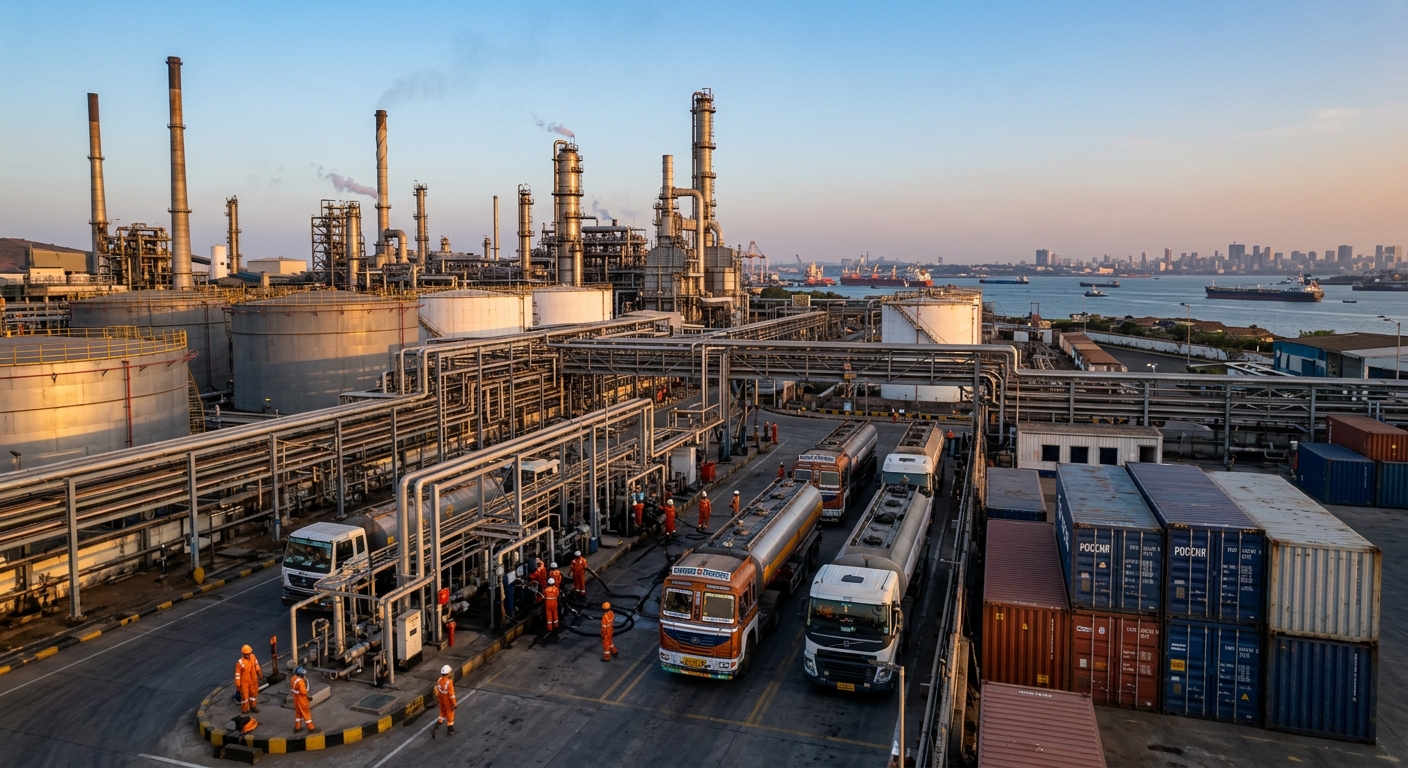
Since Russia’s invasion of Ukraine, India’s crude oil imports from Russia have surged to around 45% of its total imports by May 2023, positioning Russia just behind China as a major supplier. This shift is largely due to significant discounts on Russian oil, which have enabled Indian refiners to reduce costs and boost exports to Europe. As India diversifies its energy sources for greater security amidst market volatility, adapting its refining capacity for heavier Russian crude has become essential.
Key refineries, including Vadinar and Jamnagar, report increased Russian crude processing, facilitated by innovative supply chains like maritime routes through the Baltic Sea and corridors such as the Chennai-Vladivostok route. Although Western sanctions complicate matters, India’s role as a processing and exporting hub for Russian crude products underscores its pivotal position in the global energy landscape.
Impact of Russian Oil Imports
The dramatic rise in Russian oil imports, from under $2.5 billion in 2021-22 to over $31 billion, reflects a strategic pivot in India’s energy approach. The fiscal year 2023-24 saw Russian oil worth approximately $140 billion, illustrating significant economic gain for Indian refiners amid market challenges. This reliance on Russian crude has sharpened India’s overall import strategies, leading to reduced dependency on Middle Eastern suppliers.
Refiners have displayed remarkable adaptability in processing Russian crude, achieving operational performance aligned with export-oriented strategies, even as the geopolitical landscape shifts. Indian authorities emphasize diversification amidst global energy dynamics, indicating ongoing negotiations for further cooperation in gas and hydrocarbon development.
Geopolitical and Economic Challenges
India’s growing reliance on Russian oil, while economically advantageous, presents strategic challenges and risks, especially regarding Western sanctions. The alignment of U.S. and EU sanctions against Russia complicates India’s export dynamics, potentially affecting petroleum product exports to Europe from early 2026. India’s neutral stance in the Russia-Ukraine conflict has drawn scrutiny, with Western nations expressing concern over its energy trade with Russia.
The need for operational adjustments in Indian refineries to handle Russian crude also underscores the complexity of maintaining fuel quality amid geopolitical pressures. India’s strategic autonomy aims to balance relationships while ensuring energy security as global dynamics evolve.
Logistics and Supply Chain Developments
The increase in Russian oil imports has necessitated the development of efficient supply chains. Traditional maritime routes remain prominent while emerging alternatives like the Chennai-Vladivostok corridor enhance shipping efficiency and reduce transit times. Ship-to-ship transfers facilitate blending of Russian crude with Middle Eastern oil, optimizing costs and navigating sanctions effectively.
A network of intermediaries further supports crude delivery, reflecting the complexity of India’s logistics landscape. Increased shipping volumes highlight India’s strategic ability to secure energy amid global uncertainties.
Diplomatic Context and International Reactions
India’s substantial increase in imports of Russian crude since the Ukraine conflict has sparked international scrutiny, particularly from the U.S. and EU. While India maintains a neutral position, its growing trade has raised concerns over compliance with sanctions and affected its diplomatic relations with Western allies. Nonetheless, bilateral trade relations with Russia have expanded, enhancing economic ties beyond energy.
As India navigates these geopolitical dynamics, its participation in multilateral forums reinforces its strategy of diversifying partnerships while responding to international pressures effectively.
Future Outlook
India’s increasing imports of Russian crude are expected to continue, supported by expanding logistical routes and a deepening bilateral energy partnership. Major refining hubs are experiencing significant increases in Russian crude, reflecting enhanced operational capabilities.
Going forward, India is focusing on balancing Russian crude imports with diverse supply sources from the Middle East, Latin America, and West Africa to fortify its energy security strategy. Ongoing discussions with Russia aim to broaden cooperation in hydrocarbons, reinforcing a comprehensive approach to meeting India’s energy needs in a dynamic global landscape.
The content is provided by Blake Sterling, 11 Minute Read