
Summary
Lieutenant General Mohammed Ali Ahmed al-Haddad, the Chief of General Staff of the Libyan National Army (LNA), was killed in a devastating plane crash near Ankara, Turkey, on 23 December 2025. The Dassault Falcon 50 jet, carrying al-Haddad and seven others including senior Libyan military officials, crashed shortly after takeoff due to an electrical failure, with no survivors among the eight on board. The incident occurred as al-Haddad was returning to Libya following official meetings with Turkish defense officials aimed at strengthening military cooperation amid Libya’s ongoing security challenges.
Al-Haddad had served as Libya’s top military officer since 2020 and was regarded as a pivotal figure in efforts to unify and professionalize Libya’s fractured armed forces during a period marked by civil conflict and factional rivalry. His leadership symbolized a push toward restoring a cohesive national defense, working alongside the complex political landscape shaped by rival factions and foreign influence, notably the LNA’s role under Khalifa Haftar in eastern Libya.
The crash prompted a joint Turkish-Libyan investigation, with Turkish authorities ruling out sabotage and attributing the accident to technical malfunction. Libya declared three days of national mourning, emphasizing the loss’s profound impact on the nation’s military institution and ongoing security cooperation with Turkey. The event raised concerns about the future stability of Libya’s military leadership and its implications for the country’s fragile path toward peace and reconstruction.
International reactions underscored the tragedy’s significance, highlighting al-Haddad’s role in combating terrorism and smuggling networks and the strategic importance of Libyan-Turkish ties. The loss of al-Haddad and other senior officials marked a critical blow to Libya’s defense efforts during a sensitive geopolitical moment, reflecting broader challenges in the region’s security and political environment.
Background
The Libyan Chief of General Staff, Lieutenant General Mohammed Ali Ahmed Al-Haddad, had served in his position since August 2020, having been appointed by then-Prime Minister Fayez al-Sarraj. A career soldier, Al-Haddad was known for his support of the rebels during the 2011 uprising against Muammar Gaddafi and was highly regarded for his refusal to align with powerful militias, emphasizing professional military leadership within Libya’s fragmented armed forces. His tenure symbolized efforts to unify and professionalize the Libyan military amidst ongoing conflict.
The Libyan National Army (LNA), of which Al-Haddad was chief of staff, was originally founded in 2011 following the overthrow of Gaddafi’s government by forces aligned with the National Transitional Council. The LNA faced the immense challenge of rebuilding the country’s military infrastructure, which had suffered extensive damage during the civil war. Throughout its development, the LNA incorporated various militias into a more hierarchical military structure, particularly under the leadership of Lieutenant General Khaled Haftar, who was appointed supreme commander by the Libyan parliament in Tobruk in 2015.
Khaled Haftar, a central figure in Libya’s military history, had a long career under Gaddafi’s regime before emerging as a key commander during the post-2011 conflicts. Haftar participated in significant historical engagements such as the Yom Kippur War in 1973 and the Chadian–Libyan conflict in the late 1980s. His leadership since 2015 has involved consolidating control over eastern Libya and its vital oil terminals, aiming to stabilize and strengthen the LNA as a national military force despite ongoing challenges posed by militia groups and foreign mercenaries.
Al-Haddad’s role as Chief of General Staff placed him at the center of military coordination and strategy, tasked with navigating Libya’s complex security environment. His visit to Turkey prior to the crash was part of ongoing efforts to enhance military cooperation and secure support, including meetings with Turkish military officials and discussions on training and arms shipments to bolster Libyan forces combating ISIS remnants and smuggling networks.
This background highlights the significance of Al-Haddad’s position within the broader context of Libya’s fractured military landscape and the strategic efforts underway to restore national defense capabilities amidst persistent instability and factional rivalry.
The Plane Crash
On 23 December 2025, a private Dassault Falcon 50 jet carrying Libya’s Chief of General Staff, General Mohammed Ali Ahmed al-Haddad, along with four members of his entourage and three crew members, crashed shortly after taking off from Esenboğa Airport in Ankara, Turkey. The aircraft was en route to Tripoli, Libya, following official military meetings held in Ankara with Turkish defense officials, including Turkish Defence Minister Yaşar Güler and Chief of General Staff General Selçuk Bayraktaroğlu.
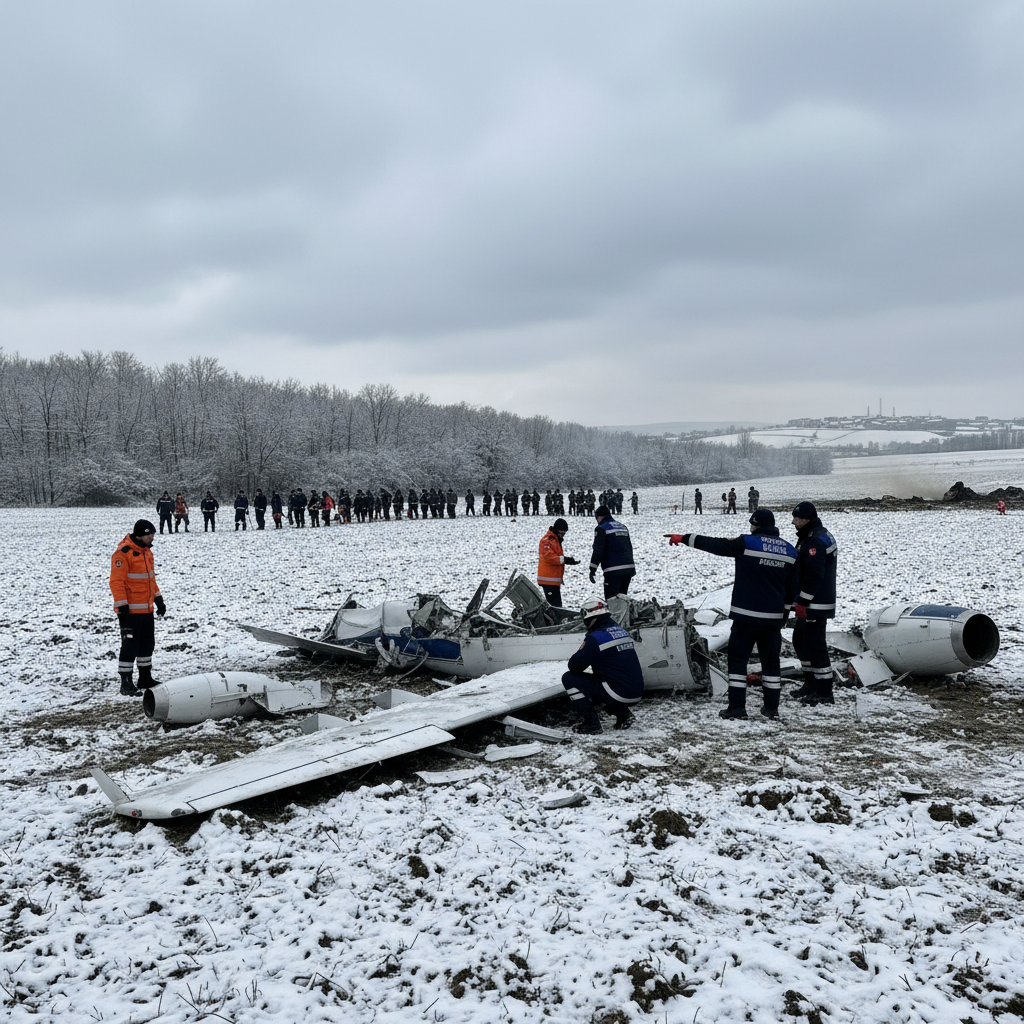
Approximately 15 minutes after departure, the jet reported an electrical failure to air traffic controllers and requested an emergency landing while flying over the Haymana district, about 40 to 45 miles southwest of central Ankara. However, communication was lost at 17:52 GMT, and the plane subsequently crashed near the village of Kesikkavak in Haymana. Rescue teams and security forces quickly arrived at the crash site, discovering scattered debris and confirming that there were no survivors among the eight people on board.
The Falcon 50 is a French-built business jet capable of carrying up to nine passengers. Reports indicated that the aircraft involved was a leased Maltese plane, though its full ownership and technical history remained unclear at the time of the crash, prompting an ongoing investigation by Turkish authorities. Four prosecutors were assigned to the case, and Turkish officials stated that initial findings ruled out sabotage, pointing instead to a technical malfunction as the probable cause.
The crash coincided with a politically sensitive period, coming just one day after the Turkish parliament extended the mandate for Turkish military deployment in Libya by two more years. The Libyan government, led by Prime Minister Abdul Hamid Dbeibah, mourned the loss as a significant blow to the nation and the military institution, emphasizing the importance of continued cooperation with Turkey. Libya announced three days of national mourning and committed to sending a team to Ankara to assist in the investigation alongside Turkish authorities.
Casualties
The plane crash resulted in the deaths of several high-ranking members of the Libyan military. Among the victims was the Libyan Chief of General Staff, Muhammed Ali Ahmed al-Haddad, who was aboard the Libya-bound business jet when it crashed following an emergency landing request due to an electrical failure. Alongside al-Haddad, four other senior military officials were killed: Chief of Staff of the Ground Forces Maj. Gen. Al-Fitouri Ghreibel; Director of the Military Manufacturing Authority Brig. Gen. Mahmoud Al-Qatioui; adviser to the Chief of Staff of the Libyan Army, Mohamed Al-Asawi Diab; and Mohamed Omar Ahmed Mahjoub, a photographer from the chief of staff’s office. Additionally, three crew members lost their lives in the crash.
This loss was described as a “great loss for the nation, for the military institution, and for all the people” by Libyan Prime Minister Abdul Hamid Dbeibah, emphasizing the significant impact on the country’s military leadership.
Investigation
Following the plane crash that resulted in the death of Libya’s Army Chief of Staff, Lieutenant General Mohammed Ali Ahmed Al-Haddad, Turkish authorities launched an immediate investigation into the incident. Initial reports from the investigation have ruled out sabotage as a cause, with Turkish officials indicating that a technical failure was the most likely reason for the crash. The aircraft reportedly experienced an electrical malfunction approximately 15 minutes after takeoff, prompting the pilot to request an emergency landing from air traffic control at 8:33 pm local time.
The black box from the jet was recovered by Turkish security forces, and examination and evaluation processes have been initiated by relevant authorities in Turkey. The Ankara chief prosecutor’s office formally opened an inquiry into the crash, with the Turkish Justice Minister Yilmaz Tunc emphasizing that all aspects of the incident would be examined thoroughly. Turkish Interior Minister Ali Yerlikaya confirmed that debris was found near Kesikkavak village in the Haymana district, the crash site, where search and rescue teams were deployed.
Libyan authorities have been involved in the investigation as well, with the Government of National Unity (GNU) preparing to send a team to Ankara to collaborate with Turkish officials on the probe. The incident led to a temporary shutdown of Ankara’s airspace, reflecting the seriousness with which Turkish officials treated the event amid concerns over security and the need to secure the capital during the investigation.
Impact and Aftermath
The death of Lieutenant General Muhammed Ali Ahmed al-Haddad in the plane crash near Ankara marked a significant blow to Libya’s military leadership and the broader efforts toward national unity. Prime Minister Abdul Hamid Dbeibeh described the incident as a “tragic and painful” loss not only for the armed forces but for the entire nation, highlighting al-Haddad and the other victims as exemplars of discipline, responsibility, and national commitment. The Government of National Unity (GNU) declared three days of official mourning across Libya, reflecting the gravity of the event on a national scale.
The crash occurred as the Libyan delegation was returning from an official trip to Ankara, where al-Haddad had engaged in discussions with Turkish military officials, including Turkey’s Minister of Defense Yasar Guler and his counterpart Selcuk Bayraktaroglu. This visit was part of ongoing military and diplomatic cooperation amid a complex geopolitical context marked by shifting alliances and the fragile political landscape in Libya. The accident coincided closely with Turkey’s parliamentary decision to extend the mandate of Turkish forces deployed in Libya, underscoring the significance of Turkish-Libyan military ties at the time.
In response to the crash, Turkish authorities initiated a thorough investigation, with initial reports indicating technical failure as the likely cause, and explicitly ruling out sabotage. Libya also dispatched an investigative team to work alongside Turkish counterparts, reflecting the importance of transparency and cooperation in uncovering the crash’s circumstances. The temporary shutdown of Ankara’s airspace following the incident elevated the crash beyond a routine aviation accident, reflecting security concerns in the immediate aftermath.
The loss of al-Haddad, who had been appointed Chief of General Staff by the UN-recognized government in 2020 and was seen as a potential key figure for unifying Libya’s fractured military factions, raised concerns about the future stability and cohesion of the country’s armed forces. His leadership role had symbolized hope for bridging divides between eastern and western Libya, which remain deeply fragmented after years of civil conflict and political upheaval. The Libyan National Army (LNA), part of the complex military landscape in Libya and led by Khalifa Haftar in the east, continues to play a pivotal role in the ongoing conflict, underscoring the critical nature of effective military leadership in the country’s path toward peace and reconstruction.
International Reactions
The tragic death of Libyan Chief of General Staff Mohammed al-Haddad in a plane crash in Turkey elicited significant international responses, reflecting the gravity of the loss for both Libya and its foreign partners. Libyan Prime Minister Abdul Hamid Dbeibah expressed profound sorrow, describing the victims as exemplars of discipline, responsibility, and national commitment. He extended condolences to the families of the deceased and their colleagues in the armed forces, emphasizing that the incident was a “great loss for the nation, for the military institution, and for all the people”.
Turkey, where the crash occurred, had hosted al-Haddad during an official visit to Ankara, underscoring the close military cooperation between the two countries. Turkey’s Defence Ministry announced al-Haddad’s visit, during which he met with Turkish Defence Minister Yaşar Güler, Selçuk Bayraktaroğlu, and other military commanders. Turkish officials promptly launched an investigation into the crash, ruling out sabotage and attributing the cause to technical failure. The Turkish Interior Minister Ali Yerlikaya confirmed the recovery of the aircraft’s black box and stated that examination and evaluation processes had begun. Turkish authorities coordinated with Libya’s Government of National Unity (GNU), which sent a team to Ankara to assist in the investigation.
Western diplomats, speaking anonymously, acknowledged the severity of the event, with one describing it as a “devastating blow” amid Libya’s ongoing political instability and security challenges. The crash occurred during a period marked by factional unrest, contested oil revenues, and public protests demanding delayed elections, further complicating Libya’s fragile political landscape. International observers recognized that al-Haddad’s death could impact ongoing efforts to stabilize the country, particularly those related to combating ISIS remnants and smuggling networks, areas in which al-Haddad had been actively engaged in cooperation with Turkey.
Libya declared three days of national mourning, signifying the importance of al-Haddad’s role and the collective grief over the loss. The incident drew attention to the precarious security situation in Libya and underscored the strategic ties between Libya and Turkey, highlighting the broader geopolitical implications of the crash.
Legacy
The tragic death of Lieutenant General Mohamed Ali Ahmed al-Haddad, the Libyan Chief of General Staff, alongside several senior military officials in a plane crash marked a profound loss for Libya’s armed forces and the nation as a whole. Al-Haddad was widely regarded as a symbol of discipline, responsibility, and unwavering national commitment, qualities praised by both the Libyan prime minister Abdul Hamid Dbeibah and the country’s defense leadership. His passing not only represented the loss of a key military leader but also the loss of experienced personnel crucial to Libya’s ongoing efforts to maintain stability and security.
As the highest-ranking officer in the Libyan National Army (LNA), al-Haddad played a central role in shaping the army’s hierarchical and strategic framework. Under his leadership, the LNA pursued a unified command structure, fostering order and operational efficiency among various militias and military factions, particularly in eastern Libya. His efforts contributed to the consolidation of a professional armed force amid Libya’s complex post-civil war environment, reinforcing the LNA’s position as a major military entity in the region.
Al-Haddad’s involvement in strengthening military and security cooperation with Turkey further underscored his significance in regional diplomacy and military strategy. The ill-fated trip from Ankara was part of ongoing efforts to enhance bilateral ties, reflecting his commitment to both internal military cohesion and external partnerships. His death, therefore, resonated beyond Libya’s borders, impacting international relations and the strategic balance within the country.
In the aftermath of the crash, the Libyan government and armed forces mourned the loss of al-Haddad and the other officers, recognizing their dedication and service. The incident underscored the fragility of Libya’s current military leadership and highlighted the critical need for continued efforts to build resilient and capable defense institutions. Al-Haddad’s legacy remains a testament to the pursuit of military professionalism and national unity in the face of ongoing challenges.
The content is provided by Jordan Fields, 11 Minute Read


