
Summary
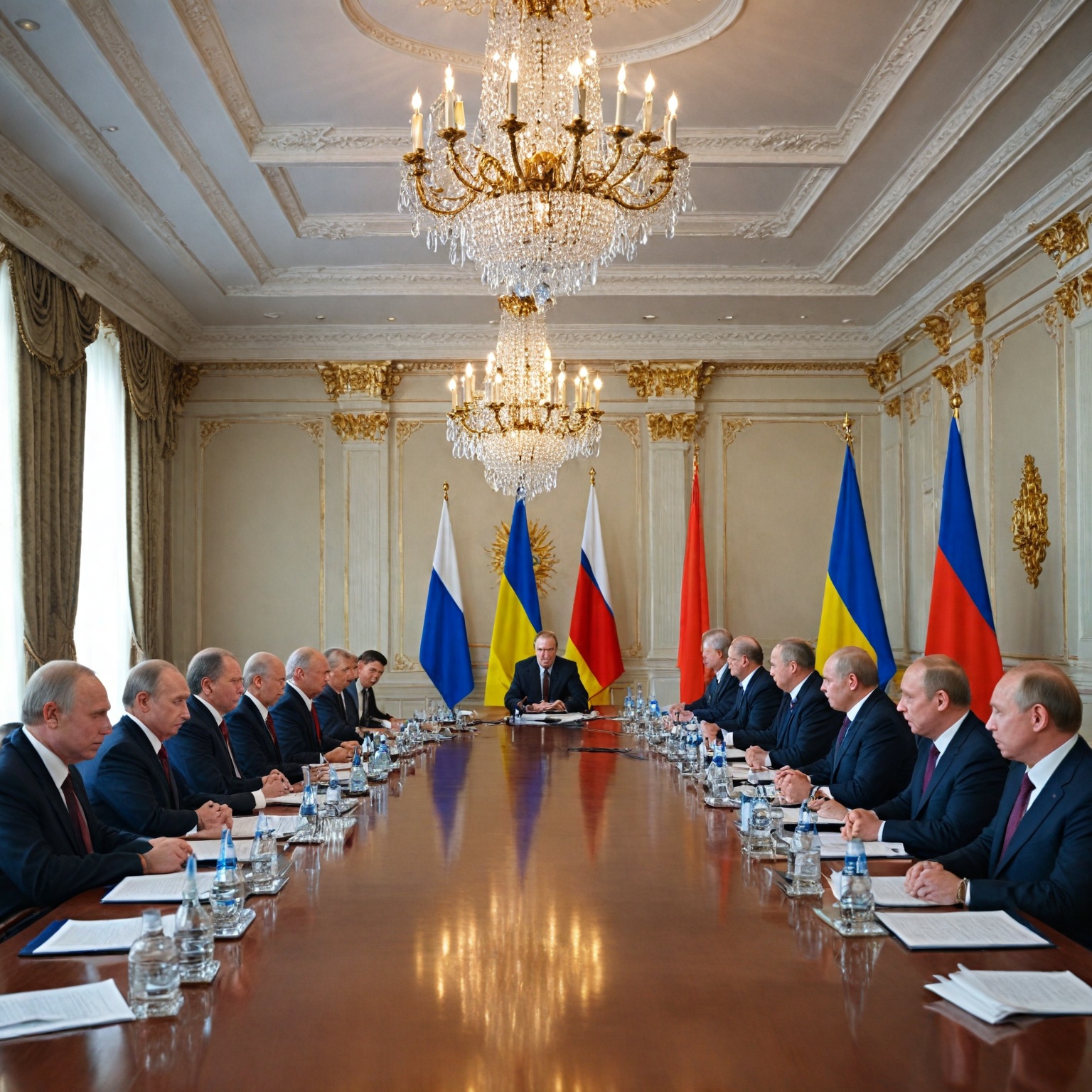
The Kremlin has warned that recent alterations made by Ukraine and European parties to the original U.S.-proposed peace plan have not improved prospects for resolving the ongoing conflict in Ukraine, signaling persistent challenges in diplomatic efforts aimed at ending hostilities. The initial 28-point U.S. peace proposal, developed through cooperation between American and Russian officials, sought to establish a comprehensive framework including a ceasefire, security guarantees, and mechanisms for monitoring compliance. However, it was widely criticized for containing provisions perceived as favorable to Russian demands, prompting Ukraine and European countries to amend the plan significantly to better safeguard Ukrainian sovereignty and territorial integrity.
European actors, notably France, Germany, and the United Kingdom, have introduced a counterproposal that removes controversial elements such as caps on Ukraine’s military size and U.S. control over frozen Russian assets, while proposing the creation of a joint security taskforce involving all parties to oversee enforcement. Ukraine has also expressed skepticism toward security guarantees modeled on NATO’s mutual defense principles, remaining firm on retaining control over its territory and rejecting permanent concessions to Russia, which continues to assert maximalist demands including constitutional annexation of occupied regions.
Despite ongoing shuttle diplomacy and multiple negotiation rounds involving U.S., European, Ukrainian, and Russian officials, the Kremlin remains critical of amendments to the original proposals, viewing them as undermining the potential for peace and complicating the diplomatic process. Kremlin spokespersons and President Vladimir Putin have underscored Russia’s desire for a settlement aligned with its core interests, while rejecting ceasefires that would merely enable Ukraine to regroup militarily. The persistence of fundamental disagreements over territorial status and security arrangements underscores the complexity of reaching a lasting agreement.
International reactions have been mixed, with European parliamentary leaders emphasizing that any peace must be grounded in international law and respect Ukraine’s sovereignty, warning against concessions to aggression. Meanwhile, Ukrainian officials continue to advocate for strong security guarantees and accountability for war crimes, reflecting broader concerns about enforceability and the sincerity of Russia’s commitments. As of mid-2025, the peace process remains fragile, marked by deep mistrust and diverging priorities that hinder the path to a negotiated resolution.
Background
In the context of ongoing conflict in Ukraine, various international actors have been engaged in efforts to negotiate a peace settlement. A notable development was the emergence of a U.S.-authored 28-point peace plan, intended as a framework for ending hostilities. This plan proposed several mechanisms, including the establishment of a joint U.S.–Ukraine–Russia working group and a Peace Council chaired by former President Donald Trump, which would have the authority to impose sanctions on violators of the agreement. The plan called for sustained support from Europe to help Ukraine build its armed forces, with a suggested peacetime size of around 800,000 troops, although this was lower than Russia’s demand for a significantly reduced Ukrainian military. Other key elements included a Russia-NATO security dialogue, a non-aggression pact involving Russia, Ukraine, and Europe, and a ceasefire monitoring and verification mechanism led by the United States with international participation to provide early warning of any future attacks.
European allies, led by France, Germany, and the United Kingdom, responded with their own counterproposal. This 28-point European plan modified several provisions to be less favorable to Russian demands, removing requirements for Ukraine to cede additional territory and eliminating the U.S. proposal to control frozen Russian assets. It also called for the creation of a joint security taskforce including the U.S., Ukraine, Russia, and European countries to oversee the enforcement of the agreement. An earlier 24-point European proposal shared similarities but differed in approach and detail.
Despite these diplomatic efforts, Ukrainian officials and European leaders have expressed skepticism and caution. Ukraine amended the U.S. plan to remove some of Russia’s maximalist demands and maintained a firm stance on preserving its sovereignty and territorial integrity. The parliamentary foreign affairs committees of 20 European countries released a joint statement emphasizing that peace must be grounded in international law and not be achieved by “yielding to the aggressor”. Ukrainian President Volodymyr Zelenskiy and his representatives have questioned the practical effectiveness of proposed security guarantees, highlighting ongoing uncertainties.
Meanwhile, Russian President Vladimir Putin has reiterated his maximalist demands and expressed confidence that military objectives could still be met if Ukraine refuses to accept Russia’s conditions. A Kremlin envoy indicated that peace talks based on the U.S. proposal were proceeding constructively, although fundamental disagreements remain.
The leak and subsequent public discourse surrounding the U.S. and European peace proposals have stirred significant debate among U.S. officials and lawmakers, with some viewing the original U.S. plan as heavily influenced by Russian positions and not a viable basis for peace. The diplomatic dynamics continue to evolve amid concerns over the sincerity and feasibility of achieving a negotiated settlement.
Modifications to the US Peace Proposals
Since mid-November 2025, diplomatic efforts to secure a peace agreement in Ukraine have intensified, with the United States and Russia reportedly collaborating on a 28-point peace plan aimed at ending the nearly four-year-long conflict. However, this original US-backed plan faced substantial criticism both internationally and within Ukraine, prompting significant amendments by Ukrainian and European officials to address concerns over territorial concessions and sovereignty.
One of the key changes involves the reduction of the original 28-point proposal to approximately 19 points, reflecting progress in negotiations and an attempt to make the plan more acceptable to Ukraine. European countries, notably France, Germany, and the United Kingdom, have proposed their own 28-point counterproposal which modifies several provisions to be less favorable to Russian demands. For example, Ukraine would not be required to cede additional territory, the cap on its armed forces would be increased from 600,000 to 800,000 personnel, and the proposal for U.S. control over frozen Russian assets was removed.
A significant sticking point remains the issue of territorial control. While the US plan hinted at a demilitarized zone along the line of contact and proposed security guarantees for Ukraine modeled on NATO’s Article 5 mutual defense clause, Ukraine has been hesitant to agree to any arrangement that implies permanent territorial concessions to Russia, especially given that Russia has annexed regions such as Kherson and Zaporizhzhia in its constitution. Ukraine’s President Volodymyr Zelensky expressed caution about the effectiveness of proposed security guarantees, questioning what concrete protections they would offer.
The European counterproposal also emphasizes the establishment of a joint security taskforce involving the U.S., Ukraine, Russia, and European actors to monitor compliance and enforcement of the agreement. This contrasts with the US proposal, which notably excluded Ukraine and NATO from the proposed working group, raising concerns about the enforceability of the peace plan.
Despite these modifications and ongoing negotiations, the Kremlin has maintained a firm stance on its maximalist demands, with President Vladimir Putin signaling confidence in achieving military objectives if Kyiv refuses to accept Moscow’s terms. The Kremlin also indicated that the revisions to the US proposals made by Europe and Ukraine have not improved prospects for peace. European parliamentary leaders have warned that a just and lasting peace must be grounded in international law and fully respect Ukraine’s sovereignty and territorial integrity, rejecting any agreements perceived as conceding to aggression.
Kremlin’s Response
The Kremlin has expressed caution and dissatisfaction regarding recent alterations made by Ukraine and European parties to the original U.S. peace proposals aimed at resolving the conflict in Ukraine. Kremlin spokesman Dmitry Peskov emphasized that while Russia appreciated the efforts of the U.S., the negotiations were ongoing at the expert level and that the Kremlin would refrain from providing continuous public commentary, as such disclosures were deemed unhelpful to the process. However, Peskov also indicated that Moscow rejected a ceasefire that would merely give Ukraine a pause to regroup, stating, “We want peace. We don’t want a truce to give Ukraine a breathing space and prepare for a continuation of the war,” underscoring Russia’s determination to achieve its goals and secure its interests through the talks.
President Vladimir Putin acknowledged receipt of the 28-point U.S. peace proposal, suggesting it could potentially serve as the foundation for a final peace settlement, but noted that the text had not yet been discussed in detail with Russia. Putin attributed the delay partly to Ukraine’s opposition to the plan, which hindered progress in negotiations. Senior Kremlin aide Yuri Ushakov elaborated that while Moscow agreed with certain aspects of the proposal, it also had criticisms and that a compromise version had not yet been reached. He underscored persistent disagreements over key issues such as territorial concessions and the nature of security guarantees from Europe, pointing out that Moscow and Kyiv, along with European allies, maintained starkly different visions for the peace settlement.
The Kremlin has been critical of amendments introduced by Ukraine and European negotiators to the original U.S. drafts, viewing them as detrimental to the chances for peace. Ushakov described these European and Ukrainian changes as unconstructive and detrimental, asserting that such modifications reduced the likelihood of reaching an agreement. He further noted that proposals for three-way talks involving Europe had not been seriously considered or developed. The Kremlin also rejected a European counter-proposal that sought to alter key points related to NATO membership and territorial status, labeling it “completely unconstructive and [not] work[ing] for us”.
Moscow perceives the evolving negotiation dynamics, including European and Ukrainian interventions, as attempts to introduce conditions unacceptable to Russia, complicating the diplomatic path forward. Despite ongoing shuttle diplomacy involving U.S. envoys such as Steve Witkoff and Jared Kushner, and meetings between U.S., European, and Ukrainian officials, the Kremlin remains firm in its stance that only a settlement aligning with Russia’s core interests can succeed. Consequently, the Kremlin maintains that recent changes to the U.S. proposals by Ukraine and its European partners have not improved, and may in fact have hindered, the prospects for a peaceful resolution to the conflict.
International Reactions
The initial U.S. peace proposal, consisting of 28 points, triggered widespread diplomatic activity and garnered mixed responses internationally. While it aimed to end the nearly four-year conflict, the proposal surprised officials in Washington and Europe and was seen by many as overly favorable to Russian demands and difficult for Ukraine to accept. Following intense negotiations between U.S. and Ukrainian officials, nine points were eventually cut to make the plan more acceptable to Kyiv.
European countries have played a significant role in shaping the peace process. French and British diplomats are managing a “Coalition of the Willing,” a group of about 30 nations pledging various levels of support for security in Ukraine. European leaders issued a joint statement announcing that the U.S. would lead a ceasefire monitoring and verification mechanism with international participation, though details about potential military intervention remained unclear. In parallel, European nations proposed their own version of the peace plan, a 24- to 28-point counterproposal considered less pro-Russian and potentially closer to a mutually agreeable framework. This European plan emphasizes a joint Security taskforce involving the U.S., Ukraine, Russia, and European countries to oversee implementation—a mechanism regarded as crucial for compliance but with unresolved coordination details concerning NATO-Russia relations and peace council functions.
Reactions from Ukraine’s frontline soldiers revealed a range of emotions, including defiance, anger, and resignation toward the original U.S. proposal, which many viewed as conceding too much to Moscow. Ukrainian officials, meanwhile, presented a separate 10-point peace plan emphasizing Ukrainian sovereignty and calling for international mediation conditioned on Russia facing war crimes accountability.
From the Russian side, official responses were cautious and noncommittal. Kremlin spokesman Dmitry Peskov acknowledged ongoing expert-level work on the peace proposals but avoided public commentary to prevent disruption of the negotiation process. President Vladimir Putin declined to specify Russia’s acceptance or rejection of any elements, describing public discussion as premature. Russia also criticized European efforts, accusing them of imposing unacceptable conditions and attempting to derail talks.
Several European parliamentary foreign affairs leaders issued a joint statement stressing that a just and lasting peace must be grounded in international law and respect Ukraine’s territorial integrity, sovereignty, and independence. They warned against yielding to the aggressor and underscored the need for firm security guarantees and economic recovery support as part of any agreement.
Implications for the Peace Process
The evolving dynamics of the peace negotiations in late 2025 have had significant implications for the prospects of ending the conflict in Ukraine. While there have been multiple rounds of talks involving U.S., European, Ukrainian, and Russian officials, the peace process remains fraught with challenges stemming from diverging priorities and contentious issues, particularly concerning Ukraine’s territorial integrity and security guarantees.
A key development has been Ukraine’s tentative willingness to compromise on NATO membership in exchange for robust security guarantees aligned with NATO’s Article 5, including the deployment of a European-led multinational force within Ukraine. However, Ukraine continues to resist ceding any territory to Russia, a major sticking point that has hindered consensus. This territorial dispute underscores the fundamental difficulty in reconciling Ukraine’s sovereignty with the Kremlin’s demands, which insist that Ukraine renounce NATO ambitions as a precondition for peace.
The U.S.-drafted 28-point peace plan, initially proposed by Special Envoy Steve Witkoff and Russian counterpart Kirill Dmitriev, aimed to establish a ceasefire and a comprehensive framework for de-escalation, including a subsequent Russia-NATO dialogue to address broader security concerns. However, subsequent revisions, which reduced the plan to 19 points, involved cutting several provisions and adjusting terms to accommodate Ukrainian and European concerns, notably removing clauses perceived as overly favorable to Russia, such as caps on Ukrainian armed forces and U.S. control over frozen Russian assets. These alterations, while intended to make the proposal more palatable, were criticized by the Kremlin as detrimental to the possibility of long-term peace.
The differing approaches to the peace plan by European actors have further complicated the process. France, Germany, and the United Kingdom presented a 28-point counterproposal that softened some of the original terms, reflecting European efforts to balance the security interests of Ukraine with the realities of negotiating with Russia. This includes establishing a joint security taskforce comprising the U.S., Ukraine, Russia, and European nations to oversee compliance—a move seen as necessary but complex given overlapping mandates with other proposed mechanisms such as the peace council chaired by former President Donald Trump. The Kremlin’s hesitation and insistence on further negotiations signal the depth of unresolved issues and skepticism about Western-led proposals.
Meanwhile, Ukrainian President Volodymyr Zelenskyy has expressed cautious optimism about finalizing a peace agreement, emphasizing the necessity for security guarantees that effectively protect Ukraine’s interests. Nonetheless, uncertainty remains over the practical enforcement of these guarantees and the extent to which they can deter further Russian aggression.
The content is provided by Avery Redwood, 11 Minute Read


