
Summary
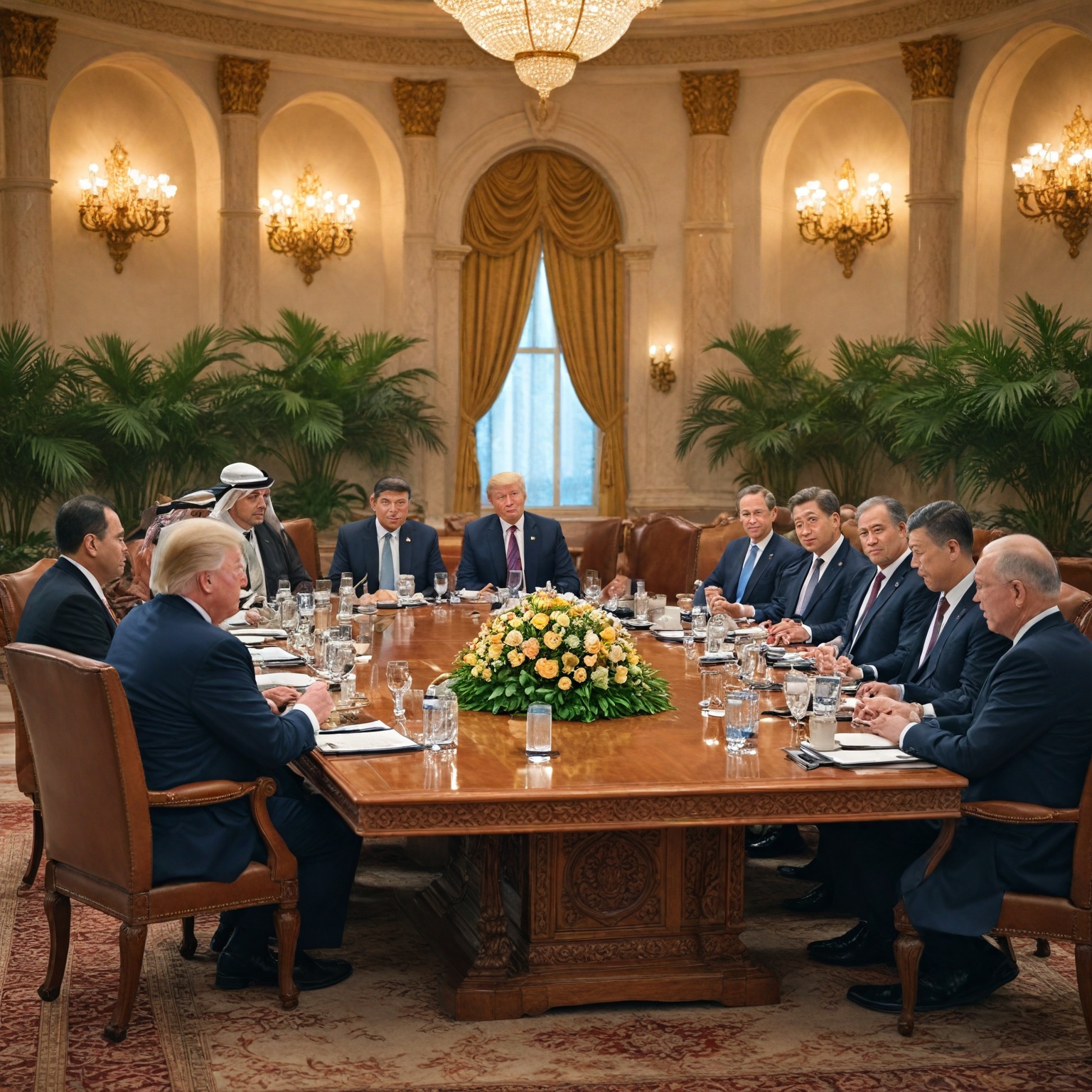
Tim Cook’s decision to decline an invitation from the White House to join former President Donald Trump’s high-profile 2024 Middle East trip attracted significant attention and commentary. The trip, which included visits to Saudi Arabia, the United Arab Emirates, and Qatar, aimed to strengthen U.S. diplomatic and economic ties in the region by blending political engagement with business outreach. Over 60 top executives from major corporations participated, including NVIDIA CEO Jensen Huang, whose presence contrasted with Cook’s notable absence.
The invitation extended to Tim Cook was part of the White House’s broader strategy to include influential business leaders in international diplomatic efforts, reflecting the growing role of technology and industry in shaping global economic partnerships. Cook’s decision to decline was made against a backdrop of complex interactions between government officials and tech executives, including prior meetings at the White House concerning cybersecurity and privacy issues. While Apple did not publicly elaborate on the rationale behind Cook’s choice, the refusal sparked discussions about the interplay between corporate discretion, political considerations, and diplomatic protocol.
In contrast, Jensen Huang’s participation highlighted the increasing importance of semiconductor and artificial intelligence sectors in U.S.-Middle East relations. Huang’s engagement at key events, such as the Royal Court of Saudi Arabia gathering, underscored Saudi Arabia’s ambitions to invest in cutting-edge technologies and foster strategic economic ties through partnerships with leading U.S. tech firms. His attendance was publicly praised by Trump, exemplifying how business leadership can intersect with diplomatic missions in contemporary international relations.
The differing responses of Cook and Huang to the White House invitation reflect broader tensions and considerations faced by business leaders navigating the intersection of politics, diplomacy, and corporate strategy. The episode illustrates evolving dynamics in summit diplomacy, where personal choices by prominent executives carry symbolic weight and influence perceptions of U.S. engagement abroad.
Background
In early 2024, U.S. President Donald Trump planned a high-profile trip to the Middle East, including stops in Saudi Arabia, the United Arab Emirates, and Qatar. The visit was designed to blend diplomacy with business engagement, featuring over 60 CEOs and top executives from major companies attending events such as the Royal Court of Saudi Arabia gathering. The trip aimed to strengthen U.S. ties with key regional partners and address ongoing geopolitical concerns, building on Trump’s previous 2017 visit that rallied majority-Muslim countries against extremism.
Among the invited business leaders was Apple CEO Tim Cook, who notably chose not to join the delegation. According to The New York Times, this decision upset President Trump, who publicly commented on Cook’s absence during the trip. In contrast, NVIDIA CEO Jensen Huang attended the visit and was recognized for his approachable and engaging demeanor, which stood out among executives and contributed to NVIDIA’s industry success. Huang appeared alongside Cook and other prominent figures, including Japanese billionaire Masayoshi Son and representatives from various major corporations, at meetings related to the trip.
Separately, Tim Cook was seen entering the White House for a brief meeting with President Trump shortly before the trip. The meeting reportedly involved discussions around cybersecurity and encryption, with Cook maintaining a firm stance on backdoor access to Apple devices during talks with the FBI and other officials. This context of complex interactions between government and tech leaders underscores the significance of Cook’s subsequent decision to decline the Middle East invitation.
White House Invitation Context
The White House has a history of inviting prominent leaders from various sectors, including technology and business, to participate in official events. For example, during Prime Minister Narendra Modi’s visit to Washington, the White House hosted a dinner with leaders from across the tech and business industries, underscoring the administration’s effort to strengthen ties with India. Invitations to such events, including those extended to sports teams or business figures, are typically accepted or declined based on the discretion of the invitees and their leadership, as seen in the case of the Philadelphia Eagles accepting a White House invitation.
Press briefings by White House officials emphasize the diversity of attendees invited to events, including state dinners, highlighting the intent to bring together individuals from different political affiliations and sectors. Additionally, historical instances illustrate the use of creative protocol measures to accommodate significant international events, such as the attendance of world leaders at Japan’s Emperor Hirohito’s funeral, which was marked by the U.S. president’s participation.
Within this broader context, decisions by tech executives like Tim Cook to accept or decline White House invitations during politically sensitive trips, such as those to the Middle East, occur amid these complex diplomatic and strategic considerations. The backdrop of such invitations reflects the administration’s efforts to engage diverse leaders while navigating the nuanced protocols that accompany international and domestic political events.
Tim Cook and the White House Invitation
In the lead-up to President Donald Trump’s trip to the Middle East, the White House extended invitations to several prominent business leaders to accompany him, including Apple CEO Tim Cook. Despite being invited, Cook ultimately chose not to join the delegation, as reported by The New York Times. This decision stood out given the presence of other influential figures such as James Murdoch, who accepted the invitation.
Prior to this, Cook was observed entering the White House for a separate meeting, which he described only as a “great meeting” with the President, without providing further details to the media. Apple declined to comment specifically on the decision regarding the Middle East trip invitation.
The choice to accept or decline invitations from the White House is a personal one, guided by individual discretion rather than obligation. Historical precedent confirms that such invitations are not mandates but rather courtesies extended to guests, underscoring that citizens have full autonomy in their responses. The White House itself refrained from commenting on individual cases but emphasized that the current administration under President Biden has pursued a notably pro-competition stance in recent decades.
Cook’s decision to decline the invitation occurred within a broader context of uncertainty in the global economy, highlighted by other CEOs voicing concerns related to trade tensions during the Trump administration. This environment may have influenced the perspectives of business leaders regarding engagement with political events tied to trade policy.
Jensen Huang’s Involvement in the Middle East Trip
Jensen Huang, the CEO of Nvidia, played a prominent role during former President Donald Trump’s Middle East trip, particularly at the early stop in Saudi Arabia. Huang was among at least 19 top CEOs who attended a significant gathering at the Royal Court of Saudi Arabia, where major business and diplomatic leaders convened. His presence alongside other tech titans, including OpenAI’s Sam Altman, underscored the trip’s focus on semiconductors and artificial intelligence, areas critical to future technological and economic cooperation between the United States and Middle Eastern countries.
During Trump’s speech in Riyadh, the former president explicitly praised Huang for traveling with the White House delegation, highlighting Nvidia’s strategic importance and his personal acknowledgment of Huang’s involvement in the trip. Huang’s participation exemplified the blending of business and diplomacy that characterized the visit, reflecting broader trends in international summitry where corporate leaders increasingly accompany political delegations to advance economic interests.
Huang’s presence in the Middle East also aligned with Saudi Arabia’s ambitions, led by Crown Prince Mohammed bin Salman, to leverage investments in cutting-edge technologies. The Saudi Public Investment Fund (PIF) has invested billions in U.S. tech companies, and the inclusion of key industry figures like Huang was seen as a way to deepen these economic ties during the visit.
Diplomatic Protocols and the Role of Tech Leaders in International Summits
Diplomatic protocols concerning permanent diplomatic missions between states have long been well established, with clearly defined procedures guiding interactions among state representatives. However, the domain witnessing the most notable innovations is the conduct of meetings between heads of state and government leaders. Historically, such personal meetings were infrequent prior to the nineteenth century due to the logistical challenges of travel and communication. Advances in technology and transportation over the last century have facilitated a significant increase in summit diplomacy, especially since the 1960s, enabling more frequent and high-profile face-to-face engagements among global leaders.
In recent years, international summits have increasingly incorporated influential figures from the technology sector, reflecting the growing intersection of global diplomacy with economic and technological leadership. During President Trump’s Middle East trip, numerous top CEOs, including OpenAI’s Sam Altman and Nvidia’s Jensen Huang, attended key diplomatic events such as the Royal Court of Saudi Arabia meeting, where at least 19 major corporate leaders were present. This blending of business and diplomacy underscores a shift towards recognizing the strategic importance of technology companies in shaping international relations and economic partnerships.
The presence of tech executives at such summits signals the importance of innovation and technology-driven economic growth in diplomatic agendas, while also providing opportunities for leaders to discuss investment and cooperation with global business figures. Saudi Arabia’s Public Investment Fund, for example, has made significant investments in US technology and transportation companies, aiming to leverage these partnerships for regional economic transformation. The participation of tech leaders like Jensen Huang not only highlights the expanding influence of technology in diplomacy but also facilitates bilateral and multilateral dialogues beyond traditional political frameworks.
Moreover, engagements by technology leaders extend beyond formal summits to include more informal interactions, such as dinners and meetings with industry counterparts in host countries. For example, Nvidia’s CEO Jensen Huang’s dinner with executives in Taiwan, which included key players from companies like TSMC and MediaTek, exemplifies how tech leaders use diplomatic trips to foster industry collaborations and media engagement. These activities complement official diplomatic efforts by strengthening business ties and promoting technological exchange at an international level.
Public and Political Reactions
The decision by Apple CEO Tim Cook to decline a White House invitation during President Trump’s Middle East trip generated varied reactions across political and public spheres. Some viewed Cook’s choice as a personal exercise of liberty, akin to past instances where prominent figures have opted out of official ceremonies. For example, Boston Bruins goalie Tim Thomas previously declined a White House ceremony honoring his team’s Stanley Cup victory, citing concerns over government overreach and emphasizing his right to accept or decline invitations freely, independent of political affiliation.
From the White House perspective, invitations to events, including state dinners, have typically featured a diverse range of attendees spanning business, sports, politics, and entertainment. Press Secretary Jean-Pierre noted that the administration strives to invite individuals representing different viewpoints and backgrounds, underscoring President Biden’s record as a broadly pro-competition leader. The inclusion of high-profile executives such as Amazon’s Jeff Bezos and Apple’s Tim Cook at previous events was notable, particularly given ongoing federal legal actions involving these companies, reflecting the administration’s intent to maintain open engagement despite legal complexities.
Industry reactions also highlighted the diplomatic and economic dimensions surrounding such invitations. NVIDIA CEO Jensen Huang’s concurrent engagements in Taiwan—where he met with leading local tech executives and media—contrasted with Cook’s decision, showcasing a strategic focus on global economic relations beyond formal U.S. government events. Furthermore, other CEOs have expressed concerns about the broader economic climate, such as BlackRock CEO Larry Fink’s remarks on trade uncertainties impacting Western investors amid ongoing trade tensions.
Implications of Attendance Decisions
Decisions regarding whether to accept invitations to the White House carry multiple implications, both symbolic and practical. In a democratic society such as the United States, citizens—including prominent figures like Tim Cook—have the right to accept or decline invitations without the need to publicly justify their choices. This principle extends to business leaders and sports figures alike, who weigh the personal, political, and corporate considerations involved.
Attendance at high-profile White House events often serves as a signal of alignment or endorsement of the administration’s policies. For instance, the presence of key industry leaders such as Amazon CEO Jeff Bezos and Apple CEO Tim Cook at state dinners highlights an intersection of business and government, especially amid ongoing legal and regulatory scrutiny faced by these corporations. Such participation can foster direct dialogue on topics of mutual interest, including U.S. manufacturing and supply chain issues—a relevant example being the assembly of the Mac Pro in Texas and discussions on domestic production.
Conversely, choosing not to attend can be interpreted as a subtle statement or a refusal to engage in perceived political theatrics. For example, Thomas’s choice not to attend a White House event, despite having the opportunity, underscores the autonomy of individuals to distance themselves without necessarily making a political declaration. Moreover, in contexts where business dealings overlap with political responsibilities, attendance decisions become even more complex. Critics of former President Trump’s international trips noted how intertwined business interests and official duties appeared, raising ethical concerns that colored perceptions of event attendance.
In the realm of international diplomacy and protocol, creative approaches to attendance are sometimes employed to respect cultural and political sensitivities, as seen in global events like the funeral of Japan’s Emperor Hirohito, which drew worldwide leaders including the U.S. president. This underscores how attendance decisions can have broader diplomatic implications beyond domestic considerations.
Finally, attendance or absence at these events can also reflect the shifting dynamics within key industries. Jensen Huang’s remarks about TSMC’s burgeoning role in the AI supply chain, and the engagement of Middle Eastern firms as partners, exemplify how strategic business developments influence and are influenced by political engagement and event participation. Thus, attendance decisions are multifaceted, encompassing personal choice, corporate strategy, political messaging, and international diplomacy.
Subsequent Developments and Legacy
The meeting between Jensen Huang and former President Donald Trump marked a significant moment in U.S.-Taiwan tech relations, occurring shortly after Trump began his second term. This gathering was notable not only for its timing but also for the high-profile presence of industry leaders, including Apple CEO Tim Cook, Amazon founder Jeff Bezos, Google CEO Sundar Pichai, Meta CEO Mark Zuckerberg, and OpenAI CEO Sam Altman at Trump’s inauguration, highlighting the intersection of politics and technology at the highest level. Huang and Trump’s discussions reportedly centered on expanding investments in U.S. chip production, particularly in light of the Commerce Department’s efforts to revise the CHIPS Act, which had previously subsidized major players like Intel and Taiwan Semiconductor Manufacturing Co..
Simultaneously, Jensen Huang’s activities in Taiwan, particularly around the Computex 2025 event, underscored the strategic planning and collaboration between NVIDIA and Taiwanese partners to chart future industry directions. This event was seen as a critical juncture for forming long-term strategies within the semiconductor sector. The participation of other prominent figures such as Japanese billionaire Masayoshi Son and representatives from global companies like Johnson & Johnson and Pratt Factories further illustrated the broad international interest and investment in technological innovation centered in Taiwan.
Additionally, the summit featured other leading technology executives such as OpenAI CEO Sam Altman, reinforcing the role of tech leaders in shaping international diplomatic and economic agendas. Elon Musk’s prominent involvement in Trump’s first overseas trip underscored his ongoing influence within the administration, raising questions about his role in government initiatives like the Department of Government Efficiency (Doge), which was scheduled for sunset shortly thereafter.
These developments reflect the evolving nature of summit diplomacy in the tech era, where personal meetings between leaders and industry titans have become increasingly frequent and strategically significant. The rise of such summitry since the 1960s parallels technological advancements that have made high-level meetings more feasible and impactful, reinforcing the critical role of direct dialogue in international relations and economic collaboration.
The content is provided by Sierra Knightley, 11 Minute Read


