
Summary
The United Nations General Assembly’s strong endorsement of the two-state solution in September 2025 marked a significant milestone in international efforts to resolve the long-standing Israeli-Palestinian conflict. Through the adoption of the “New York Declaration,” supported by 142 member states, the Assembly reaffirmed the vision of establishing two sovereign states—Israel and Palestine—living side by side in peace and security. The resolution called for tangible, time-bound actions including an immediate ceasefire in Gaza, disarmament of Hamas, normalization of relations between Israel and Arab countries, and the deployment of an international stabilization mission to protect civilians and monitor security arrangements.
The two-state solution has been a central framework for peace since the mid-20th century, tracing its origins to the United Nations Partition Plan of 1947 and subsequent diplomatic initiatives such as the Arab Peace Initiative and the Quartet’s Roadmap for Peace. Despite decades of conflict, intermittent violence, and political disagreements, the international community continues to view this approach as the most viable path to a just and lasting peace in the Middle East. The 2025 resolution reflects renewed multilateral commitment, including a global alliance co-chaired by Saudi Arabia and Norway, aimed at advancing negotiations and practical steps toward Palestinian statehood.
However, the resolution and its associated diplomatic efforts have generated considerable controversy. Israel and the United States opposed the declaration, criticizing it as one-sided and counterproductive to direct negotiations, with concerns that it could empower Hamas and undermine Israeli security and demographic interests. Israeli Prime Minister Benjamin Netanyahu publicly rejected the premise of a Palestinian state, while some former Israeli leaders expressed conditional support for the two-state framework. Additionally, the resolution’s endorsement of contentious issues such as the Palestinian “right of return” has sparked debate over its implications for Israel’s identity and security.
Public opinion remains deeply divided, particularly within Israel, where skepticism toward foreign mediation coexists with significant support for U.S. involvement and varied attitudes toward coexistence with a Palestinian state. The Assembly’s resolution also emphasized urgent humanitarian concerns, including calls for a Gaza ceasefire and facilitation of aid, linking peace efforts to immediate relief for civilians. Overall, the 2025 endorsement underscores the complex interplay of international diplomacy, regional politics, and societal divisions that continue to shape the prospects for peace between Israel and Palestine.
Background
The two-state solution is a longstanding proposed framework aimed at resolving the Israeli-Palestinian conflict by establishing two sovereign states: Israel for the Jewish people and Palestine for the Palestinian people, composed primarily of the West Bank and Gaza Strip. This concept traces its origins to the mid-20th century, notably with the United Nations General Assembly’s adoption of Resolution 181 in 1947, which recommended partitioning the British Mandate of Palestine into independent Arab and Jewish states, alongside an internationally administered Jerusalem. While the Jewish community largely accepted the plan as a legal basis for establishing Israel, the Arab community rejected it, leading to the outbreak of the 1948 Arab–Israeli War. As a consequence, the State of Israel was established on the territory allocated to the Jewish state as well as parts of the proposed Arab state.
Throughout the decades, various international efforts have sought to advance the two-state solution. In 2002, the UN Security Council reaffirmed the vision of two states living side by side in peace, which was followed by the Arab League’s adoption of the Arab Peace Initiative the same year and the Quartet’s 2003 Road Map for peace. That year also saw the unofficial Geneva Accord, negotiated by prominent Israeli and Palestinian figures, further outlining potential pathways to a two-state resolution. These initiatives highlight the international community’s continuing engagement with the two-state framework as the foundation for a just and lasting peace.
The conflict has remained marked by violence and political disputes, including Hamas’s control over Gaza and the ongoing debates surrounding Palestinian statehood and Israeli security. Within the international arena, positions on the two-state solution have varied. Some countries, such as Australia, have experienced shifts in policy toward more balanced stances over time, reflecting evolving domestic and diplomatic considerations. Meanwhile, the United States has often framed support for the two-state solution alongside concerns over security and counterterrorism efforts.
In recent years, the United Nations General Assembly has reaffirmed the two-state solution as the only viable path to lasting peace in the Middle East, emphasizing the need for tangible, time-bound steps toward this goal and urging ceasefires and humanitarian access in Gaza. Despite these efforts, disagreements persist regarding the role of various actors, including Hamas, and the practical implementation of peace agreements. Nonetheless, the two-state solution remains the central focus of international diplomacy aimed at resolving the Israeli-Palestinian conflict.
UN General Assembly Resolution Endorsing Two-State Solution
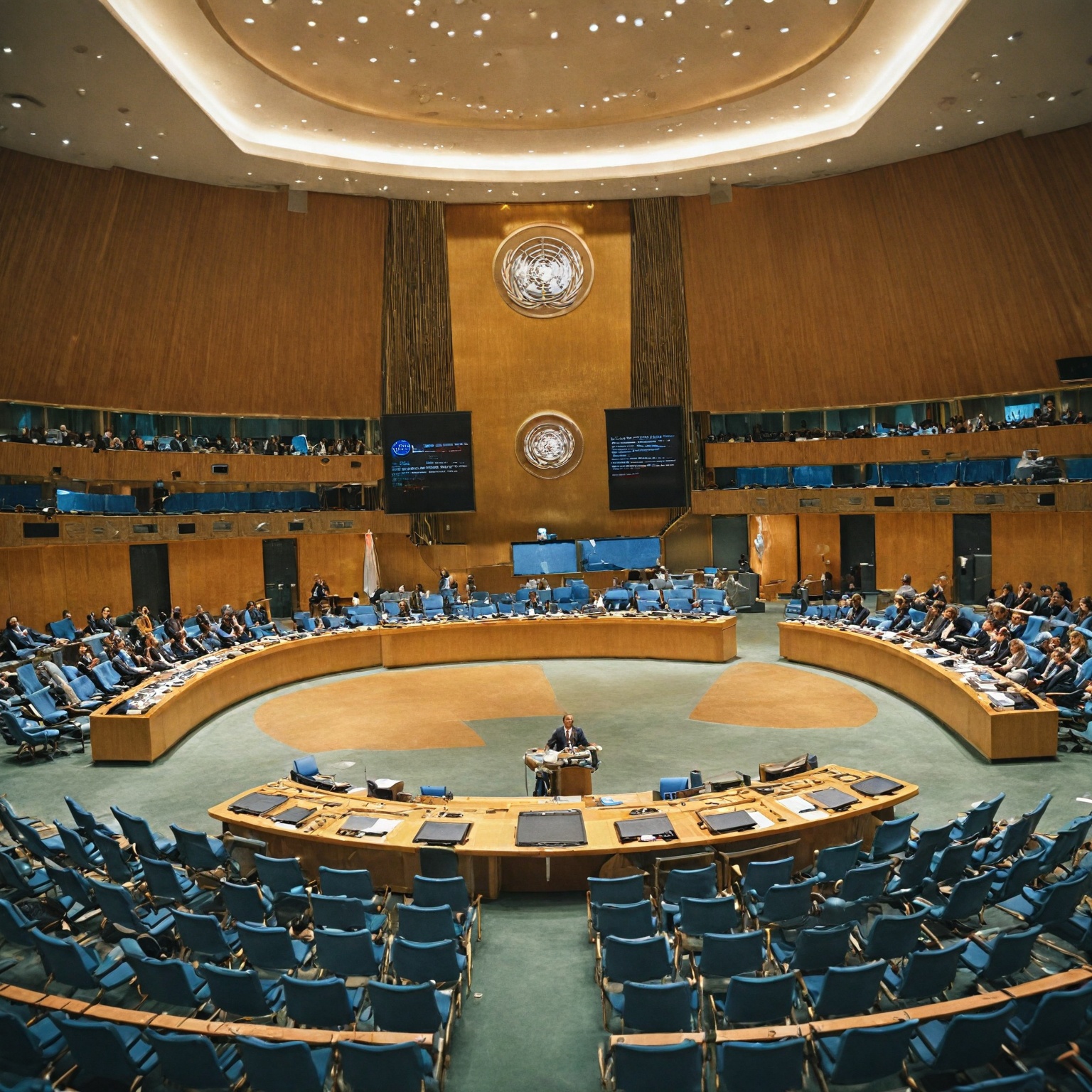
In September 2025, the United Nations General Assembly overwhelmingly adopted a landmark resolution known as the “New York Declaration,” which strongly endorses the revival and implementation of a two-state solution to resolve the Israeli-Palestinian conflict. The resolution was supported by 142 member states, with 10 voting against—including Israel and the United States—and 12 abstentions. It followed an international conference held in July 2025 at UN Headquarters, co-chaired by France and Saudi Arabia, where the declaration was initially approved.
The New York Declaration outlines “tangible, timebound, and irreversible steps” aimed at achieving a peaceful settlement and the establishment of an independent, sovereign, economically viable, and democratic Palestinian state living side by side in peace and security with Israel. It calls for collective action to end the war in Gaza, the disarmament of Hamas, exclusion of Hamas from governance in Gaza, normalization of relations between Israel and Arab countries, and collective security guarantees for both parties. The resolution also supports the deployment of a temporary international stabilization mission under UN auspices to protect Palestinian civilians, support the transfer of security responsibilities to the Palestinian Authority, and monitor ceasefires and future peace agreements.
The resolution garnered significant applause in the General Assembly Hall and was described by many delegates as a long-overdue step toward peace. South Africa’s delegate emphasized the importance of the declaration amid statements from Israeli Prime Minister Benjamin Netanyahu rejecting the possibility of a Palestinian state, which many saw as undermining peace prospects. The Assembly reiterated that the two-state solution remains the “only path to lasting peace” in the Middle East and underscored the urgency of a Gaza ceasefire and the facilitation of humanitarian aid to the enclave ahead of winter.
Despite broad international support, the United States expressed strong opposition to the New York Declaration, describing it as a “misguided and ill-timed publicity stunt” that could undermine serious diplomatic efforts to end the conflict. Israel also condemned the resolution as “disgraceful,” continuing its military operations in Gaza. Nevertheless, ongoing diplomatic efforts include a global alliance launched in late 2024, co-chaired by Saudi Arabia and Norway, to promote the two-state solution through coordinated international engagement.
Reactions and Responses
The United Nations General Assembly’s overwhelming endorsement of the declaration outlining “tangible, time-bound, and irreversible steps” towards a two-state solution between Israel and the Palestinians sparked a wide array of reactions from different stakeholders.
Supportive Reactions
The resolution received strong backing from many countries, including all Gulf Arab states and 142 member states voting in favor. The declaration, which emerged from an international conference hosted by France and Saudi Arabia in July 2025, was praised for advancing a comprehensive roadmap that calls for an immediate ceasefire in Gaza, the release of hostages, disarmament of Hamas, normalization between Israel and Arab countries, and collective security guarantees. The endorsement was welcomed as a significant step toward achieving a just, lasting, and secure peace in the Middle East, with expectations that it would build momentum ahead of a UN summit co-chaired by Riyadh and Paris scheduled for later that month.
Criticism and Opposition
Conversely, the resolution faced strong criticism from Israel and the United States, both of which voted against it alongside several other countries such as Argentina, Hungary, and Micronesia. Israeli officials, including Ambassador Danny Danon, condemned the declaration as “one-sided” and dismissed it as a hollow gesture that would undermine the credibility of the UN General Assembly. Danon argued that the resolution effectively rewards Hamas and claimed it would be exploited by the group to declare the resolution “the fruit of 7 October,” referring to the date of a deadly attack by Hamas.
The United States labeled the vote as a “misguided and ill-timed publicity stunt” that would hinder serious diplomatic efforts to end the conflict, with U.S. diplomat Morgan Ortagus describing the resolution as “a gift to Hamas”. Israel’s opposition was further underscored by Prime Minister Benjamin Netanyahu’s statement hours before the vote declaring, “there will be no Palestinian state,” coupled with the announcement of expanded settlements in the West Bank that Palestinians claim as part of their future state.
Concerns Over Key Provisions
One of the contentious elements in the declaration was its continued endorsement of the so-called “right of return,” which critics argue could threaten Israel’s status as a Jewish state by altering demographic realities. This aspect contributed to the perception among Israeli officials that the resolution undermined Israel’s security and political legitimacy.
Calls for Reparations and Further Action
Beyond the vote itself, the General Assembly highlighted the necessity for establishing an international mechanism to address reparations related to damages caused by Israeli actions. The resolution also called for creating an international register of damages and convening a conference within the Assembly’s current session to advance the implementation of UN resolutions concerning Palestine and the two-state solution.
Public Opinion and Societal Impact
Public opinion in Israel regarding the two-state solution and lasting peace with the Palestinians remains deeply divided and complex. According to a Pew Research Center survey conducted between February and March 2025 among a nationally representative sample of 998 Israeli adults, Israelis exhibit considerable skepticism toward foreign involvement in peace efforts, viewing most international actors and the United Nations as more harmful than helpful, with the notable exception of the United States, which 81% of Israelis regard positively in this context. The same survey explored attitudes toward the feasibility of peaceful coexistence alongside an independent Palestinian state and revealed mixed views on the prospects of such a solution.
Political orientation within Israeli society significantly influences support for the two-state solution. A November 2023 survey by the Israel Democracy Institute found that among Jewish Israelis, 75% on the political Left supported progress toward a two-state solution in exchange for American assistance, compared with 45% in the Center and only 21% on the Right. Former Israeli prime ministers Ehud Barak and Ehud Olmert publicly expressed support for the two-state framework in late 2023, reflecting some political leadership backing despite divided public sentiment.
The United Nations General Assembly’s overwhelming endorsement of a resolution to revive the two-state solution in September 2025 elicited strong reactions within Israeli society. Israeli officials sharply criticized the vote as a “political circus” detached from reality, particularly due to the resolution’s failure to label Hamas a terrorist organization—a stance seen as disregarding the October 7, 2023 Hamas attacks that killed over 1,200 people and took hostages.
The societal impact of these developments is reflected in the deepening divides within Israeli society regarding peace and security. While some segments of the population endorse international diplomatic efforts and a negotiated two-state solution, others remain distrustful of both Palestinian leadership and international involvement, citing security concerns and skepticism about the feasibility of peace. This polarization underscores the challenges facing efforts to achieve lasting peace and the complex interplay between domestic opinion and international diplomacy.
Impact and Significance
The endorsement of the two-state solution by the United Nations General Assembly has had profound implications for the ongoing Israeli-Palestinian conflict and the broader Middle East peace process. By adopting multiple resolutions affirming that a two-state solution remains the “only path to lasting peace,” the Assembly has reinforced international consensus on the necessity of establishing an independent, sovereign Palestinian state alongside Israel to achieve a just and comprehensive peace in the region.
One significant impact of this endorsement is the formal call for the establishment of an international mechanism for reparations to address damages caused by Israeli actions. This includes the creation of an international register to document evidence and claims related to the conflict, thereby ensuring accountability and providing a framework for addressing grievances. Additionally, the Assembly’s decision to convene an international conference during its session aims to facilitate the implementation of UN resolutions pertaining to Palestine, further advancing diplomatic efforts toward peace.
The adoption of the draft decision titled “Endorsement of the New York Declaration on the Peaceful Settlement of the Question of Palestine and the Implementation of the Two-State Solution” with overwhelming support (142 in favor, 10 against, and 12 abstentions) reflects a broad international commitment, despite some notable opposition from countries such as Israel and the United States. This broad support underscores the global community’s recognition of the two-state framework as essential for ending the cycle of violence and fostering regional stability.
The resolution’s impact extends beyond formal declarations, influencing regional and international diplomatic initiatives. For example, a global alliance involving about 90 countries was launched to promote the two-state solution, with meetings held in Riyadh, Brussels, and Oslo, and strong backing from major powers like the G7, which emphasized the need for a just and secure peace enabling both Israelis and Palestinians to coexist. Such coalitions enhance coordinated diplomatic efforts and demonstrate growing multilateral resolve to resolve the conflict.
Public opinion, particularly within Israel, reflects complex attitudes towards the peace process. Surveys indicate skepticism among Israelis regarding foreign involvement in peace facilitation, though there remains significant support for the United States’ role. Furthermore, while only a minority of Jewish Israelis believe peaceful coexistence with an independent Palestinian state is possible, a higher proportion of Arab Israelis express optimism about a two-state solution. These perspectives highlight the societal challenges that the international community’s resolutions seek to address.
The Assembly’s emphasis on urgent humanitarian concerns, such as calls for a Gaza ceasefire and ensuring food and aid deliveries, particularly in anticipation of harsh winter conditions, reinforces the connection between peace efforts and immediate humanitarian relief. The resolutions explicitly link the cessation of violence, the release of hostages, and the end of occupation with the broader goal of mutual recognition and cooperation among regional peoples and countries, thereby framing peace as contingent upon tangible actions on the ground.
Criticism and Controversies
The United States has been a prominent critic of the UN General Assembly resolution endorsing the two-state solution, characterizing it as a “misguided and ill-timed publicity stunt” that undermines serious diplomatic efforts to end the Israeli-Palestinian conflict. U.S. representatives argued that the resolution does not facilitate direct negotiations between Israelis and Palestinians and instead perpetuates long-standing divisions at a time when cooperation is urgently needed. Furthermore, the U.S. delegation expressed concerns that the resolution effectively serves as a “gift to Hamas” by indirectly endorsing demands such as the so-called right of return, which they claim could threaten Israel’s demographic future. The United States also opposed the New York Declaration and related initiatives tied to the peace process.
Israel, closely allied with the United States, similarly rejected the resolution. Israeli officials, including Ambassador Danny Danon, described it as a one-sided gesture lacking serious commitment to peace and benefiting Hamas, which they identified as the principal beneficiary of the resolution’s endorsement. Long-serving Prime Minister Benjamin Netanyahu explicitly opposed the establishment of a Palestinian state, underscoring internal divisions within Israeli leadership; however, some former Israeli prime ministers, such as Ehud Barak and Ehud Olmert, have expressed support for a two-state solution.
Critics from other quarters also voiced reservations about the resolution. The Russian Federation emphasized the importance of the resolution amid escalating tensions but lamented that it represented “less than what we could and must do,” pointing to the Security Council’s inability to act due to Western opposition. Some delegates cautioned that certain language within the resolution could blur distinctions between Israeli actions and Palestinian suffering, potentially equating aggressor and victim.
On the other hand, some member states condemned actions perceived as undermining international law and peace efforts. Venezuela, representing the Group of Friends in Defense of the UN Charter, condemned the
Follow-Up and Subsequent Developments
Following the strong endorsement of the two-state solution by the United Nations General Assembly, several key initiatives and international responses have shaped the ongoing diplomatic efforts aimed at resolving the Israeli-Palestinian conflict. In late 2024, a global alliance was launched to actively pursue the establishment of a Palestinian state alongside Israel, co-chaired by Saudi Arabia and Norway. This alliance convened multiple meetings in Riyadh, Brussels, and Oslo throughout late 2024 and early 2025, reflecting sustained international commitment to achieving a just, lasting, and secure peace through a two-state framework.
The New York Declaration, resulting from a high-level international conference held under the joint chairmanship of Saudi Arabia and France, emphasized collective action to end the war in Gaza, ensure Israel’s withdrawal, and facilitate the transfer of control to the Palestinian Authority based on the principle of “one government, one law, one gun.” It also called for the deployment of a temporary international stabilization mission under U.N. auspices to protect Palestinian civilians, support the transfer of internal security responsibilities, and provide security guarantees for both Israel and Palestine, including ceasefire monitoring and oversight of any future peace agreements.
Despite broad support, the resolution and associated declarations met with significant opposition from Israel, the United States, and a handful of other countries. The U.S. criticized the declaration as a “misguided, ill-timed publicity stunt” that undermines diplomatic efforts and accused it of emboldening Hamas by endorsing contentious issues such as the right of return, which it claims threatens Israel’s demographic balance. Meanwhile, Palestinian representatives regarded the decisions as affirmations of peace and sovereignty.
In addition to security and governance measures, the General Assembly highlighted the need for an international mechanism for reparations to address damages resulting from the conflict. It called for creating an international register to document losses and injuries and planned to convene an international conference to implement relevant U.N. resolutions aimed at achieving comprehensive peace in the Middle East.
The United Nations Secretary-General and other officials underscored the urgency of immediate ceasefire efforts and the restoration of peace, reaffirming that the two-state solution remains the only viable path forward. Concerns were raised over recent Israeli leadership statements rejecting the two-state framework, emphasizing the need for strong, coordinated actions by the Security Council and the international community to halt hostilities and support the peace process.
The content is provided by Jordan Fields, 11 Minute Read


