
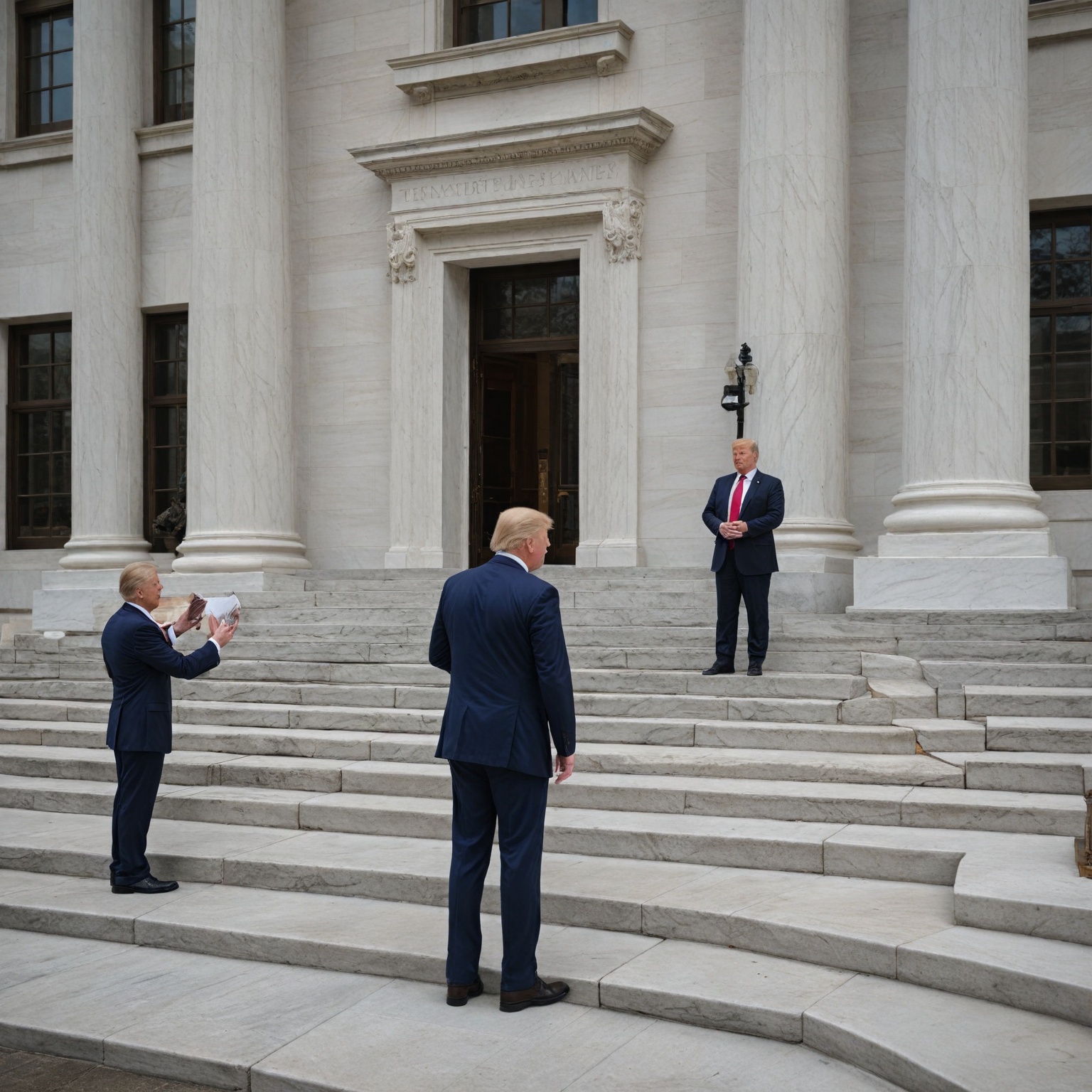
Summary
President Donald Trump’s upcoming visit to the Federal Reserve headquarters in Washington, D.C., marks a rare and significant escalation in his ongoing conflict with Federal Reserve Chair Jerome Powell. It is the first official presidential visit to the central bank in nearly two decades, highlighting the unusual political tension between the White House and the Fed’s leadership. The visit comes amid Trump’s persistent public criticism of Powell’s reluctance to lower interest rates, a stance the president views as detrimental to his economic agenda. Trump has even threatened to dismiss Powell, signaling a direct challenge to the Fed’s long-standing independence in monetary policymaking.
The dispute extends beyond monetary policy to include scrutiny of the Federal Reserve’s costly $2.5 billion renovation project at its historic Washington buildings. The Trump administration has criticized the project’s expenses, prompting calls for investigations, while the Fed has responded with detailed public communications defending the renovations and emphasizing their necessity for security and safety upgrades. The president’s planned tour of the construction site alongside his visit to the Fed underscores the multifaceted nature of the conflict between the executive branch and the central bank.
Historically, the Federal Reserve has maintained institutional independence to insulate monetary policy from short-term political pressures, a tradition upheld by presidents from the Clinton through the Obama administrations. Trump’s aggressive public attacks and unprecedented visit break with this norm, reflecting his frustration with the Fed’s cautious approach amid complex economic challenges, including inflation partly driven by his administration’s trade policies. Economists and market observers have expressed concern that politicization of the Fed could undermine economic stability and inflation control.
This visit symbolizes a broader struggle over the role and autonomy of the Federal Reserve in U.S. economic governance. It highlights the tensions inherent in balancing the Fed’s independent mandate with political pressures, especially during periods of economic uncertainty and contentious policy debates. As such, Trump’s visit is not only a direct confrontation with Chair Powell but also a significant moment in the evolving relationship between the White House and the nation’s central bank.
Background
President Donald Trump’s upcoming visit to the Federal Reserve headquarters in Washington, D.C., marks a significant escalation in his ongoing conflict with Federal Reserve Chair Jerome Powell. This visit is notable as it is the first time in nearly two decades that a sitting U.S. president will officially visit the central bank, underscoring the unusual tension between the White House and the Fed’s leadership.
The dispute primarily centers on Powell’s handling of U.S. monetary policy, particularly his refusal to lower interest rates despite repeated demands from Trump. Since Powell’s appointment, Trump has publicly criticized the Fed chair, accusing him of poor economic stewardship and even threatening to fire him before the end of his term in May. The president has pushed for rate cuts and the cessation of quantitative tightening, arguing that lower rates would stimulate economic growth.
Complicating this dynamic is Trump’s criticism of a costly, approximately $2.5 billion renovation project underway at the Federal Reserve’s nearly century-old Washington buildings. The Trump administration has repeatedly questioned the project’s expenses, with officials, including the Office of Management and Budget Director, vowing investigations. In response, the Fed has defended the renovations through public communications, including a detailed FAQ page and a virtual tour showcasing asbestos removal and security upgrades. The administration’s scheduled tour of the construction site coincides with Trump’s visit, signaling an intensified focus on this issue alongside monetary policy disputes.
Despite the political pressures, the Federal Reserve maintains its institutional independence, a principle that has generally insulated it from direct White House influence since the early 1990s. Experts note the complexity of monetary policy, highlighting the lag between economic events and policy effects, which necessitates cautious decision-making by the Fed. However, Trump’s persistent public attacks break with this norm, reflecting his frustration with the Fed’s cautious approach amid rising inflation and trade uncertainties.
The backdrop to these tensions includes increased inflationary pressures partly attributed to tariffs imposed by the Trump administration. Powell has pointed to these tariffs as a factor preventing earlier interest rate cuts, further complicating the Fed’s policy decisions. Meanwhile, the administration’s trade policies and immigration plans have raised concerns among economists about potential inflation surges, adding further complexity to the economic outlook and the Fed’s role.
Details of the Upcoming Visit
President Donald Trump is scheduled to visit the Federal Reserve’s headquarters on Thursday at 4:00 p.m. ET, marking the first official presidential trip to the central bank in nearly two decades. This visit coincides with the ongoing $2.5 billion renovation project of the Fed’s main buildings, which has attracted scrutiny from both the administration and the public. The Federal Reserve has made efforts to address criticism by providing a virtual tour of the construction site and detailing adjustments to certain features, such as scaling back a rooftop terrace intended for staff.
Trump’s visit represents an escalation in his broader pressure campaign against Fed Chair Jerome Powell, particularly concerning the Fed’s reluctance to lower interest rates as Trump has repeatedly demanded. Traditionally, the Federal Reserve operates with a high degree of independence from the White House, and presidential visits to the Fed are rare, underscoring the symbolic nature of Trump’s trip. While the White House schedule confirmed the timing of the visit, it did not specify whether Trump would meet directly with Powell during the visit.
This unprecedented presidential presence at the Federal Reserve headquarters highlights the intensifying battle between Trump and Powell, as the administration continues to scrutinize both the bank’s monetary policy decisions and its costly renovation efforts. The Fed has maintained that its decisions will be based on “careful, objective, and nonpolitical analysis,” even as Trump signals his intention to maintain pressure on the institution.
Political Context and Motivations
President Donald Trump’s escalating tensions with Federal Reserve Chair Jerome Powell occur against a backdrop of longstanding debates over the independence of the central bank and its role in managing the economy. Historically, presidents from the Clinton through the Obama administrations largely refrained from exerting direct political pressure on the Fed, respecting its autonomy in monetary policymaking. This tradition of insulation stems from the Fed’s complex mandate to steer long-term economic goals, a task complicated by lags in data availability and policy effects, which requires a degree of independence from short-term political considerations.
However, during his tenure, Trump has taken a markedly different approach. His frustration centers not on Powell’s competence but on the Fed’s refusal to lower interest rates as aggressively as he desires, which Trump views as detrimental to his administration’s economic agenda. This tension has manifested in public insults, threats to fire Powell, and even the display of a draft termination letter to House Republicans, signaling a significant departure from prior presidential restraint. Although Trump at times denied serious intentions to remove Powell, his repeated criticisms and unprecedented personal visit to the Fed headquarters underscore his willingness to challenge the institution’s independence directly.
Trump’s visit to the Federal Reserve—a symbolic and unusual move—coincides with broader efforts by his administration to scrutinize and criticize the Fed’s operations, including the $2.5 billion renovation project of its nearly century-old buildings. This project became a focal point for administrative pushback, with officials like the Office of Management and Budget Director Russell Vought calling for investigations and the Fed responding with detailed public communications defending the expenditure. These clashes over both policy and institutional matters illustrate the multifaceted nature of the political conflict.
Underlying these confrontations is the structural complexity of the Federal Reserve System itself, which blends public and private elements: while private banks elect regional board members, the Board of Governors—including its chair—is appointed by the president and confirmed by the Senate, creating built-in tensions between political oversight and operational independence. Trump’s intensified efforts to influence or potentially remove Powell represent a significant challenge to the Fed’s traditionally apolitical stance, raising concerns about the consequences for monetary policy and inflation control.
Key Topics and Issues Discussed or Anticipated
A central theme surrounding former President Donald Trump’s upcoming visit to the Federal Reserve is the intensified scrutiny and criticism of the Fed’s monetary policies, particularly those involving interest rates. Trump has consistently advocated for lower interest rates, arguing that rate cuts are necessary due to what he perceives as insufficient inflationary pressure in the economy. Despite the Federal Reserve’s prior interest rate reductions before his tenure, Trump has continued to press for more aggressive monetary easing, even amid historically low rates and a recovering economy.
The Federal Reserve’s independence has become a pivotal issue in the discourse. Chair Jerome Powell has emphasized the importance of the Fed’s autonomy to avoid succumbing to short-term political pressures, which can foster inflationary outcomes. Many economists and scholars have expressed concern over any attempts to politicize the central bank, warning that political interference could undermine economic stability and lead to runaway inflation, citing historical precedents globally.
Economic conditions also frame the debate. During the Obama administration, the economy experienced low inflation alongside elevated unemployment as it recovered from the Great Recession. More recently, although unemployment rates remain low, inflation has been above the Fed’s 2% target, creating uncertainty about the economic outlook. The Federal Reserve has acknowledged this uncertainty, highlighting challenges in using monetary policy effectively due to the lag between data availability and policy impact.
Additionally, the Fed’s expanded responsibilities extend beyond setting interest rates to supervising banks, maintaining financial stability, and providing critical financial services. These duties underscore the complexity of the Fed’s role and the challenges it faces in balancing various economic goals while maintaining its operational independence.
Responses from the Federal Reserve and Chair Powell
The Federal Reserve and its Chair, Jerome Powell, have actively responded to the mounting criticism and pressure from President Donald Trump and his administration. Despite repeated public attacks by Trump, including insults and the threat of dismissal, Powell has maintained a firm stance on the central bank’s policies, particularly regarding interest rates. The Fed has resisted lowering borrowing costs significantly, with Powell emphasizing the importance of maintaining monetary policy independence free from short-term political pressures, which he argues helps to keep inflation under control.
In response to the administration’s criticism of the Federal Reserve’s $2.5 billion renovation project at its nearly century-old headquarters, the Fed launched a “Frequently Asked Questions” page on its website. This initiative was intended to address concerns raised by the Office of Management and Budget and other officials, including accusations of excessive spending. Powell has called for an inspector general review to investigate the increased renovation costs, which rose from an initial estimate of $1.9 billion to $2.5 billion due to unforeseen conditions.
Throughout these exchanges, Powell has underscored the Fed’s institutional independence. The Federal Reserve operates without needing approval from the executive or legislative branches for its monetary policy decisions and does not receive congressional appropriations, allowing it to act independently despite being a government entity. This independence, Powell argues, is essential to safeguarding the economy from inflationary risks and maintaining stability amid the political turmoil and economic uncertainties, including those caused by tariff policies pursued by the Trump administration.
Public, Media, and Market Reactions
The upcoming visit by President Trump to the Federal Reserve’s renovation site has sparked significant public and media attention, highlighting an intensified battle with Fed Chair Jerome Powell. The visit, initially planned as a tour of the nearly century-old buildings undergoing a $2.5 billion revamp, has become emblematic of broader tensions between the White House and the central bank.
Media coverage has underscored the controversial nature of the renovation project itself. Critics from the Trump administration, including Office of Management and Budget Director Russell Vought, have condemned the extensive and costly plans—citing features such as rooftop terrace gardens, VIP private dining rooms, elevators, water features, and premium marble—as extravagant expenditures unfit for a government institution. These criticisms have fueled calls for investigations, further politicizing the Federal Reserve’s operational decisions.
Meanwhile, the Federal Reserve has publicly defended both the renovation and its broader independence from political interference. Chair Jerome Powell has repeatedly resisted President Trump’s criticisms and pressure to lower interest rates, emphasizing the importance of maintaining the Fed’s autonomy to effectively manage economic policy. Powell and other officials have stressed that central bank independence shields monetary policy from short-term political agendas that could fuel inflation, a point supported by research linking greater central bank independence to lower inflation outcomes.
Market reactions have mirrored these tensions. Economists and investors remain cautious amid Trump’s aggressive trade policies, including tariffs and immigration plans, which many view as potential triggers for renewed inflationary pressures. The Federal Reserve faces the challenging task of discerning whether current price increases are transitory or signal a sustained rise requiring higher interest rates, complicating monetary policy decisions.
Public discourse, amplified by reporters such as Sarah Foster who cover the Fed extensively, reflects the complex interplay of economic policy, political influence, and institutional transparency. While the Fed strives to maintain a wide range of financial products and services information accessible to the public, it acknowledges that proprietary rules and regional availability affect how products appear, demonstrating the nuanced environment in which the Fed operates.
In sum, President Trump’s visit to the Federal Reserve not only spotlights the physical renovation of its historic buildings but also symbolizes an ongoing struggle over the central bank’s role and independence amidst a politically charged economic landscape.
Historical Context
The Federal Reserve was deliberately structured by Congress to maintain independence from short-term political pressures, recognizing that elected officials, including presidents, often favor lower interest rates to stimulate immediate economic growth despite the risk of higher inflation in the long term. Section 10 of the Federal Reserve Act of 1913 specifies that Fed governors, including the chair, can be removed “sooner removed for cause by the president,” indicating limited presidential control but preserving operational autonomy.
Historically, presidents have generally respected this independence. From the Clinton administration through the Obama administration, it became the norm that presidents would not exert direct pressure on the Fed, allowing it to function with relative insulation from political influence. This tradition of noninterference has helped maintain market confidence and economic stability, as political manipulation of central banks has often led to negative outcomes such as runaway inflation and economic turmoil in other countries.
However, this historical precedent faced a significant challenge during the Trump administration. Despite appointing Jerome Powell as Fed Chair, President Trump frequently criticized Powell publicly and on social media, demanding lower interest rates and expressing frustration over the Fed’s cautious approach to monetary policy. Unlike previous presidents, Trump’s objections were not directed at Powell’s competence but rather at the Fed’s fundamental role in prioritizing long-term economic stability over short-term political gains. His persistent calls for interest-rate cuts, even when inflation was not perceived as a pressing concern, marked a departure from established norms and increased tensions between the White House and the central bank.
Trump’s decision to make an official visit to the Federal Reserve, the first by an American president in nearly two decades, underscored this shift and symbolized an acceleration of political pressure on an institution traditionally viewed as independent. This visit highlighted the broader conflict between presidential expectations and the Fed’s mandate, intensifying the ongoing battle with Chair Powell.
Significance and Implications
President Trump’s upcoming visit to the Federal Reserve is widely seen as a highly symbolic act that challenges the long-standing independence of the institution. Historically, from the Clinton administration through the Obama administration, presidents have generally refrained from exerting direct pressure on the Fed, allowing it to operate without political interference in its monetary policy decisions. This tradition of non-interference has been rooted in the Fed’s unique role as an independent central bank, insulated from executive and legislative branches by design, with board members serving staggered terms and funding not subject to congressional appropriations.
Trump’s decision to visit the Federal Reserve headquarters, coupled with his public criticisms of Chairman Jerome Powell for resisting calls to lower interest rates, marks a departure from this norm. By bringing his grievances directly to the Fed, Trump is intensifying the ongoing tensions between the administration and the central bank, signaling a more confrontational stance toward monetary policy management. This move underscores the challenges the Fed faces in balancing its difficult mandate to steer the economy through monetary policy amidst political
The content is provided by Sierra Knightley, 11 Minute Read


