
Summary
The United States Department of Justice unsealed a criminal indictment in March 2020 against Venezuelan President Nicolás Maduro, his wife Cilia Flores, and several senior Venezuelan officials, accusing them of leading a narco-terrorist organization responsible for trafficking vast quantities of cocaine into the United States. The charges, filed in the Southern District of New York, allege that Maduro and his inner circle have exploited Venezuela’s state institutions for over 25 years to facilitate drug trafficking operations in partnership with violent international criminal groups, including Mexico’s Sinaloa Cartel and Colombia’s guerrilla factions. This indictment represents a significant escalation in U.S. efforts to hold Maduro’s regime accountable for corruption and illicit activities, amid a prolonged political and humanitarian crisis in Venezuela.
Maduro’s government, widely characterized by U.S. officials and international observers as increasingly authoritarian, has been the target of sanctions and diplomatic isolation since Maduro assumed power in 2013 following Hugo Chávez’s death. The indictment and a concurrent U.S. military raid to capture Maduro marked a rare and bold direct intervention, signaling an intensified U.S. strategy combining legal, military, and diplomatic tools to undermine Maduro’s rule and disrupt the so-called “Cartel de Los Soles” — a narcotics-terrorist network allegedly headed by Maduro himself. The legal actions have sparked complex debates over international law, including the limits of foreign official immunity and the extraterritorial reach of U.S. law enforcement.
The indictment also implicates Cilia Flores, a prominent political figure and Maduro’s wife, who is accused of facilitating meetings between traffickers and Venezuelan officials, as well as accepting bribes. The charges have reverberated throughout Venezuela and the international community, intensifying political polarization within the country and eliciting mixed reactions globally, ranging from support for efforts to combat corruption and narcotrafficking to concerns about violations of Venezuelan sovereignty and the impact on humanitarian conditions.
Overall, the Maduro indictment exemplifies the intersection of international criminal law, U.S. foreign policy, and geopolitical rivalry in Latin America. It highlights evolving legal doctrines surrounding the prosecution of sitting heads of state accused of transnational crimes and underscores the contentious nature of U.S. involvement in Venezuela’s ongoing political crisis.
Background
Nicolás Maduro assumed the presidency of Venezuela in 2013, following a narrow electoral victory after the death of Hugo Chávez, the founder of the United Socialist Party of Venezuela (PSUV) and president from 1999 to 2013. Over the years, Maduro’s government has been widely characterized as increasingly authoritarian, with significant concerns raised by various U.S. administrations about the deterioration of human rights and democratic institutions in Venezuela. Initially a major oil supplier to the United States, Venezuela’s relationship with the U.S. soured due to a lack of cooperation on counternarcotics and counterterrorism, coupled with growing internal repression under Maduro’s regime.
U.S. policy toward Venezuela hardened over time, with targeted sanctions imposed on key Venezuelan officials under both the Obama and Trump administrations. Maduro has been labeled by U.S. officials as a “tyrant” aligned with adversaries of the United States and the head of the “Cartel de Los Soles,” a powerful narco-terror organization accused of flooding the U.S. with cocaine. These allegations culminated in a sealed indictment against Maduro and his wife, Cilia Flores, unsealed in late December and filed in the Southern District of New York, accusing them of leading a corrupt, illegitimate government involved in extensive drug trafficking.
Cilia Flores, Maduro’s wife, is a prominent political figure in her own right, having been closely linked to Chávez and the Chavismo movement. She served in various political roles, including as a National Assembly leader, and was known for her influence behind the scenes as a key adviser to Maduro. Flores and her family members have faced multiple allegations of corruption and drug smuggling in U.S. courts, further complicating the political and legal challenges facing the couple.
The political crisis in Venezuela has had broad implications, not only for the country but also for Venezuelan communities abroad, including tens of thousands residing in New York City. Local leaders have expressed concern over the impact of the U.S. military operation and subsequent indictment on these communities, emphasizing the need to monitor the situation closely to ensure their safety. Despite the tensions, some Venezuelans have expressed cautious optimism about recent developments, viewing them as a potential turning point for the country’s future.
Indictment Overview
On March 26, 2020, the United States Department of Justice (DOJ) unsealed criminal indictments against Venezuelan President Nicolás Maduro, his wife Cilia Flores, and more than a dozen current and former Venezuelan officials. The primary charges were filed in the United States District Court for the Southern District of New York (SDNY), with related cases in the District of Columbia and the Southern District of Florida. The indictment was made public immediately upon filing, accompanied by DOJ-issued wanted posters, signaling both a legal strategy to facilitate extradition efforts abroad and a political move to intensify U.S. pressure on the Venezuelan leadership.
The indictments accuse Maduro and his co-conspirators of leading a vast criminal enterprise involving narco-terrorism and drug trafficking. Specifically, the charges include conspiracy to import cocaine into the United States, narco-terrorism, possession of machine guns and destructive devices, and conspiracy to possess such weapons. According to the indictment, Venezuela’s leaders have abused their public positions and corrupted institutions for over 25 years to facilitate the importation of thousands of tons of cocaine into the U.S..
The documents allege that Maduro partnered with violent drug trafficking and narco-terrorist groups such as Mexico’s Sinaloa Cartel, the Zetas, Colombian narco-terrorist organizations, and the Venezuelan gang Tren de Aragua to traffic drugs. Authorities estimate that by 2020, as much as 250 tons of cocaine were trafficked through Venezuela into the United States. Flores is specifically implicated for brokering meetings between major traffickers and Venezuelan anti-drug officials, as well as for accepting substantial bribes.
While the indictments carry significant criminal accusations, they also raise complex legal and political questions. Domestic indictments establish jurisdiction only when defendants are physically present in the U.S., and prosecutorial actions must adhere to constitutional and ethical standards. Moreover, prosecuting sitting heads of state like Maduro intersects with international law and the evolving doctrine of foreign official immunity, especially following Supreme Court rulings such as United States v. Samantar. Notably, the DOJ has, in past memos, asserted broad constitutional authority for extraterritorial arrests, even when these actions may contravene international sovereignty norms.
Taken together, the indictment offers a comprehensive view of a criminal supply chain extending from Colombia and Venezuela to the U.S., underscoring the alleged central role of Maduro and his inner circle in narcotics trafficking and corruption. The case remains a landmark example of the intersection between international criminal law, U.S. domestic law, and geopolitical strategy.
Evidence Supporting the Indictment
The indictment against Venezuelan President Nicolás Maduro and several senior officials is grounded in extensive evidence alleging long-term involvement in narcotics trafficking and narco-terrorism. According to the U.S. Department of Justice, Maduro’s government coordinated with armed groups to traffic large quantities of cocaine into the United States, leveraging state institutions to facilitate the illegal operations. The charges describe a corruption scheme spanning over 25 years, wherein Venezuelan leaders exploited their public positions to import tons of cocaine, with Maduro positioned at the center of this network.
Key evidence includes testimony and recorded meetings involving Maduro’s close associates. Nephews of Maduro’s wife, Cilia Flores, were documented in 2015 negotiating the shipment of multi-hundred-kilogram cocaine loads from a “presidential hangar” at a Venezuelan airport, indicating direct involvement of Maduro’s family in the drug trade. Additionally, corrupt arrangements involved monthly bribes paid to the director of the Venezuelan anti-drug office, as well as substantial sums per cocaine flight to ensure safe passage, with portions of these payments reportedly funneled to Flores.
Further investigations revealed the use of front companies and shell entities to evade sanctions and obscure illicit financial transactions. A notable example is the seizure in September 2024 of a Dassault Falcon 900EX jet, intercepted in the Dominican Republic and flown to Florida, which prosecutors linked to Maduro’s regime through covert purchases designed to mask ownership and support drug trafficking activities.
The indictment also emphasizes the operational role of senior officials such as Defense Minister Vladimir Padrino López, who was accused of enabling drug trafficking and helping sustain Maduro’s grip on power. The U.S. government underscored this by placing a $15 million reward on Padrino López’s arrest, matching the bounty offered for Maduro.
Collectively, the evidence portrays a sophisticated criminal enterprise embedded within Venezuela’s highest levels of power, supported by corrupt officials and enforced through both bribery and military involvement. This evidence forms the basis for the narcotics trafficking and narco-terrorism conspiracy charges unsealed by the U.S. Department of Justice.
Legal Proceedings and Judicial Actions
The indictment against Venezuelan President Nicolás Maduro and his wife, Cilia Flores, was filed in the U.S. District Court for the Southern District of New York. Alongside Maduro and Flores, several other individuals including Maduro’s son, Nicolás Ernesto Maduro Guerra, Diosdado Cabello Rondón, Ramón Rodríguez Chacín, and Héctor Rusthenford Guerrero Flores were also charged. The charges encompass narco-terrorism conspiracy, cocaine importation conspiracy, possession of machine guns and destructive devices, and conspiracy to possess such weapons against the United States.
The U.S. Department of Justice has pursued these charges amid broader allegations of Venezuelan officials’ strategic alliances with Colombian FARC factions dating back to the late 2000s, which involved narcotics trafficking and related offenses. The case has involved protracted legal proceedings, including international extradition actions such as the 2023 transfer of former Venezuelan official Hugo Carvajal from Spain to the United States to face similar charges.
While the Department of Justice’s internal policy prohibits prosecuting a sitting U.S. president, this policy does not extend to foreign leaders and does not carry the force of law. Local and federal prosecutors in the United States must adhere to constitutional due process and ethical standards, which generally prevent charging decisions based solely on political considerations. This legal framework has allowed U.S. courts to pursue indictments against high-ranking foreign officials despite diplomatic immunity claims.
Regarding immunity and jurisdictional issues, U.S. courts maintain that even if a foreign head of state is brought to the United States in violation of international law, they can still be tried once on U.S. soil. Prosecutors may circumvent diplomatic immunity by designating the individual as a criminal rather than a legitimate head of state, for example, by charging them as leaders of narco-terrorist organizations. The International Court of Justice (ICJ) has held in cases like the Arrest Warrant Case (2002) that sitting heads of state generally enjoy immunity from prosecution in foreign national courts to protect their ability to perform diplomatic duties. However, international criminal tribunals such as the International Criminal Court (ICC) do not recognize official capacity as a shield from criminal responsibility, allowing for prosecutions of sitting leaders if member states cooperate.
Legal scholars have debated the application of universal jurisdiction for heinous crimes, though the ICJ has traditionally upheld immunity for sitting presidents. If a leader is removed from power and replaced by a new government, the capturing state may seek retroactive consent to prosecute. These complex legal and diplomatic considerations form the backdrop to the ongoing judicial actions against Maduro and his associates in the United States.
U.S. Strategic and Geopolitical Motivations
The U.S. decision to launch a military raid targeting Venezuelan President Nicolás Maduro and his wife was driven by a combination of strategic and geopolitical factors aimed at reshaping influence in the Western Hemisphere. While the immediate impact on the global balance of power is expected to be limited, the operation signifies a forceful assertion of U.S. policy in the region, reminiscent of a modern interpretation of the Monroe Doctrine.
Central to this strategy is the desire to counteract what the U.S. government characterizes as Maduro’s corrupt and narcotics-linked regime. Maduro and his inner circle have been indicted on charges related to narcoterrorism, including allegations that they have collaborated with international drug trafficking organizations such as Mexico’s Sinaloa Cartel and Colombia’s narco-terrorist groups to smuggle cocaine into the United States. The U.S. administration contends that Maduro heads the “Cartel de Los Soles,” a narcotics-terrorist organization that has infiltrated Venezuela’s government and military, enriching officials while perpetuating illegal drug operations.
The raid and indictment reflect a broader U.S. policy approach under the Trump administration, which combined targeted sanctions, diplomatic isolation of Maduro, and efforts to support opposition leader Juan Guaidó. This policy was framed as a “Trump corollary” to the Monroe Doctrine, signaling an expansion of U.S. military presence and influence in the region to counter authoritarianism and illicit activities. Although there was initial concern that the indictment and military action might undermine ongoing negotiations and humanitarian aid efforts in Venezuela, U.S. officials maintained that these measures were necessary to hold the Maduro regime accountable and disrupt its criminal enterprises.
Furthermore, the legal justification for the raid was grounded in the existence of indictments against Maduro, which U.S. authorities argue legitimizes the intervention under international law. This precedent may encourage other powers to use similar legal grounds for interventions in the future. Ultimately, the operation marks a decisive moment in U.S.-Venezuela relations and underscores the administration’s willingness to deploy military force alongside diplomatic and economic tools to pursue its strategic objectives in Latin America.
Comparison with Previous U.S. Policies and Actions
The indictment and subsequent actions against Venezuelan President Nicolás Maduro and his wife mark a continuation of longstanding U.S. involvement in Latin America, echoing historical patterns of intervention in the region. This approach has been described as a modern extension, or “Trump corollary,” to the Monroe Doctrine, a policy originally articulated in 1823 to assert U.S. influence in the Western Hemisphere. Historically, the Monroe Doctrine was used to justify numerous U.S.-backed military coups and covert operations across South and Central America and the Caribbean. The recent actions against Maduro, including the U.S. military raid and criminal charges, are considered by some experts as the most significant direct intervention since 1989.
Since the mid-2000s, U.S. administrations have progressively tightened their stance toward Venezuela in response to deteriorating human rights, democratic conditions, and cooperation on counternarcotics and counterterrorism. The Obama and Trump administrations implemented targeted sanctions on Venezuelan officials as the Maduro government increasingly centralized power and moved toward authoritarianism. The Biden Administration has largely maintained these sanctions while adopting a somewhat conciliatory approach, engaging in negotiations with Maduro’s government, facilitating prisoner exchanges, and allowing limited resumption of oil operations by companies such as Chevron. This shift represents a nuanced strategy balancing pressure with diplomatic engagement, contingent on Maduro’s willingness to improve humanitarian conditions and restore democratic processes.
The 2020 indictment unsealed by the U.S. Department of Justice expanded criminal allegations against Maduro and numerous Venezuelan officials, accusing them of narco-terrorism, corruption, and drug trafficking over more than two decades. This represented a significant escalation from prior sanctions and diplomatic pressure, explicitly linking the Venezuelan leadership to illicit narcotics networks responsible for flooding U.S. markets. The legal actions have been contentious: critics argue that publicizing these indictments undermines fragile diplomatic efforts and Venezuela’s access to humanitarian aid, while proponents contend that holding Maduro accountable is essential to combat entrenched corruption and criminality. The indictment was further revised in 2023 to include additional defendants, such as Maduro’s son and others, reinforcing the comprehensive nature of U.S. legal pursuits.
Furthermore, the U.S. has broadened its counterterrorism strategy in the region by designating certain criminal organizations, including Venezuelan street gangs like Tren de Aragua,
International and Domestic Reactions
The U.S. raid in Venezuela and the capture of President Nicolás Maduro and his wife elicited a wide range of international and domestic responses, reflecting the complex geopolitical and humanitarian dimensions of the event. Internationally, the action was viewed through the lens of longstanding U.S. interventions in Latin America, drawing historical parallels to the Monroe Doctrine and its later corollaries. Some analysts described the raid as a continuation of a “Trump corollary” to the Monroe Doctrine, emphasizing a renewed U.S. military presence in the Western Hemisphere and a forceful approach not seen since the U.S. invasion of Panama in 1989. However, concerns were raised about the legality and precedent of such interventions, as the U.S. justified the operation by citing indictments against Maduro under U.S. law—a claim that could influence future actions by other global powers.
Domestically within Venezuela, reactions ranged from hope to fear and uncertainty among the populace following the news of Maduro’s capture. The political crisis surrounding Maduro’s administration, marked by accusations of authoritarianism since he succeeded Hugo Chávez, has been a longstanding concern for the international community, particularly the United States. Over recent years, the U.S. government has increased pressure on Maduro’s regime through targeted sanctions and has designated Venezuelan criminal organizations like the Tren de Aragua and Cartel de los Soles as foreign terrorist entities, aiming to undermine the regime’s stability and regional influence. The raid intensified debates over U.S. policy and its impact on Venezuelan society and regional security.
Humanitarian organizations expressed apprehension that aid could become a political tool amidst the crisis. Nonetheless, some welcomed efforts to maintain humanitarian assistance, such as the April 2021 agreement that allowed the World Food Program to resume operations in Venezuela. The capture of Maduro also raised significant legal questions regarding the prosecution of sitting heads of state. While international law generally protects incumbent leaders from foreign prosecution to preserve diplomatic functions, exceptions exist under instruments like the Rome Statute of the International Criminal Court, which removes immunity for serious crimes if a warrant is issued and cooperation is secured from member states.
Political and Social Impact in Venezuela
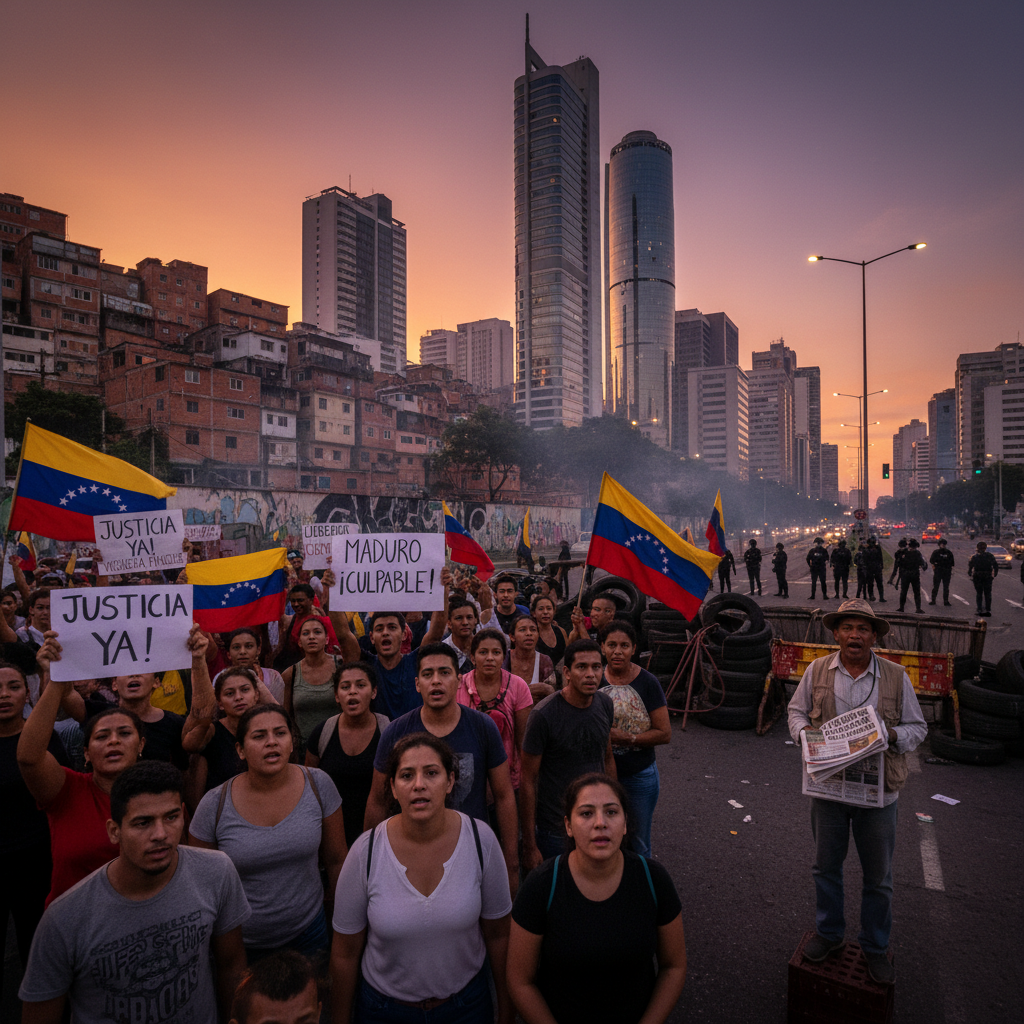
The unsealing of the U.S. Department of Justice indictment against Venezuelan President Nicolás Maduro and his wife, Cilia Flores, had significant political and social repercussions within Venezuela. Politically, the indictment intensified an already deep polarization between Maduro’s government and the opposition, while exacerbating tensions between Venezuela and the United States. Maduro’s administration denounced the charges as an act of “imperialist aggression” and labeled the indictment a “fabricated plot” aimed at justifying regime change and destabilizing the country. Supporters of Maduro rallied in Caracas following calls by the ruling United Socialist Party of Venezuela (PSUV) for demonstrations demanding the release of the president and first lady, underscoring the government’s efforts to consolidate domestic support amid escalating external pressure.
Socially, the indictment and the related U.S. actions—including the announcement of rewards up to $15 million for information leading to Maduro’s arrest—contributed to heightened insecurity and uncertainty among the Venezuelan populace. The political crisis, marked by deteriorating democratic conditions and authoritarian rule under Maduro since 2013, had already strained Venezuelan society. The U.S. government’s move was viewed by critics as undermining fragile dialogue efforts and complicating access to humanitarian aid, further impacting the country’s humanitarian situation.
The polarized response extended beyond Venezuelan borders, with domestic and international actors sharply divided. Within the United States, the operation to capture Maduro on Venezuelan soil was celebrated by some administration officials and Republican lawmakers as enforcement of justice, while Democrats criticized it as a violation of Venezuela’s sovereignty and inconsistent with congressional briefings. Regionally, Venezuela’s situation fits into a broader context where many countries have experienced varying degrees of U.S. intervention, adding layers of historical complexity to the current crisis.
Media Coverage and Public Discourse
The announcement of the United States’ indictment and attempted capture of Venezuelan President Nicolás Maduro and his wife triggered intense media scrutiny and polarized public discourse both within the United States and internationally. Media outlets highlighted the rarity of such direct U.S. military action in the region, noting that while U.S. interventions in Latin America have a long history, the scale and boldness of this operation were described as unprecedented since 1989. Coverage frequently referenced the so-called “Trump corollary” to the Monroe Doctrine, framing the U.S. move as part of a broader strategy to expand American influence and enforce regime change in the Western Hemisphere.
In U.S. political circles, reactions to the operation and indictment sharply divided along partisan lines. Republicans generally praised the enforcement of the 2020 narco-trafficking indictment against Maduro, viewing it as a justified measure against an alleged criminal regime. Conversely, Democrats expressed concern over the potential consequences, warning that the operation risked entangling the United States in another foreign conflict and violated Venezuela’s sovereignty and right to self-determination. This political split was echoed in public commentary, with some emphasizing the operation’s implications for Venezuelan diaspora communities, notably in cities like New York, where tens of thousands of Venezuelan-Americans reside.
Venezuelan reactions ranged from cautious hope to fear and uncertainty about the country’s future. Local media and citizen responses captured the complexity of public sentiment as the nation grappled with the implications of Maduro’s capture by U.S. forces and the possibility of political upheaval.
Legal experts and commentators also debated the legitimacy and ramifications of the indictment and attempted arrest. While national courts generally respect the immunity of sitting heads of state under customary international law to ensure diplomatic functions can continue without threat of arrest, the International Criminal Court (ICC) operates under different rules. According to Article 27 of the Rome Statute, official capacity does not exempt a head of state from criminal responsibility, implying that if the ICC were to issue a warrant, Maduro could legally be seized with the cooperation of member states. However, in the absence of ICC involvement, the operation raised significant questions about international law and norms protecting sovereign leaders from foreign prosecution.
Investigative media reports further revealed that the operation was motivated in part by the U.S. Department of State’s financial rewards program, which offered up to $15 million for information leading to Maduro’s arrest. Some of the individuals involved in the attempted capture were reportedly influenced by the prospect of claiming the bounty and seeking international legitimacy for their actions. The Venezuelan government’s rapid and forceful response, which resulted in the death and capture of several participants, underscored the operation’s controversial and high-stakes nature.
Related Historical and Legal Context
The indictment of Venezuelan President Nicolás Maduro and his wife must be understood against a backdrop of complex legal doctrines and geopolitical tensions involving foreign officials’ immunity, extraterritorial jurisdiction, and U.S. policy toward Venezuela. Traditionally, international law grants sitting heads of state and officials immunity from prosecution in foreign national courts to preserve diplomatic relations and enable peaceful international interactions. However, this immunity is not absolute; international criminal tribunals have successfully prosecuted sitting and former heads of state for serious crimes, exemplified by cases such as the International Criminal Court proceedings against Omar Al-Bashir of Sudan.
In the United States, the doctrine of foreign official immunity has undergone significant evolution. The 2010 U.S. Supreme Court decision in United States v. Samantar notably altered the legal landscape by holding that foreign officials do not enjoy immunity from civil suits under U.S. law if they are accused of certain misconduct, thereby enabling courts to assess immunity claims on a case-by-case basis. Parallel to this development, internal U.S. legal opinions have suggested that the President possesses inherent constitutional authority to direct extraterritorial law enforcement actions, including arrests, even where such actions may contravene international sovereignty norms. This perspective underpins the willingness of U.S. authorities to pursue criminal charges against foreign leaders accused of transnational crimes.
The Maduro indictment aligns with this legal framework by characterizing the Venezuelan president not merely as a sovereign head of state but as the leader of a “narco-terrorist organization,” thus seeking to circumvent claims of diplomatic immunity. U.S. prosecutors allege that Maduro and senior Venezuelan officials engaged in extensive narcotics trafficking in partnership with violent drug cartels and guerrilla groups such as Colombia’s FARC, facilitating the shipment of thousands of tons of cocaine into the United States and profiting from this illicit trade. The indictment further accuses Maduro of orchestrating violent reprisals, including kidnappings and murders, against those undermining their operations.
This legal posture is supported by the broader U.S. policy trajectory toward Venezuela over recent decades. Since the mid-2000s, successive U.S. administrations have expressed increasing concern over the Maduro government’s authoritarianism, human rights abuses, and involvement in narcotics trafficking, leading to targeted sanctions against key officials and efforts to isolate Maduro diplomatically. Following the U.S. recognition of opposition leader Juan Guaidó as interim president in 2019, the Trump administration intensified pressure through sanctions, diplomatic isolation, and contemplated military options. The unsealing of indictments against Maduro and his associates in 2020 marked a significant escalation in legal and political efforts to hold the Venezuelan leadership accountable and exert leverage amid the ongoing political crisis.
Notably, U.S. legal experts argue that even if Maduro were to be forcibly removed from Venezuela in a manner violating international law, U.S. courts retain jurisdiction to prosecute him once on American soil, reinforcing the determination to pursue justice irrespective of diplomatic immunity claims. This approach situates the Maduro case within a broader pattern of assertive U.S. actions against foreign autocrats involved in transnational criminality, comparable to previous operations targeting leaders in Panama and Iraq.
Thus, the indictment against Nicolás Maduro and his wife is emblematic of evolving international legal principles regarding foreign official immunity, extraterritorial law enforcement, and the intersection of criminal justice with geopolitical strategy. It reflects a convergence of U.S. legal doctrine, foreign policy imperatives, and international efforts to combat narcotics trafficking and authoritarianism in Latin America.
The content is provided by Sierra Knightley, 11 Minute Read


