Summary
The agreement between South Korea and the United States for the release of detained workers represents a pivotal development in bilateral labor and diplomatic relations. It followed a large-scale enforcement operation in early 2023 near Savannah, Georgia, where U.S. Immigration and Customs Enforcement (ICE) arrested approximately 475 workers, including over 300 South Korean nationals employed at a Hyundai-LG electric vehicle battery plant. The raid, part of intensified immigration enforcement efforts by the U.S. government, sparked diplomatic concern due to the workers’ visa statuses and the economic implications for Korean-invested enterprises in the United States.
Rooted in the broader context of the Korea–U.S. Free Trade Agreement (KORUS FTA) and its pioneering labor provisions aligned with International Labour Organization (ILO) standards, the subsequent agreement reinforced commitments to uphold fundamental labor rights and fair working conditions. The negotiated resolution entailed administrative procedures for the workers’ release and repatriation, reflecting a concerted diplomatic effort led by South Korean officials to protect their nationals while maintaining the strategic alliance between the two countries.
Beyond labor issues, the agreement underscores the intertwined political and economic motivations driving U.S.-South Korea relations. It aligns with efforts to deepen cooperation amid regional security challenges posed by China’s rise, bolsters economic integration through expanded market access and trade facilitation, and incorporates enforceable labor standards within a robust legal framework. Nevertheless, the enforcement actions and worker detentions have generated controversy, highlighting tensions between immigration policies and diplomatic relations and prompting debate on the treatment of foreign workers in the U.S.
Overall, the agreement exemplifies the complexities of managing labor mobility, immigration enforcement, and international trade commitments within the evolving geopolitical landscape. It reinforces the importance of bilateral mechanisms to protect workers’ rights while balancing economic interests and security concerns in the U.S.-South Korea partnership.
Background
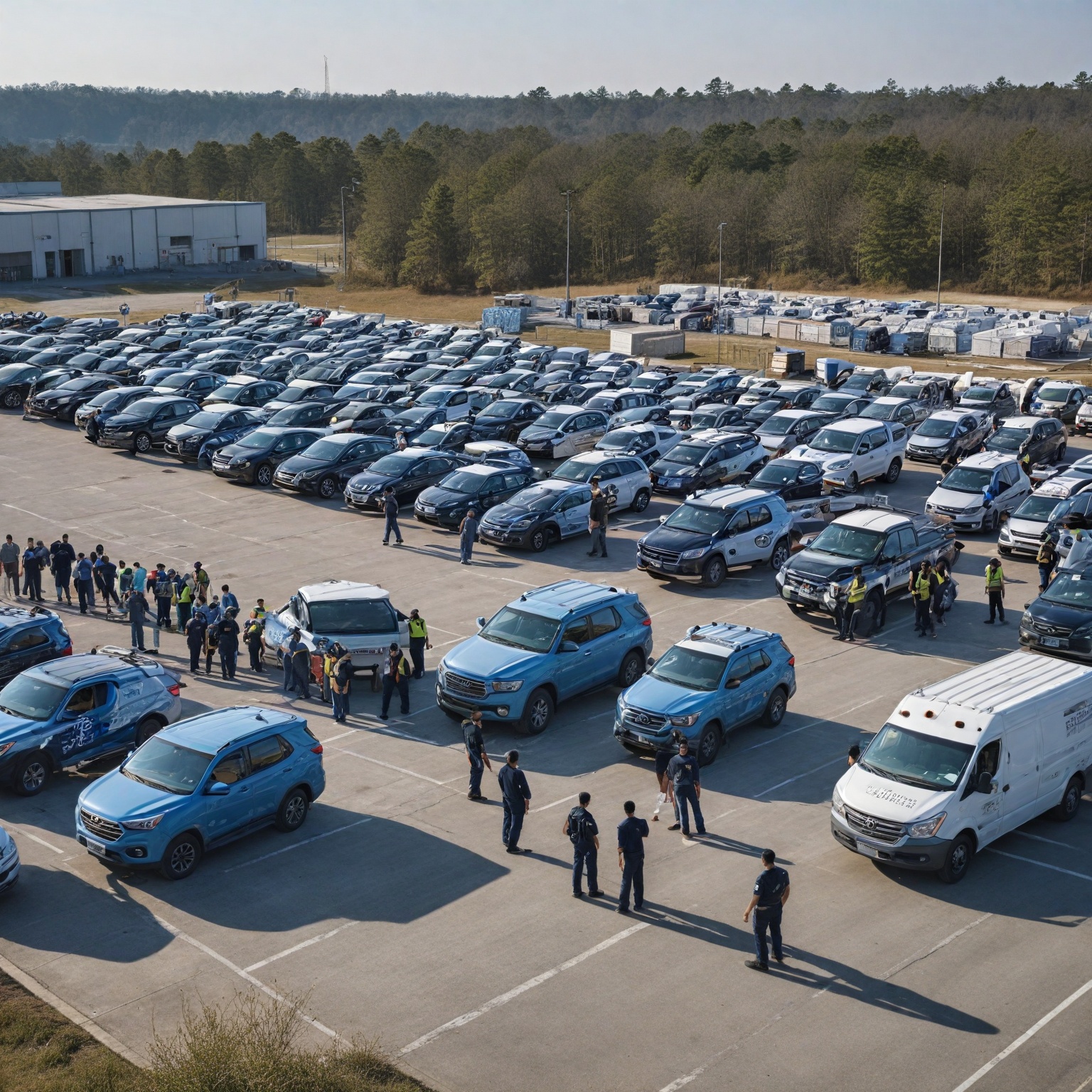
In a significant enforcement operation near Savannah, Georgia, U.S. Immigration and Customs Enforcement (ICE) arrested approximately 475 workers, including more than 300 South Korean nationals. This event marked the largest single-site enforcement action undertaken by ICE, which is part of the U.S. Department of Homeland Security. Video footage released by ICE showed a caravan of vehicles arriving at the site, with federal agents directing workers to line up outside the facility.
The raid occurred amid broader efforts under the Trump administration to increase immigration-related arrests nationwide. Similar enforcement actions had targeted various workplaces, including a meat-processing plant in Omaha, Nebraska, and a fire-equipment company in Kings Mountain, North Carolina, as well as day laborers outside Home Depot locations. The administration reportedly aimed to achieve a minimum of 3,000 immigration arrests per day, supported by additional funding and detention capacity authorized by legislation signed in July 2019.
Following the raid, South Korea’s Foreign Ministry expressed “concern and regret” over the incident and dispatched diplomats to the site to assist those affected. This response reflects the close diplomatic ties between South Korea and the United States, with the two countries maintaining strong economic and labor cooperation. Notably, the U.S.-South Korea trade agreement incorporates high standards for protecting workers’ rights, including commitments by South Korea to uphold fundamental labor rights as outlined by the International Labour Organization (ILO). The agreement emphasizes effective enforcement of labor laws to maintain fair competition and includes mechanisms for cooperation on labor issues such as occupational safety, unemployment insurance, and labor-management relations.
The broader geopolitical context underscores the importance of trilateral ties between South Korea, the United States, and Japan, especially as the region faces rising challenges from China’s growing influence. This partnership aims to foster cooperation on economic and security matters, demonstrating a strategic alignment among these allies.
Timeline of Events Leading to the Agreement
The roots of the agreement between South Korea and the United States regarding worker release can be traced back to broader trade negotiations and labor discussions. After initial talks and ratifications of the Korea–U.S. Free Trade Agreement (KORUS FTA), which included groundbreaking labor provisions based on the 1998 International Labor Organization Declaration, both countries had established a legal framework to uphold fundamental labor rights and mechanisms to address disputes.
In August 2004, South Korea enacted the Employment Permit System to address labor shortages and training issues in small and medium enterprises, reflecting the country’s ongoing engagement with labor management policies. However, tensions rose sharply when U.S. Immigration and Customs Enforcement (ICE) raided a construction site in Ellabell, Georgia, in early 2023. The raid resulted in the detention of 475 workers, most of whom were South Korean nationals employed at a Hyundai-LG electric vehicle battery plant. U.S. officials stated that many workers were present under short-term or recreational visas, which do not permit employment, prompting the enforcement action to protect American jobs.
The arrests sparked significant diplomatic concern in South Korea. President Lee Jae Myung ordered an all-out response to the situation, establishing an Overseas Korean Protection Task Force and preparing to engage with U.S. authorities to resolve the matter. The South Korean government emphasized that U.S. law enforcement must respect the rights of its nationals and the economic interests of Korean-invested companies in the United States.
Following intense diplomatic engagement, including final negotiations overseen by South Korean presidential chief of staff Kang Hoon-sik, South Korea and the U.S. reached an agreement on the release of the detained workers. The resolution included administrative procedures and plans to repatriate the workers via chartered flights, signaling a successful diplomatic effort to address the crisis.
Details of the Agreement
The agreement between South Korea and the United States concerning worker release was finalized following discussions at the 2010 G-20 Seoul summit and further negotiations, leading to an official announcement and signing on December 4, 2010. The updated version of the agreement entered into effect on March 15, 2012, after ratification by both countries’ legislative bodies with strong majorities.
A significant component of the agreement involves commitments by both nations to uphold and enforce labor laws related to fundamental labor rights. These rights encompass the five core labor standards as defined by the 1998 International Labor Organization (ILO) Declaration on Fundamental Principles and Rights at Work, including acceptable conditions concerning minimum wages, working hours, occupational safety, and health standards. The agreement obligates both South Korea and the United States to maintain these standards within their legal frameworks and to provide access to fair and transparent labor tribunals or courts for workers and employers seeking enforcement of their rights.
The enforcement mechanisms established under this agreement are notable for linking labor obligations to trade and investment issues, featuring dispute settlement procedures similar to those applied to commercial obligations within the treaty. This distinguishes it from other trade agreements that either lack enforceable labor provisions or rely on softer compliance measures. Additionally, cooperative initiatives promote respect for ILO principles, including specific compliance with ILO Convention 182 concerning the Worst Forms of Child Labor. These cooperative activities focus on improving labor administration, enforcement of labor laws, and addressing challenges related to child labor and other core labor rights.
Domestically, South Korea’s legal framework, including the Labor Standards Act and supplementary laws protecting fixed-term, part-time, and temporary agency workers, provides the foundation for safeguarding working conditions such as wages, working hours, holidays, and leave. The government actively enforces these standards through inspections, corrective orders, and policies encouraging the conversion of non-regular workers to regular employment status. Special provisions ensure protections even for small workplaces, and specific measures address the rights of non-regular workers, who represent a significant portion of the workforce. Furthermore, employment programs for foreign workers are regulated to reduce illegal employment while maintaining protections, although criticisms remain regarding worker mobility and severance pay conditions.
Insurance coverage, including workers’ compensation, health, pension, and employment insurance, is mandatory for workers under various visa statuses, with additional insurances such as departure guarantee and accident insurance required for foreign workers. These provisions ensure a safety net for workers under the terms of the agreement and related employment regulations.
Profile of the Detained Workers
The detained workers at the Hyundai-LG electric vehicle battery plant in Ellabell, Georgia, were primarily South Korean nationals, with approximately 300 of the 475 arrested individuals identified as such. Many of these workers were employed as subcontractors for Hyundai and LG Energy Solution, the South Korean companies jointly owning the facility. A significant portion of the detainees consisted of LG employees who were in the United States on various types of visas, including business visas and visa waiver programs, tasked with providing technical guidance during the construction of the battery factory.
The reasons for their detention stemmed from violations of U.S. immigration regulations. According to an ICE official, some detainees had illegally crossed the U.S. border, others held visas that prohibited employment, and some had overstayed their authorized work visas. ICE emphasized that individuals on short-term or recreational visas are not authorized to work in the United States, underscoring the rationale behind the raid as a measure to protect American jobs.
The situation sparked concern in South Korea, with opposition political parties warning that the detentions could pose serious risks to bilateral relations and the workers themselves. In response, South Korean authorities planned to arrange charter flights to repatriate the detained workers as soon as administrative procedures were completed. The detained workers, being mainly foreign subcontractors, faced complex legal and administrative challenges typical for foreign nationals under detention, including potential deportation processes and the need to navigate South Korea’s immigration regulations if returned.
Working Conditions and Labor Rights Environment
South Korea’s labor environment is governed primarily by the Labor Standards Act, which establishes minimum standards for wages, working hours, holidays, and leave to protect and improve workers’ basic livelihoods. This Act sets legally binding floors for working conditions, prohibiting any degradation below these standards. It applies in principle to businesses or workplaces employing five or more workers, though certain provisions extend protections to smaller workplaces based on their financial capabilities. Specific rules cover fixed-term employees by limiting service periods to two years, part-time workers by requiring additional wages for overtime beyond contractual hours, and temporary agency workers by restricting the types of permissible work and service duration. The Ministry of Employment and Labor (MOEL) actively inspects and guides businesses to ensure compliance, particularly regarding the lawful management of non-regular workers.
The labor rights framework also addresses the employment of foreign and migrant workers, who have become increasingly significant since South Korea’s industrial expansion in the 1980s. To mitigate labor shortages, the country permits hiring foreign workers—primarily from Central and South-East Asia—for low-paid positions in small and medium-sized enterprises, often under industrial trainee programs with limited terms. These workers are covered by health and safety regulations and insurance systems. Although programs like the Employment Permit System (EPS) have been internationally recognized, including with a UN Public Service Award in 2011 for combating corruption and reducing illegal employment, criticisms remain. These focus on the system’s employer-friendly aspects, such as restrictions on workers changing employers and delayed severance payments until workers return to their home countries. Since 2004, such foreign worker programs have expanded from manufacturing and construction sectors to fisheries and certain service industries.
Furthermore, bilateral commitments between South Korea and the United States emphasize the enforcement of labor laws concerning fundamental labor rights, including acceptable conditions of work related to minimum wages, working hours, and occupational safety and health. Both countries guarantee workers and employers access to judicial, administrative, or other tribunals to ensure enforcement of these rights, contributing to a more equitable labor environment.
Political and Economic Motivations Behind the Agreement
The agreement between South Korea and the United States to secure the release of workers and deepen bilateral cooperation was driven by a combination of political and economic factors. Politically, the deal represents a strategic effort to strengthen the longstanding alliance between the two countries, especially amid growing regional security challenges. South Korean President Yoon Suk-yeol highlighted the significance of the Washington Declaration during his state visit to the U.S., emphasizing an “unprecedented” commitment by America to bolster defense, deter aggression, and protect allies through enhanced nuclear capabilities and joint planning mechanisms. This initiative reflects Seoul’s desire for a more visible and integrated role in nuclear deterrence strategies against North Korea, while also addressing concerns related to China’s rising regional assertiveness. The broader trilateral relationship involving the U.S., South Korea, and Japan has similarly gained momentum as these nations seek to overcome historical mistrust in order to counterbalance China’s geopolitical influence.
Economically, the agreement is rooted in the mutual benefits anticipated from increased trade and investment flows. The Korea Institute for International Economic Policy projected that South Korean exports to the U.S. could grow by approximately 12% annually, or $5.4 billion, with even greater expansion expected over the long term. The agreement opens South Korea’s substantial $580 billion services market to American companies across diverse sectors such as express delivery, engineering, legal and accounting services, education, and healthcare, thereby supporting job creation in the U.S. service industry. Moreover, adjustments to tariffs on automobiles and trucks were negotiated to enhance opportunities for U.S. auto manufacturers, addressing earlier concerns raised during the 2008 U.S. presidential election about the Korea-U.S. Free Trade Agreement’s potential shortcomings in boosting American auto exports. The U.S. International Trade Commission estimated that the economic output resulting from this agreement could surpass the combined benefits of the previous nine U.S. trade agreements, underscoring the significance of tariff reductions and market access improvements.
From South Korea’s perspective, the agreement also aligns with domestic economic reforms and labor market adjustments. Public companies have been positioned for privatization, and market liberalization efforts have targeted sectors like law and accounting, though sensitive areas such as education and healthcare were excluded to protect local interests. Labor-related cooperation, including commitments to uphold fundamental labor rights and improve working conditions, constitutes a core element of the agreement, with provisions aimed at unemployment insurance, occupational safety, and labor-management relations. Additionally, South Korea’s Employment Permit System (EPS), which allows foreign workers mainly from Central and South-East Asia to fill low-wage jobs, has been recognized internationally for reducing illegal employment and corruption, although criticisms remain regarding worker protections within the program. These measures reflect an ongoing balancing act between opening markets and safeguarding social and labor standards.
Impact of the Agreement
The agreement between South Korea and the United States has had significant political, economic, and social impacts since its inception. Politically, it marked a renewed commitment to cooperation and partnership between the two nations, with U.S. President Biden describing it as “a groundbreaking new chapter” in trilateral relations involving the Republic of Korea, Japan, and the United States, particularly in countering regional security threats posed by China. South Korean President Yoon Suk-yeol highlighted the Washington Declaration’s unprecedented commitment to enhance defense and deterrence capabilities, including the potential use of nuclear weapons to protect U.S. allies, a stance that elicited cautionary responses from China.
Economically, the agreement has opened South Korea’s substantial $580 billion services market to American companies, thereby expanding export opportunities and supporting job growth in a wide range of U.S. service sectors such as express delivery, engineering, legal services, education, and healthcare. Adjustments to tariffs on automobiles and trucks under the agreement have also benefited U.S. manufacturers by facilitating increased exports to South Korea before reciprocal tariff reductions take effect. The U.S. International Trade Commission projected that the economic gains from this agreement would surpass those of the previous nine U.S. trade agreements combined, underscoring its importance for American economic output.
On the social front, the agreement has introduced groundbreaking labor provisions aligned with the International Labor Organization’s fundamental rights, ensuring that both countries commit to upholding core labor standards and allowing for formal legal recourse if obligations are unmet. Despite these advancements, recent events, such as the large-scale U.S. Immigration and Customs Enforcement (ICE) raid at a Hyundai battery plant in Georgia that resulted in the detention of hundreds of mostly South Korean workers, have strained bilateral relations and raised concerns about the treatment of South Korean nationals in the U.S.. The South
Reactions to the Agreement and Worker Release
The agreement between South Korea and the United States, which included provisions for the release of detained workers, drew a range of responses from government officials, lawmakers, and international observers. South Korea’s Foreign Ministry expressed “concern and regret” over the circumstances that led to the detentions and emphasized the protection of the rights and interests of Korean citizens during U.S. law enforcement operations. The Ministry also dispatched diplomats to the site to monitor the situation closely.
South Korean President Yoon Suk-yeol, during his state visit to the White House, hailed the Washington Declaration—which accompanied the agreement—as an “unprecedented” commitment by the U.S. to enhance defense cooperation and deter attacks against allies, signaling a broader strategic partnership. However, the move also sparked unease from regional actors such as China, which cautioned against escalating tensions and provoking confrontations in response to the strengthened U.S.-South Korea alliance.
In the United States, the large-scale raids and subsequent worker detentions triggered criticism from some lawmakers, particularly those representing diverse communities. Members of the Congressional Asian Pacific American Caucus and representatives from Georgia voiced deep alarm, condemning the actions as misplaced enforcement that targeted immigrants in workplaces and communities of color instead of focusing on violent criminals. They highlighted the social and economic harm caused by such raids, including family separations and damage to trust in global partnerships.
The incident attracted significant attention in both countries due to the economic implications. South Korea closely monitored the case to assess potential impacts on the operations of major Korean industrial firms like Hyundai and LG, which have been investing billions in new U.S. factories as part of a shared goal to deepen economic ties beyond military cooperation. The raids risked undermining this expanding alliance centered on global supply chains and economic integration.
Despite the tensions, U.S. President Joe Biden characterized the agreement and ongoing trilateral cooperation with South Korea and Japan as a “groundbreaking new chapter” in diplomatic relations. He emphasized the importance of strengthening ties to address regional security challenges, especially in light of China’s rising influence. Commentators noted that South Korea and Japan were moving past historical mistrust to unite against shared concerns, underscoring the strategic value of the partnership.
Legal and International Framework
The agreement between South Korea and the United States regarding worker release is grounded in a robust legal and international framework that integrates trade obligations with labor standards enforcement. Central to this framework is the linkage established in trade agreements such as the EU-Korea Free Trade Agreement and the U.S.-South Korea Free Trade Agreement, which explicitly tie trade concessions to compliance with internationally recognized labor rights and conditions of work.
Chapter 13 of the EU-Korea FTA, for instance, outlines specific labor obligations and a dispute mechanism designed to ensure that both parties adhere to fundamental labor standards. This approach reflects a broader trend since the 1990s to incorporate social clauses in trade agreements, aiming to prevent a “race to the bottom” in labor protections among developing and emerging economies, while also addressing criticisms of paternalism and neo-colonialism inherent in such clauses. Similarly, the U.S.-South Korea trade agreement mandates that both countries effectively enforce labor laws related to fundamental rights, minimum wages, working hours, and occupational safety and health. It guarantees fair and transparent access for workers and employers to labor tribunals or courts, reinforcing the commitment to uphold the five fundamental labor rights as stated in the 1998 International Labour Organization (ILO) Declaration on Fundamental Principles and Rights at Work.
The agreements further include cooperative mechanisms to promote respect for ILO principles, such as compliance with ILO Convention 182 on the Worst Forms of Child Labor and measures to enhance labor administration and enforcement practices. Enforcement mechanisms are robust, allowing for unannounced site visits by customs authorities and potential trade sanctions, including tariff impositions and denial of market access for goods that do not comply with agreed labor standards.
Domestically, South Korea’s Labor Standards Act establishes baseline protections for workers, covering wages, working hours, holidays, and leave. It applies generally to workplaces with five or more employees, with certain provisions extending protections even to smaller businesses depending on their capacity to comply. To address long-term labor shortages and enhance workforce management, South Korea introduced the Employment Permit System in 2004, which regulates foreign worker employment while aiming to balance economic and social needs.
On the U.S. side, immigration enforcement policies have intensified under recent administrations, including increased workplace raids and detentions targeting undocumented workers. These enforcement actions are supported by legislative provisions that bolster Immigration and Customs Enforcement (ICE) resources, impacting immigrant labor populations across various sectors. Nonimmigrant visa categories remain relevant for legal temporary stays by foreign nationals for tourism, business, education, or specialty work purposes, further shaping the context of labor mobility between the two nations.
Together, these international agreements and domestic laws create a comprehensive legal and institutional environment that seeks to protect worker rights, promote fair labor standards, and ensure compliance through enforceable mechanisms within the bilateral framework between South Korea and the United States.
Aftermath and Follow-up
Following the agreement between South Korea and the United States for the release of detained workers, a plane was arranged to bring back the workers once all administrative procedures were completed. However, the incident caused diplomatic tensions, as it risked straining ties between Washington and Seoul. This came at a critical time when both countries were working to narrow differences and advance trade discussions after a summit between then-President Donald Trump and South Korean President Lee Jae Myung. South Korea’s First Vice Foreign Minister Park Yoon-joo expressed regret over the timing of the incident, emphasizing the need to maintain momentum of trust and cooperation between the two leaders.
The broader context of U.S.-South Korea relations also includes significant economic and labor cooperation. The U.S.-Korea trade agreement has expanded American companies’ access to South Korea’s substantial market, potentially supporting tens of thousands of well-paying U.S. services jobs and boosting American economic output beyond previous trade agreements. Both nations have committed to enforcing labor laws effectively, covering fundamental rights, working conditions, minimum wages, working hours, and occupational safety and health. These labor commitments are enforceable under dispute settlement mechanisms similar to those governing commercial obligations.
On the South Korean side, policies have been implemented to address labor issues concerning foreign and non-regular workers. Measures include corrective orders to eliminate illegal use of temporary agency workers and government programs encouraging the conversion of non-regular workers to regular status by subsidizing labor costs. These efforts aim to reduce discrimination and improve labor conditions through education, counseling, and consulting services. The Employment Permit System (EPS), which allows workers mainly from Central and South-East Asia to fill low-paid jobs in sectors unattractive to Korean workers, has helped reduce illegal employment and earned international recognition, though it faces criticism for certain restrictive practices such as limiting employer changes and withholding severance pay until workers return to their home countries.
In cases where foreigners are subject to departure orders, immigration officials follow procedures that allow the individual time to settle their affairs before leaving South Korea. Deportation orders are delivered directly, and those deemed flight risks may be detained in foreign detention centers. Additionally, social insurance coverage—including workers’ compensation, health, pension, and employment insurance—is mandatory or voluntary depending on visa status, with both employers and foreign workers required to subscribe to various insurance policies that guarantee departure and cover return costs and accidents.
The content is provided by Blake Sterling, 11 Minute Read