
Summary
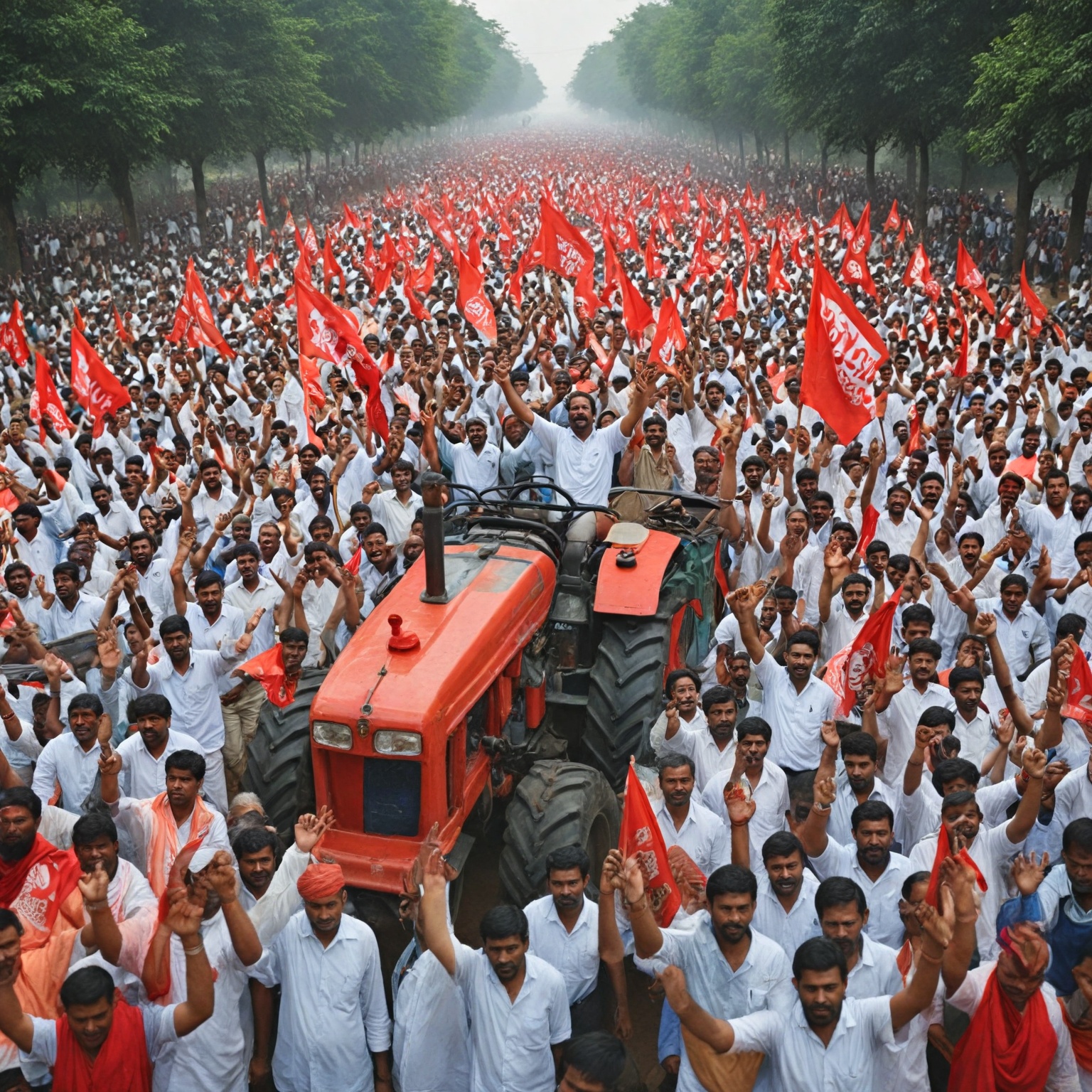
The Massive Nationwide Protest Planned by Farmers Groups on August 13, 2025, represents a significant coordinated mobilization of farmers, trade unions, and allied organizations across India and beyond, aimed at contesting government policies perceived as harmful to agricultural livelihoods and economic sovereignty. Spearheaded primarily by the Central Trade Unions (CTUs) and the Samyukt Kisan Morcha (SKM)—a coalition of over forty farmers’ unions—this protest follows a series of escalating agrarian movements responding to issues such as unfavorable trade agreements, declining farm incomes, and regulatory pressures. The protest seeks to unite diverse social groups including farmers, workers, students, and citizens in mass actions like tractor rallies, demonstrations, and public gatherings to demand policy changes and greater protection for farmers’ rights.
The protest arises amid widespread farmer unrest fueled by multiple grievances: opposition to the India-UK Comprehensive Economic Trade Agreement (CETA), concerns over United States tariff threats impacting Indian agricultural exports, and dissatisfaction with the government’s approach toward agricultural subsidies, minimum support prices (MSPs), and infrastructural support. These demands are rooted in longstanding struggles over fair pricing, food security, and economic independence, echoing earlier protests such as the 2020–2021 Indian farmers’ movement against the controversial Farm Bills. The August 13 protest also reflects a broader global context of farmer activism seen across Europe, Asia, and the Americas, where farmers resist environmental regulations and market liberalization policies they view as threatening their livelihoods.
Tactics employed in the protest include mass tractor and motorcycle rallies, coordinated lobbying efforts, and strategic disruptions to transportation and supply chains, with the support of major transport bodies like the All India Motor Transport Congress. The protest infrastructure encompasses extensive logistical planning, including medical support and regional mobilizations addressing specific local issues, such as the plight of apple growers in Himachal Pradesh affected by international tariffs. The CTUs-SKM platform manages coordination among hundreds of unions, emphasizing both peaceful mass demonstrations and political advocacy to press their demands.
The August 13 protest has drawn significant national and international attention, eliciting mixed reactions ranging from government criticism and political polarization to policy reconsiderations in the European Union and elsewhere. Controversies have emerged over allegations of anti-national activities and freedom of assembly, as well as debates on the impact of international trade agreements on domestic agriculture. Despite some policy concessions and government dialogue, farmers and allied groups remain resolute, viewing the protest as a critical moment in an ongoing struggle to secure equitable agricultural policies and protect the interests of small and medium farmers in an increasingly globalized economy.
Background
Farmers’ protests have surged globally due to multiple grievances related to agricultural policies, pricing, and environmental regulations. In Europe, the 2024 farmers’ protests began in December 2023, with demonstrations triggered by dissatisfaction over low food prices and opposition to proposed environmental regulations such as carbon taxes, pesticide bans, and restrictions on nitrogen emissions and water usage. These protests occurred amid the European Union’s Common Agricultural Policy, which allocates approximately €57 billion in subsidies to farmers, representing about a quarter of all EU subsidies. Farmers also expressed concern over trade agreements involving non-EU countries, including Ukraine and South American Mercosur nations.
In the Netherlands, protests resumed in mid-December as farmers reacted against supermarkets’ low payment for their products and nitrogen emission limitation laws. Demonstrations included blocking entrances to distribution centers of major supermarket chains like Jumbo and Albert Heijn in various cities. Additionally, on 1 July, the city of Harderwijk declared a state of emergency in anticipation of protests organized by the anti-government group Nederland in Verzet. Farmers escalated actions by blocking roads with vehicles to disrupt food distribution networks and restrict supermarket access.
India has witnessed prolonged and intense farmer protests, notably against the three agriculture acts passed in 2020, collectively referred to as the Farm Bills. These laws aimed to deregulate wholesale markets and enable farmers to sell directly to processors but raised fears of losing government-guaranteed price floors, thereby threatening farmers’ income security. The movement, largely driven by unions from Punjab and Haryana, included the massive Dilli Chalo march to the capital, which faced police resistance. The protests were marked by tragic incidents, including the Lakhimpur Kheri violence in October 2021, described by unions as a “massacre” comparable to the Jallianwala Bagh massacre, leading to calls for the dismissal and arrest of implicated government officials. Despite the government repealing the Farm Bills in November 2021, demands for guaranteed minimum support prices (MSPs) and improved income security continued.
MSP remains a critical point of contention in India. It is the government-announced minimum price for certain crops intended to ensure remunerative returns to farmers. While MSP is widely supported, the farm laws did not guarantee it as a legal right, leading to farmer apprehension about price security. The government has implemented schemes such as the Price Support Scheme (PSS) and Farmer Income Protection Scheme (PM AASHA) to support MSP fulfillment, but concerns over enforcement persist.
Farmers have also advocated for enhanced agricultural infrastructure, including improved storage, irrigation, and reliable electricity, as seen in protests in Tamil Nadu over inadequate water supply causing crop damage. Similar movements have taken place globally, with protests reported in Nepal, Malaysia, New Zealand, and parts of South America, often driven by demands for fair prices and opposition to restrictive regulations.
In the United States, farm policy is governed by periodic legislation such as the Agriculture Improvement Act of 2018, which allocates significant budgets towards nutrient management and crop insurance. This framework reflects ongoing government involvement in supporting the agricultural sector, though protests in the US have been less prominent compared to other regions.
Collectively, these movements highlight a widespread global struggle by farmers to secure fair pricing, supportive policies, and sustainable agricultural practices amid changing economic and environmental landscapes. The planned massive nationwide protest on August 13 builds upon this context of growing farmer mobilization and discontent.
Planning of the Protest
The planning of the massive nationwide protest scheduled for August 13, 2025, is a coordinated effort primarily led by the Central Trade Unions (CTUs) and the Samyukt Kisan Morcha (SKM), a coalition of over forty Indian farmers’ unions. This joint platform aims to unite workers, peasants, farmers, students, and patriotic citizens in a collective show of dissent against various government policies perceived as detrimental to the interests of these groups.
The protest has been organized in response to several critical issues, including the Union government’s pro-corporate policies that have allegedly increased mass poverty, slowed industrialization and the economy, and harmed medium and small enterprises across India. A central grievance is the recently signed India-UK Comprehensive Economic Trade Agreement (CETA), which the protesting groups argue compromises India’s economic independence and sacrifices the interests of farmers and workers in favor of foreign corporate profits. There is also strong opposition to the United States’ tariff threats, which are viewed as economic coercion harming Indian agriculture and food security.
The protest’s form of action will include a variety of mass mobilizations such as tractor and motorcycle rallies, public gatherings, protest demonstrations, and other forms decided by the participating organizations. This approach aims to maximize participation and visibility across the country. The protest is set to be a defining moment in the ongoing agrarian struggle, particularly in states like Himachal Pradesh, where farmers have also demanded government intervention regarding US tariffs affecting local produce such as apples.
The SKM, representing a broad coalition of farmers’ unions—including Krantikari Kisan Union, Akhil Bharatiya Kisan Sabha, Jamhoori Kisan Sabha, and others—serves as the coordinating body for the protest. It issues statements on behalf of all affiliated unions and manages strategy and tactics across diverse groups. The SKM’s network extends to over 500 national farm and workers’ unions, and its coordinated actions have inspired similar protests in multiple Indian states, including Maharashtra, Rajasthan, Gujarat, Karnataka, and others.
Supporting the protest are significant transport bodies like the All India Motor Transport Congress (AIMTC), representing millions of truckers, bus, and taxi drivers. These groups have threatened to halt supply movements in northern India and possibly nationwide if their demands and those of the farmers remain unaddressed.
Key demands accompanying the protest include pensions for farmers, loan waivers, and withdrawal from the World Trade Organization pressures regarding farm subsidies. The protesting groups claim that the government has failed to fulfill several promises made after previous agitations, leading to the intensification of protests. Despite ongoing talks between the government and farmers, no resolution has been reached, with the SKM and allied unions prepared to escalate actions, including marches towards Delhi.
Protest Tactics and Methods
The nationwide protest planned by farmers’ groups and allied organizations on August 13, 2025, involves a diverse array of tactics designed to maximize participation and public impact. The Central Trade Unions and Samyukt Kisan Morcha (CTUs-SKM) have called upon farmers, workers, students, and patriotic citizens to engage in various mass actions including tractor and motorcycle rallies, protest demonstrations, public gatherings, and other forms of protest as determined by different platforms and partner organizations.
Tractor rallies have emerged as a prominent method of protest, with farmers gathering in large numbers to mobilize around symbolic and logistical centers. During previous protests, such as the 2024 Indian farmers’ movement, thousands of tractors converged at key locations, including the Singhu Border, with estimates reaching up to 200,000 tractors participating in some events. Similarly, in the United Kingdom, tractor protests were used effectively to disrupt traffic and draw attention to farming issues, exemplified by a go-slow tractor protest in Dover organized by Save British Farming and Fairness for Farmers, supported by the National Farmers’ Union.
Beyond rallies, protest methods also include coordinated lobbying efforts. For instance, during earlier movements, approximately 1,800 farmers entered Parliament to directly engage with Members of Parliament, underscoring a strategy of combining public demonstrations with political advocacy. Other creative protest methods noted in various contexts include bullock-cart rallies by marginal farmers and the strategic halting of transportation services by truckers and bus drivers, threatening to extend such stoppages nationwide if demands remain unaddressed.
These protests are often characterized by symbolic actions aimed at drawing public and media attention, such as the placement of manure piles in front of government buildings or setting bales of hay on fire in European cities to highlight agricultural grievances. Additionally, farmers have engaged in targeted visits to the businesses and private residences of politicians and activists opposed to their cause, sparking debates about the boundaries of freedom of speech and assembly.
Logistics and Support during the Protest
The planned nationwide protest on August 13, 2025, organized by various farmers’ groups and allied organizations, involves significant logistical coordination and support to ensure widespread participation and impact. The joint platform CTUs-SKM, which includes 10 Central Trade Unions and the Samyukt Kisan Morcha, has called for diverse mass actions such as tractor and motorcycle rallies, public gatherings, and demonstrations across multiple states. This requires extensive mobilization efforts involving transportation, communication, and safety measures for participants.
To facilitate smooth organization, transport bodies like the All India Motor Transport Congress (AIMTC) have extended their support to the protesting unions, helping in managing vehicular movements and rallies. Coordination among various farmer unions, including Bharatiya Kisan Union factions and other members of the Samyukt Kisan Morcha umbrella, ensures that the protest strategy and logistics are unified and effective.
Medical assistance is also a critical component of the protest infrastructure. For instance, during earlier protests, volunteer doctors like Dr. Swaiman Singh provided prolonged medical services at protest sites near the capital territory, highlighting the necessity of on-site healthcare support during extended demonstrations. This approach is likely to be replicated to address any health emergencies during the August 13 events.
Additionally, local issues such as those faced by apple growers in Himachal Pradesh, who have also demanded governmental intervention regarding US tariffs, indicate regional protest activities that require tailored logistical planning. Given the scale and diversity of actions planned, the coordination among farmers, trade unions, transport groups, and medical volunteers is vital to maintain protest momentum and participant safety throughout the nationwide event.
Events of August 13 Protest
A joint platform comprising ten central trade unions and the Samyukt Kisan Morcha (CTUs-SKM) organized a nationwide protest on August 13, 2025, in response to US President Donald Trump’s recent tariff threats and the India-UK Comprehensive Economic Trade Agreement (CETA). The CTUs-SKM issued a call for all farmers, workers, students, and patriotic citizens to participate in a day of resistance marked by diverse mass actions. These included tractor and motorcycle rallies, protest demonstrations, public gatherings, and other forms of protest as determined by various platforms and partner organizations across the country.
The protest aimed to demonstrate widespread opposition through coordinated efforts involving different social groups, highlighting the solidarity among farmers and workers in resisting policies perceived as detrimental. The mass mobilization on August 13 was part of a larger pattern of organized demonstrations, reflecting a strategic effort to engage large numbers of participants through various modes of protest.
Impact and Reactions
The nationwide farmers’ protest garnered significant attention and elicited a variety of responses from different stakeholders. The protest involved a large-scale coordinated effort, including 1,800 farmers lobbying directly inside Parliament to press their demands to Members of Parliament (MPs), signaling the seriousness and organized nature of the movement. The widespread nature of the protests also underscored farmers’ demands for improvements in agricultural infrastructure, such as better storage capacity, irrigation facilities, and reliable electricity supply, exemplified by region-specific protests like those in Tamil Nadu protesting crop damage due to inadequate water supply.
The protests resonated beyond national borders and drew reactions from international bodies. The European Union, for instance, proposed weakening some climate and environmental measures in response to farmer protests that included disruptive tractor rallies ahead of the June EU elections, highlighting how agricultural activism is influencing policy at supranational levels. Similarly, in Argentina, parallel farmer protests highlighted issues such as lack of access to land, unfair pricing, and inadequate government support for sustainable farming, indicating a global dimension to the agrarian unrest.
Within India, the protests triggered strong political reactions. Prime Minister Narendra Modi’s government responded with notable criticism amid extensive media coverage of the tens of thousands of farmers protesting at the outskirts of the Indian capital. Some politicians propagated misinformation and allegations of separatism, sedition, and anti-national activities linked to the protests, intensifying political polarization. Incidents such as the lynching of an alleged desecrator by Nihangs were defended by some factions, further complicating the public discourse around the protests.
The protests also sparked debate over India’s trade policies. Farmer groups and labor unions expressed concern over trade agreements like the India-UK Comprehensive Economic Partnership Agreement (CETA) and potential India-US trade deals, arguing these pacts sacrifice farmers’ and workers’ interests in favor of foreign corporate profits. Critics warned that such agreements might lead to price collapses and threaten food security by granting unrestricted access to multinational agribusiness corporations. These concerns tied the farmers’ demands not only to domestic agricultural reform but also to broader issues of economic sovereignty and global trade practices.
Politically, farm reforms have long been a contentious issue. Despite promises from major political parties such as the Bharatiya Janata Party and Indian National Congress, many recommended reforms, particularly those concerning agricultural market regulation and the functioning of Agricultural Produce Market Committees (APMCs), have seen limited or uneven implementation across states. This gap in policy execution has contributed to farmers’ ongoing mistrust and discontent, fueling the momentum of the protest movement.
Aftermath and Continuing Developments
Following the announcement of the nationwide day of resistance on August 13, 2025, farmers’ organizations and allied groups have been actively planning various forms of protest actions, including tractor and motorcycle rallies, public gatherings, and demonstrations, to sustain pressure on the government and rally public support. The protests are part of a broader global wave of farmers’ demonstrations that have been ongoing since 2021, spanning six continents with a significant concentration in Europe and India. These protests reflect widespread grievances regarding agricultural policies perceived as threatening farmers’ livelihoods and food security.
In India, concerns remain high regarding recent trade agreements such as the India-UK Comprehensive Economic and Trade Agreement (CETA) and potential future deals with the United States. Critics argue that these agreements favor foreign corporate interests at the expense of Indian farmers and workers, potentially undermining the country’s economic independence and agricultural sector. There is
The content is provided by Jordan Fields, 11 Minute Read


