
Summary
India is undertaking a significant expansion of its Strategic Petroleum Reserves (SPR) to enhance energy security amid growing dependence on imported crude oil and increasing geopolitical uncertainties. Currently, India imports approximately 83% of its crude oil, exposing the country to supply disruptions and price volatility in international markets. To mitigate these risks, India has developed underground storage facilities at Mangaluru, Visakhapatnam, and Padur, Karnataka, with a combined capacity of about 5.33 million metric tonnes (MMT), sufficient to cover roughly 9.5 days of crude oil consumption. The government aims to increase this reserve to a 90-day buffer, in line with International Energy Agency (IEA) standards, following India’s associate membership in the agency since 2017.
The expansion plan involves constructing new strategic storage facilities across multiple sites, including salt caverns in Bikaner, Rajasthan, and additional caverns in Mangalore and Bina, Madhya Pradesh. These locations have been strategically chosen for their proximity to refineries and coastal access, facilitating efficient supply chain management. The initiative is backed by substantial government funding, with over ₹5,500 crore (approximately US$640 million) allocated for phase II of the SPR programme, and involves key stakeholders such as Indian Strategic Petroleum Reserves Limited (ISPRL), Engineers India Ltd, and private sector participants.
India’s efforts to bolster its SPR infrastructure come in response to vulnerabilities exposed by past crises, notably the 1990 Gulf War and the 1991 economic crisis, which underscored the country’s limited oil reserves and heavy import dependence. Despite progress, the expansion faces challenges including inconsistent budget allocations, logistical complexities, and concerns about strategic autonomy, especially with foreign entities like the Abu Dhabi National Oil Company leasing storage capacity at some sites. Critics argue that these issues could hamper timely completion and full operationalization of the SPR facilities.
Overall, India’s strategic push to enhance emergency oil reserves reflects its broader vision to secure long-term energy stability, reduce economic risks from global oil market fluctuations, and strengthen its position in international energy diplomacy. The integrated approach combines domestic infrastructure development, private sector involvement, and international cooperation, aiming to build resilience against future supply shocks and geopolitical uncertainties.
Background
India’s energy landscape is characterized by a high dependence on crude oil imports due to limited domestic petroleum reserves. Currently, India relies on imports for approximately 82.8% of its crude oil and 45.3% of its natural gas needs, reflecting significant vulnerability to global supply disruptions and price volatility. While the country has developed substantial refining and processing capacities, making it a net exporter of petroleum products, the lack of adequate indigenous reserves necessitates continued import dependence.
In response to the challenges posed by oil price volatility and supply uncertainties, the Government of India initiated the establishment of Strategic Petroleum Reserves (SPRs) as a long-term solution. This effort began in 1998 under the Atal Bihari Vajpayee administration, which approved the construction of underground storage facilities in Mangaluru, Visakhapatnam, and Padur, Karnataka. These sites were selected for their strategic location near refineries on the east and west coasts, enabling rapid access to stored crude during emergencies. These strategic reserves supplement existing commercial crude and petroleum product stocks held by oil companies and serve as a critical buffer against external supply shocks.
India’s commitment to energy security was further underscored by its associate membership status in the International Energy Agency (IEA) in 2017. Under the IEA framework, member countries are obligated to maintain emergency oil reserves equivalent to at least 90 days of net oil imports. This international engagement highlights India’s intent to align with global standards in energy crisis management and cooperation.
Beyond storage infrastructure, India has explored alternative approaches to enhance energy security. These include developing proven domestic oil fields to maintain reserves at low cost and increasing production capacity in emerging regions such as Rajasthan and Tripura. Additionally, strategic collaborations and economic initiatives, such as the proposed Special Economic Zone (SEZ) at Dahej, Gujarat, have aimed to bolster the country’s petrochemical and energy sectors.
Current Storage Infrastructure
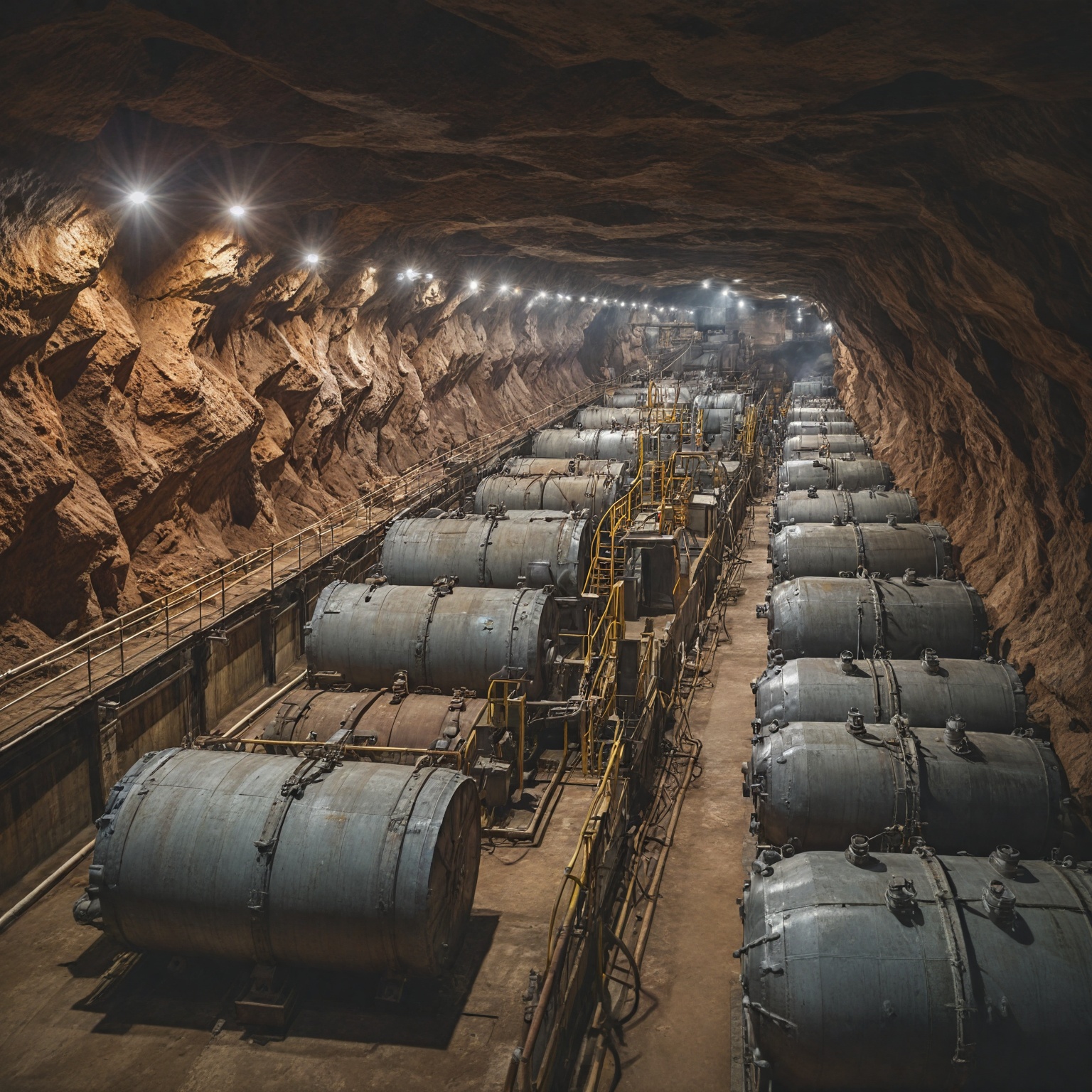
India’s strategic crude oil storage infrastructure currently comprises three underground facilities located at Mangaluru, Visakhapatnam, and Padur in Karnataka. These sites are strategically positioned with ready access to refineries on both the east and west coasts, allowing efficient distribution during supply disruptions. The combined storage capacity of these caverns is approximately 5.33 million metric tonnes (MMT), developed during the first phase of the Strategic Petroleum Reserve (SPR) program initiated in 1998 under the Atal Bihari Vajpayee administration at an investment of around $600 million.
In addition to these underground reserves, Indian refiners maintain their own crude oil and petroleum product inventories equivalent to about 64.5 days of consumption, resulting in an overall reserve capacity of roughly 74 days when combined with the strategic reserves. This level of storage plays a crucial role in India’s energy security framework by providing a buffer against external supply shocks.
The government and associated agencies have further expanded the existing infrastructure through public-private partnerships. For instance, recent approvals include the construction of new caverns in Chandikhole, Odisha, and the doubling of capacity at Padur. These developments are set to increase India’s total strategic reserve capacity to approximately 11.83 million tonnes.
New Strategic Plans for Enhancement
India is advancing its strategic petroleum reserves (SPR) capacity with a comprehensive plan to bolster energy security amid global geopolitical uncertainties and rising domestic consumption. The government, through Indian Strategic Petroleum Reserve Limited (ISPRL), is exploring the establishment of new storage facilities across multiple locations, aiming to extend the country’s crude oil backup capacity to cover 90 days of net imports, aligning with International Energy Agency (IEA) standards.
Key proposed sites for the new strategic reserves include a 5.2 to 5.3 million tonne capacity facility utilizing salt caverns at Bikaner in Rajasthan’s desert region, and a 1.75 million tonne facility at the Mangalore Special Economic Zone in Karnataka, both chosen for their proximity to refineries and coastal access which facilitate transportation and logistics. Additionally, a new reserve is planned for Bina in central Madhya Pradesh, although its storage capacity is yet to be determined. These initiatives complement earlier approved projects such as the 2.5 million tonne facility at Padur (Karnataka) and the 4 million tonne installation at Chandikhol (Odisha), which are currently under expansion or construction as part of the second phase of India’s SPR programme.
The expansion effort involves detailed feasibility studies being conducted by state-run Engineers India Ltd, which is preparing comprehensive reports to guide the development of these new facilities. The projects require Union Cabinet approval following these assessments before construction can commence. Funding support has been reflected in the Union Budget 2025-26, with an allocation of approximately Rs. 5,597 crore (US$ 640.46 million) directed towards phase II of ISPRL’s underground storage infrastructure.
India’s strategic petroleum reserve policy has also evolved to encourage private sector participation and commercialization of certain facilities, reflecting a shift towards a more integrated approach to energy security. This initiative is especially significant given the vulnerabilities exposed by recent global oil market volatilities and supply disruptions, such as those arising from conflicts in West Asia. By increasing its reserve capacity to a 90-day buffer, India aims to safeguard its economy and maintain stable fuel supplies during emergencies or price shocks, building resilience into its energy framework.
Infrastructure Development and Technological Upgrades
India is undertaking significant infrastructure development and technological upgrades to enhance its strategic crude oil reserve capacity. The government has commissioned state-run Engineers India Ltd (EIL) to prepare detailed feasibility reports (DFRs) for constructing new petroleum reserves at six proposed locations. Among these, sites at the Mangalore Special Economic Zone in Karnataka and salt caverns in Bikaner, Rajasthan, have been identified, though final decisions are pending. These locations are strategically chosen for their proximity to the coast and major refineries, facilitating efficient supply chain management.
The strategic petroleum reserves currently consist of underground storage facilities at three locations: Mangalore, Visakhapatnam, and Padur in Udupi district, Karnataka. These underground caverns provide ready access to refineries on both the eastern and western coasts of India. Apart from underground tanks, the country also utilizes above-ground tank storage and fully developed in situ reserves to bolster its crude oil backup capacity. An innovative approach under consideration involves developing proven oil fields for intermittent production, enabling rapid extraction when global oil prices exceed a set threshold. This method offers a cost-effective alternative to traditional storage by leveraging existing oil fields for strategic reserves.
The development of additional storage infrastructure is planned in phases. The first phase, initiated under the Atal Bihari Vajpayee administration in 1998, established three underground facilities with a combined capacity of 5.33 million metric tons (MMT) at an investment of approximately $600 million. The second phase, announced in the 2017-18 budget speech by Finance Minister Arun Jaitley, includes constructing new caverns at Chandikhole, Odisha, and Bikaner, Rajasthan. In June 2018, the Narendra Modi government approved the construction of the Chandikhole facility and the expansion of capacity at Padur, which together aim to increase the total strategic reserve capacity to 11.83 MMT. Additionally, expansion plans at Rajkot, Gujarat, are underway as part of this second phase.
These infrastructure projects reflect India’s broader strategic objective of achieving a 90-day crude oil reserve capacity to safeguard against global supply disruptions and volatile oil prices. Technological upgrades and feasibility assessments conducted by EIL and overseen by Indian Strategic Petroleum Reserve Ltd’s CEO L R Jain ensure that the expansions are economically viable and aligned with national energy security goals.
Government Policies, Institutional Framework, and Funding
India’s approach to strategic petroleum reserves has evolved significantly over the years to address energy security concerns and align with international standards. The concept of maintaining emergency oil reserves was initially proposed in 1998 during the administration of Atal Bihari Vajpayee, following the energy crisis experienced during the 1990 Gulf War when India’s oil reserves were sufficient for only three days. This led to the establishment of the Strategic Petroleum Reserve Programme aimed at safeguarding the country from supply disruptions.
The Indian Strategic Petroleum Reserves Limited (ISPRL), a wholly owned subsidiary of the Oil Industry Development Board (OIDB) under the Ministry of Petroleum and Natural Gas, is the nodal agency responsible for creating and managing these reserves. Currently, ISPRL maintains underground storage facilities at Mangaluru, Visakhapatnam, and Padur, with a total capacity of 5.33 million metric tons (MMT), equivalent to approximately 36.92 million barrels, sufficient to cover about 9.5 days of India’s crude oil consumption.
India’s policy framework has undergone substantial modifications to encourage private sector participation and commercialisation of strategic reserves. This model mirrors those of countries such as Japan and South Korea, allowing private lessees, predominantly major oil companies, to lease storage space and trade crude oil stored in these reserves. Such reforms aim to enhance the operational efficiency and economic viability of the reserves while ensuring national energy security.
Financially, the government’s budget allocations for strategic petroleum reserves have seen fluctuations. The 2023-24 budget had earmarked ₹5,000 crore for filling vacant storage slots in caverns; however, this plan was deferred mid-year, and the 2024-25 interim budget did not allocate funds for this purpose. Nonetheless, the Union Budget 2025-26 allocated ₹5,597 crore (approximately US$640.46 million) to the Ministry of Petroleum and Natural Gas for phase II of the ISPRL project, which involves converting two large underground caverns into petroleum storage facilities, signaling renewed commitment to expanding strategic reserves.
In addition to domestic initiatives, India has also engaged in international energy diplomacy to strengthen its strategic petroleum reserve capabilities. Notably, India has secured lease arrangements with entities such as Abu Dhabi National Oil Company (ADNOC), allowing access to vast oil reserves abroad. This partnership not only provides India with additional emergency oil supplies but also involves UAE investments in India’s strategic infrastructure, aiding in cost management for storage facility development and maintenance. Furthermore, India’s associate membership in the International Energy Agency (IEA) since 2017 commits the country to maintaining emergency reserves equivalent to 90 days of net oil imports as per the International Energy Programme agreement.
Recent strategic plans aim to expand India’s reserve capacity to cover 90 days of consumption, with potential new storage sites proposed in regions including the Mangalore Special Economic Zone in Karnataka and Bikaner in Rajasthan, among others located near coastlines and refineries to facilitate access and logistics. Feasibility studies for these sites are underway, highlighting the government’s forward-looking policies towards enhancing energy security amidst geopolitical uncertainties in West Asia and other regions.
Roles of Key Stakeholders
The enhancement and management of India’s strategic petroleum reserves involve several key stakeholders, each playing a vital role in ensuring the country’s energy security.
The Indian Strategic Petroleum Reserves Limited (ISPRL) is the principal agency responsible for maintaining the nation’s strategic crude oil reserves. As a wholly owned subsidiary of the Oil Industry Development Board (OIDB), ISPRL operates under the administrative control of the Ministry of Petroleum and Natural Gas. It currently manages emergency fuel stores totaling 5.33 million metric tons (approximately 36.92 million barrels), which can supply the country for about 9.5 days of consumption. These reserves are stored in underground facilities located at Mangaluru, Visakhapatnam, and Padur in Karnataka.
The Ministry of Petroleum & Natural Gas plays a pivotal role in policy formulation and oversight related to strategic petroleum reserves. The Ministry also provides crucial updates and insights on the progress and future plans for expanding these reserves, as highlighted in parliamentary communications.
Furthermore, the Oil Industry Development Board (OIDB) acts as the parent organization of ISPRL, supporting its operational and strategic functions within the broader framework of India’s energy sector development.
Private sector participation has also been introduced as part of the government’s modified policies to commercialize and diversify the strategic petroleum reserve program. State-run engineering consultancy Engineers India Ltd is actively engaged in conducting feasibility studies for the construction of new reserve facilities, reflecting a collaborative approach between public and private entities to enhance the country’s emergency preparedness.
Additionally, significant financial allocations, such as the approval of ₹5,597 crore (approximately US$640.46 million) for Phase II of ISPRL’s project, underscore the government’s commitment to expanding underground petroleum storage capacity. This phase involves converting two large underground caverns into strategic storage sites, further strengthening the reserve infrastructure.
Together, these stakeholders—including ISPRL, the Ministry of Petroleum & Natural Gas, OIDB, Engineers India Ltd, and private sector participants—form a coordinated network that drives India’s efforts to safeguard its energy needs against geopolitical uncertainties and supply disruptions.
Geopolitical and Economic Drivers
India’s initiative to enhance its emergency oil reserves is primarily driven by geopolitical and economic factors that have historically impacted the country’s energy security. The Gulf War of 1990 precipitated a sharp increase in global oil prices, which in turn caused a massive rise in India’s oil import bills. This event significantly contributed to the 1991 Indian economic crisis, during which foreign exchange reserves were critically low, covering only about three weeks of imports, and the government nearly defaulted on its financial obligations. The crisis underscored the vulnerability of India’s economy to external shocks related to oil price volatility and import dependence.
Despite overcoming the crisis through economic liberalisation policies, India has continued to face challenges due to fluctuating oil prices. Recognising the need for a strategic buffer, the Atal Bihari Vajpayee administration in 1998 proposed the construction of petroleum reserves to mitigate the effects of global oil market volatility. This led to the establishment of three underground storage facilities in Mangaluru, Visakhapatnam, and Padur as long-term measures to enhance energy security.
India’s reliance on oil imports remains high, with approximately 85% of its crude oil consumption dependent on
Impact and Significance
The enhancement of India’s Strategic Petroleum Reserves (SPR) carries profound implications for the country’s energy security and economic stability. Historically, India has faced critical energy vulnerabilities, notably during the 1990 Gulf War when its oil reserves were sufficient for only three days, underscoring the urgent need for a strategic buffer against global supply disruptions. The subsequent 1991 economic crisis further highlighted the country’s susceptibility to foreign exchange shortages and volatile oil prices, which threatened its ability to finance imports and maintain economic stability.
By expanding the SPR, India aims to establish a robust 90-day energy security buffer, which is critical amid growing domestic energy consumption and persistent geopolitical uncertainties affecting global oil markets. This initiative is expected to mitigate the impact of external shocks, such as sudden price surges or supply interruptions, thereby enhancing resilience against global oil market volatility. The development of additional underground storage caverns through Indian Strategic Petroleum Reserves Limited (ISPRL) also signifies a strategic investment, backed by substantial government funding, to ensure long-term energy sustainability.
Moreover, the SPR expansion reinforces India’s engagement with international energy organizations such as OPEC, the International Energy Agency (IEA), and the International Energy Forum (IEF), positioning the country as a more influential player in global energy diplomacy. Overall, the strategic reserves not only contribute to securing the nation’s energy needs during emergencies but also support broader economic stability and policy planning by cushioning against external supply shocks and price fluctuations. This enhanced energy preparedness is vital for sustaining India’s economic growth trajectory in an increasingly uncertain global energy landscape.
Challenges and Criticisms
India’s efforts to expand its Strategic Petroleum Reserve (SPR) have encountered several challenges and drawn criticisms, primarily related to funding, dependency on imports, and geopolitical risks. One major hurdle is the irregularity in budget allocations for maintaining and filling the strategic reserves. Although the government had allocated ₹5,000 crore in the 2023-24 budget to fill vacant storage slots, this plan was deferred mid-year, and no provision was made in the 2024-25 interim budget for the same purpose. This uncertainty in funding raises concerns about the timely operationalization and optimal utilization of the SPR infrastructure.
Another critical challenge stems from India’s heavy dependence on crude oil imports, which currently meet over 85% of its oil demand. The country lacks adequate indigenous petroleum reserves, forcing it to rely on international markets to sustain its energy needs until renewable energy sources such as solar, wind, hydro, and biomass become more prominent. This dependency makes India vulnerable to global oil price volatility and supply disruptions, especially amid ongoing geopolitical tensions in West Asia, including the recent Israel-Iran conflict, which threatens stable oil flows.
Furthermore, while India has engaged in innovative arrangements like leasing storage capacity to foreign entities such as the UAE’s Abu Dhabi National Oil Company (Adnoc), which uses the facilities for its own trading purposes, questions remain about the strategic autonomy this approach offers. Although these partnerships help offset the costs of building and maintaining storage, critics argue that reliance on foreign companies for storage leasing may complicate India’s emergency response capabilities during geopolitical crises.
Finally, the ambition to increase reserve capacity to cover 90 days of consumption aligns with International Energy Agency (IEA) standards and is essential for India’s prospective IEA membership. However, meeting this target requires overcoming significant logistical and infrastructural challenges, including finalizing storage site selections and completing detailed feasibility studies, which are still in progress for six proposed locations. The slow pace of expansion and incomplete infrastructure development has been highlighted as a potential risk to India’s long-term energy security objectives.
Future Prospects and Strategic Vision
India is poised to significantly enhance its strategic petroleum reserves as part of a broader vision to secure energy independence and buffer against global oil market volatility. The government has initiated plans to establish six new strategic oil reserve facilities across the country, aiming to increase the nation’s crude oil backup capacity to a 90-day supply buffer. This expansion aligns with India’s growing dependence on oil imports, which currently account for over 85% of its consumption, and the necessity to mitigate risks arising from geopolitical instability, particularly in West Asia.
Among the prospective sites for these new reserves are locations in the Mangalore Special Economic Zone in Karnataka and salt cavern-based storage in Bikaner, Rajasthan. Additionally, a new reserve is planned at Bina in Madhya Pradesh, central India, with its storage capacity yet to be finalized pending detailed feasibility studies. The selection of sites near coastal refineries ensures efficient logistics and accessibility, reflecting strategic planning to integrate reserves with existing oil infrastructure. The government has entrusted Engineers India Ltd (EIL) with preparing detailed feasibility reports for these projects, with approvals from the Union cabinet contingent on successful assessments.
This strategic initiative builds upon earlier phases where India established significant storage capacities, such as the 2.5 million-ton facility at Padur and a 4 million-ton installation at Chandikhol in Odisha, which are now being expanded. Notably, the United Arab Emirates’ Abu Dhabi National Oil Company (Adnoc) has secured substantial storage capacity at Padur and Mangalore, reflecting increasing private sector participation in line with policy reforms aimed at commercialising strategic reserves.
India’s strategic vision is rooted in lessons from past energy crises, such as the 1990 Gulf War and the 1991 economic crisis, which exposed the vulnerability of limited oil reserves and foreign exchange constraints. Initiated in 1998 under the Atal Bihari Vajpayee administration, the strategic petroleum reserve program sought to provide a long-term solution to energy security challenges. The current expansion, approved under the Narendra Modi administration in 2018, aims to raise the total strategic reserve capacity to approximately 11.83 million tonnes, with plans for further additions in Gujarat’s Rajkot region and beyond.
Furthermore, India’s engagement in international energy diplomacy through platforms such as the Organization of the Petroleum Exporting Countries (OPEC), International Energy Agency (IEA), and International Energy Forum (IEF) complements its domestic efforts to bolster energy resilience. The integrated approach of enhancing storage capacity, encouraging private sector involvement, and fostering global cooperation underscores India’s strategic vision to withstand external supply disruptions and maintain energy stability in an increasingly uncertain global environment.
The content is provided by Avery Redwood, 11 Minute Read


