
Summary
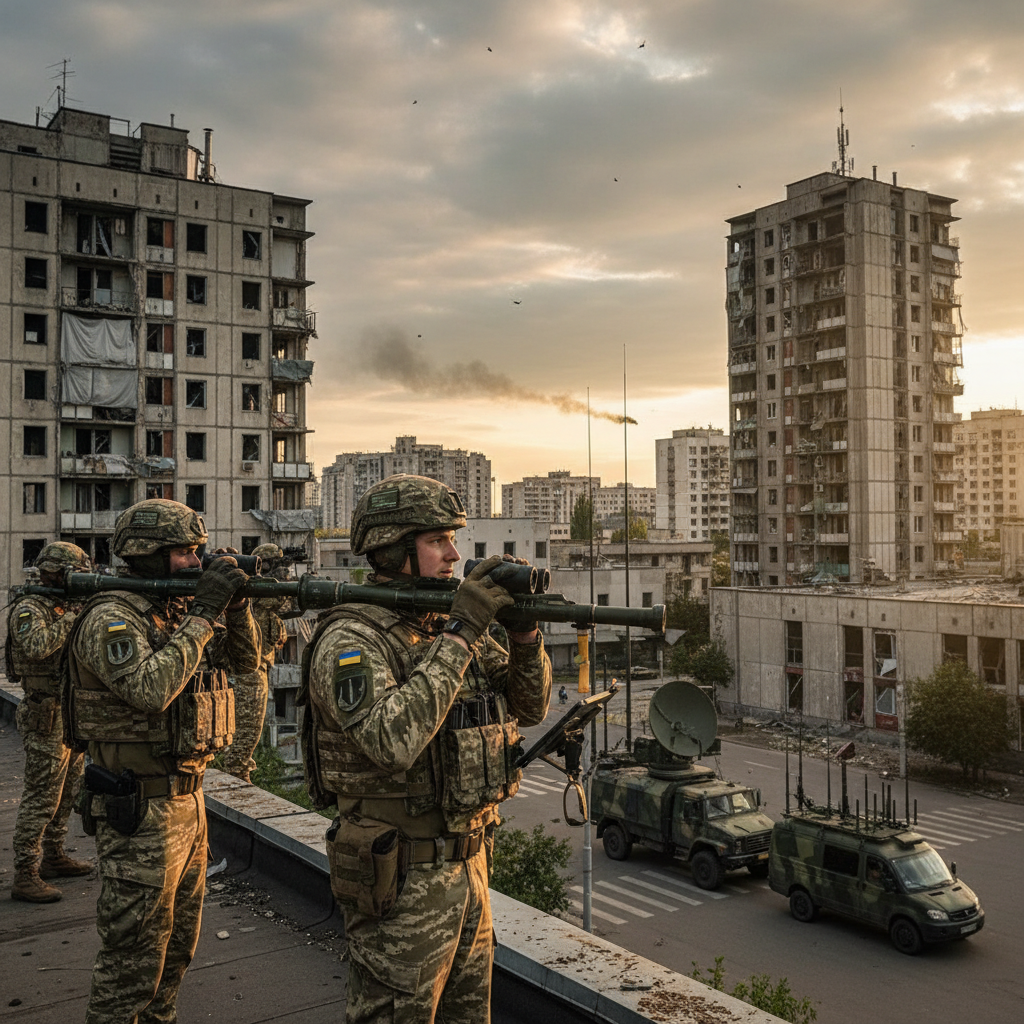
The ongoing conflict between Ukraine and the Russian Federation, now extending into its fourth year as of 2025, has witnessed a marked intensification in the use of drones and missile strikes by Russian forces targeting Ukrainian military and civilian infrastructure. These attacks have severely damaged Ukraine’s energy systems, disrupted daily life, and caused significant civilian casualties, including deaths from drone strikes in urban areas such as Kyiv’s Sviatoshynskyi district. The escalation in aerial assaults comes amid evolving military tactics, with both sides employing advanced unmanned aerial vehicles (UAVs) and layered air defense systems in one of the most technologically complex battlespaces seen in recent history.
Russian forces have launched saturation attacks involving hundreds of drones and dozens of cruise missiles in coordinated operations aimed at crippling Ukraine’s energy grid and infrastructure across multiple regions. Despite robust Ukrainian defenses—comprising electronic warfare, interceptor drones, and Western-supplied missile systems such as the Patriot and Hawk batteries—thousands of civilians have been left without power and essential services, underscoring the high human cost of the conflict. Ukraine’s rapid development and deployment of innovative countermeasures, including volunteer-driven interceptor drones, reflect a dynamic adaptation to Russia’s evolving aerial threats.
The surge in attacks coincides with heightened diplomatic efforts, notably the planned 2025 meeting between Ukrainian President Volodymyr Zelenskyy and former U.S. President Donald Trump, who are expected to discuss peace negotiations focusing on territorial disputes and security guarantees. These talks take place against a backdrop of ongoing violence and strategic brinkmanship, including Russian warnings of potential nuclear escalation and intensified Western sanctions aimed at pressuring Moscow.
This period of intensified strikes and diplomatic engagement illustrates the broader geopolitical stakes of the Ukraine conflict, highlighting the interplay between advanced military technology, humanitarian consequences, and international efforts to broker a resolution amid persistent hostilities.
Background
The armed conflict between Ukraine and the Russian Federation has persisted into its fourth year by 2025, with ongoing hostilities and no ceasefire or political resolution in sight. The intensification of attacks has led to significant civilian casualties and widespread displacement, exacerbating humanitarian needs across the region. Since Russia’s full-scale invasion in 2022, the conflict has witnessed a notable evolution in the use of military technology, particularly the deployment of drones and missiles.
Russian forces have increasingly utilized both air- and ground-based cruise missiles, as well as unmanned aerial vehicles (UAVs), in coordinated strikes against Ukrainian targets. Ukrainian air defense systems have reportedly intercepted dozens of missiles and hundreds of drones during recent attacks, employing a combination of aircraft, anti-aircraft missiles, electronic warfare, and their own unmanned systems to repel the assaults. These strikes have affected both military and civilian infrastructure, including verified drone attacks on residential buildings in Kyiv’s Sviatoshynskyi district, causing injuries to civilians and widespread alarm among residents.
The conflict has also highlighted a significant shift in the strategic role of drones. Previously considered tools primarily used by weaker actors in unconventional or asymmetric warfare, drones have now become central to state military operations in a high-intensity conflict between major powers. Both Russia and Ukraine have adapted small UAVs for frontline use, integrating them extensively into their armed forces. This pivot represents a departure from the traditional perception of drones as merely remote warfare agents and underscores their increasing utility in total war scenarios.
The contested airspace in Ukraine is highly active, with layered countermeasures at multiple frequencies and ranges challenging the effectiveness of UAVs and missile strikes. Unlike previous conflicts, such as the global war on terror where adversaries lacked the capacity to neutralize drones effectively, the Ukrainian battlefield features dynamic electronic warfare and missile defenses designed to disrupt and destroy incoming UAVs. Civilians living near the front lines, such as those in Zaporizhzhia, have experienced frequent bombardments by rockets and drones, forcing them into makeshift shelters amid the constant threat of attack.
These developments form the backdrop to the ongoing diplomatic efforts and preparations for high-level meetings between Ukrainian President Volodymyr Zelenskyy and U.S. President Donald Trump, reflecting the broader geopolitical stakes involved in the conflict and the international response to the escalating violence.
Timeline of Intensified Strikes
In late December 2025, Russia launched a series of intensified missile and drone attacks targeting Ukraine’s energy infrastructure and civilian facilities. On Christmas Day, the Russian offensive included more than 600 drones and 30 missiles aimed at essential infrastructure across multiple regions, resulting in significant damage and the deaths of three civilians, including a four-year-old child. Ukrainian President Volodymyr Zelenskyy described the timing of the attack as a “conscious choice,” noting that while Ukraine had traditionally celebrated Christmas on January 7 following the Julian calendar, it had shifted to December 25 starting in 2023.
The assaults involved coordinated use of air and ground-based cruise missiles, with Ukrainian air defenses repelling many attacks through a combination of aircraft, anti-aircraft missiles, electronic warfare systems, and unmanned interceptors. Despite these defensive measures, thousands of families were left without electricity following strikes in the Kirovohrad, Mykolaiv, Odesa, Sumy, Kharkiv, Kherson, Chernihiv, Dnipro, and Cherkasy regions. These strikes marked the seventh such attack targeting energy infrastructure nationwide within the preceding two months.
Earlier in the month, a similar overnight attack involved approximately 500 drones and 40 missiles, which knocked out power and heating in parts of Kyiv. Zelenskyy linked these escalations to Russia’s reaction to ongoing peace negotiations brokered by Washington, specifically discussions regarding territorial control post-conflict.
Meanwhile, Russia accused Ukraine of retaliatory strikes, including an incident where a Ukrainian drone hit a petrochemical plant in Stavropol, southern Russia, causing a fire. The Kremlin viewed strikes on Russian nuclear-capable bombers as an “existential threat,” with analysts suggesting that Russia’s responses would be significant but should be distinguished from Ukrainian defensive actions.
Amid this intensified conflict, Ukraine has advanced its drone interception capabilities. Experimental use of interceptor drones began in late 2023 and early 2024, with systems like the Sting and Bullet interceptors being deployed to counter surveillance and attack drones effectively. This asymmetric defense has played a critical role in mitigating the scale of damage from Russia’s persistent drone and missile barrages.
Russian Military Capabilities and Strategy
Since the full-scale invasion of Ukraine in February 2022, Russia has maintained control over approximately 20 percent of Ukrainian territory, following territorial gains exceeding four thousand square kilometers in 2024. Despite mounting battlefield setbacks and increasing domestic criticism, Russian military strategy has adapted to incorporate an intensified use of missile and drone strikes targeting Ukrainian infrastructure and military assets.
A notable feature of Russia’s military approach is the extensive deployment of both cruise missiles and unmanned aerial vehicles (UAVs), often referred to as tactical drones. These platforms serve as force multipliers in Russia’s efforts to degrade Ukrainian energy infrastructure and disrupt daily life across multiple cities. The integration of drones into Russian operations marks a significant evolution in state military behavior, moving beyond their traditional use by non-state actors and insurgents to a core component in a high-intensity conflict against a major power.
Russian air attacks frequently involve saturation strikes combining ground- and air-launched cruise missiles alongside swarms of drones, overwhelming Ukrainian air defense systems. Ukrainian forces have intercepted a considerable number of these incoming threats—reports indicate that dozens of missiles and hundreds of drones have been shot down through a combination of aircraft, anti-aircraft missiles, electronic warfare, and unmanned defense systems. However, the diversity and complexity of aerial targets pose ongoing challenges to Ukrainian air defenses, necessitating the procurement and deployment of varied defensive technologies such as US-made Hawk systems, gun trucks, and advanced laser-guided weapons.
In response to the drone threat, innovative solutions have been developed by volunteer groups and startups, producing interceptors like the Sting and Bullet. These systems engage enemy drones through rapid acceleration and direct collision, operated via first-person-view goggles or display interfaces, thus complementing traditional missile and gun-based air defense measures.
Strategically, there have been reported discussions among senior Russian military commanders concerning the potential use of tactical nuclear weapons in Ukraine, reflecting heightened concerns over battlefield failures. However, these deliberations reportedly excluded President Vladimir Putin.
Ukrainian Defense and Response
Ukraine has faced an escalating threat from Russian missile and drone attacks, targeting critical infrastructure and urban centers across the country. In response, Ukrainian forces and their international partners have developed a multifaceted and evolving air defense strategy combining traditional systems, electronic warfare, and innovative domestic technologies.
Air Defense Systems and International Support
Kyiv has strengthened its air defense capabilities with support from international allies, deploying advanced systems such as the US-made Patriot batteries, which have become some of the most valuable assets in the country’s layered defense network. Older systems like the Hawk surface-to-air missiles, restored and modernized with foreign assistance, have also proven effective alongside gun trucks and truck-mounted anti-aircraft guns. However, protection remains uneven; while Kyiv enjoys relatively strong air defense coverage, other major cities such as Kharkiv, Odesa, and Zaporizhzhia continue to suffer regular, often deadly bombardments due to less robust defenses.
Facing dwindling stocks of Soviet-era missiles amid relentless Russian barrages, Ukrainian forces have innovated by adapting and combining existing systems with Western technology. This includes the so-called ‘FrankenSAM’ projects, such as upgrading Soviet Buk-M1 (SA-11 Gadfly) systems to fire NATO RIM-7 Sea Sparrow missiles, as well as modifying 9K33 Osa launchers to fire R-73 missiles. Additionally, improvements have been made to reactivated S-200 batteries through enhanced guidance systems provided by allied partners.
Electronic Warfare and Counter-Drone Measures
Electronic warfare (EW) has emerged as a crucial pillar of Ukraine’s defense, enabling the disruption and neutralization of Russian drones and missiles. Ukrainian EW units have effectively jammed and disabled enemy drones, particularly during major confrontations such as the Battle of Kyiv in 2022 and the large-scale missile attack in January 2023, preventing reconnaissance and combat drones from causing greater damage. Between July 18 and 24, 2024 alone, Ukrainian electronic warfare operators reportedly neutralized nearly 8,000 Russian drones, highlighting the scale and effectiveness of these systems.
Ukraine’s approach integrates electronic suppression with kinetic measures in a layered defense system. Signals intelligence identifies incoming drone threats, which are then jammed or electronically disrupted, followed by physical interception using missile and gun systems when necessary. The development and production of EW equipment is predominantly handled by private Ukrainian companies, some in collaboration with foreign manufacturers, ensuring ongoing innovation and resilience in this domain.
Domestic Innovations and Interceptor Drones
To supplement existing defenses, Ukraine has rapidly developed and deployed inexpensive interceptor drones designed to collide with and destroy high-altitude suicide drones at a fraction of the cost of traditional missile interceptors. Volunteer-driven startups like Wild Hornets produce systems such as the Sting and the Bullet, which are operated using first-person-view technology to enhance targeting precision. These drones form part of a diverse defensive array that includes multimillion-dollar missile systems, nets, and anti-aircraft guns, creating a comprehensive and adaptable response to Russian aerial threats.
Challenges and Humanitarian Impact
Despite these defensive measures, Ukraine continues to endure significant damage to its energy infrastructure and civilian areas due to the intensity of Russian strikes. Widespread power outages and water supply disruptions have affected regions such as Rivne, Ternopil, Khmelnytskyi, Chernihiv, Lviv, and Odesa, exacerbating the humanitarian crisis as millions require assistance and displacement remains high. The sustained attacks underscore the urgency for continued innovation, support, and coordinated defense efforts as Ukraine confronts an increasingly sophisticated and persistent aerial threat.
Humanitarian and Infrastructure Impact
The ongoing full-scale war in Ukraine has precipitated a massive humanitarian crisis, with over 12.7 million people inside the country requiring urgent assistance. Many of these individuals have been displaced multiple times due to intensified hostilities, especially following increased aerial attacks on critical infrastructure in 2025. These attacks have caused widespread power outages and water supply disruptions, heightening concerns about the approaching winter season and exacerbating the plight of internally displaced persons (IDPs) and returnees. The UNHCR has been actively coordinating with national authorities, UN agencies, and local and international partners to provide essential protection, shelter, and non-food items, while also supporting early recovery efforts and durable solutions for affected populations.
Civilian casualties remain a grave concern amid the escalated attacks involving both Russian missiles and drones. According to the Human Rights Monitoring Mission in Ukraine (HRMMU), at least 139 civilians were killed and 738 injured in one recent month alone, with short-range drone strikes accounting for nearly 30% of these incidents. Among the fatalities reported were a four-year-old child and two other civilians, while multiple residential areas, including a working-class district in Kyiv’s Sviatoshynskyi suburb, sustained damage from drone strikes, resulting in injuries to several residents.
The conflict has severely undermined Ukraine’s energy infrastructure, critically affecting the country’s power generation capabilities. By September 2024, approximately 80% of Ukraine’s thermal power capacity had been lost due to Russian attacks, escalating to the destruction of 90% of thermal generation by May 2025. Hydropower facilities have also suffered significant damage, with around 50% impaired and 40% destroyed as of the same period. Consequently, Ukraine’s overall energy production operated at only about one-third of its pre-invasion capacity by the fall of 2025.
Overnight missile and drone strikes have particularly targeted western regions, including Rivne, Ternopil, Khmelnytskyi, Lviv, and Odesa, inflicting severe damage on critical energy infrastructure. These attacks led to widespread emergency power outages, with nearly all consumers in some western areas losing electricity. The national grid operator was forced to implement emergency power cuts across most regions, canceling previously scheduled outages and plunging many cities, including Kyiv, into darkness. Authorities have emphasized the prioritization of essential services and reduced non-critical lighting amid the energy sector’s ongoing crisis.
Efforts to counter these aerial threats have evolved since late 2023, with initial experiments involving interceptor drones and electronic warfare proving integral to Ukraine’s defense strategy. The deployment of advanced systems such as the Patriot missile defense systems has been highlighted by Ukrainian leadership as crucial to shielding major urban centers and vital infrastructure from missile and drone attacks, potentially altering the strategic dynamics of the conflict.
The conflict’s impact extends to nuclear facilities, with the Zaporizhzhia nuclear plant experiencing operational disruptions. Both Ukrainian and Russian sides have accused each other of attacks and power line severances, leading to intermittent power supplies. The plant’s six reactors have been placed in “cold shutdown,” relying on emergency diesel generators during power interruptions, raising international concern over nuclear safety amid ongoing hostilities.
Political and Diplomatic Context
In the lead-up to the planned meeting between Ukrainian President Volodymyr Zelenskyy and former U.S. President Donald Trump, there was significant focus on advancing peace negotiations amid ongoing conflict. Zelenskyy outlined a “broad agenda” for the discussions, highlighting key issues such as the fate of the Donbas region in eastern Ukraine and the management of the Russian-occupied Zaporizhzhia nuclear power plant. These topics represent some of the most contentious sticking points between Kyiv and Washington in efforts to broker a ceasefire or peace deal.
The meeting, scheduled to take place in Florida, was seen as a critical diplomatic effort to address both security guarantees for Ukraine and territorial control following Russia’s full-scale invasion in 2022. Zelenskyy was expected to bring a comprehensive 20-point plan aimed at ending the war, with an emphasis on restoring stability and negotiating terms that would be acceptable
International Involvement and Reactions
The intensifying drone and missile strikes on Ukraine have prompted significant international responses, reflecting the complex geopolitical stakes of the conflict. Western countries, including the United States and its allies, have intensified their support for Ukraine by providing advanced air-defense systems such as the Patriot, IRIS-T, NASAMS, and MIM-23 Hawk, along with gun trucks to protect Ukrainian airspace from missile and drone attacks. The Pentagon also launched the “FrankenSAM” project in 2023, aimed at developing surface-to-air missile systems capable of firing AIM-9M missiles constructed from components sourced from the US and partner nations for Ukrainian use. This demonstrates a strategic pivot in state military behavior, incorporating small unmanned aerial vehicles (UAVs) on a large scale to counter Russian forces in what has become a total war scenario.
On the diplomatic front, high-profile negotiations have been underway, involving key figures such as U.S. special envoy Steve Witkoff, Jared Kushner, and Ukrainian negotiators Rustem Umerov and Andriy Hnatov. Their meetings in Florida reflect ongoing efforts to broker a U.S.-mediated proposal aimed at ending the war, though details remain vague and progress uncertain. This diplomatic activity coincides with Russia’s extensive overnight attacks on Ukraine, which included 653 drones and 51 missiles and triggered nationwide air raid alerts on Ukraine’s Armed Forces Day.
From a strategic and security perspective, the Kremlin views these strikes, especially those targeting Russian nuclear-capable bombers, as an “existential threat.” Experts suggest that Russia’s response could be significant, yet Western officials emphasize that Ukraine’s actions are defensive measures in response to Russia’s massive air assaults on Ukrainian cities and towns. This dynamic recalls Cold War-era strategic dilemmas, with fears that escalation could potentially lead to nuclear conflict. Notably, in the lead-up to the invasion, Russian President Vladimir Putin ordered a shift to a “special regime of combat duty,” and Russia conducted nuclear launch system exercises, underscoring heightened strategic alertness.
The international community has also reacted with severe economic measures. The United States, in coordination with G7 allies and partners, has imposed the most stringent sanctions ever levied on a major economy, including Executive Order 14071, which prohibits new investments in and certain services to Russia in response to ongoing aggression. These sanctions form part of a broader strategy to pressure Russia economically while supporting Ukraine militarily and diplomatically.
Meanwhile, humanitarian concerns have escalated, with over 12.7 million people in Ukraine requiring assistance amid intensified hostilities in 2025. Renewed aerial attacks on critical infrastructure have caused major power outages and water shortages, raising urgent concerns about the wellbeing of the civilian population ahead of winter.
Analysis and Expert Commentary
Prior to the full-scale Russian invasion of Ukraine in 2022, academic perspectives on military drones primarily focused on their strategic impact as remote warfare agents, often overlooking their tactical advantages and enabling functions on the battlefield. However, the conflict has demonstrated how small tactical drones have become pivotal tools for both reconnaissance and precision strikes, significantly altering battlefield dynamics. Scholars now recognize that these drones have empowered underdog forces by enhancing situational awareness and providing cost-effective offensive capabilities.
The ongoing conflict has also highlighted the evolving nature of electronic warfare and air defense systems. Despite Russia’s high losses in the autumn of 2023, its deployment of distributed and decentralized electronic warfare systems has been more effective in disrupting Ukrainian counteroffensives, particularly through jamming American rocket systems. Meanwhile, Ukraine’s air defense capacity has increasingly relied on private sector innovation and international partnerships to produce electronic warfare equipment. Ukrainian forces have adapted legacy platforms such as Su-24 bombers to launch advanced missiles like the Storm Shadow, incorporating components from retired British Panavia Tornado aircraft.
Experts emphasize the complexity of countering diverse aerial threats, especially drones. Ukrainian air defense commanders have called for a broader range of air defense tools, including laser-guided weapons and systems like the U.S.-provided Hawk missiles, which, despite predating more advanced Patriot systems, have proven valuable in defending against drone and missile attacks. Gun trucks and other mobile air defense platforms have also contributed to Ukraine’s layered defensive posture.
The intensification of drone and missile strikes on energy and military infrastructure reflects a strategic effort by both sides to undermine each other’s war-sustaining capabilities. Ukraine’s increased targeting of Russian oil refineries aims to cut critical funding streams for Moscow’s military operations, while Russia’s attacks on Ukrainian energy and logistics aim to pressure Kyiv into accepting unfavorable terms in U.S.-backed peace negotiations.
The content is provided by Avery Redwood, 11 Minute Read


