Summary
The China Hits Back at Trump’s Claims Accuses US of Undermining Geneva Trade Deal controversy centers on the escalating tensions between China and the United States following a trade agreement reached in Geneva in early 2025. The deal, negotiated amid a protracted trade war, aimed to reduce tariffs and improve economic cooperation between the world’s two largest economies. While the agreement initially raised hopes for easing trade frictions and fostering a more stable bilateral relationship, it quickly became a flashpoint when then-President Donald J. Trump publicly accused China of violating the terms, alleging noncompliance related to critical mineral deliveries and other trade commitments.
In response, Chinese officials vehemently denied the U.S. accusations, asserting that Beijing had fully adhered to the Geneva agreement and condemning American actions—such as export controls on advanced technologies and visa restrictions on Chinese students—as unilateral measures that undermined the spirit of the deal. China’s commerce ministry emphasized its commitment to the agreement and warned of “resolute and forceful measures” to protect its interests, while also expressing willingness to continue dialogue with the United States to resolve disputes through established channels.
The dispute highlighted the fragility of the Geneva trade deal and the broader challenges in U.S.-China economic relations under the Trump administration. It underscored conflicting negotiation styles and strategic priorities, with Washington favoring rapid deal announcements and China preferring extensive groundwork before public leader engagement. Furthermore, the conflict exposed deeper issues, including inconsistent U.S. tariff policies, technology restrictions, and geopolitical rivalries that complicated efforts to stabilize trade ties.
Central to managing this dispute are the World Trade Organization’s (WTO) enforcement and dispute resolution mechanisms, which provide a legal framework for arbitration and negotiation aimed at preventing escalation. Both countries invoked these multilateral processes as part of their strategies, reflecting the intricate balance between bilateral tensions and global trade governance. The ongoing negotiations and retaliatory measures have continued to influence the trajectory of U.S.-China economic relations, illustrating the complex interplay of trade policy, national security, and international diplomacy in the 21st century.
Background
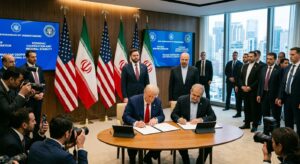
The U.S.-China trade relationship experienced heightened tensions amid a protracted trade war that disrupted supply chains, led to layoffs, and contributed to rising wholesale prices. Against this backdrop, a series of high-level negotiations took place, including meetings in Geneva where U.S. Treasury Secretary Scott Bessent and Trade Representative Jamieson Greer described progress toward resolving trade disputes and reducing the substantial $1.2 trillion U.S. global goods trade deficit with China. The White House announced a trade deal reached during these discussions, highlighting the rapid agreement as indicative that the differences between the two countries might not have been as significant as initially perceived.
Chinese officials, including Vice Premier He Lifeng and Vice Commerce Minister Li Chenggang, expressed optimism regarding the joint statement expected from the Geneva talks, describing it as “good news for the world.” Both sides emphasized ongoing communication and cooperation to maintain a sustainable, long-term economic and trade relationship. The U.S. committed to modifying certain tariffs imposed on Chinese goods by May 2025 as part of this effort.
Despite these positive signals, the trade talks remained fragile. The World Trade Organization’s Dispute Settlement Understanding (DSU) continued to serve as an important framework for resolving conflicts, emphasizing negotiation and arbitration to prevent escalation. This system underscored the complexity of managing global trade disputes in an environment where bilateral tensions could quickly affect multilateral trade relations.
However, the post-Geneva period saw deteriorating relations, with China refuting U.S. claims that it had violated the terms of the agreement. Beijing accused Washington of breaching the deal and escalating economic and trade frictions unilaterally, contributing to renewed uncertainty and instability in bilateral relations. The contrasting diplomatic styles between the U.S., which sought to showcase rapid dealmaking, and China, which favored extensive groundwork before public leader engagement, also complicated the talks. Rising tensions extended beyond trade, further hampering the prospects for sustained dialogue between the two powers.
Meanwhile, the Trump administration faced criticism for an inconsistent tariff policy that not only strained relations with China but also affected other countries seeking to negotiate tariff reductions. Although some officials admitted that the imposed tariffs were unsustainable and signaled a willingness to reduce them, the uncertainty surrounding the trade talks raised doubts about the long-term efficacy of the trade disruptions. Many American businesses, wary of the trade climate, canceled orders and postponed expansion plans, questioning whether the short-term disruptions justified the limited immediate concessions obtained from China.
Trump’s Claims and Allegations
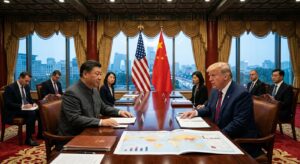
In the aftermath of the trade deal signed between the United States and China in Geneva, Switzerland, President Donald J. Trump publicly accused China of violating the terms of the agreement. Trump claimed that Beijing had “totally violated” the deal, which was initially intended to reduce tariffs for 90 days while further negotiations took place. However, he did not provide specific details on how China had breached the agreement or outline the exact actions the U.S. planned to take in response.
The Trump administration pointed to delays in the delivery of critical minerals from China, which are essential to American industries such as automotive, electronics, and defense, as evidence of noncompliance. These allegations came amid broader trade tensions, with the U.S. escalating export restrictions on semiconductor design software and chemicals, as well as revoking visas for Chinese students—measures that Beijing criticized as seriously undermining the Geneva deal.
White House press secretary Karoline Leavitt emphasized that, under President Trump’s direction, the administration was aggressively working to onshore critical supply chains, including magnet production, to reduce reliance on China. She also stated that the U.S. was actively monitoring China’s compliance with the agreement and that Trump planned to speak directly with President Xi Jinping soon.
Despite Trump’s accusations, U.S. officials acknowledged that trade negotiations had stalled, as noted by Treasury Secretary Scott Bessent in a Fox News interview. The trade talks, which had initially resulted in a surprising agreement to reduce tariffs more than anticipated, were seen by some in the administration as an opportunity to reset the economic relationship between the two countries.
Meanwhile, the Chinese commerce ministry rejected the U.S. claims, describing them as “seriously contrary to the facts.” China insisted that it had strictly implemented and actively upheld the agreements reached in Geneva, including steps to cancel and suspend certain tariff and non-tariff measures announced earlier in response to U.S. reciprocal tariffs. The ministry also vowed to take “resolute and forceful measures” to safeguard its rights and interests if the U.S. continued actions it viewed as undermining the deal.
The Geneva trade deal itself was framed as a mechanism to continue discussions on economic and trade relations, with designated representatives from both countries committed to ongoing consultations. However, the unfolding dispute highlighted the fragility of the agreement and the ongoing challenges in U.S.-China trade relations during the Trump administration.
China’s Official Response
Following accusations from the United States that China violated the Geneva trade agreement, Chinese officials strongly refuted these claims, asserting that the U.S. allegations were “seriously contrary to the facts” and emphasizing Beijing’s adherence to the commitments made during the Geneva talks. Liu Pengyu, spokesperson for China’s embassy in Washington, called on the U.S. to immediately correct its “erroneous actions” and cease discriminatory restrictions against China, urging both sides to uphold the consensus reached at the high-level Geneva meeting.
The Chinese commerce ministry maintained that China had “strictly implemented and actively upheld” the Geneva agreements, highlighting its efforts to cancel and suspend certain tariffs and non-tariff measures initially announced in April as a reciprocal response to U.S. tariffs. At the same time, Chinese officials accused the U.S. of seriously undermining the deal by introducing new export control guidelines on artificial intelligence chips, halting sales of chip design software (EDA) to China, and revoking visas for Chinese students studying in the United States, estimated at around 280,000 individuals. These actions were portrayed as violations of the spirit and letter of the Geneva agreement.
Despite these tensions, China expressed willingness to continue communications on trade matters with U.S. counterparts, reflecting a desire to move forward “in the spirit of mutual opening, continued communication, cooperation, and mutual respect,” as outlined in their mutual commitments by mid-May 2025. Chinese Vice Premier He Lifeng described recent trade talks as “candid” and noted “substantial progress” toward an important consensus, signaling Beijing’s intent to maintain dialogue despite growing bilateral frictions.
In sum, China’s official response centered on rejecting U.S. accusations, defending its compliance with Geneva commitments, and condemning U.S. measures perceived as undermining the agreement, while simultaneously advocating for renewed dialogue and cooperation to resolve ongoing trade disputes.
Enforcement and Dispute Resolution Mechanisms
The enforcement of trade agreements and the resolution of disputes between member nations are central to maintaining the stability and effectiveness of the multilateral trading system. The World Trade Organization (WTO) plays a pivotal role in this regard through its Dispute Settlement Understanding (DSU), which provides a structured and legally binding framework for addressing trade conflicts. This system is widely regarded as one of the most active international dispute settlement mechanisms, ensuring that WTO agreements are upheld and that violations are appropriately managed.
At the heart of this framework is the Dispute Settlement Body (DSB), which oversees the entire process, including the establishment of panels, the adoption of rulings, and the authorization of retaliatory measures if necessary. The DSB serves as a crucial forum where member nations, such as Indonesia, can seek arbitration and appeal decisions related to trade disputes. This mechanism balances the need for strict enforcement with opportunities for negotiation and amicable resolution, encouraging parties to resolve issues before escalating them formally.
A significant aspect of the WTO’s approach is the emphasis on preemptive negotiations. The organization encourages member states to engage in consultations aimed at resolving disagreements without resorting to litigation. This not only helps to preserve trade relationships but also reduces the burden on formal dispute procedures. When disputes do escalate, the WTO’s Appellate Body provides a further layer of review, ensuring that rulings are consistent and legally sound across jurisdictions.
The enforcement mechanisms also draw on precedents such as the Convention on the Recognition and Enforcement of Foreign Arbitral Awards, which facilitates the cross-border recognition of arbitration decisions. This is particularly important in the global trade context where agreements and disputes often transcend national boundaries.
In the context of the recent tensions between the United States and China following the Geneva trade deal, China’s response underscored the critical role of these enforcement and dispute resolution mechanisms. China accused the United States of undermining the deal and signaled its intention to use available measures to protect its rights and benefits under the agreement. This included the potential use of WTO procedures to address grievances and enforce compliance, highlighting the WTO’s dispute settlement system as a key instrument in managing and resolving high-stakes trade conflicts.
Furthermore, the establishment of consultation mechanisms between the U.S. and China for ongoing trade and economic issues exemplifies the WTO’s emphasis on dialogue and negotiation as essential tools for dispute prevention and resolution. These mechanisms facilitate continuous communication and cooperation, helping to mitigate misunderstandings and prevent disputes from escalating into protracted conflicts.
Analysis of the Dispute
The dispute between China and the United States over the Geneva trade deal reflects deeper tensions rooted in competing economic strategies and geopolitical rivalries. Central to this conflict is the multilateral trading system’s dispute settlement mechanism, which plays a crucial role in maintaining global trade stability by providing forums for arbitration and enforcing trade rules. The World Trade Organization’s Dispute Settlement Body (DSB) serves as a critical platform where member nations, including China and the U.S., seek to resolve trade disagreements while managing tariffs and authorizing retaliatory measures to ensure compliance with international agreements.
The trade tensions have been exacerbated by the erratic tariff policies implemented by the Trump administration, which imposed substantial import taxes on China and other trading partners, triggering widespread uncertainty in global markets. Although initial tariff impositions were intended to support American workers and address the growing trade deficit, critics argue that these measures disrupted supply chains and raised costs across industries. Subsequent negotiations, such as the Geneva talks, resulted in agreements to reduce some levies, but skepticism remained on both sides regarding the sincerity and durability of these commitments.
China’s pushback against U.S. accusations of violating the Geneva agreement underscores the broader mistrust characterizing bilateral relations. Beijing contends that Washington’s increased restrictions on technology exports and visa policies targeting Chinese students have escalated tensions beyond trade, complicating efforts to reach a comprehensive resolution. This multifaceted conflict is further complicated by divergent political factions within the U.S., ranging from nationalist hardliners advocating economic and potentially military confrontation to business leaders seeking more cooperative engagement with China.
The framework established by the May 14, 2025, commitments to continue high-level discussions reflects a mutual recognition of the importance of their economic and trade relationship, with designated representatives from both sides tasked with ongoing dialogue. However, the enduring challenge lies in reconciling the United States’ demands for a “level playing field” with China’s emphasis on sovereignty and developmental priorities. The dispute exemplifies the complex interplay between trade policy, national security concerns, and geopolitical strategy in the contemporary global order.
Follow-up Developments and Aftermath
Following the high-level trade talks in Geneva, where U.S. Treasury Secretary Scott Bessent and Chinese Vice Premier He Lifeng declared substantial progress and reached an important consensus, both sides committed to continuing discussions aimed at improving their economic and trade relationship. The agreement included China suspending a significant portion of additional tariffs on U.S. goods, while the United States agreed to modify its own tariff applications on Chinese products, including those from Hong Kong and Macau, reflecting a mutual effort to de-escalate trade tensions.
Despite these positive steps, tensions remained palpable as both countries navigated complex political and strategic interests. Chinese officials repeatedly urged the United States to cease discriminatory practices and engage in dialogue on an equal footing, emphasizing the importance of respecting prior agreements reached in Geneva. Meanwhile, U.S. accusations that China had not fully complied with the trade commitments were met with strong denials from Beijing, which asserted it had actively upheld the agreed measures, including tariff suspensions and administrative actions taken since April 2025.
Observers noted that structural differences in negotiation styles contributed to challenges in sustaining momentum. While the U.S. administration, particularly under President Trump, favored high-profile leader involvement early in the negotiation process, Chinese tradition typically reserves such engagement for when substantial agreements at lower levels are nearly complete. This divergence partly complicated diplomatic communications and contributed to the fluctuating progress in talks.
Following the announcement, plans were set for ongoing working-level consultations, with designated representatives—He Lifeng for China and Scott Bessent alongside U.S. Trade Representative Jamieson Greer for the United States—tasked with steering future economic and trade discussions. These meetings were intended to alternate locations between the two countries or a mutually agreed third country, signaling a structured yet flexible approach to resolving outstanding issues.
Nevertheless, concerns lingered that the fragile détente might unravel. Analysts warned that the unresolved underlying frictions could reignite a trade war, given the highly charged political environments and the broad range of economic and geopolitical disputes overshadowing the bilateral relationship. This backdrop underscored the complexities of sustaining a stable trade agreement amid competing national interests and global economic pressures.
The content is provided by Sierra Knightley, 11 Minute Read