
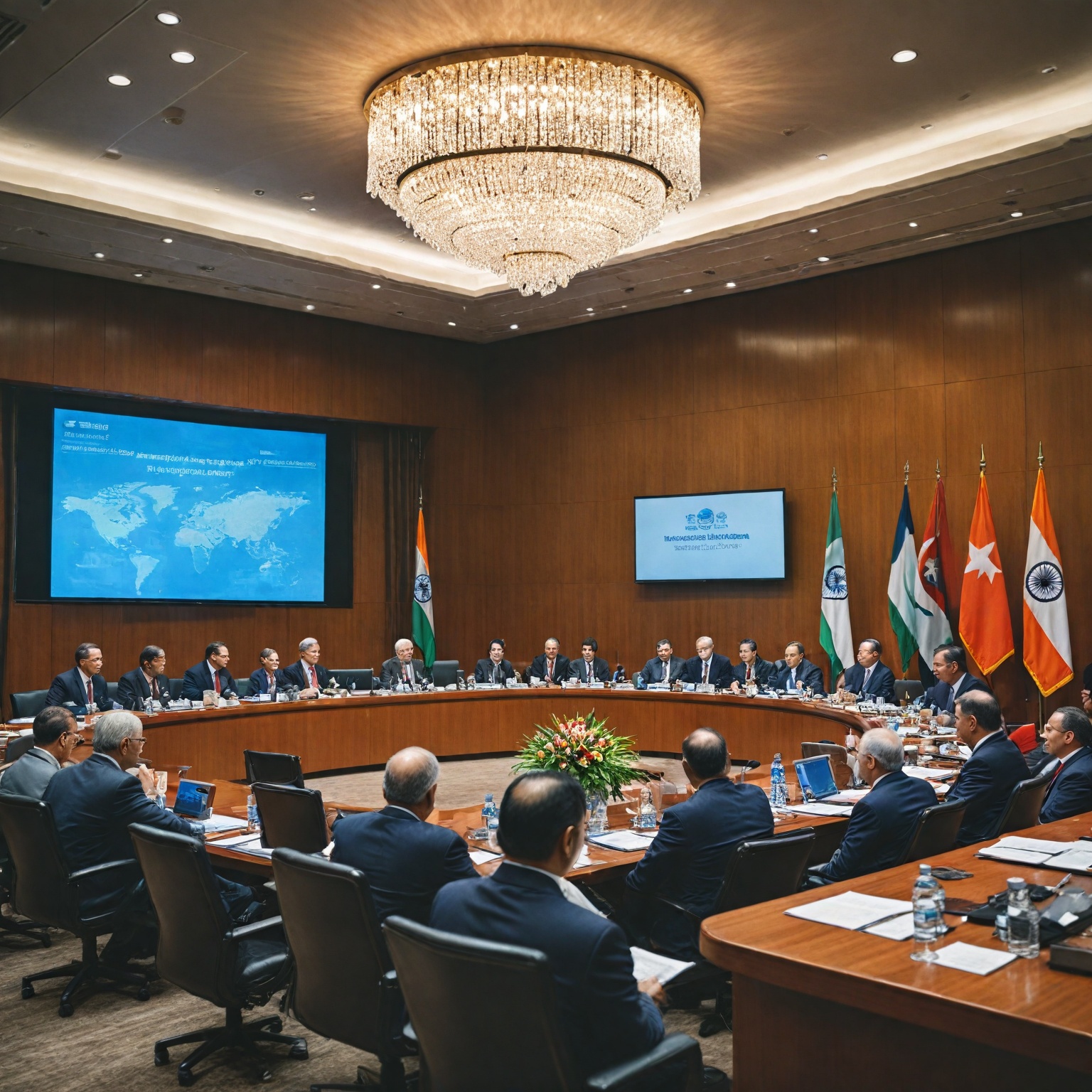
Strategic Resilience Amid Global Shifts
India’s robust response to global challenges is underscored by External Affairs Minister Subrahmanyam Jaishankar, emphasizing strategies for hedging, de-risking, and diversification. These strategies are essential as India confronts significant disruptions from global events such as the Covid-19 pandemic and geopolitical tensions. Jaishankar asserts that these challenges reveal the strategic necessity for India to enhance national capabilities and foster diversified global partnerships to effectively navigate an uncertain international landscape.
Vision for Development: Viksit Bharat 2047
Jaishankar advocates for the vision of Viksit Bharat 2047, aiming to establish India as a self-reliant, high-income economy by the centenary of its independence. Essential to this vision are structural reforms and international collaboration to drive innovation and secure resources. A clear focus on balancing strategic autonomy with engagement across diverse global partners is critical, particularly with nations such as Russia, the UAE, and Japan, enhancing India’s geopolitical standing and economic ties.
Navigating Criticism and Complexities
India’s strategy encounters challenges regarding the balance of strategic autonomy and dependency on major powers. Critics highlight the potential vulnerabilities that arise from deep relationships with countries like the US and China. Additionally, managing domestic reforms requires careful implementation to avoid socio-economic disruption while aligning with the goal of attracting investments and formalizing the economy.
Government Initiatives for Economic Resilience
India’s economic strategy is informed by comprehensive fiscal reforms and proactive foreign policy aimed at risk mitigation. The introduction of the Goods and Services Tax (GST) and landmark labor codes are pivotal in formalizing the economy and enhancing compliance for businesses. Strategic investments in infrastructure and productivity enhancement are prioritized, aiming to bolster growth while navigating debt dynamics.
International Partnerships and Strategic Engagement
Jaishankar stresses the importance of diversifying international partnerships to strengthen economic resilience and mitigate risks linked to global geopolitical tensions. India is enhancing relations with the European Union and the UAE through various trade agreements. These efforts are designed to bolster trade ties, ensuring stable economic relationships amidst shifting global power dynamics.
Future Growth Outlook
Looking ahead, India’s growth projections indicate resilience amid global challenges, with the IMF forecasting a 6.6% growth rate in 2025–26 as structural reforms take root. Jaishankar is optimistic about achieving high-income status, emphasizing the need for ongoing reform implementation and expanded market access. Stronger ties with countries like Russia and continued engagement with Japan and Spain illustrate India’s multifaceted approach to enhancing its global standing in a dynamic environment.
The content is provided by Jordan Fields, 11 Minute Read


