
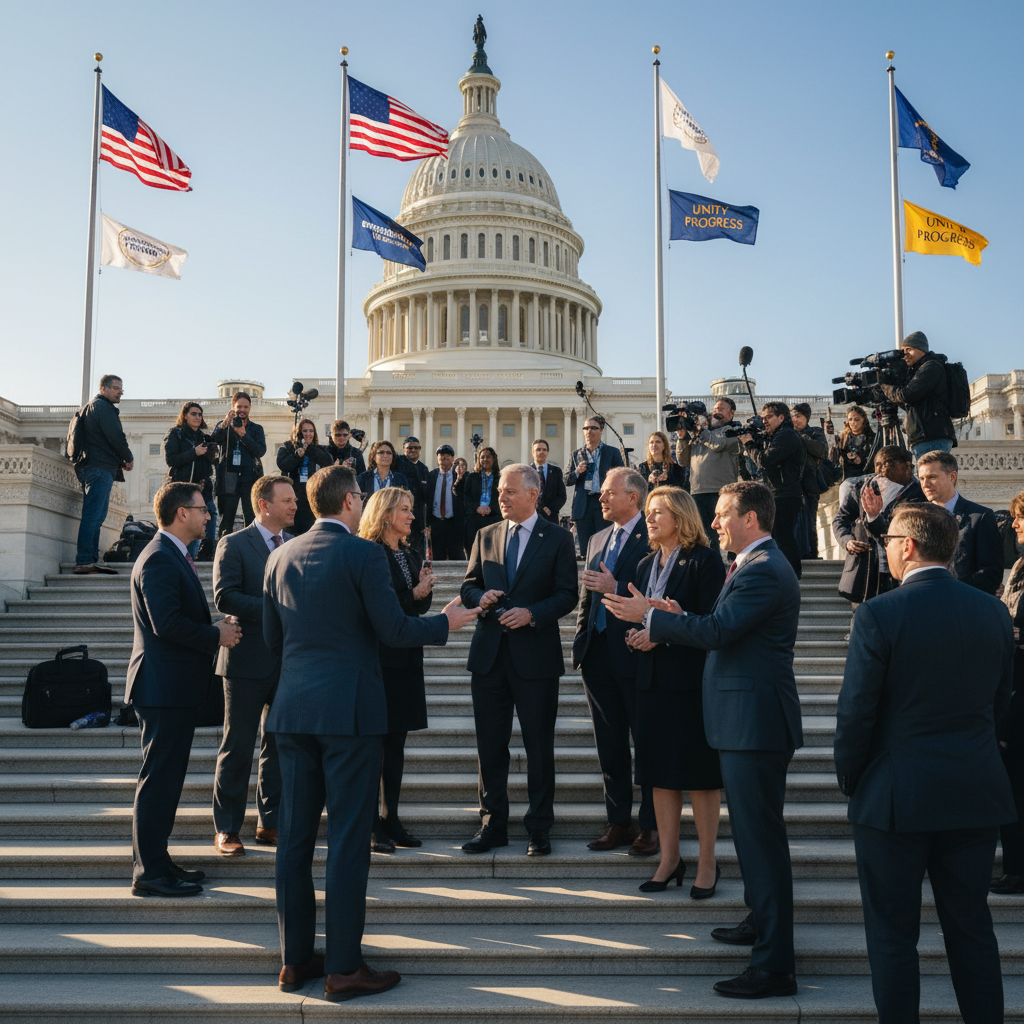
Summary of Recent Funding Bills
On January 22, 2026, the House of Representatives passed essential funding bills crucial for preventing a potential partial government shutdown. This set of appropriations, covering departments such as Defense, Health and Human Services, and Homeland Security, aims to finance the federal government through Fiscal Year 2026. The legislative efforts sought to avoid a repeat of the historic 43-day shutdown experienced the prior September, driven by partisan conflicts over budget priorities.
The approval was not without controversy, particularly regarding Immigration and Customs Enforcement (ICE) funding and the absence of significant immigration reforms. Despite opposition, the Homeland Security bill passed narrowly at 220-207, while a combined package received broader support at 341-88. Republican leaders framed these bills as part of the “America First” agenda, promoting national security and infrastructure improvements.
Funding Bills and Political Dynamics
The House recently approved the final set of funding bills necessary to avert a government shutdown, highlighting the intricate political dynamics at play. While the Homeland Security bill faced criticism from Democrats due to its funding approaches to ICE, it ultimately passed. The broader “minibus” package, which included other key appropriations bills, received strong bipartisan support.
House Republicans framed their approach as responsible governance, contrasting it with the previous reliance on omnibus packages. Notable investments include enhanced infrastructure and technological advancements. However, the final passage is contingent upon Senate agreement, with a looming deadline requiring prompt action to avoid disruptions.
Legislative Process Overview
The House’s legislative process for appropriations involves extensive review and debate among twelve subcommittees. Each subcommittee develops funding proposals that form the complete appropriations package. As these bills advance, they must garner majority support in both chambers of Congress, elucidating the challenges of achieving consensus amid political factions.
Recent appropriations have showcased bipartisan cooperation, yet internal divisions within both parties emerged during negotiations. Moderate Democrats and conservative Republicans sought to balance competing demands, emphasizing the need for fiscal responsibility while advancing their party agendas. The narrow margins of approval reflect ongoing political tensions that complicate the appropriations process.
Senate Considerations and Challenges
Following the House’s passage, the Senate pushed to advance similar funding measures, requiring bipartisan support to avert a government shutdown. Past challenges, particularly regarding the Department of Homeland Security funding, showcased the complexities of addressing immigration policies while striving for overarching funding agreements.
Weather-related delays posed additional risks to timely Senate action, underscoring the urgency to complete funding decisions before the impending shutdown deadline. Thus, the bipartisan efforts signify an ongoing commitment to maintain government stability through cooperative legislative action.
Political Implications and Reactions
The quick passage of the funding bills underlines pressing political dynamics within Congress, as Republicans aimed to present themselves as responsible caretakers of governance while leveraging funding decisions to further their policy goals. Republicans portrayed the appropriations as moves towards fiscal discipline and national security enhancement, while Democrats raised concerns about funding allocations tied to ICE, reflecting ideological divides.
As each party navigates its internal factions, the reactions to proposed spending measures highlight the balancing act required to achieve bipartisan support in the current legislative landscape. The tension over immigration funding, in particular, illustrates the friction impacting broader negotiations.
Broader Impact and Future Directions
The passage of the funding bills has significant implications for federal governance, promoting long-term stability over the cycle of temporary funding measures. This focus on full-year appropriations aims to mitigate future government shutdown threats while fostering accountability in the appropriations process. However, underlying political divisions may pose ongoing challenges for consensus in addressing funding decisions.
Ultimately, the recent funding actions not only secure necessary resources for critical programs but also emphasize the need for collaborative governance amidst partisan disagreements. As Congress approaches future funding deadlines, the balance between fiscal priorities and ideological commitments will remain pivotal in shaping the legislative landscape.
The content is provided by Jordan Fields, 11 Minute Read


