
Summary
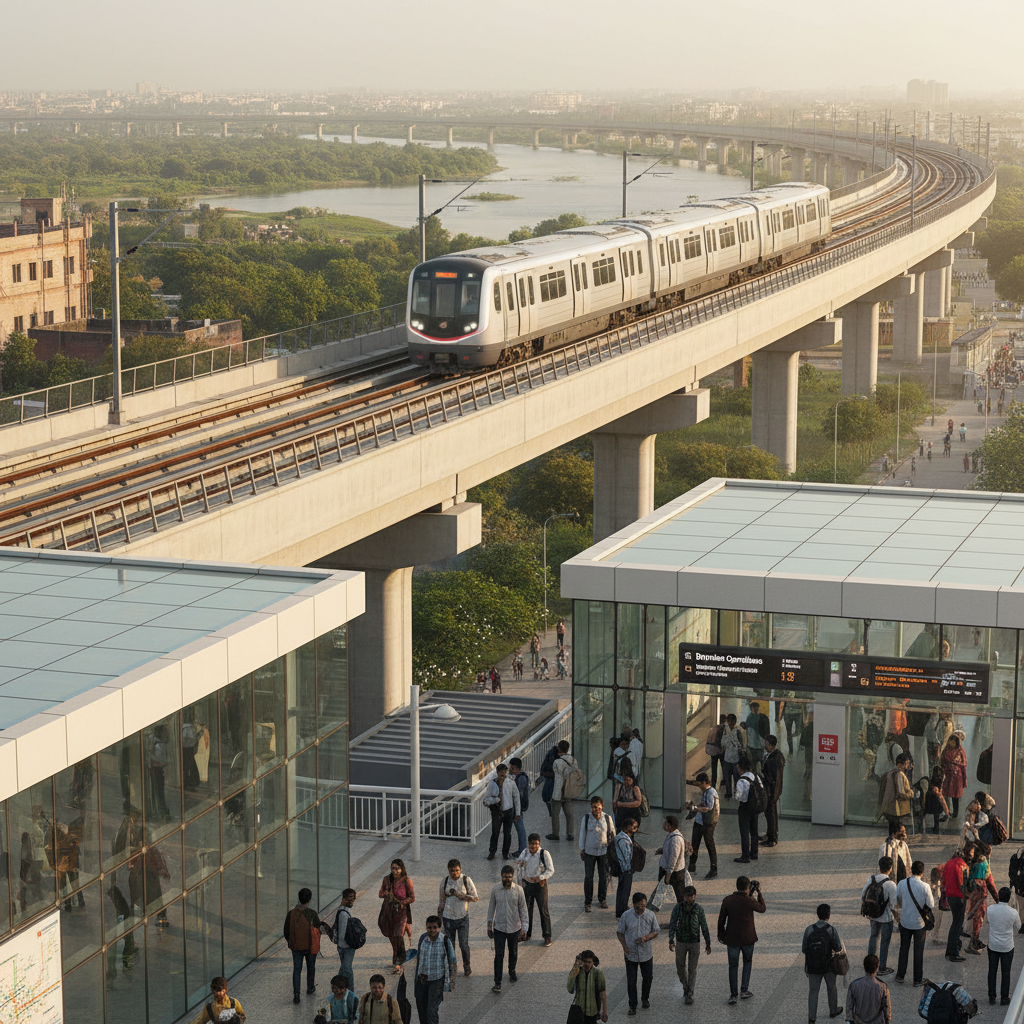
The Majlis Park–Maujpur-Babarpur corridor is a key segment of Delhi Metro’s Phase IV expansion, officially inaugurated on March 8, 2025. This 12.3-kilometre elevated stretch includes ten new stations, enhancing connectivity in previously underserved areas of northern and northeastern Delhi. Its construction features India’s first double-decker viaduct over the Yamuna River and utilizes advanced Communication-Based Train Control (CBTC) technology, with plans for full driverless operations by early 2026, all aimed at improving commuter reliability and experience.
Background and Project Overview
As a vital part of Phase IV, the corridor facilitates easier travel across north and northeast Delhi. It links several residential and commercial hubs, addressing previous transit gaps. The infrastructure includes a significant double-decker viaduct and is fully elevated, reducing road interference. With a total investment exceeding ₹18,300 crore, the initiative supports the broader goal of creating a modernized transportation framework in Delhi.
Implementation
Inaugurated on March 8, 2025, the corridor completion marks a significant milestone, allowing seamless travel around Delhi’s metro loop. Funded through a mix of government equity and international loans, including ₹4,310 crore from JICA, the project exemplifies a model minimizing public funding reliance. Initial construction commenced in late 2019, achieving operational readiness by November 2025 despite some minor post-opening closures for maintenance.
Impact and Significance
The corridor significantly improves urban mobility in Delhi, linking critical neighborhoods and reducing both travel times and congestion. The economic boost is visible, particularly in areas like Yamuna Vihar, with rising property values attributed to improved transport accessibility. The project highlights sustainable financing practices and positions the Delhi Metro as a leader in modern transit solutions, promising enhanced travel experiences with advanced signaling technologies.
Integration with Delhi’s Transit Network
The corridor completes a continuous loop for Delhi Metro, enabling circumferential travel without needing to interchange at central stations. With 38 stations and multiple interchange points, it enhances connectivity across densely populated areas. The simultaneous expansion of other metro lines complements this development, further improving accessibility and environmental sustainability across Delhi.
Political and Public Reception
The corridor’s inauguration was met with substantial political support, aimed at positioning it as a transformative urban mobility solution. Public enthusiasm surrounded the launch, as citizens anticipated improved accessibility and reduced travel times to key neighborhoods. The significance of this project reflects broader infrastructure investments addressing urban transit challenges comprehensively.
Future Developments
Delhi Metro Phase IV will continue evolving, with further extensions anticipated through 2026. Remaining sections are under construction, enhancing urban connectivity further. The financial backing for these projects continues to focus on sustainable practices, reflecting a commitment to modernizing Delhi’s transit systems while maintaining efficiency and reliability for commuters.
The content is provided by Harper Eastwood, 11 Minute Read


