
Summary
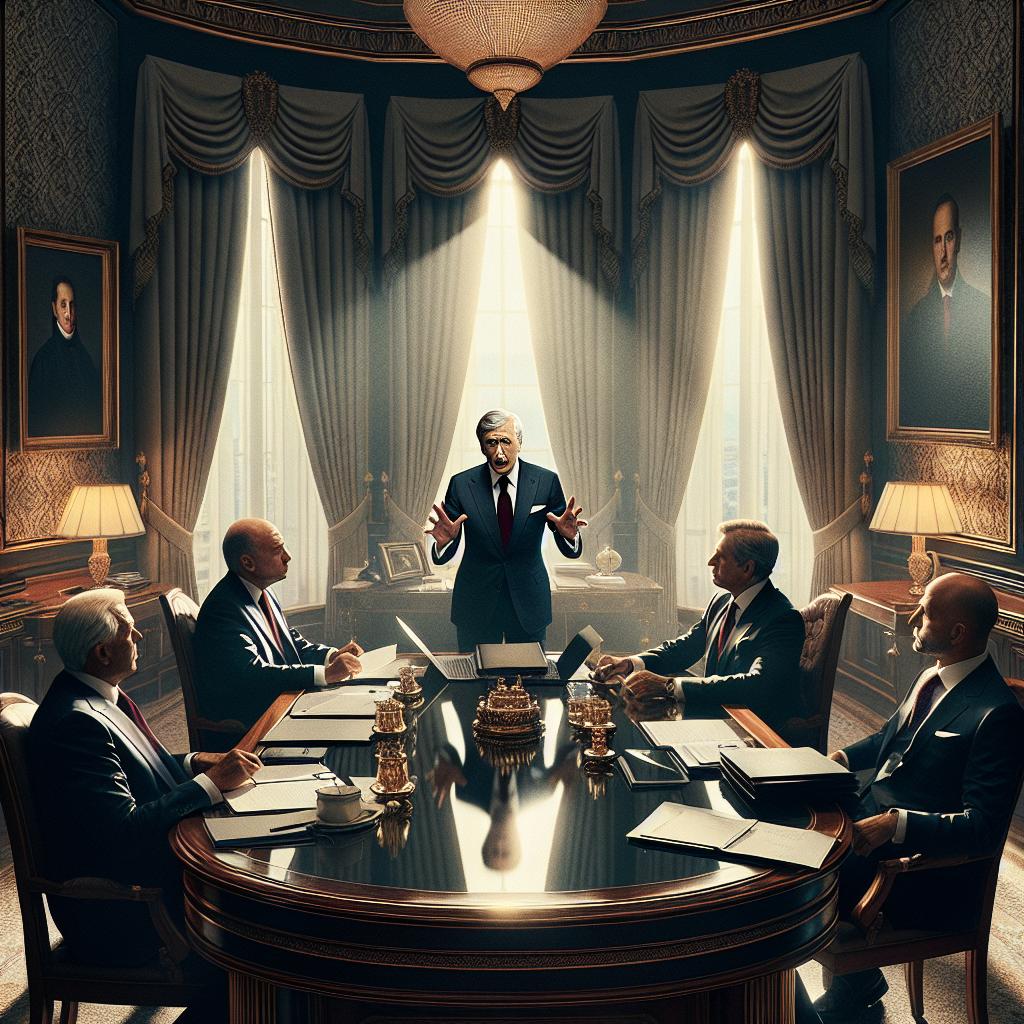
The exclusive meeting held in April 2025 between President Donald Trump and the chief executives of major U.S. retailers Walmart, Target, and Home Depot marked a significant moment in the ongoing trade tensions between the United States and China. Convened privately at the White House, the discussion focused on the impact of escalating tariffs on imported goods, supply chain disruptions, and the broader economic implications for the retail sector and American consumers. The meeting brought together Walmart CEO Doug McMillon, Target CEO Brian Cornell, and Home Depot CEO Ted Decker, reflecting the critical role these companies play in the U.S. economy given their heavy reliance on Chinese imports.
The context of the meeting was shaped by a series of aggressive tariff measures implemented by the Trump administration, including levies as high as 145% on certain Chinese imports, which provoked retaliatory tariffs from China and the European Union. These tariffs threatened to increase costs for retailers and consumers amid ongoing inflationary pressures, raising concerns about profit margins, pricing strategies, and economic stability. The retailers expressed a shared commitment to delivering value to American consumers while seeking constructive engagement with the administration to navigate the uncertain trade environment.
Though described by participants as “productive” and “constructive,” the meeting underscored the complex challenges faced by corporate America in balancing government trade policies with business realities. Walmart CEO Doug McMillon, in particular, leveraged his prior experience working with the Trump administration to bridge communication between the private sector and policymakers. However, analysts and trade groups such as the National Retail Federation cautioned that the tariffs could fuel consumer price increases and economic slowdown, highlighting the broader controversy surrounding the administration’s protectionist agenda.
This high-profile engagement illustrated the increasing influence of major retailers in U.S. trade policy discussions and the delicate diplomacy required to manage the evolving global trade landscape. The meeting set a precedent for ongoing dialogue between government leaders and corporate executives aimed at mitigating tariff impacts while supporting economic growth and consumer welfare amid rising international trade tensions.
Background
In April 2025, President Donald Trump hosted a private meeting at the White House with the CEOs of major U.S. retailers Walmart, Target, and Home Depot to discuss the impact of escalating tariffs on their businesses and the broader economy. The meeting included Walmart CEO Doug McMillon, Target CEO Brian Cornell, and Home Depot CEO Ted Decker. It was not part of the president’s public schedule but was described by the companies involved as “productive” and “constructive,” with an emphasis on sharing insights and exploring a path forward on trade policies.
The context for this meeting was a period of heightened trade tensions between the United States and China, as well as retaliatory measures from other countries such as the European Union. The U.S. had imposed significant tariffs on Chinese imports, including levies as high as 145%, which substantially affected companies relying on imported goods. In response, China raised its retaliatory tariffs on U.S.-origin goods to 84%, effective April 10, 2025, further escalating trade tensions. President Trump had announced a 90-day pause on some reciprocal tariffs and introduced a reduced 10% duty during this period for countries that had not retaliated against the U.S..
Walmart, Target, Home Depot, and Lowe’s are among the largest U.S. retailers heavily dependent on imports from China, with over half of Walmart and Target’s imports originating there. Analysts expressed concern that these tariffs could significantly impact the retailers’ profit margins and contribute to rising prices for American consumers, who were already facing prolonged inflation. Despite this, Walmart was considered to be in a relatively strong position compared to competitors, given its status as the nation’s largest grocer.
The retailers collectively emphasized their commitment to delivering value to American consumers amid the challenging trade environment. Statements from Walmart, Target, and Home Depot highlighted the importance of continued dialogue with the administration to manage the uncertainty and anxiety caused by the tariff policies. The meeting underscored the complex dynamics between U.S. trade policy, corporate strategy, and consumer prices during a critical phase of the trade dispute.
The Meeting
On Monday, President Donald Trump convened a private meeting at the White House with chief executives from three of the nation’s largest retailers—Walmart CEO Doug McMillon, Target CEO Brian Cornell, and Home Depot CEO Ted Decker—to discuss the implications of his sweeping tariff plans on their heavily import-dependent business models. A representative from Lowe’s was also reported to be in attendance, although the company did not immediately comment. The meeting was not listed on the president’s public schedule and was first reported by Bloomberg earlier in the day.
During the discussion, the retailers and the president explored the potential impact of tariffs, especially considering that more than half of Walmart’s and Target’s imports originate from China, a country subject to some of the highest tariff rates under Trump’s policies. Home Depot and Lowe’s similarly rely on imports from China, raising concerns about increased costs and margin pressures.
Following the meeting, the three companies issued nearly identical statements characterizing the dialogue as productive and constructive. Walmart emphasized its appreciation for the opportunity to share insights, reaffirming its commitment to delivering value to American consumers. Target highlighted the productive nature of the meeting in discussing the path forward on trade, while Home Depot described the conversation as informative and expressed eagerness to continue the dialogue. President Trump also commented that the meeting “went very well” and described it as an honor to host the executives in the Oval Office.
The meeting occurred amid broader uncertainty and volatility caused by the administration’s protectionist trade agenda, which has elicited a cautious but measured response from corporate America. Retail leaders have been careful in their public rhetoric, balancing concerns about the tariffs’ impact on supply chains and profit margins with recognition of the president’s engagement with the business community. Despite the private nature of the discussions, it remains unclear how the potential cost increases will ultimately affect consumer prices in stores.
Walmart CEO Doug McMillon, who has served since 2014 and previously worked with Trump’s first administration, brought extensive experience to the meeting. His prior roles included serving on a presidential advisory council and a COVID-19 task force, positioning him as a familiar interlocutor with the White House. Meanwhile, Target’s Brian Cornell noted that while he had not directly spoken with President Trump, he and other retail leaders worked closely with industry groups to ensure their collective voice was heard in the administration’s policymaking process.
Agenda and Objectives
The primary agenda of the exclusive meeting between CEOs of Walmart, Target, and Home Depot with President Trump was to address the ongoing concerns surrounding the newly imposed tariffs and their impact on the U.S. retail sector and broader economy. Business leaders sought to engage in delicate diplomacy with the White House to communicate the challenges posed by market volatility and tariff-induced cost pressures while exploring pathways for constructive dialogue and potential adjustments to trade policies.
Key objectives included discussing the economic uncertainties created by the tariffs and their ripple effects on supply chains, consumer prices, and corporate operations. Retail executives emphasized the need to maintain flexibility in pricing strategies to absorb tariff costs without disproportionately burdening consumers, aiming to balance competitiveness with value delivery. The CEOs collectively underscored their commitment to continuing dialogue with the administration to find a viable path forward that safeguards American business interests and supports economic stability.
Additionally, the meeting served as a platform to express concerns about the broader implications of trade tensions, including retaliation by affected countries and the potential for these dynamics to disrupt established trade partnerships. The executives also highlighted the importance of sustaining open channels for negotiation amid an evolving global trade landscape, particularly as Southeast Asian economies faced high tariff rates impacting their export-dependent markets. Overall, the engagement reflected a coordinated effort by major retailers to influence trade policy in a manner conducive to long-term economic growth and consumer welfare.
Discussions and Key Points
President Donald Trump held a high-profile meeting with chief executives from major U.S. retailers, including Walmart, Target, Home Depot, and Lowe’s, to discuss the ongoing trade tensions and tariff policies affecting American businesses. The meeting was part of Trump’s broader strategy to address trade imbalances through reciprocal tariffs, which he has characterized as a central pillar of his economic agenda.
Retail leaders expressed a mix of concern and cooperation during the discussions. David French, executive vice president of government relations at the National Retail Federation (NRF), highlighted that “more tariffs equal more anxiety and uncertainty for American businesses and consumers,” emphasizing the uneven impact tariffs may have across different retailers. Walmart, as the nation’s largest grocer, was noted to be in a relatively stronger position compared to many competitors, enabling it to better absorb some tariff-related costs.
Statements from the involved companies underscored a collaborative tone. A Walmart spokesperson noted a “productive meeting with President Trump and his team,” expressing appreciation for the opportunity to share insights. Target and Home Depot similarly characterized their interactions as “informative and constructive” and conveyed a commitment to continuing the dialogue while focusing on delivering value to American consumers. Walmart CEO Doug McMillon acknowledged the challenges tariffs present, stating the company was “not immune to some of the effects” but remains “positioned to play offense,” aiming to keep prices low despite the uncertainties surrounding the tariffs.
The discussions also took place amid escalating tariff retaliations internationally. On April 9, China raised tariffs on U.S. goods to 84%, and shortly thereafter to 125%, provoking the EU to impose tariffs on selected U.S. imports worth over €20 billion, though with delayed implementation. These developments heightened concerns over potential price increases for American consumers, especially among blue-collar voters, and raised the risk of economic slowdown.
President Trump announced a 90-day pause on reciprocal tariffs and implemented a 10% duty during this period on countries that had not retaliated, seeking to ease tensions and encourage negotiations. More than 75 countries reportedly reached out to the White House to discuss trade issues, indicating the wide-reaching impact and global attention the tariffs attracted.
Outcomes and Immediate Aftermath
The exclusive meeting between CEOs of Walmart, Target, and Home Depot with President Donald Trump was marked by a shared emphasis on maintaining open dialogue and collaboration amidst the uncertainties created by new tariff policies. Following the discussions, representatives from the three retail giants issued nearly identical statements expressing appreciation for the opportunity to share their insights and a commitment to working toward solutions that benefit American consumers. A Walmart spokesperson remarked, “We had a productive meeting with President Trump and his team and appreciated the opportunity to share our insights,” while Target and Home Depot echoed similar sentiments about the constructive nature of the dialogue and their dedication to continued engagement with the administration.
Despite the positive tone, the meeting underscored ongoing challenges faced by these companies. Walmart acknowledged that the “range of outcomes for Q1 operating income growth has widened” due to several factors, including the company’s “desire to maintain flexibility to invest in price as tariffs are implemented,” reflecting cautious financial planning in the face of tariff-induced market volatility. This cautious stance is consistent with broader corporate apprehension about the impact of President Trump’s aggressive tariff policies, which have generated uncertainty among investors and business leaders who rely heavily on imported goods.
Furthermore, Walmart CEO Doug McMillon’s history of engagement with the Trump administration, including advisory roles before the council’s disbandment in 2017 and participation in a special task force during the COVID-19 pandemic, positioned him as a key interlocutor capable of bridging corporate concerns with governmental trade strategies. The meeting therefore represented not only an immediate response to trade tensions but also part of an ongoing, delicate diplomacy that business leaders have been navigating to mitigate the risks associated with evolving tariff regulations and market instability.
Public and Media Response
The exclusive meeting between the CEOs of Walmart, Target, and Home Depot with President Trump to discuss tariffs drew significant attention from both the public and the media. Corporate America, while preparing for the impact of market volatility and tariffs, maintained careful rhetoric, illustrating the delicate diplomacy business leaders aimed to engage in amid the tense trade environment.
The National Retail Federation (NRF), a key trade group representing the retail industry, voiced strong concerns about the negative effects tariffs could have on U.S. consumers, warning that rising tariffs would likely drive up prices and potentially dampen the economic outlook for American families, particularly impacting blue-collar voters. The Business Roundtable, an association of leading CEOs, similarly emphasized the broader economic risks associated with tariff escalation, noting the potential for slowed growth and diminished consumer opportunity.
Target’s management, in particular, found itself navigating a complex landscape beyond tariffs, attempting to avoid culture war conflicts by shifting its focus from diversity, equity, and inclusion initiatives toward belonging initiatives, a move that attracted media scrutiny regarding consumer reactions. Despite this, the company continued to assert its commitment to delivering value to consumers, as reflected in statements issued following the meeting with Trump.
Internationally, China responded to the U.S. tariffs by increasing its own levies on American goods to 125%, intensifying trade tensions and prompting a series of retaliatory measures including targeted tariffs on U.S. energy, agriculture, and industrial products, along with export restrictions and investigations against U.S. companies. This tit-for-tat escalation further fueled uncertainty among investors and business leaders reliant on imports.
Media coverage highlighted the cautious optimism expressed by the retail executives, who described the meeting as “productive” and appreciated the opportunity to share their insights directly with the administration. Nonetheless, the broader public discourse remained wary of the potential economic repercussions, with concerns that sustained tariff increases could drive consumer prices higher and contribute to an economic slowdown.
Significance and Legacy
The exclusive meeting between the CEOs of Walmart, Target, and Home Depot with President Trump marked a critical moment in the ongoing trade tensions and tariff negotiations during 2025. The gathering underscored the influential role of major U.S. retailers in shaping trade policy amid escalating tariff disputes between the United States and China. Given Walmart’s status as the nation’s largest grocer and retailer with 1.6 million U.S. employees, its engagement was particularly significant, as it set a tone for the broader retail industry’s response to tariffs and supply chain disruptions.
The meeting was emblematic of corporate America’s cautious diplomacy in navigating a complex economic environment, where business leaders balanced the need to influence government policy with concerns over market volatility and consumer impact. The CEOs’ statements reflected a shared focus on maintaining value for American consumers while addressing the uncertainties posed by tariffs and retaliatory measures.
The timing of the meeting coincided with heightened trade tensions, including China’s dramatic increase of retaliatory tariffs on U.S. goods—from 34 percent to 84 percent, later escalating to 125 percent—and President Trump’s subsequent tariff hikes and temporary pauses on reciprocal tariffs. These developments highlighted the volatile nature of international trade relations and the challenges faced by multinational retailers reliant on imported goods, particularly amid persistent inflationary pressures on consumers.
In the broader legacy of this meeting, it demonstrated the growing influence of large retailers in trade policy discussions and the importance of dialogue between the private sector and government during periods of economic uncertainty. The engagement also reflected a strategic effort by retailers to mitigate adverse impacts of tariffs on supply chains and consumer prices while preserving their competitive positions in a shifting global trade landscape. Ultimately, the meeting set a precedent for continued collaboration and communication between corporate leaders and policymakers in addressing the complex dynamics of U.S.-China trade relations.
The content is provided by Sierra Knightley, 11 Minute Read


