
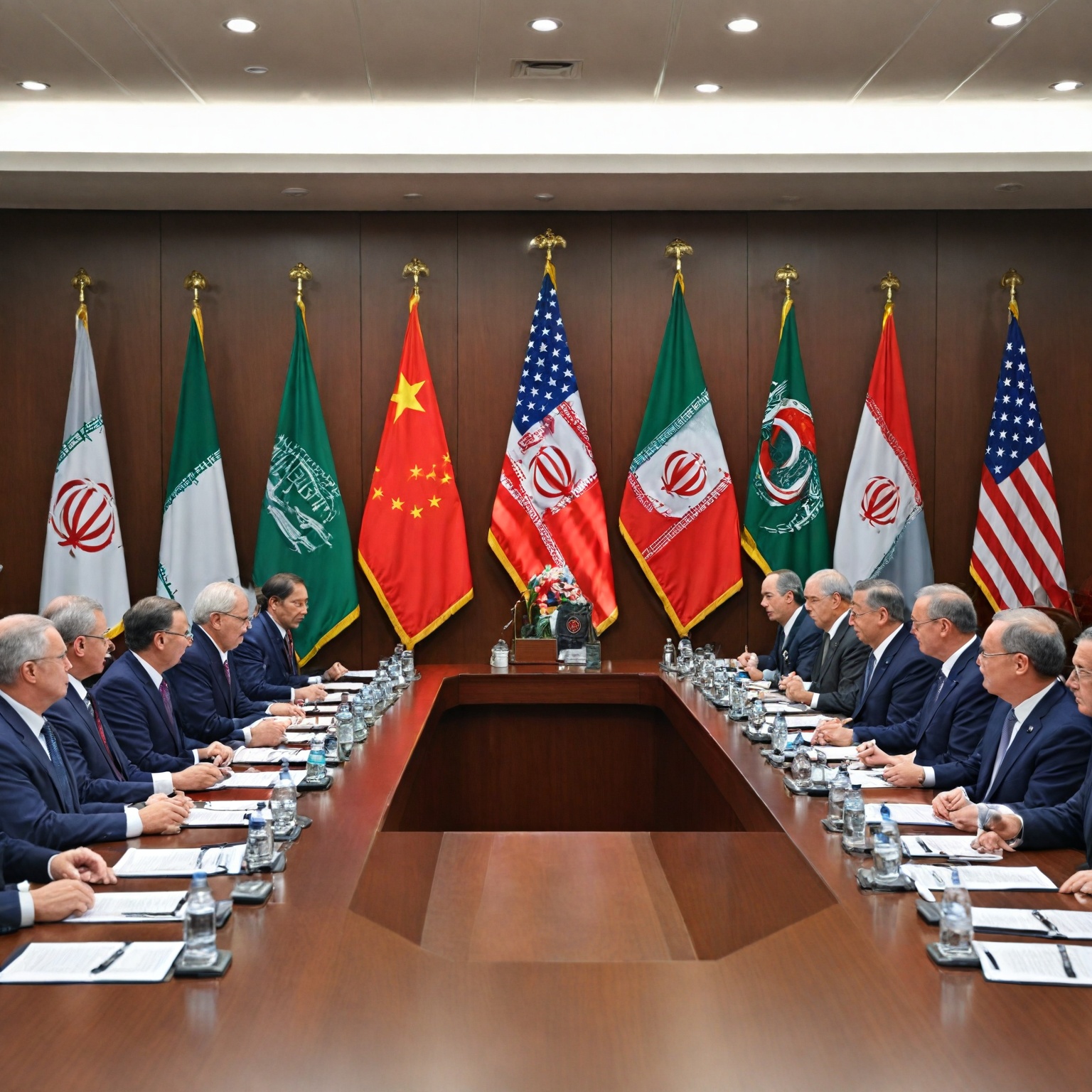
Summary
The urgent quest to revive the Iran nuclear deal has intensified amid escalating tensions between the United States and Iran, raising concerns over the potential for military conflict. Rooted in decades of historical grievances—most notably the 1953 U.S.-backed coup that overthrew Iran’s democratically elected government—the fraught relationship has been further strained by geopolitical developments in the Middle East, including Iran’s regional proxy engagements and nuclear ambitions. The 2015 Joint Comprehensive Plan of Action (JCPOA), a landmark agreement aimed at limiting Iran’s nuclear program in exchange for sanctions relief, initially brought cautious optimism but collapsed following the United States’ withdrawal under President Donald Trump in 2018.
The Trump administration’s “maximum pressure” campaign, involving stringent economic sanctions and military posturing, sought to coerce Iran into renegotiating a stricter deal but instead exacerbated hostilities and led to a series of military escalations between 2018 and 2020. These included attacks on U.S. forces by Iranian-backed militias, retaliatory U.S. strikes, and the high-profile assassination of Iranian General Qasem Soleimani, bringing the two countries perilously close to open conflict. The campaign’s impact on Iran’s economy and security calculus has been profound, yet Tehran’s continued advancement of its nuclear program and regional influence has kept the prospect of war a persistent risk.
Since 2021, diplomatic efforts under the Biden administration have aimed to restore the JCPOA framework through multilateral negotiations, despite significant challenges such as Iran’s evolving nuclear activities, internal political shifts, regional proxy conflicts, and broader international crises. Key sticking points remain, including the scope of nuclear inspections, sanctions relief, and Iran’s designation of the Islamic Revolutionary Guard Corps as a terrorist organization, complicating the prospects for a durable agreement. International actors, including European nations, China, and regional intermediaries, continue to advocate for dialogue to prevent further escalation.
The intersection of historical mistrust, ongoing proxy wars, and nuclear uncertainty renders the situation highly volatile, with analysts warning that failure to secure a renewed deal could trigger renewed sanctions snapbacks and provoke Iranian retaliatory measures, potentially igniting wider military confrontations in an already unstable Middle East. The outcome of these urgent negotiations will significantly shape regional security dynamics and the future of U.S.-Iran relations.
Background
The roots of tensions between Iran and the United States trace back to the 1953 Iranian coup d’état, in which the democratically elected Prime Minister Mohammad Mosaddegh was overthrown. This coup was orchestrated by the Iranian army with substantial support from the United States and the United Kingdom, aiming to strengthen the autocratic rule of Shah Mohammad Reza Pahlavi. The event left a lasting impact on Iranian perceptions of foreign intervention, fueling deep-seated resentment towards the United States that persisted through subsequent decades. This historical context contributed significantly to the anti-American sentiment that surfaced during the 1979 Iranian Revolution, which ended the monarchy and established an Islamic republic.
Over the past two decades, Iran’s foreign policy has been shaped by heightened sensitivity to external interference, particularly following the U.S. military invasions of Afghanistan in 2001 and Iraq in 2003, as well as the Arab uprisings beginning in 2010. Tehran perceives these geopolitical shifts as direct threats to its national security and territorial integrity. This perception has intensified diplomatic strains and military posturing in the region, with Washington maintaining an increased military presence as a strategic deterrent amid ongoing regional instability.
A pivotal moment in recent history was the negotiation and signing of the Joint Comprehensive Plan of Action (JCPOA) in 2015. This landmark agreement, reached between Iran and the P5+1 countries along with the European Union, sought to limit Iran’s nuclear program in exchange for sanctions relief. Under the JCPOA, Iran agreed to significant restrictions on its nuclear facilities and allowed increased inspections by the International Atomic Energy Agency (IAEA), aiming to assure the international community that its nuclear activities remained peaceful. The accord followed 20 months of complex negotiations and was viewed as a diplomatic breakthrough designed to prevent nuclear proliferation in the Middle East.
Despite initial compliance verified by IAEA inspectors, the deal faced criticism and opposition from U.S. political figures, culminating in President Donald Trump’s 2018 decision to withdraw the United States from the JCPOA. Trump argued that the agreement failed to safeguard American national security interests and accused it of enabling Iran’s malign activities while only delaying its nuclear ambitions. This withdrawal marked a significant escalation in U.S.-Iran tensions, which were further exacerbated by subsequent military confrontations and sanctions under the “maximum pressure” campaign.
The complex historical grievances, combined with contemporary geopolitical dynamics and the collapse of the JCPOA framework, have created a volatile environment. This has raised concerns about the potential for military conflict as efforts to revive the Iran nuclear deal face urgent and uncertain prospects.
Withdrawal from the Iran Nuclear Deal
The United States’ withdrawal from the Joint Comprehensive Plan of Action (JCPOA), commonly known as the Iran nuclear deal, was announced by then-President Donald Trump on May 8, 2018. Trump declared that the U.S. would cease participation in the agreement, citing concerns that the deal was flawed and that Iran negotiated in bad faith, receiving too much in return for insufficient commitments. He argued that the deal failed to prevent Iran from progressing toward acquiring nuclear weapons and did not adequately address Iran’s regional malign activities or its support for terrorism.
Following the withdrawal, the Trump administration set out a series of demands to renegotiate a more stringent deal, effectively amounting to Iran’s total political capitulation. The administration immediately began re-imposing sanctions on Iran, targeting critical sectors of its economy including energy, petrochemical, and financial industries. Businesses were given a limited timeframe to wind down operations involving Iran, with severe consequences threatened for non-compliance. These actions were intended to pressure the Iranian regime to alter its behavior and to stop funding activities deemed illicit, such as terrorism and nuclear development.
The decision drew significant international criticism and concern. Former President Barack Obama warned that the withdrawal would leave the world less safe by presenting a “losing choice between a nuclear-armed Iran or another war in the Middle East.” Many international actors, including European officials and China, urged the U.S. to reconsider its stance and continue support for the JCPOA, emphasizing dialogue over confrontation. The International Atomic Energy Agency (IAEA) had verified Iran’s compliance with the deal’s nuclear-related commitments prior to the withdrawal.
Tensions escalated in the aftermath, with Trump’s administration designating parts of Iran’s military as terrorist organizations and issuing bellicose threats, including targeting culturally significant Iranian sites. This raised fears of potential armed conflict between the U.S. and Iran, with heightened regional instability due to proxy wars in Syria, Yemen, and Iraq. Questions about the administration’s legal authority and the evidence underpinning these actions were also raised by watchdog groups and members of Congress.
The withdrawal had broader geopolitical implications, reinforcing Iran’s deterrence posture while triggering regional recalibrations in response to U.S. policy shifts. Iranian missile strikes against U.S. targets underscored the increased risks of direct military confrontation. The Trump administration’s policy aimed to disrupt and degrade Iran’s nuclear and missile programs as well as its regional influence, viewing these objectives as critical to U.S. national security interests.
The “Maximum Pressure” Campaign
The “Maximum Pressure” campaign refers to the United States’ strategy to compel the Iranian regime to alter its behavior by imposing stringent economic sanctions and maintaining a heightened military posture in the region. Initially implemented during the Trump administration, this approach aimed to isolate Iran economically and diplomatically to curb its nuclear ambitions and malign activities.
Central to the campaign was the U.S. withdrawal from the Joint Comprehensive Plan of Action (JCPOA) and the immediate re-imposition of sanctions targeting critical sectors of Iran’s economy, including energy, petrochemical, and financial industries. The administration provided a grace period for businesses to wind down operations with Iran, warning of severe consequences for non-compliance. This withdrawal sought to pressure Tehran into changing its course by cutting off key revenue streams and limiting access to international markets.
The sanctions have had a significant impact on Iran’s oil exports, reducing them by approximately 1.5 million barrels per day since May of the previous year and driving purchases of Iranian crude nearly to zero. This economic squeeze has compounded internal pressures on the regime, which already faces years of mismanagement, corruption, and existing sanctions.
In addition to economic measures, the campaign incorporated efforts to counter Iran’s malign activities in cyberspace and intelligence operations. The U.S. Department of the Treasury designated Iran’s Ministry of Intelligence and Security (MOIS) and its cyber units for conducting malicious cyber operations targeting government and private-sector entities worldwide. These designations highlighted the broad spectrum of threats posed by the Iranian regime, from cyberattacks to foreign intelligence activities.
Despite the campaign’s hardline stance, some Iranian elites have acknowledged that resolving Iran’s escalating economic challenges might require renewed economic engagement with the U.S., even as hardliners resist such ties. Nevertheless, the ongoing campaign remains a central pillar of U.S. policy aimed at deterring Iran’s destabilizing regional actions and ensuring that Iranian malign acts are no longer rewarded.
Military Incidents and Escalations (2018–2020)
Between 2018 and 2020, tensions between the United States and Iran sharply escalated, marked by a series of military incidents and proxy confrontations that brought the two nations to the brink of open conflict. The period was defined by increased attacks on U.S. forces in Iraq, significant shifts in military posture, and high-profile targeted strikes.
Beginning in late 2018 and accelerating throughout 2019, Iranian-backed militias in Iraq, notably Kataib Hezbollah, intensified rocket and missile attacks on American military installations. These proxy attacks increased dramatically, with assaults on U.S. forces rising by 400% from 2019 to 2020, reaching what was described as “epidemic levels” under the Trump administration. The escalation forced the U.S. to take unprecedented security measures, including Secretary of State Mike Pompeo’s decision to begin closing the U.S. embassy in Baghdad due to deteriorating safety conditions.
The U.S. responded with targeted military actions against Iranian proxy groups. On December 29, 2019, the U.S. military carried out defensive strikes in Iraq and Syria against Kataib Hezbollah sites, which were seen as retaliation for the killing of a U.S. contractor. This action was part of a broader “maximum pressure” campaign of sanctions and military deterrence initiated by the Trump administration after the U.S. withdrawal from the Iran nuclear deal in 2018.
The situation reached a critical point in early January 2020 with the U.S. drone strike that assassinated Qasem Soleimani, the commander of Iran’s Quds Force, near Baghdad International Airport. The U.S. government justified the strike by citing intelligence about “imminent” Iranian plans to attack American personnel and diplomatic facilities in Iraq. President Trump stated that the killing was aimed at deterring future Iranian attacks, while Secretary Pompeo echoed claims of imminent threats. This assassination provoked immediate regional tensions and fears of broad escalation, as Iran and its allies vowed retaliation.
Following Soleimani’s death, proxy attacks by Iraqi militias continued unabated, with at least 14 attacks reported in the months after January 2020, indicating that the killing did not de-escalate hostilities. The U.S. military increased its posture across the Middle East to integrate deterrence efforts and safeguard its forces and allies, including Israel and Gulf states. However, concerns grew over the risk of a wider proxy war involving key U.S. allies and regional powers, potentially destabilizing the broader Middle East.
In early 2020, a planned U.S. military strike was abruptly called off despite aircraft and naval forces being in position, reflecting the administration’s cautious approach to escalation amid intensifying confrontations. Nonetheless, the Trump administration maintained that the U.S. Armed Forces were stronger than ever, emphasizing significant military investments and capabilities.
Throughout this period, the military escalations underscored the fragile nature of U.S.-Iran relations. While Iran’s missile counterattacks reinforced its deterrence posture, they also triggered regional realignments and diplomatic recalibrations toward engagement with Tehran. The conflict’s trajectory kept the two countries on a dangerous path, with fears of a full-scale military confrontation growing increasingly pronounced.
Regional Proxy Conflicts and Military Tensions
The Middle East has been a focal point of escalating proxy conflicts and military tensions involving Iran, the United States, and their respective allies. These tensions have been exacerbated by the U.S. withdrawal from the Joint Comprehensive Plan of Action (JCPOA) in 2018 and the subsequent “maximum pressure” campaign, which included intensified sanctions and diplomatic isolation of Iran. The removal of U.S. military presence in the region has been a stated goal of former President Trump, creating unease among American allies who view ongoing proxy conflicts as a source of regional instability.
Iran’s regional influence is exerted primarily through its network of proxies and allied militias, notably in Iraq, Syria, Yemen, and Lebanon. Following the 2011 Arab Spring and the rise of insurgencies in Syria, Iran’s strategic reliance on Iraqi Shia militias and other proxy groups has grown, facilitating its military and political reach across the Levant and the Gulf. These proxies have actively engaged in hostilities against U.S. interests, as exemplified by a series of rocket attacks targeting American forces in Iraq since 2019. These attacks serve as provocations aimed at pressuring the U.S. to withdraw its troops and diminish American influence in the region.
The risk of escalation remains high, with thousands of U.S. troops stationed in volatile zones vulnerable to attacks amid rising tensions. Both the U.S. and Iran seek to avoid full-scale regional war, but the ongoing proxy engagements increase the potential for unintended military clashes. The U.S. has responded by maintaining a robust military posture across the Middle East to deter further aggression and support allied states, despite domestic and international calls for de-escalation.
Iran’s pursuit of nuclear capabilities since the mid-20th century adds another layer of complexity to the regional security environment. The JCPOA initially imposed restrictions on Iran’s nuclear program in exchange for sanctions relief, but the U.S. withdrawal undermined the agreement and heightened mutual distrust. In response to renewed sanctions and political isolation, Iran has threatened to withdraw from the Nuclear Non-Proliferation Treaty and potentially resume nuclear activities without oversight, raising alarm among global powers.
Meanwhile, regional rivalries, particularly between Sunni-majority Saudi Arabia and Shi’ite-majority Iran, further destabilize the Gulf. Saudi Arabia and other regional actors remain deeply skeptical of Iran’s intentions, fearing that Tehran’s ambitions could undermine their economic development and security. Diplomatic efforts have at times sought to temper these tensions, but decades of hostility and competing interests continue to fuel conflicts across the Middle East.
Diplomatic Efforts and Negotiations Post-Withdrawal
Following the United States’ withdrawal from the Joint Comprehensive Plan of Action (JCPOA), diplomatic efforts to salvage the agreement have been fraught with difficulties and intermittent progress. Talks between Washington and Tehran resumed in April 2021, aiming to bring both parties back into compliance with the deal. However, these negotiations have been repeatedly disrupted by a range of geopolitical events, including the election of Iran’s conservative president Ebrahim Raisi, Russia’s invasion of Ukraine, and the 2023 Israel-Hamas conflict, all of which further complicated the environment for dialogue.
Despite these challenges, several countries and international actors have expressed support for continued diplomacy. China has emphasized the importance of dialogue over confrontation, reaffirming its commitment to preserving and implementing the JCPOA. The European Council on Foreign Relations, while not taking an official position, has seen members advocating for the U.S. to reconsider its approach to the agreement. Additionally, Oman has played a mediating role in facilitating indirect talks between the United States and Iran, with optimism expressed by various officials about clarifying remaining issues through continued negotiations.
The Biden administration has made reinstating the deal a stated priority, holding talks with Iran and other original signatories in Vienna
Political and Public Reactions
The political and public reactions to the evolving situation between the United States and Iran have been marked by deep divisions and significant tensions. Early on, the regime’s control over public opinion in Iran suppressed pro-democracy movements and led to a crackdown on opposition groups, setting a tone of limited political freedom and dissent within the country. This internal repression contrasted sharply with the international community’s concern over Iran’s nuclear program and regional activities.
In the United States, the 2018 decision by then-President Donald Trump to withdraw from the Joint Comprehensive Plan of Action (JCPOA) sparked widespread controversy. Trump framed the JCPOA as a flawed agreement, promising a “totally different deal” if elected. However, the decision faced criticism domestically and abroad. Polls showed that a majority of Americans, including 53% of the general public and 94% of U.S. international relations scholars, disapproved of the withdrawal. Several European leaders and China expressed regret over the U.S. decision, advocating for dialogue over confrontation and urging Washington to reconsider its approach.
Trump’s aggressive rhetoric, including threats targeting Iranian cultural sites and the designation of Iran’s Islamic Revolutionary Guard Corps as a terrorist organization, heightened fears of military conflict. These bellicose stances alarmed many observers and contributed to escalating tensions in the region. Nevertheless, some U.S. officials emphasized the need for maintaining a strong military posture as a deterrent while navigating complex diplomatic efforts.
Diplomatic initiatives continued despite these tensions. In late 2021, renewed talks involving Iran, the United States, and other signatories aimed to revive the JCPOA. Statements from Iranian and European officials highlighted a willingness to collaborate and find a diplomatic solution, though significant hurdles remained, such as disagreements over nuclear inspections and sanctions relief. This cautious optimism was tempered by ongoing regional conflicts and mutual distrust.
Within Iran, memories of foreign intervention, particularly the 1953 U.S.-backed coup, fuel enduring resentment toward American involvement in its affairs. This historical context shapes Iranian perceptions of U.S. policies and complicates diplomatic engagements. Meanwhile, in Washington, the Iranian revolution and its aftermath remain defining moments that influence contemporary national security and foreign policy debates.
Legacy of Historical Events on Current Relations
The legacy of historical events, particularly the 1953 Iranian coup d’état, continues to profoundly influence current US-Iran relations. The coup, orchestrated by the United States and the United Kingdom, led to the overthrow of Prime Minister Mohammad Mosaddegh and the reinstatement of Mohammad Reza Shah Pahlavi’s autocratic rule. This intervention marked one of the first major American involvements in the Middle East and laid the groundwork for decades of mutual suspicion and resentment between the two nations.
While the coup initially appeared to secure American strategic interests during the Cold War, including access to Iranian oil and containment of Soviet influence, its long-term consequences were detrimental. It fostered deep-seated paranoia within Iran, enabled political repression under the Shah, and undermined the legitimacy of the Pahlavi regime. Although Iran experienced significant economic growth and modernization under the Shah’s “White Revolution” in the following decades, the American role in the coup became a symbol of foreign interference and contributed to the eventual 1979 Iranian Revolution.
This historical context has shaped contemporary interactions, where memories of the coup fuel Iranian distrust toward US intentions. In recent years, heightened tensions—including economic sanctions, military confrontations, and diplomatic breakdowns—are often viewed through the prism of this fraught past. The United States’ “maximum pressure” campaign and the withdrawal from the Iran nuclear deal under the Trump administration further exacerbated these tensions, reviving fears of conflict reminiscent of earlier confrontations.
Thus, the shadow of 1953 endures as a critical factor complicating diplomatic efforts today, underscoring how historical grievances continue to influence the trajectory of US-Iran relations and the urgent quest for a durable deal.
Iran’s Internal Political Dynamics and Responses
Iran’s internal political landscape has been profoundly shaped by its historical experiences with foreign intervention and authoritarian rule. A pivotal figure in this context was Mohammad Mosaddegh, who was imprisoned in 1940 and subsequently became a staunch advocate for the nationalization of Iran’s oil industry. His opposition to foreign influence and authoritarianism culminated in the 1953 coup orchestrated by foreign powers, which removed him from office, placed him under house arrest, and reinstated the Shah’s rule for another quarter-century until the 1979 Iranian Revolution. This event remains a cornerstone of Iranian political memory, fueling widespread resentment toward foreign interference, especially by the United States, and shaping the ideological framework of the Islamic Republic.
The legacy of these events has fostered a political culture deeply sensitive to external threats and interventions, which the current Iranian leadership views as central to its national security strategy. The geopolitical upheavals in the Middle East over the last two decades—including the U.S. military interventions in Afghanistan and Iraq and the Arab uprisings—have been perceived by Tehran as direct threats to its territorial integrity and regime stability. This perception drives Iran’s emphasis on self-reliance, deterrence, and assertive regional policies to counterbalance perceived external aggression.
Within this context, Iranian responses have included both political and military strategies. Politically, Iran has resisted foreign pressures through a combination of diplomatic engagement and internal consolidation of power, often citing its historical experiences to legitimize its cautious stance toward the West. Militarily, the Iranian government has pursued enhanced deterrence capabilities, including missile development and asymmetric warfare tactics, to prevent foreign military incursions and assert its regional influence. This approach was evident during the Trump administration, where Iranian counter-escalations reinforced deterrence and prompted some regional actors to reconsider their policies toward Tehran.
Iranian leadership also frames its nuclear policy through a religious and ideological lens. Supreme Leader Ali Khamenei’s fatwa against nuclear weapons has been presented as a primary rationale for Iran’s stance on nuclear armament, contrasting with Western concerns focused on formal agreements like the JCPOA. Nonetheless, internal debates persist amid external pressures, with increasing tensions potentially nudging Tehran closer to pursuing nuclear capabilities as a strategic countermeasure to escalating sanctions and military threats.
Analysis of Potential Military Conflict Scenarios
The possibility of a military conflict involving the United States and Iran remains a complex and multifaceted issue shaped by regional dynamics, strategic calculations, and political considerations. Several scenarios have been analyzed regarding how such a conflict might unfold and what risks it could entail.
One potential scenario involves a combined strike orchestrated by key U.S. allies in the region, with each country contributing based on its unique military capabilities. This coordinated approach aims to inflict significant setbacks on Iran’s nuclear program while simultaneously limiting Tehran’s ability and incentive to retaliate. Former President Trump suggested that an Israeli-led attack, with U.S. participation, might be the most plausible option for such a strike. However, any military operation carries inherent risks, including the need for the United States to safeguard its regional forces, partners, and allies such as Israel and the Gulf states.
The Trump administration has maintained a posture of military readiness, underscored by significant investments in rebuilding U.S. armed forces and enhancing missile capabilities. According to statements from that period, the U.S. military was described as stronger and more lethal than ever before, which factors into strategic calculations surrounding potential confrontations. Despite this, an instance in which a planned strike was aborted at the last moment illustrates the precarious nature of decision-making in such high-stakes scenarios. In one reported case, planes and ships were already deployed when the order to stand down was given, highlighting the delicate balance between military action and restraint.
Proxy warfare further complicates the potential for direct U.S.-Iran conflict. Iran’s engagement through proxy groups in Syria, Yemen, and Iraq escalates regional instability and puts thousands of U.S. troops and interests at risk. This indirect form of conflict risks broadening into full-scale regional warfare, a scenario U.S. leaders have consistently sought to avoid. The continued presence of U.S. allies in these proxy engagements adds to the complexity, as these nations may be reluctant to escalate tensions while also wary of the U.S. desire to reduce its military footprint in the Middle East.
Moreover, the imposition and reinforcement of sanctions—particularly those initiated during the 2019 “maximum pressure” campaign—have intensified Iran’s military responses. After the revocation of oil sanctions waivers, Iran and its proxies expanded their military escalation campaign against U.S. and partner interests, contributing to a heightened risk of confrontation. Iranian missile capabilities, as demonstrated in attacks such as the strike on Ayn Al Asad airbase, have reinforced Tehran’s deterrence posture and prompted regional actors to reconsider their engagement strategies with Iran.
The content is provided by Harper Eastwood, 11 Minute Read


