
Summary
The Navi Mumbai International Airport (NMIA) is a major greenfield airport project designed to alleviate the growing passenger and cargo traffic demands in the Mumbai Metropolitan Region (MMR). Developed by the City and Industrial Development Corporation (CIDCO) in partnership with Adani Airport Holdings under a public–private partnership framework, the airport aims to provide a modern aviation hub with scalable capacity, innovative design inspired by India’s national flower—the lotus—and phased development to ultimately handle up to 90 million passengers annually. The airport’s first phase, featuring a 3,700-meter runway and a large passenger terminal, is slated for commercial operations by late 2025.
In line with long-term growth plans, CIDCO has recently invited bids for a techno-commercial feasibility study to evaluate the addition of a third runway at NMIA. This study is critical to assessing the technical and commercial viability of expanding the airport’s capacity to meet future air traffic demand, enabling High Intensity Runway Operations (HIRO) and improving operational resilience. The proposed expansion also encompasses supporting infrastructure such as new taxiways, aprons, and terminal enhancements designed to increase efficiency and reduce congestion both at NMIA and in the broader Mumbai aviation network.
Environmental sustainability and regulatory compliance are integral to the third runway project. CIDCO has incorporated comprehensive environmental management and audit programs to mitigate ecological impacts, particularly in sensitive Coastal Regulation Zone (CRZ) areas that include mangroves and mudflats. The project adheres to stringent environmental standards, including ISO 14001 certification, and incorporates innovative construction techniques to minimize disruption to marine and terrestrial ecosystems. Despite these measures, concerns remain regarding environmental impact management and cumulative effects on public health in the ecofragile region, highlighting the need for continued monitoring and community engagement.
The third runway feasibility study reflects NMIA’s strategic importance in regional infrastructure development by decentralizing Mumbai’s air traffic load, enhancing connectivity, and supporting Maharashtra’s broader economic and transport objectives. As Mumbai’s existing airport faces capacity constraints, NMIA’s expansion is poised to become a cornerstone of India’s aviation infrastructure, addressing current bottlenecks while preparing for sustained growth in passenger and cargo movement across the region.
Background
The Navi Mumbai International Airport (NMIA) project was initiated to address the growing passenger traffic demands in Mumbai, which the existing airports struggled to accommodate due to infrastructure constraints. The City and Industrial Development Corporation (CIDCO), the project proponent, undertook extensive site selection studies, evaluating alternatives such as Navi Mumbai and Rewas-Mandwa. Navi Mumbai was ultimately preferred because of its stronger advantages, fewer weaknesses, moderate environmental impact, and lower risks compared to the Rewas-Mandwa site.
Covering an area of approximately 1,160 hectares, the greenfield airport project is designed to be developed in five phases. Its terminal design is inspired by India’s national flower, the Lotus, aiming to create a distinctive architectural landmark. The project received several clearances and approvals over the years, including an initial environmental clearance valid until November 2021, and Ministry of Defence clearance. The Maharashtra government also announced plans in 2015 to develop a 600 sq km city called Naina (Navi Mumbai Airport Influence Notified Area) around the airport to support the infrastructure and economic activity generated by the project.
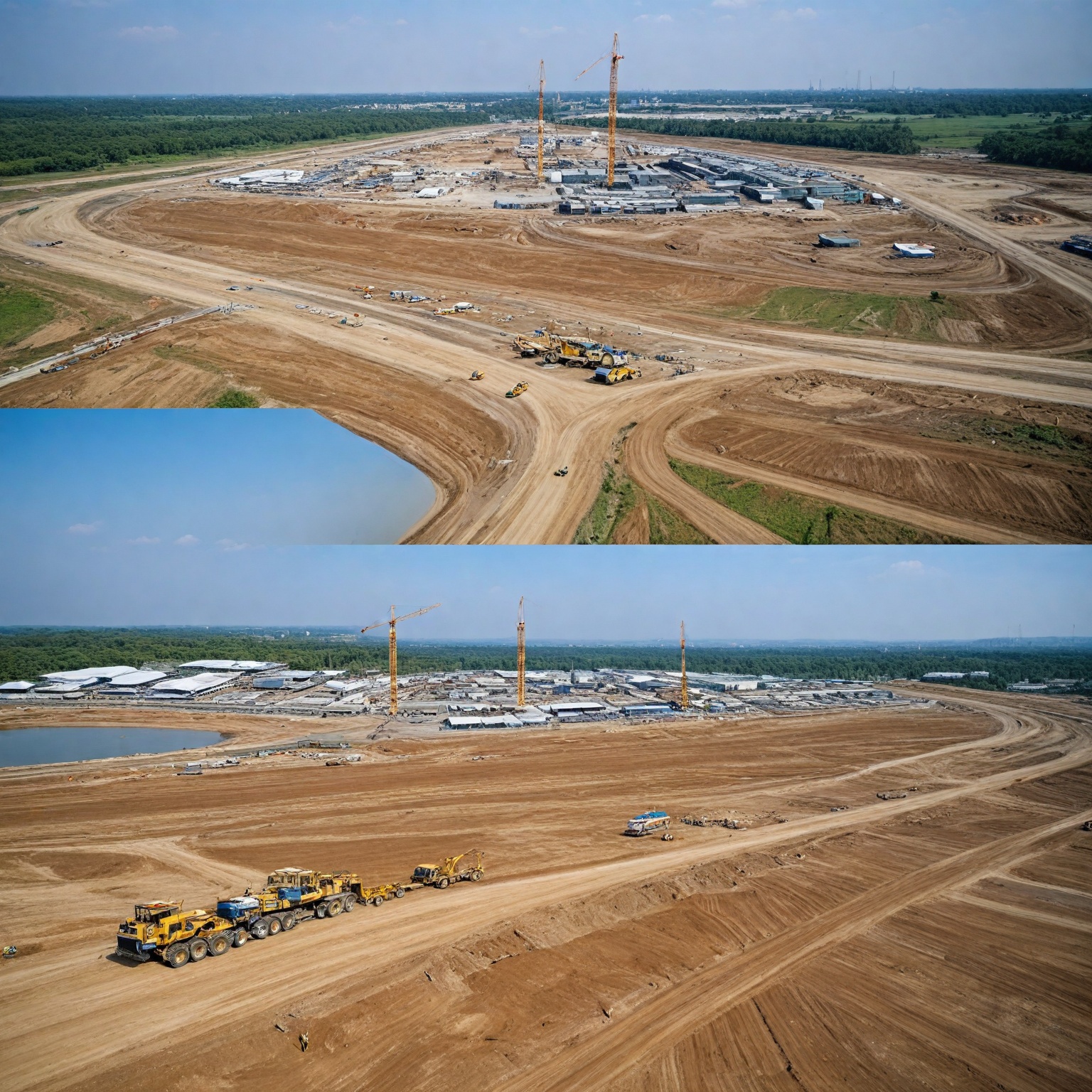
CIDCO, in partnership with Adani Airport Holdings, formed Navi Mumbai International Airport Limited (NMIAL) as a special-purpose vehicle under a public–private partnership framework to manage the project. After completing pre-development activities, construction commenced in August 2021. The airport features a single 3,700-meter runway oriented northeast–southwest, and commercial operations are planned to begin by the end of 2025, with an inauguration scheduled earlier that year.
As of recent updates, approximately 50% of the rock-cutting and site-filling work has been completed, with the south runway’s filling nearly finished and granular sub-base laying set to begin soon. The commercial operationalization of the airport is expected realistically by March 31, 2025, though there remains a possibility of earlier completion.
To accommodate future growth and operational requirements, CIDCO has initiated a significant new step by inviting bids through an e-tendering process for a techno-commercial feasibility study for the addition of a third runway at NMIA. This study aims to assess the technical and commercial viability of the third runway to ensure the airport’s long-term capacity and efficiency.
Third Runway Project
The third runway project at Navi Mumbai International Airport (NMIA) is a critical component of the airport’s long-term expansion plan to accommodate the growing air traffic demand in the Mumbai Metropolitan Region (MMR). The project aims to assess the technical and commercial viability of developing an additional runway to support future operational requirements and air traffic growth.
CIDCO, the nodal agency responsible for the project, has initiated a consultancy assignment focused on conducting a detailed feasibility study for the third runway. This study, expected to last six months, follows the Least Cost Selection (LCS) procurement method. The tender documents and bidding schedules were made available on CIDCO’s e-tendering portal, facilitating a transparent selection process for expert agencies to undertake the assessment.
The development of the third runway is planned as part of the broader airport expansion, which includes the construction of new taxiways, aprons, terminal expansions, tunnels, and supporting infrastructure. These enhancements are designed to enable High Intensity Runway Operations (HIRO) and maintain aircraft separation at a minimum of 3 nautical miles, targeting an eventual passenger handling capacity of 60 million per annum in the second phase of the airport’s growth.
Environmental considerations have been integral to the planning process for the third runway. Feasibility studies have incorporated evaluations of different construction methodologies to minimize ecological impact, such as reduced land reclamation extent, non-dredge techniques during land formation to protect water quality and marine ecology, and the application of deep cement mixing (DCM) for ground improvement in contaminated areas. These mitigation measures aim to ensure environmental compliance while facilitating the airport’s expansion.
The third runway is also envisioned to enhance the airport’s operational resilience by allowing better handling of peak traffic periods and weather disruptions, thereby supporting NMIA’s role as a major aviation hub intended to alleviate pressure on the existing Mumbai airport. The project aligns with Maharashtra’s strategic infrastructure development, complementing nearby initiatives like the Vadhavan Port to create an integrated transport and logistics corridor.
Feasibility Study
The City and Industrial Development Corporation (CIDCO) has initiated a techno-commercial feasibility study to evaluate the development of a third runway at Navi Mumbai International Airport. This study aims to assess the technical and commercial viability of the runway expansion, taking into account anticipated future air traffic growth and operational requirements. The feasibility analysis is intended to provide objective data to inform strategic capacity planning, thereby supporting the airport’s role in relieving Mumbai’s existing airport congestion and accommodating increasing passenger and cargo traffic.
CIDCO has invited bids through an e-tendering process for the appointment of a consultant to conduct this study. The selection of the consultant will be conducted via the Least Cost Selection (LCS) method, following established procurement norms. The consultancy assignment is scheduled to last six months, with detailed bidding schedules and tender documents made available on CIDCO’s official e-tendering portal from December 16.
The scope of the feasibility study includes runway analysis that provides critical insights into technical design options, environmental considerations, and commercial feasibility. The study also integrates environmental management aspects, focusing on monitoring and mitigating potential adverse impacts during the construction and operational phases. This involves setting Action and Limit Levels for environmental parameters, implementing mitigation measures, and recommending improvements to environmental management systems to ensure sustainable development practices.
Environmental considerations form a significant component of the study, with CIDCO committed to compliance with sustainability standards such as ISO 14001. These efforts aim to minimize environmental impact, enhance resource efficiency, and preserve the natural environment surrounding the airport. Moreover, the feasibility study supports obtaining environmental clearance from the Ministry of Environment, Forest and Climate Change (MoEF), which requires development permission and adherence to stringent environmental safeguards.
Earlier phases of the Navi Mumbai International Airport project involved global tender invitations and competitive bidding processes, with major infrastructure activities such as rock-cutting and site-filling already underway. The feasibility study complements these developments by refining runway configuration options, optimizing passenger terminal design, and improving environmental performance through innovative construction methods like non-dredge land formation and deep cement mixing for ground improvement.
Environmental Considerations
The development of the third runway at Navi Mumbai International Airport involves a comprehensive Environmental Management and Audit (EM&A) programme aimed at minimizing adverse environmental impacts throughout the construction and operational phases. Key responsibilities under the EM&A framework include providing advice on works programmes, submitting proposals for mitigation measures when Action and Limit Levels are exceeded, implementing impact reduction strategies, and adhering to complaint handling procedures. The programme also encompasses field sampling, testing, assessment, data analysis, and reporting to verify the success of mitigation measures and to confirm the accuracy of Environmental Impact Assessment (EIA) predictions.
The construction phase will follow standard methodologies that, when combined with recommended mitigation measures, are not expected to significantly affect the environmental performance of the project. Facilities to be constructed include the third runway, taxiways, aprons, and various ancillary buildings. Noise mitigation measures are particularly emphasized, with indirect measures such as window insulation and air conditioning offered to affected village houses along the North Lantau shoreline during interim periods before full commissioning. Furthermore, the Master Layout Plan for adjacent Comprehensive Development Areas considers the alignment of the Noise Exposure Forecast (NEF) contour lines to avoid locating noise-sensitive uses within high-noise zones.
Environmental clearance for the project has been rigorously reviewed and reissued by the Union Ministry of Environment, Forest and Climate Change (MoEF&CC) based on recommendations from the Expert Appraisal Committee (EAC). All previously imposed conditions from the 2010 clearance remain in force, including those related to the protection of ecologically sensitive Coastal Regulation Zone (CRZ) areas. The site selected for the airport includes approximately 26% in CRZ-1 zones comprising mangroves, mudflats, and forest lands, necessitating strict environmental safeguards. In response, CIDCO is required to prepare a Mangrove Management Plan aimed at protecting the adjacent mangrove ecosystems beyond compensatory afforestation efforts.
CIDCO’s commitment to sustainable development is further demonstrated by its attainment of ISO 14001 certification for Environmental Management, underscoring its focus on reducing environmental impacts and enhancing resource efficiency in the region. The regulatory framework also involves compliance with federal and civil aviation standards regarding navigable airspace and airport property management to ensure the safe and secure functioning of the expanded airport facilities.
Anticipated Benefits and Impact
The development of a third runway at Navi Mumbai International Airport is expected to bring substantial operational and environmental benefits to the region. Primarily, the addition of a parallel runway will significantly increase the airport’s capacity to handle future air traffic growth, addressing current limitations posed by Mumbai’s existing single-runway operations at Chhatrapati Shivaji Maharaj International Airport (CSMIA). With two parallel runways, the airport will reduce flight holding patterns and delays, thereby improving efficiency and passenger experience.
The feasibility study commissioned by CIDCO aims to assess both the technical and commercial viability of this expansion, ensuring the new infrastructure meets future operational demands while facilitating smoother air traffic flows across the Mumbai Metropolitan Region (MMR). This is particularly crucial as the current airport infrastructure is strained and unable to accommodate projected increases in passenger and cargo movements, with the new runway planned to handle wide-body jets and support phased capacity enhancements.
From an environmental perspective, standard construction methodologies will be adopted with recommended mitigation measures to minimize adverse impacts during the expansion of airport facilities such as taxiways, aprons, terminals, and associated infrastructure. The implementation of comprehensive Environmental Monitoring and Audit (EM&A) programs will further ensure compliance with environmental standards by monitoring key parameters, recommending mitigation measures, and addressing any exceedance of action or limit levels.
Furthermore, indirect noise mitigation measures, including window insulation and air-conditioning, will be provided to nearby affected residential areas to reduce the impact of increased noise levels during and after construction. This proactive approach aims to safeguard the wellbeing of local communities such as Sha Lo Wan and villages along the North Lantau shoreline, which remain vulnerable due to their proximity to the airport.
In the broader context, expanding Navi Mumbai’s airport capacity through the third runway aligns with regional transport and sustainability goals by decentralizing air traffic from Mumbai’s overburdened airport, promoting balanced regional development, and enhancing connectivity across the MMR. Such infrastructure improvements are critical to supporting the region’s economic growth and integrating Navi Mumbai more effectively into the global aviation network.
Project Timeline and Milestones
The Navi Mumbai International Airport (NMIA) project has progressed through multiple significant phases since its inception. Initial land acquisition for the core area was completed by 2019, with the entire project land handed over in July 2022 following necessary resettlement measures. Construction officially commenced in August 2021 under a public–private partnership framework between Adani Airport Holdings and CIDCO, managed through the special-purpose vehicle Navi Mumbai International Airport Limited (NMIAL).
By November 2023, approximately 57% of the first phase work was reported complete. The first phase includes a 3,700-meter single runway and a 2 lakh square meter terminal capable of handling 20 million passengers per annum, with cargo handling capacity initially planned at 0.5 million tonnes per annum. This phase was inaugurated on 8 October 2025 by Prime Minister Narendra Modi, with commercial operations slated to begin on 25 December 2025.
The airport’s phased development strategy aims to gradually expand capacity from 20 million passengers per annum in Phase 1 to 60–65 million in Phase 2, and ultimately reaching 90 million passengers and 2.5 million tonnes of cargo per annum by Phase 3, expected around 2032. Future phases will include parallel runways and enhanced infrastructure, including connectivity improvements such as hovercraft services from Colaba and cargo links from Raigad.
In alignment with this long-term growth vision, CIDCO has initiated a consultancy assignment focused on the technical and commercial viability of adding a third runway at NMIA. This six-month feasibility study, conducted under the Least Cost Selection procurement method, aims to address future air traffic growth and operational requirements to support the airport’s expansion as a major aviation hub. The detailed bidding process for this study was scheduled to begin on 16 December, with documents made available on the official CIDCO e-tendering portal.
Throughout the project, environmental protection and mitigation activities have been closely monitored alongside construction milestones to ensure sustainable development. The airport’s architectural design, inspired by the lotus flower, and its phased construction model exemplify a balance of aesthetic appeal and functional scalability.
Stakeholders
The development of the third runway at Navi Mumbai International Airport involves multiple key stakeholders who play distinct roles in ensuring the project’s technical, commercial, environmental, and operational viability. The City and Industrial Development Corporation (CIDCO) is the primary agency spearheading the initiative. CIDCO is responsible for inviting bids and overseeing the consultancy assignment aimed at conducting a techno-commercial feasibility study for the new runway, reflecting its role as the state-run planning authority managing the project under its Transport and Airport (T & C) department.
In addition to CIDCO, consultants and business entities, including joint ventures and consortia, form another critical stakeholder group. These entities are engaged through an e-tendering process to submit Requests for Proposal (RFP) and are selected based on the Least Cost Selection (LCS) method, ensuring a competitive and transparent procurement process aligned with established norms.
Environmental and health oversight is also a vital consideration, with mechanisms established to monitor and mitigate adverse environmental impacts. Advisory inputs to the Expert Team (ET) are mandated for works programs and activities that could contribute to environmental harm, alongside proposals for mitigation measures in cases where action and limit levels are exceeded, following event and action plans. Despite the importance of health impact assessments, integrated studies regarding the cumulative effects of such developments, especially on public health, remain generally unavailable, as noted in broader
Challenges and Concerns
The development of a third runway at Navi Mumbai International Airport faces several challenges and concerns primarily related to environmental impacts and planning in ecofragile areas. One significant concern is the potential generation of adverse environmental effects due to construction and operational activities. To address these concerns, comprehensive environmental monitoring and assessment procedures have been proposed, including field sampling, measurement, testing, and reporting of various environmental parameters as outlined in the Environmental Monitoring and Audit (EM&A) Manual. These procedures aim to identify any exceedance of Action and Limit Levels and recommend suitable mitigation measures to reduce environmental impact.
Moreover, planners and policymakers have historically overlooked environmental considerations in ecofragile regions, which has been a criticism of past development efforts in Navi Mumbai. The region’s sensitivity requires careful integration of environmental aspects into future planning to ensure sustainable growth and minimize ecological damage. This highlights the need for stringent environmental management systems and adherence to complaint handling processes to manage public concerns and grievances effectively.
Another challenge relates to the technical and commercial viability assessment itself. The six-month consultancy study must accurately project future air traffic growth and operational requirements, which can be complex given the dynamic nature of urban and regional development. Additionally, adherence to the Least Cost Selection (LCS) procurement method introduces competitive and procedural complexities that must be managed to ensure a transparent and effective selection process.
Future Prospects
The Navi Mumbai International Airport (NMIA) is poised to become a critical aviation hub catering to the escalating air traffic demand in the Mumbai Metropolitan Region (MMR). Currently, the airport is progressing steadily, with significant construction milestones such as runway readiness for Instrument Landing System (ILS) calibration and completion of the parallel taxiway and main pavement layers achieved by March 2024. These developments underpin the airport’s capability to support an initial passenger capacity of around two crore per annum through its first and second phases, which include one runway and one terminal building.
Looking ahead, the increasing passenger and cargo traffic forecast necessitates expansion plans beyond the initial infrastructure. CIDCO has initiated a consultancy assignment to evaluate the technical and commercial viability of adding a third runway at NMIA. This study aims to address future air traffic growth and operational requirements, ensuring the airport can sustain high-intensity runway operations with aircraft separation as close as three nautical miles, accommodating a minimum capacity of 60 million passengers per annum.
Such expansion is integral to managing the limitations faced by existing airports, including Chhatrapati Shivaji Maharaj International Airport, which currently operates with a single runway and faces capacity constraints even with the upcoming Navi Mumbai airport. The third runway feasibility study reflects a proactive approach to future-proofing the region’s aviation infrastructure, fostering enhanced connectivity, and supporting sustainable mobility policies in line with global aviation system development.
Together, these initiatives signify NMIA’s strategic role in decentralizing passenger and cargo movement across the MMR, contributing to smoother regional connectivity and positioning Navi Mumbai as a prominent aviation hub in India.
The content is provided by Blake Sterling, 11 Minute Read


