
Summary
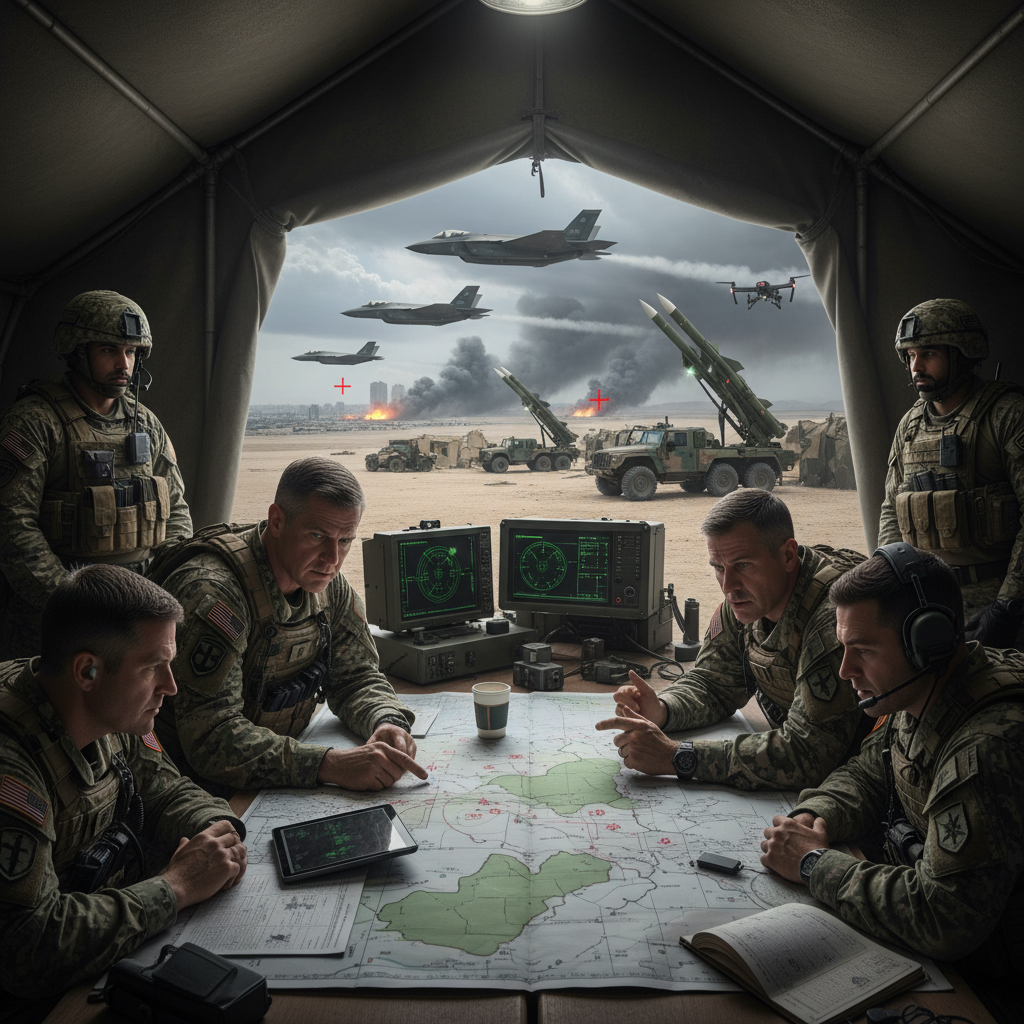
The 2024 military offensive by the United States and Israel against Iran represents a critical escalation in tensions in the Middle East. Focused on Iranian nuclear facilities and military installations in key cities, the operation aimed to diminish Iran’s missile capabilities and nuclear threats. Following the strikes, Iran retaliated with missile and drone attacks on U.S. military bases in the region, raising concerns of a broader conflict and putting thousands of U.S. personnel at risk. Meanwhile, diplomatic efforts to address Iran’s nuclear ambitions faltered, leading to a significant volatility in the area.
Background
The escalating tensions between the U.S., Israel, and Iran have historical roots, including the 1979 hostage crisis and ongoing proxy conflicts involving groups like Hamas and Hezbollah. The recent Gaza war further fueled these conflicts, with increased attacks on U.S. and Israeli interests. Diplomatic negotiations intended to limit Iran’s nuclear activities have repeatedly stalled, particularly over missile discussions, with both the U.S. and Israel expressing a need for stricter measures. Amid mounting military confrontations, the stage was set for the offensive that unfolded in 2024.
The Offensive
The coordinated U.S. and Israeli offensive initiated extensive air and naval strikes on strategic Iranian military assets. Prime Minister Netanyahu framed the operation as a preemptive measure to eliminate existential threats, underscoring a decade-long collaboration for enhanced military coordination. The strikes targeted major cities across Iran, including critical military infrastructure, while advanced tactics were employed to neutralize defenses. Although the U.S. did not deploy ground forces directly, thousands of personnel remained at risk amidst rising tensions, and the international community remained alert to the fallout.
Targets and Damage
Key locations attacked included military bases, government buildings, and residences of Iranian officials, with significant damage reported in Tehran and other cities like Isfahan and Qom. Civilian infrastructure sustained damage as well, prompting widespread humanitarian concerns. Reports of collateral damage have raised alarms about potential civilian casualties and the broader implications of the offensive on regional stability.
Iranian Retaliation
Tehran responded with missile and drone strikes against several U.S. military bases, confirming its readiness to engage in direct conflict. Iran’s armed forces signaled they would target any bases supporting U.S. activities against Iran, resulting in airspace closures across several neighboring countries. While ground combat from Iran is not expected, the ongoing military tension remains a key factor in regional security assessments.
Regional and Domestic Reactions
The airstrikes prompted unequivocal condemnation from Iran, which portrayed the attacks as violations of sovereignty, while also raising alarms among Gulf Arab states about potential escalations. Saudi Arabia and other regional actors expressed solidarity with the affected nations but remained apprehensive about increased hostilities. Domestically in the U.S., while support for the operation existed, growing opposition reflected concerns over further military entanglement in the region, complicating public sentiment towards U.S. involvement.
International Reactions
Responses from the international community varied widely, with some nations supporting military efforts to curb Iran’s nuclear capabilities, while others condemned the strikes as aggressive. Arab countries expressed concerns over destabilization, highlighting fears of broader conflicts enveloping the region. This divergence underscores the complex geopolitical landscape that has been further strained by the military actions.
Aftermath and Consequences
The strikes catalyzed immediate retaliatory measures from Iran, raising alarms about a potential wider conflict. With damage assessments ongoing, the conflict’s humanitarian toll and its implications for regional stability remain under close scrutiny. Military posturing has intensified, leading to significant U.S. force deployments and a worrying military buildup in the region. The breakdown of diplomatic negotiations further complicates the scenario, indicating a challenging and uncertain path ahead for both regional and international stakeholders.
Analysis
This offensive highlights the advanced military capabilities and significant coordination between the U.S. and Israel in efforts to counter perceived threats from Iran. The targeted strikes aimed to undermine Iran’s military effectiveness and deter its regional aspirations, though they have also prompted serious concerns about the potential for escalating conflict. With both regional leaders and international actors expressing apprehensions about future instabilities, it’s clear that the geopolitical dynamics surrounding Iran will require careful navigation to avoid broader confrontations and humanitarian crises.
The content is provided by Harper Eastwood, 11 Minute Read