
Summary
The Supreme Court is set to review a landmark case concerning an executive order issued during President Donald Trump’s administration that sought to restrict birthright citizenship in the United States. The order aimed to limit the automatic grant of U.S. citizenship to children born on American soil exclusively to those with at least one parent who is a U.S. citizen or lawful permanent resident, effectively excluding children born to undocumented immigrants or those with temporary legal status. This directive challenged the long-standing constitutional interpretation of the Citizenship Clause of the Fourteenth Amendment, which has been understood since its ratification in 1868 to guarantee citizenship to nearly all persons born in the U.S., regardless of their parents’ citizenship or immigration status.
Birthright citizenship is primarily grounded in the Fourteenth Amendment and affirmed by the Supreme Court’s 1898 decision in United States v. Wong Kim Ark, which established that children born in the U.S. to non-citizen parents who are not diplomats or occupying hostile forces are entitled to citizenship by birthright. The Trump administration’s directive marked a significant departure from this precedent, sparking immediate and widespread legal challenges. Lower federal courts consistently blocked the executive order, ruling that it conflicted with constitutional protections and longstanding Supreme Court precedent.
The case has drawn intense public and political attention, with immigrant rights organizations and civil liberties advocates condemning the directive as unconstitutional and a threat to the rights of millions of children born in the U.S. The Supreme Court’s forthcoming decision, expected in mid-2026, is poised to resolve key questions about the scope of the Fourteenth Amendment, the limits of executive authority in immigration policy, and the judicial power to issue nationwide injunctions. The ruling will have profound implications for U.S. citizenship law and immigration policy, potentially reshaping the legal landscape established over more than 150 years.
References
Fourteenth Amendment, U.S. Constitution
United States v. Wong Kim Ark, 169 U.S. 649 (1898)
U.S. Citizenship and Immigration Services, Birthright Citizenship
Congressional Research Service, Birthright Citizenship and the Fourteenth Amendment
American Civil Liberties Union, Statement on Birthright Citizenship
Wong Kim Ark, Supreme Court Decision, 1898
Immigration Law Journal, “Jus Soli and U.S. Citizenship”
Federal District Court rulings on Trump’s birthright citizenship directive
National Immigration Law Center, Legal Analysis of Executive Order
American Civil Liberties Union, Legal Challenges to Birthright Citizenship Restrictions
FWD.us, Public Response to Birthright Citizenship Debate
Supreme Court Docket, Birthright Citizenship Case
Legal scholars on Nationwide Injunctions and Immigration Policy
Immigration Policy Review, Implications of Supreme Court Decision
Public Policy Institute, Birthright Citizenship and U.S. Immigration History
Background
The principle of birthright citizenship in the United States originates from the Fourteenth Amendment, ratified in 1868 following the Civil War. The Citizenship Clause of this amendment states, “All persons born or naturalized in the United States, and subject to the jurisdiction thereof, are citizens of the United States and of the State wherein they reside,” thereby guaranteeing citizenship to nearly all individuals born on U.S. soil. This provision was primarily aimed at ensuring citizenship rights for formerly enslaved African Americans but has been broadly interpreted to apply regardless of race or parentage.
The most significant legal affirmation of birthright citizenship came with the Supreme Court decision in United States v. Wong Kim Ark (1898). Wong Kim Ark was born in the United States to Chinese immigrant parents who were not diplomats or officials, and the Court ruled 6–2 that he was a U.S. citizen by virtue of his birth on American soil under the Fourteenth Amendment. This ruling set a precedent establishing that children born in the U.S. to non-citizen parents are entitled to citizenship, cementing the doctrine of jus soli (right of the soil) in American law.
Current U.S. citizenship law acknowledges two primary pathways for acquiring citizenship at birth: jus soli, through birth within U.S. territory under its jurisdiction, and jus sanguinis, through the citizenship of at least one parent at the time of birth. The United States is among approximately 30 countries worldwide that confer automatic citizenship based on birthplace.
In recent years, birthright citizenship has become a contentious issue following the issuance of a controversial executive order under the Trump administration that sought to restrict this right. The order, which was quickly blocked by multiple federal courts, challenged the long-established legal consensus upheld since Wong Kim Ark and raised questions about the constitutionality of limiting citizenship guaranteed by the Fourteenth Amendment. Civil rights groups and legal experts have argued that any change to birthright citizenship would require a constitutional amendment, as it is firmly embedded in both Supreme Court precedent and federal law.
The Supreme Court’s decision to take up the related cases signals a pivotal moment in the ongoing legal and political debate over birthright citizenship, potentially reaffirming or revisiting the fundamental promise enshrined in the Fourteenth Amendment.
The Directive
In January 2021, shortly after President Donald Trump began his second term, he issued an executive order aimed at restricting birthright citizenship in the United States. The directive sought to limit the application of the Fourteenth Amendment’s Citizenship Clause, which traditionally grants citizenship to all individuals born on U.S. soil regardless of their parents’ immigration status. Specifically, the order asserted that birthright citizenship should only apply to those born to at least one parent who is a U.S. citizen or a lawful permanent resident, effectively excluding children born to undocumented immigrants or those with temporary status.
The administration justified the policy by arguing that children born to undocumented immigrants or temporary visitors are not “subject to the jurisdiction” of the United States under the Fourteenth Amendment because these children owe allegiance to their parents’ home countries rather than to the U.S.. This interpretation challenged the longstanding understanding of the Citizenship Clause, which has been broadly interpreted since its ratification in 1868 to guarantee citizenship to nearly all persons born within the country’s borders.
The directive explicitly prohibited federal agencies from issuing documents recognizing U.S. citizenship to individuals born under the contested circumstances, and called for enforcement measures by various departments including State, Homeland Security, and Social Security. However, it also stated that it would not affect the citizenship status of children born to lawful permanent residents or others legally entitled to citizenship documentation.
The policy quickly became a focal point in the broader immigration crackdown pursued by the Trump administration but was met with immediate and widespread legal challenges. Lower courts consistently blocked the directive’s implementation, ruling that it conflicted with the Constitution and the Supreme Court’s 1898 precedent in United States v. Wong Kim Ark, which has been considered a cornerstone protecting birthright citizenship. Despite these setbacks, the Trump administration pursued procedural appeals focused on limiting nationwide injunctions issued by federal judges against the directive, though it avoided pressing the core constitutional issue for the Supreme Court until later.
Civil rights advocates and legal experts condemned the directive as unconstitutional and argued that the Citizenship Clause’s broad guarantee was always intended to include the children of immigrants, irrespective of their parents’ legal status. The American Civil Liberties Union, among others, expressed anticipation that the Supreme Court would ultimately reject the policy and reaffirm birthright citizenship protections.
The directive remains a significant and contentious attempt to redefine the scope of birthright citizenship, raising profound questions about constitutional interpretation, immigration policy, and the rights of children born in the United States.
Legal Challenges
President Donald Trump’s executive order seeking to restrict birthright citizenship sparked immediate and widespread legal challenges across the United States. Lower federal courts uniformly blocked the implementation of the policy, ruling that it conflicted with the 14th Amendment’s Citizenship Clause, which grants citizenship to “all persons born or naturalized in the United States, and subject to the jurisdiction thereof”. These rulings referenced longstanding precedent, including the 1898 Supreme Court decision in United States v. Wong Kim Ark, which has been widely regarded as affirming the constitutional guarantee of birthright citizenship to virtually everyone born on U.S. soil regardless of their parents’ status.
The Trump administration, rather than pushing directly for a Supreme Court ruling on the constitutionality of the executive order, sought to limit the scope of nationwide injunctions issued by district courts that prevented enforcement of the policy. In a 6-3 decision, the Supreme Court curtailed the ability of lower courts to issue such universal orders but did not rule on the underlying legal validity of the birthright citizenship directive itself. Dissenting justices criticized this approach as procedural “gamesmanship,” noting that a substantive victory for the administration would require overcoming strong constitutional and historical precedents affirming birthright citizenship.
Legal experts and civil rights organizations have consistently maintained that the policy violates the clear text and intent of the 14th Amendment. The American Civil Liberties Union and immigrant-rights advocates expressed hope that the Supreme Court would “put this issue to rest once and for all,” emphasizing the broad legal consensus rejecting the administration’s efforts. Meanwhile, the administration justified the order as a measure to discourage illegal immigration and birth tourism, but it never took effect due to the swift and unanimous legal opposition it faced.
Oral arguments on the challenges to the executive order are expected in 2026, with a final ruling anticipated by mid-year. Until then, multiple lower court injunctions remain in place, preventing the government from enforcing the directive. The case promises to bring significant public attention to the Supreme Court’s interpretation of birthright citizenship and the limits of executive authority in immigration policy.
Supreme Court Review
The Supreme Court announced that it would hear a landmark case challenging the constitutionality of President Donald Trump’s January 20 executive order aimed at ending birthright citizenship in the United States. This executive order sought to restrict the automatic granting of citizenship to children born on U.S. soil if their parents are not U.S. citizens or permanent residents, particularly targeting those with parents in temporary lawful status or without legal status.
Lower federal courts across the country consistently ruled the executive order unconstitutional, citing the 14th Amendment—which guarantees citizenship to “all persons born or naturalized in the United States, and subject to the jurisdiction thereof”—and a pivotal Supreme Court decision from 1898 that has long been interpreted as affirming birthright citizenship. Consequently, multiple nationwide injunctions were issued to block the administration from enforcing the policy.
While the Supreme Court did not initially address the constitutionality of the order directly, it did curtail the power of lower courts to issue universal injunctions in a 6–3 decision, allowing for more limited relief through class-action lawsuits. The Trump administration initially refrained from asking the Supreme Court to reinstate the policy immediately after the lower courts blocked it, instead urging the justices to limit the issuance of nationwide injunctions against federal government actions.
Oral arguments for the case are expected to take place in early 2026, with a final ruling anticipated by mid-2026. The case has attracted significant public attention, with immigrant-rights advocates and legal experts emphasizing the clear constitutional guarantee of birthright citizenship and warning against the administration’s attempts to redefine it. The American Civil Liberties Union’s national legal director Cecillia Wang expressed anticipation that the Supreme Court would “put this issue to rest once and for all”.
This case is seen not only as a constitutional test of birthright citizenship but also as a broader legal battleground over the scope of federal courts’ power to issue nationwide injunctions. The Trump administration’s position reflects a long-term legal strategy aimed at securing a favorable ruling from the Supreme Court despite setbacks in lower courts.
Potential Implications of the Supreme Court Decision
The Supreme Court’s upcoming decision on President Trump’s executive order regarding birthright citizenship carries significant legal and social implications. At the core is the interpretation of the Citizenship Clause of the Fourteenth Amendment, which has traditionally guaranteed citizenship to virtually everyone born on U.S. soil, except for specific exclusions such as children of foreign diplomats or enemy occupiers. The executive order sought to restrict this right, limiting citizenship to children born to parents with “primary allegiance” to the United States—namely, citizens and lawful permanent residents—arguing that children of undocumented immigrants, birth tourists, and temporary visitors should not automatically acquire citizenship.
Should the Court uphold the executive order, it would mark a dramatic shift in constitutional interpretation and longstanding legal precedent. This could effectively end birthright citizenship for children born in the U.S. to non-citizen parents without lawful permanent residency, potentially rendering some children stateless depending on their parents’ nationality and immigration status. Such a ruling would also disrupt more than 150 years of legal tradition, as emphasized by critics who highlight the 1898 United States v. Wong Kim Ark decision as the foundational case affirming broad birthright citizenship protections.
Conversely, a decision striking down the order would reinforce the current understanding of the Fourteenth Amendment and uphold the legal consensus established by federal courts nationwide, which have repeatedly blocked the policy as unconstitutional. The American Civil Liberties Union and immigrant-rights groups argue that birthright citizenship is a fundamental constitutional right that cannot be curtailed by executive action.
Beyond the constitutional issues, the Supreme Court’s ruling will also affect administrative practices. The executive order instructed federal agencies to align their policies accordingly, which if upheld, would require significant changes in the recognition and documentation of citizenship status for children born in the United States. Additionally, the case underscores broader questions about the authority of federal courts to issue nationwide injunctions, an issue the Court has already begun addressing in related rulings.
The decision, expected around mid-2026 following oral arguments, will not only settle a contentious legal debate but also shape the future of U.S. immigration and citizenship policy, with ramifications for millions of families and the nation’s identity.
Public and Political Response
The announcement that the Supreme Court would review President Donald Trump’s executive order restricting birthright citizenship sparked widespread public and political reactions. Immigrant rights groups and civil rights organizations expressed strong opposition to the directive, emphasizing the long-established constitutional guarantee of birthright citizenship under the 14th Amendment. The American Civil Liberties Union (ACLU), through its national legal director Cecillia Wang, underscored that the federal courts had unanimously ruled the order unconstitutional and contrary to a landmark 1898 Supreme Court decision, Wong Kim Ark, which remains a cornerstone of citizenship law in the United States. Wang expressed hope that the Supreme Court would “put this issue to rest once and for all”.
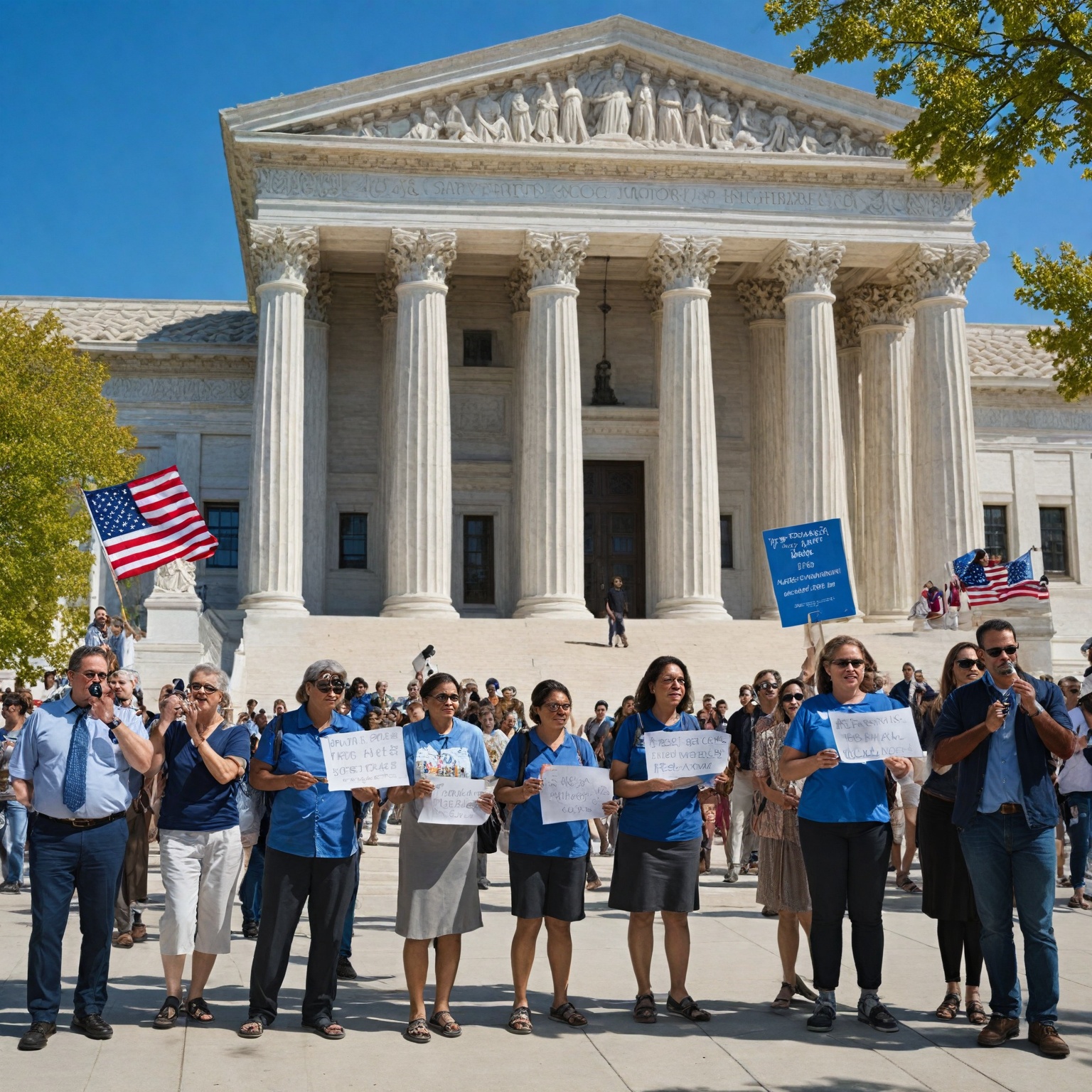
Immigrant advocacy groups similarly condemned the executive order, arguing that the Constitution is clear in its language and intent regarding citizenship rights. Todd Schulte, president of FWD.us, a bipartisan political organization, criticized the Trump administration’s efforts as “continued, unlawful, and unconstitutional,” noting that courts had repeatedly blocked attempts to enforce the policy. Public demonstrations in support of birthright citizenship occurred outside the Supreme Court, highlighting the high stakes and emotional resonance of the case among immigrant communities and their allies.
On the political front, the case underscored divisions surrounding immigration policy and constitutional interpretation. The administration, while pressing for judicial review, initially focused on procedural strategies to limit nationwide injunctions against the policy rather than directly challenging the substance of birthright citizenship. In a 6-3 Supreme Court ruling, the justices curtailed the ability of lower courts to issue universal injunctions but did not rule on the constitutionality of the executive order itself, leaving the core legal questions unresolved. Dissenting justices voiced concern that the government’s procedural approach amounted to “gamesmanship,” as prevailing constitutional precedent, including the text and history of the 14th Amendment, strongly supported birthright citizenship.
Comparative and Related Legal Contexts
The debate over birthright citizenship in the United States centers on the interpretation of the Citizenship Clause of the Fourteenth Amendment, ratified in 1868, which states that “all persons born or naturalized in the United States, and subject to the jurisdiction thereof, are citizens of the United States and of the State wherein they reside”. This clause was originally designed to ensure citizenship for formerly enslaved individuals and their descendants, and it has long been understood by all three branches of the U.S. government to confer a broad grant of citizenship based on jus soli, or birthplace.
The key legal precedent in this area is the 1898 Supreme Court case United States v. Wong Kim
The content is provided by Harper Eastwood, 11 Minute Read