
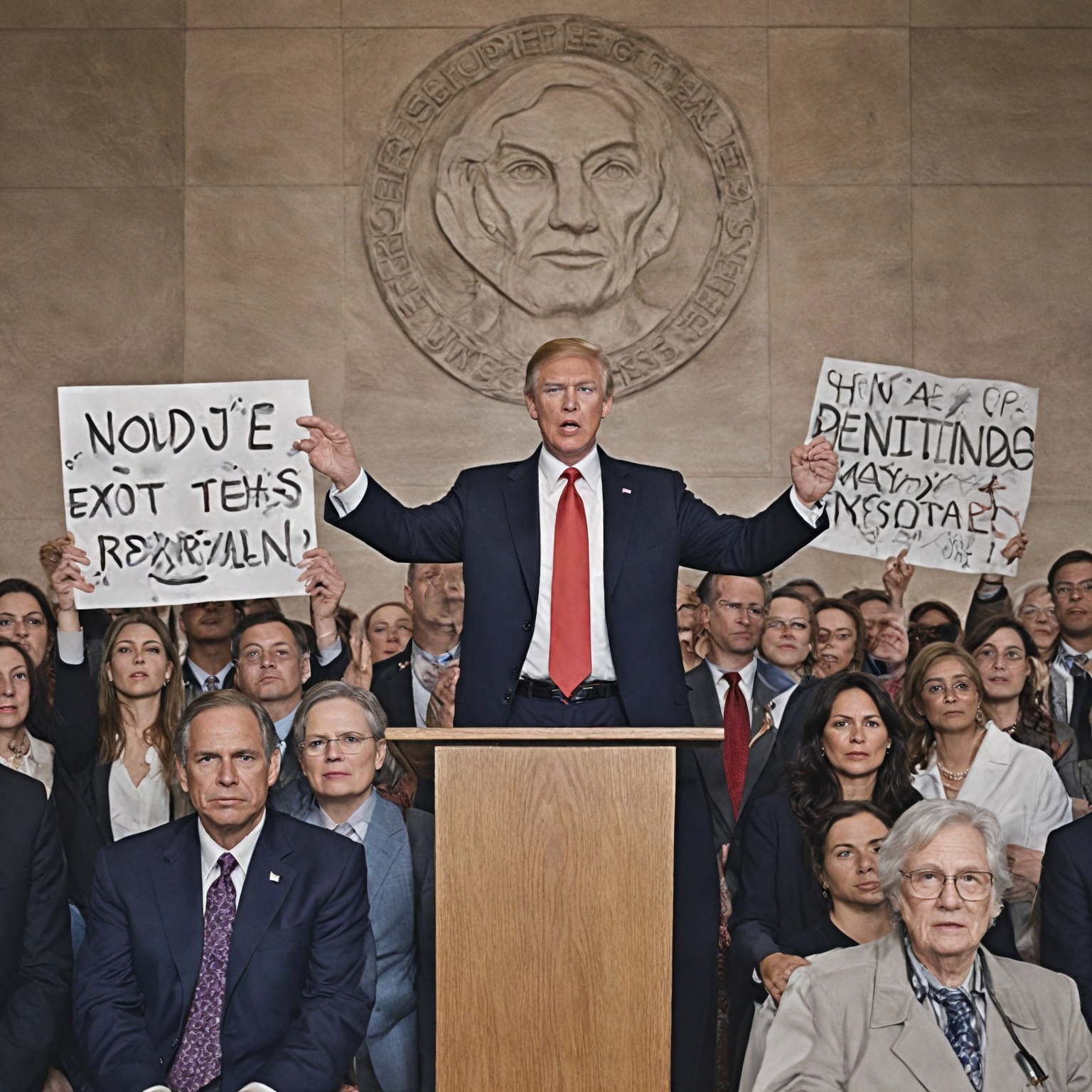
Summary
The 2023–2025 Texas redistricting controversy centers on the Republican-led effort to redraw congressional districts mid-decade, a process traditionally conducted once every ten years following the U.S. census. Spearheaded by Governor Greg Abbott and backed by former President Donald Trump, the redistricting plan aimed to secure additional Republican seats ahead of the 2026 midterm elections by targeting Democratic incumbents in urban areas such as Austin, Dallas, Houston, and South Texas. This aggressive move prompted fierce opposition from Texas Democrats, who accused Republicans of engaging in partisan gerrymandering designed to dilute minority voting strength and suppress the electoral influence of Black and Hispanic communities.
In response to the proposed maps, which Democrats characterized as a “rigged game” and a threat to democracy, Texas House Democrats staged quorum-breaking walkouts, fleeing the state to stall the legislative process. Governor Abbott responded with threats of arrest and legal action against absent lawmakers and those aiding their efforts, escalating political tensions. The dispute drew national attention, with Democratic leaders in states like California and Illinois contemplating retaliatory redistricting measures to counteract the GOP’s Texas plan, underscoring the broader partisan and regional implications of the conflict.
Legal challenges have been central to the controversy, with multiple lawsuits alleging violations of the Voting Rights Act and the U.S. Constitution based on racial gerrymandering and minority vote dilution. The U.S. Department of Justice intervened, arguing that several majority-minority districts were unconstitutionally drawn, prompting special legislative sessions and prolonged litigation. Republicans defended their maps as lawful and reflective of population shifts, contending they increased minority-majority districts, though critics remain skeptical of these claims amid historical patterns of discriminatory redistricting in Texas.
This ongoing redistricting battle exemplifies the intersection of partisan politics, minority voting rights, and legal challenges that have historically shaped Texas’s electoral landscape. It highlights the contentious nature of mid-decade redistricting efforts and raises significant questions about fair representation, the balance of political power, and the enforcement of federal voting protections in one of the nation’s most politically consequential states.
Background
Redistricting in Texas is a constitutionally mandated process that occurs every ten years following the publication of the U.S. decennial census data. According to the Texas Constitution, new district boundaries must be drawn and approved through the regular legislative process, requiring passage by both houses of the Texas Legislature and the governor’s signature, unless overridden by the legislature. The Texas Legislative Council provides legislators with census data, which is used to draw district maps via computer software. If the legislature fails to pass a plan for state house districts during the first regular session after the census, the responsibility temporarily falls to the Legislative Redistricting Board (LRB), though this board has no authority over congressional redistricting. In the event of continued inaction, courts may step in to impose district plans.
Historically, Texas has experienced repeated legal challenges to its redistricting maps, with federal courts and the U.S. Supreme Court striking down districts multiple times since the 1960s, largely due to violations of the Voting Rights Act and constitutional requirements. The Voting Rights Act of 1965 has played a significant role in shaping the redistricting landscape, especially with respect to protecting minority voting rights. Texas has been subject to federal preclearance requirements in the past, and allegations of racial gerrymandering continue to be a focal point in contemporary disputes.
Politically, redistricting has long been used as a tool for partisan advantage, a practice known as gerrymandering that dates back to the 18th century. In Texas, recent efforts to redraw maps have been deeply partisan. Republicans, motivated by narrow majorities in the U.S. House and seeking to solidify control ahead of the 2026 midterm elections, have pushed for maps favoring their party. This effort has included attempts at mid-decade redistricting, reminiscent of the 2003 redistricting cycle. Former President Donald Trump and his political operatives have exerted significant pressure on Texas GOP leaders to produce maps that increase Republican seats, targeting areas represented by Democrats around Austin, Dallas, Houston, and South Texas.
In response, Texas House Democrats have used quorum-denying walkouts as a strategy to stall the passage of Republican-backed redistricting plans. Several Democratic lawmakers fled the state to prevent a quorum, prompting threats from Governor Greg Abbott, who warned that lawmakers would have to remain out of Texas for years to block the legislation and hinted at potential legal repercussions for those aiding the walkouts.
The controversy also drew national attention, with Democratic governors from California and Illinois reportedly considering reciprocal partisan responses to Texas’s redistricting efforts, highlighting the broader political ramifications of the dispute. The ongoing legal battles over Texas’s redistricting underscore the complex intersection of state constitutional law, federal voting rights protections, and partisan politics that define the current crisis.
Accusations of Cheating and Partisan Manipulation
Democrats have vehemently accused Republicans of cheating and engaging in partisan manipulation amid the contentious Texas redistricting battle. The mid-decade redistricting plan, strongly supported by Texas Governor Greg Abbott and former President Donald Trump, was criticized by Democrats as a blatant political power grab aimed at suppressing the votes of people of color and consolidating GOP control in the U.S. House of Representatives. Texas Democrats characterized the plan as a racist and partisan attack targeting Black and Hispanic voters, arguing it was designed to dilute minority voting strength and unfairly redraw district lines for partisan advantage.
In response to Republican efforts, many Texas Democratic lawmakers fled the state in a dramatic move to break quorum and stall the redistricting process. Texas state Representative John Bucy stated that Democrats “broke quorum because sometimes, the only way to uphold your oath is to refuse to play along with a rigged game,” defending their absence as a stand against what they described as the theft of democracy in broad daylight. Governor Abbott threatened legal action, warning that lawmakers returning to the state capitol would face arrest, and further alleged that fundraising efforts to pay fines incurred by absent Democrats could constitute bribery, with potential legal consequences for donors as well.
The controversy sparked reactions beyond Texas. California Democrats, led by Speaker Nancy Pelosi, announced plans for a mid-decade redistricting initiative of their own to counteract the GOP’s Texas map, which threatened up to five Democratic-held congressional seats ahead of the 2026 midterms. California Governor Gavin Newsom criticized Abbott and Republicans for manipulating the political system and supported retaliatory measures by Democrats in other states. This escalating partisan tit-for-tat suggested a prolonged national redistricting conflict could ensue, with states leveraging redistricting authority to offset political gains made elsewhere.
The legal challenges against Texas’ redistricting plans have been significant. Lawsuits such as Terrazas v. Clements alleged that the Republican-drawn maps violated the Fourteenth and Fifteenth Amendments by diluting minority voting strength and interfering with political association rights. The U.S. Department of Justice objected to Texas’s redistricting proposals on grounds of unconstitutional racial gerrymandering. Republicans, however, maintained that their maps increased the number of Hispanic-majority districts and created additional majority-Black districts, countering accusations of racial discrimination.
Democrats and allied commentators framed the GOP’s aggressive mid-cycle redistricting as cheating, pointing to historical and ongoing partisan gerrymandering practices designed to entrench political power. Senator Bernie Sanders, who caucuses with Democrats, supported the Texas lawmakers’ strategy by emphasizing the need to respond when Republicans use redistricting for political gain. Meanwhile, Abbott and other Republicans dismissed such criticisms as unfounded, asserting that the redistricting process was lawful and necessary to reflect population shifts revealed by the 2020 census.
Role of Governor Greg Abbott and Texas GOP
Governor Greg Abbott played a central role in advancing the Texas GOP’s efforts to redraw congressional districts mid-cycle, a move aimed at securing additional Republican seats ahead of the 2026 midterm elections. Despite initial hesitation among some congressional Republicans, Abbott acted decisively after the U.S. Department of Justice issued a legal rationale claiming that four majority-minority districts in the Houston and Fort Worth areas were unconstitutionally racially gerrymandered. Responding to this, Abbott called a special legislative session that included mid-decade redistricting on its agenda, citing constitutional concerns raised by the federal government.
The redistricting maps initially drawn in 2021 had been designed to protect Republican incumbents and to maintain GOP control over two new seats Texas gained through population growth. These maps delivered the expected results, with Republicans winning 25 of 38 congressional seats in recent elections. However, they were promptly challenged in court by plaintiffs alleging racial discrimination against Black and Latino voters. Abbott’s administration maintained that the Legislature was free to redraw maps for partisan gain or any other reason it deemed appropriate.
Abbott’s involvement went beyond legislative agenda-setting. In the face of Democratic lawmakers fleeing the state to break quorum and block the redistricting effort, Abbott threatened their arrest and called on Texas courts to consider removing those absent legislators from office for abandoning their duties. He also suggested that fundraising efforts by Democrats to pay imposed fines could amount to bribery, vowing to pursue legal action against such violations, including potential extradition of out-of-state lawmakers. These measures underscored Abbott’s firm stance in enforcing Republican control over the process.
The Texas GOP, with Abbott’s backing, unveiled draft maps targeting Democratic incumbents in Austin, Dallas, Houston, and South Texas, aiming to gain up to five additional Republican seats. While redistricting for partisan advantage is legally permitted, the Voting Rights Act prohibits dilution of minority voters’ influence—a point of contention that Democrats and civil rights advocates emphasized in court challenges.
The Republican-led Legislature ultimately passed the redistricting bill after a protracted six-month process. Although the Department of Justice eventually granted preclearance for the maps, this approval came only after objections by professional staff were overruled by political appointees within the agency. The ongoing legal and political battles over Texas’s redistricting efforts reflect broader national disputes concerning voting rights and partisan gerrymandering, with Texas serving as a prominent battleground. Abbott’s leadership has been instrumental in pushing forward the GOP’s agenda, despite fierce opposition from Democrats and civil rights groups.
Legal Challenges and Federal Involvement
Following the 2020 census, Texas underwent a contentious redistricting process that has prompted multiple legal challenges alleging racial discrimination and violations of federal voting rights laws. Central to these disputes are accusations that the Republican-led Texas Legislature and Governor Greg Abbott engaged in partisan gerrymandering designed to dilute minority voting strength and entrench GOP political power ahead of upcoming elections.
A consolidated set of lawsuits was filed in the U.S. District Court for the Western District of Texas, El Paso Division, including cases such as Wilson v. Texas, Voto Latino v. Scott, and LULAC v. Abbott. These suits allege that the state’s congressional and legislative maps, redrawn under H.B. 1 and S.B. 6, violate Section 2 of the Voting Rights Act as well as the Fourteenth and Fifteenth Amendments. Plaintiffs contend that the redistricting plans intentionally diminish the electoral influence of Hispanic, Black, and other minority voters by either packing them into a few districts or dispersing them to reduce their collective voting power. Additional claims assert that the plans unlawfully divide communities of interest and overpopulate certain districts, which results in underrepresentation in fast-growing areas.
The federal government formally joined the litigation by filing United States v. Texas, asserting that the redistricting maps have both discriminatory purpose and effect, thereby abridging minority voters’ rights under Section 2 of the Voting Rights Act. The complaint seeks to block elections under the current plans and compel Texas to implement new maps that comply with federal law.
This legal conflict occurs against a backdrop of intensified partisan pressure, particularly from former President Donald Trump and Texas GOP lawmakers aiming to maximize Republican-controlled districts before the 2026 midterms. The legislature’s draft maps have explicitly targeted Democratic-held seats in major urban areas such as Austin, Dallas, Houston, and South Texas. Republicans defend their plans by asserting that minority communities retain the ability to elect candidates of their choice, while Democrats have responded by threatening political maneuvers, including mass walkouts to stall the redistricting process.
Historically, Texas has faced repeated federal court rulings finding intentional discrimination in redistricting efforts since the enactment of the Voting Rights Act in 1965. Notably, after the 2010 redistricting cycle, courts determined that the state unlawfully discriminated against Hispanic and Black voters by packing them into certain districts to limit their influence elsewhere. The present litigation represents a continuation of these long-standing disputes over the state’s compliance with federal protections against racial vote dilution.
Under Texas law, the legislature is required to redraw state house districts during the first regular session following each decennial census, with failure to act triggering intervention by the Legislative Redistricting Board. However, congressional redistricting falls exclusively under legislative authority or may be taken up by courts if the legislature fails to enact a valid plan. The maps must meet strict federal standards requiring districts to be nearly equal in population and free of racial discrimination.
The ongoing federal trial, held before a panel of three U.S. district judges in El Paso, began in May 2025 after years of pretrial discovery. It scrutinizes whether Texas’ maps unlawfully suppress minority voting strength and whether political motives have overridden legal obligations. Governor Abbott’s subsequent special legislative session in July 2025, convened partly in response to the Department of Justice’s objections, underscores the state’s contested efforts to finalize redistricting amid intense legal and political pressure.
Impact on Minority Communities and Voter Representation
The redistricting efforts in Texas have raised significant concerns regarding their impact on minority communities and voter representation. The U.S. Department of Justice (DOJ) flagged four majority-minority congressional districts in the Houston and Fort Worth areas, including the 18th District, as unconstitutionally racially gerrymandered. This accusation forms a central part of the Republican-led push for mid-decade redistricting, which Texas Republicans have both denied in court and cited as justification for the changes.
Section 2 of the Voting Rights Act (VRA) prohibits election practices that dilute minority voting strength, such as “packing” minority voters into a single district or dispersing them to minimize their influence. Critics argue that the proposed redistricting could reduce the ability of African American and Latino voters to elect candidates of their choice, potentially violating these longstanding protections. Observers warn that if Texas succeeds in such an effort, it could set a precedent enabling similar strategies in other states with substantial minority populations, including Florida and Missouri.
The proposed redistricting plan would alter the racial and political composition of districts in ways that could disadvantage minority voters. For instance, it would increase the number of districts where white residents hold a majority of eligible voters from 22 to 24, while only modestly increasing Hispanic-majority districts from seven to eight and creating two majority-Black districts where none currently exist. However, the redrawing of districts in key urban areas like Dallas-Fort Worth—such as overhauling Rep. Julie Johnson’s Dallas-anchored district to favor Republicans and removing Fort Worth from Rep. Marc Veasey’s district—raises concerns about diluting minority voters’ influence in their political bases.
These developments occur amid a backdrop where traditional racial voting patterns are shifting, notably with Republicans making historic gains among Hispanic voters in 2024. This shift complicates the usual narratives of racial politics in redistricting but does not negate the concerns over minority vote dilution.
Legal challenges to redistricting based on political motivations are typically difficult to win; however, the Supreme Court has upheld challenges based on racial gerrymandering. A 2023 ruling regarding Alabama’s congressional districts found that the
Political and Public Reactions
The redistricting effort led by Texas Republicans sparked a fierce backlash from Democratic lawmakers and their supporters, who accused the GOP of manipulating the process to entrench partisan advantage. Texas House Democrats staged a walkout, breaking quorum to prevent a vote on the proposed congressional maps. Democratic state Rep. John Bucy defended the move, stating that sometimes “the only way to uphold your oath is to refuse to play along with a rigged game” and emphasized that their actions were meant to represent the voices and future of their constituents rather than allowing democracy to be “stolen in broad daylight”. The Texas House Democratic Caucus responded defiantly to Governor Greg Abbott’s threats of arrest and legal action against absent Democrats with the succinct statement, “Come and take it”.
Governor Abbott issued a warning that providing financial support to the absent Democrats could constitute a bribery violation, setting a strict 3 p.m. deadline for their return amid escalating tensions. This threat was part of a broader Republican push, encouraged by former President Donald Trump, to redraw the maps in a way that could create up to five new Republican seats in Texas, thereby safeguarding GOP control of the U.S. House of Representatives in upcoming elections. Republicans, however, denied allegations of racial gerrymandering, with several lawmakers testifying under oath that the current maps did not discriminate, asserting that their sole aim was to maximize GOP electoral success across potentially 30 congressional districts.
The Democratic resistance extended beyond Texas. Democratic leaders and governors from states such as California and Illinois expressed solidarity with Texas Democrats and considered retaliatory redistricting measures to counteract the Texas GOP’s efforts. California, in particular, announced plans to redraw its own congressional maps as an act of “self-defense” against what former House Speaker Nancy Pelosi described as an attack on national democracy. Pelosi highlighted that California Democrats were united in their efforts to neutralize the impact of the Texas redistricting push, which threatened to eliminate multiple Democratic-held seats ahead of the 2026 midterms.
The conflict also revealed shifting attitudes toward partisan gerrymandering. Some Democrats who had previously criticized mid-cycle redistricting began reconsidering their stance, acknowledging the boldness of the Republican strategy and the need to respond in kind. At the same time, criticism from both parties suggested a broader dissatisfaction with the process, with lawmakers like House Minority Leader Hakeem Jeffries and others expressing that most legislators opposed the aggressive redistricting effort.
Legal interpretations of the redistricting controversy added another layer of complexity. Constitutional law experts argued about the implications of recent court decisions regarding racial gerrymandering and the Voting Rights Act. Some experts noted that while the Voting Rights Act prohibits dilution of minority votes, recent rulings had narrowed the scope of what constitutes unconstitutional racial gerrymandering, complicating claims against the GOP maps.
Consequences for Future Elections and Political Landscape
The redistricting process in Texas has significant implications for future elections and the broader political landscape. The maps passed by the legislature, including HB 1000 signed into law in 2023, have been met with immediate legal challenges, reflecting the contentious nature of redistricting efforts in the state. These challenges, consolidated in federal court since 2021, illustrate the prolonged judicial scrutiny that can follow redistricting, potentially delaying the implementation of new district boundaries and affecting electoral preparations.
One key consequence of the ongoing disputes is the possibility of mid-decade redistricting. Historically, the Texas legislature has altered maps outside the decennial cycle to respond either to judicial rulings or to gain political advantage through gerrymandering, as seen in 2003 when Republicans, having gained control of the legislature, redrew districts to solidify their power. Such mid-cycle changes can dramatically reshape political representation and influence the balance of power both within the state legislature and in congressional delegations.
Federal legal requirements impose stricter standards on congressional redistricting compared to state legislative districts, particularly concerning population equality among districts. Failure by the legislature to enact valid congressional maps may lead to courts stepping in to draw district boundaries, introducing judicial influence into what is often a highly politicized process. This judicial intervention can lead to unpredictability in electoral districts ahead of critical election cycles.
The 2026 elections are poised to be directly impacted by the current redistricting turmoil. Political operatives linked to former President Trump actively pushed for maps favoring Republicans, aiming to secure up to five additional congressional seats in Texas. This strategy targets Democratic strongholds around major urban centers such as Austin, Dallas, Houston, and South Texas, attempting to protect the GOP’s narrow majority in the U.S. House of Representatives. While partisan redistricting is permissible under federal law, attempts to dilute minority voting strength are prohibited under the Voting Rights Act, setting a legal boundary on how far mapmakers can go in manipulating district lines.
The internal dynamics of the redistricting process, including Governor Abbott’s involvement and the legislature’s response to federal pressure, have further complicated the political environment. Discussions around re-redistricting during a special session in July 2025 underscore the fluid and often unpredictable nature of this process. Any new maps adopted will likely face additional court challenges, perpetuating a cycle of legal and political contention that influences candidate strategies, voter engagement, and ultimately election outcomes.
In sum, the redistricting saga in Texas not only reshapes electoral districts but also intensifies partisan competition, affects minority representation, and introduces judicial uncertainty. These factors collectively influence the political landscape heading into the 2026 elections and beyond, with the potential to alter the balance of power both within Texas and at the federal level.
Related Controversies and Broader Context
Redistricting in the United States has long been a contentious and politically charged process, with allegations of partisan manipulation frequently arising. A prominent example is the ongoing dispute over Louisiana’s congressional map, which has drawn scrutiny under the Voting Rights Act. The GOP-led Louisiana legislature initially adopted a map with only one majority-minority district, but a federal judge ordered the creation of a second majority-Black district, citing probable violations of Section 2 of the Act. This case is now before the Supreme Court, which heard arguments and scheduled re-argument in its next term, highlighting the significant legal implications for efforts to remedy vote dilution nationwide.
The procedural aspects of redistricting vary by state but generally follow a decennial schedule tied to the census, as illustrated by the evolving processes throughout the 1980s to 2010s. For instance, Texas follows its constitutional requirement that redistricting legislation pass both houses of the state legislature and receive the governor’s signature, with the legislature holding the power to override vetoes. Despite this formal process, Texas has frequently faced judicial interventions at both the federal and Supreme Court levels for failing to comply with equal population mandates and the Voting Rights Act, particularly concerning minority representation.
Attempts to mitigate gerrymandering have led some states to establish independent or bipartisan redistricting commissions. These bodies aim to reduce partisan influence in the redistricting process, though their effectiveness varies and political actors sometimes seek ways to circumvent such reforms. In Texas, where Republicans hold a narrow majority in the U.S. House, efforts to redraw districts have included not only the standard decennial process but also mid-decade redistricting, such as the controversial 2003 plan that intensified partisan divides.
Governor Greg Abbott’s stance on redistricting has been the subject of internal debate and political speculation. Sources close to the governor have disputed characterizations of reluctance to pursue new maps, although details remain opaque due to legal sensitivities. Any legislative redistricting plan in Texas is expected to face immediate legal challenges, reflecting the highly litigious nature of redistricting battles in the state.
Furthermore, the broader legal landscape has shifted following the rollback of federal protections against extreme partisan gerrymanders. While federal courts have limited their role in adjudicating these disputes, state courts and laws continue to vary significantly in their capacity to address partisan redistricting abuses. This divergence has led to a patchwork of redistricting standards and enforcement, complicating efforts to ensure fair representation across states.
The content is provided by Sierra Knightley, 11 Minute Read


