
Summary
Poland Destroys Russian Drones Amid Ukraine’s Caution: Is Putin Testing the West’s Resolve
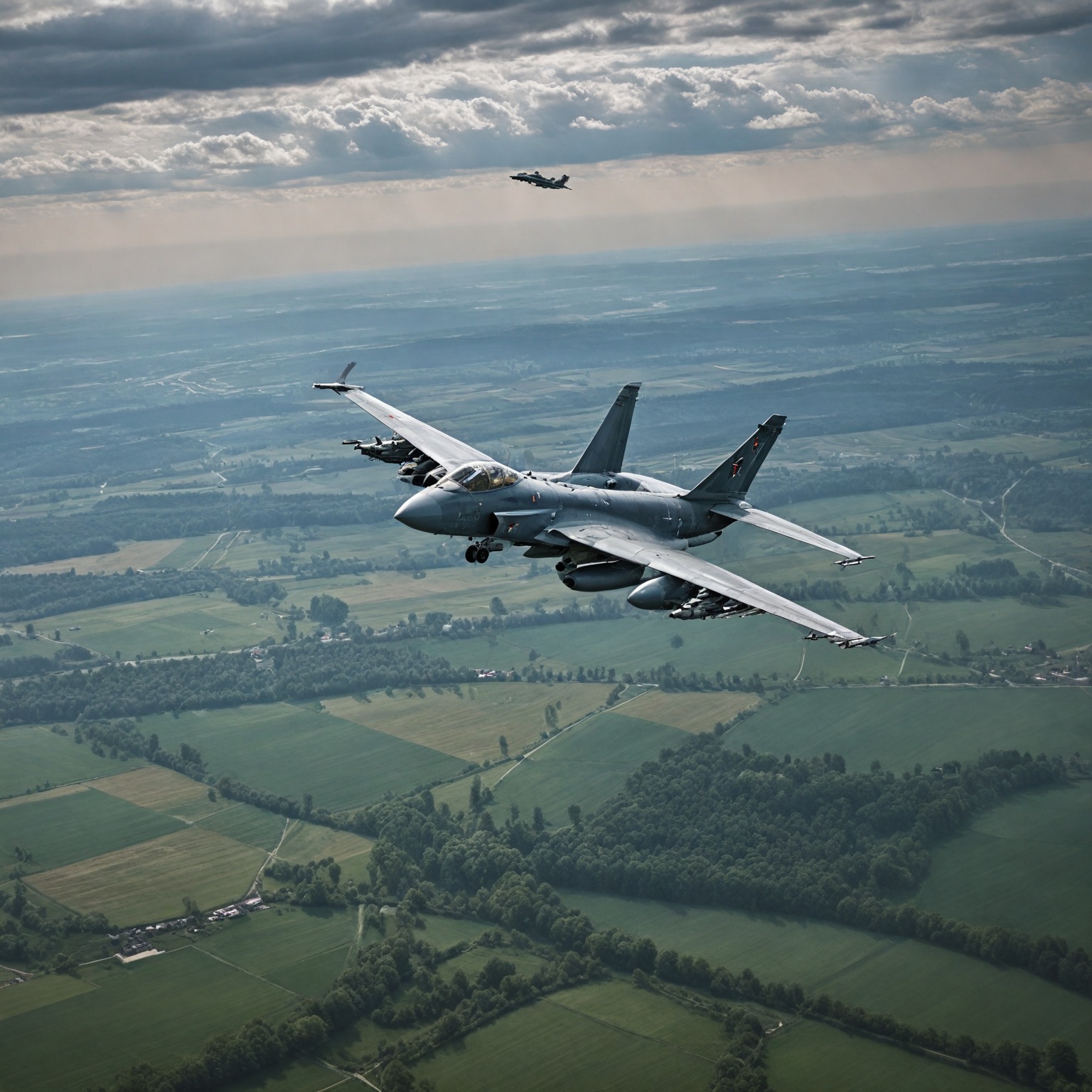
In September 2025, a significant escalation in the Russia-Ukraine conflict occurred when multiple Russian drones violated Polish airspace, marking an unprecedented breach of NATO territory. At least 19 Shahed-type drones, part of a larger Russian aerial assault involving over 400 drones and dozens of missiles targeting Ukraine, entered Poland’s airspace in the early hours of 10 September. The Polish Air Force, supported by NATO allies including Dutch F-35 fighter jets, successfully intercepted and shot down several of these drones, while one drone struck a residential building in eastern Poland without causing casualties.
This incident prompted Poland to invoke Article 4 of the North Atlantic Treaty, calling for consultations among NATO members due to the perceived threat to its territorial integrity and regional security. Polish Prime Minister Donald Tusk emphasized the seriousness of the airspace violations, describing them as acts of aggression posing a real danger to Polish citizens. Ukraine’s President Volodymyr Zelensky condemned the attacks as a dangerous escalation and urged the West to respond decisively to deter further Russian provocations.
The drone incursions and Poland’s prompt defensive response underscore the evolving nature of warfare in Eastern Europe, highlighting the strategic importance of NATO’s eastern flank amid Russia’s ongoing military campaign in Ukraine. Analysts interpret these actions as a potential test by Russian President Vladimir Putin of the West’s resolve and NATO’s collective defense mechanisms. Russia, however, denied the airspace violations, dismissing the allegations as unfounded.
Poland’s response reflects a broader historical context of vigilance against Russian aggression, rooted in centuries of conflict and geopolitical rivalry. The incident has heightened tensions within NATO and among European allies, reinforcing calls for stronger cooperation on air defense and sanctions against Russia. It also illustrates the interconnected security challenges facing Ukraine, Poland, and the wider European region amid the protracted war.
Background
The tensions between Poland and Russia have deep historical roots dating back several centuries. The rivalry and uneasy relations between the two nations were notably marked by the Polish–Muscovite War (1609–1618), which ended with the Truce of Deulino. This agreement granted the Polish–Lithuanian Commonwealth territorial concessions but preserved Russian independence, setting a precedent for ongoing conflict and mutual distrust. The war had long-lasting impacts, including the emergence of negative Polish stereotypes in Russia and the rise of the Romanov dynasty, which ruled Russia until 1917. Throughout history, military confrontations between Poland and Russia frequently shaped their national strategies and identities, with Poland often emphasizing deterrence and strategic alliances to counter Russian aggression.
In the early 20th century, hostilities continued during the Polish-Soviet War (1919–1921), where Poland asserted military advantage over Soviet forces in attempts to secure its eastern borders. The conflict occurred against a backdrop of political instability in Poland following World War I, with the country simultaneously engaged in multiple border disputes and internal challenges. This period reinforced Poland’s commitment to maintaining a strong defense posture and highlighted the precariousness of its geopolitical position.
The recent escalation in hostilities stems from Russia’s ongoing military campaign against Ukraine, which began with the full-scale invasion in 2022. Russia has repeatedly launched missile and drone attacks on Ukrainian territories near the Polish border, prompting Poland and NATO to increase their air defense readiness. In response to these incursions, Poland has deployed preventive military measures aimed at protecting its airspace and citizens. NATO and allied aircraft have been operating over Poland, while the Polish Operational Command actively monitors the situation to counter threats from Russian unmanned aerial vehicles (UAVs) and missiles.
The immediate catalyst for the latest tensions was a large-scale Russian drone attack on Ukraine, involving over 400 drones and dozens of cruise and ballistic missiles. These attacks not only targeted multiple regions of Ukraine but also resulted in violations of Polish airspace. Some of the Russian drones were intercepted and shot down by Polish and NATO forces, with one drone reportedly striking a residential building in eastern Poland, though no casualties were reported. Polish authorities have maintained close communication with NATO allies and emphasized the necessity of a strong, unified response to deter further escalation by Russia.
Ukrainian President Volodymyr Zelenskyy condemned the drone attacks as a significant escalation, urging the West to respond decisively to prevent the war from expanding further. The situation underscores Poland’s strategic importance as a frontline NATO member and its role in the broader regional security dynamics shaped by Russia’s aggressive actions.
Incident Overview
On 10 September 2025, at approximately 1:13 a.m. local time, at least 19 Shahed-type drones launched from the Russian Federation entered Polish airspace, marking an unprecedented violation described as “an act of aggression that posed a real threat to the safety of our citizens”. The Polish Air Force, supported by NATO Quick Reaction Alert aircraft, engaged the drones, successfully shooting down at least three of them. Several NATO countries aided in the defense operation, with Dutch F-35 Lightning II jets playing a key role in intercepting the drones.
The military response involved the use of armaments against the intruding objects, and efforts were made to locate and collect debris from the downed drones. The operation to recover drone remnants was ongoing the morning after the incident, with authorities maintaining close communication among the president, the minister of defense, and the operational commander overseeing the response.
The incursion also caused physical damage when one of the drones struck a residential building in Wyryki, eastern Poland. Fortunately, there were no reported injuries from this strike. The event was publicly characterized by Polish officials as a serious breach of national security and an unprecedented violation of the country’s airspace.
Ukrainian President Volodymyr Zelenskyy condemned the incident, noting that at least eight Iranian-made Shahed drones had been aimed toward Poland amid a broader Russian assault involving 415 drones and 40 missiles targeting Ukraine overnight. He described the incursion as “an extremely dangerous precedent for Europe” and called for a coordinated and strong response from all partners, including Ukraine, Poland, European nations, and the United States.
In response to the incident, Polish Prime Minister Donald Tusk requested the invocation of Article 4 of the North Atlantic Treaty, signaling a formal consultation among NATO allies regarding collective defense measures. Meanwhile, Russia dismissed the accusations of airspace violation as groundless through its chargé d’affaires in Poland. The episode heightened tensions on NATO’s eastern flank and underscored the evolving threat posed by drone warfare in the ongoing Russia-Ukraine conflict.
Polish Response
In response to repeated violations of its airspace by drone-type objects amid ongoing Russian attacks on Ukraine, Poland’s military swiftly initiated defensive operations. The Operational Command of the Polish Armed Forces confirmed that multiple drones were detected and subsequently shot down by Polish and NATO forces, emphasizing the immediate activation of protective procedures to safeguard Polish airspace and citizens. Polish Prime Minister Donald Tusk publicly thanked the Polish Operational Command and NATO pilots for their effective actions, stating that the security of Polish airspace had been stabilized and that the threat level had returned to normal.
The Polish military’s response involved the use of weapons to neutralize the aerial objects, with ongoing operations to locate and recover debris from the downed drones. Territorial Defense forces were mobilized to assist in the search efforts following the incidents. Despite one drone striking a residential building in Wyryki, eastern Poland, no injuries were reported.
Poland’s response reflects a broader strategic stance rooted in historical experiences of foreign aggression and a determination to prevent repetition of past tragedies. Polish leaders view their defensive measures not only as immediate security actions but also as part of a long-term commitment to national sovereignty and resilience against external threats. The Operational Command emphasized the preventive nature of their deployments, working closely with NATO allies who maintained air policing and intercept missions over Polish territory during periods of intensified Russian aerial activity.
Official Statements and Policies
The Polish military officially reported an “unprecedented” number of violations of its airspace, describing the situation as involving multiple incursions by Russian drones. In response, Polish forces engaged these objects with armaments and successfully neutralized more than ten threats during the early hours of the incident, including shooting down several drones. The Operational Command of the Armed Forces released a statement emphasizing that the deployment of military assets was preventive and focused on protecting Polish airspace and citizens. NATO and allied aircraft operated over Poland while monitoring the situation, illustrating close coordination with international partners.
Poland’s Defence Minister Wladyslaw Kosiniak-Kamysz confirmed that the country remained in constant contact with NATO command throughout the incident. Ukrainian President Volodymyr Zelenskyy also noted that approximately two dozen Russian drones may have entered Polish airspace during the night and expressed Ukraine’s readiness to deepen cooperation with partners for reliable airspace protection. Following the attacks, Polish officials declared that there was no cause for panic, but acknowledged that military conflict was “closer than at any time since the Second World War.” In response to the threat, Poland invoked NATO’s Article 4, formally requesting consultations with the alliance—a measure that has been employed only seven times since NATO’s founding in 1949 and last used in 2022 following Russia’s full-scale invasion of Ukraine.
Polish leadership framed these decisions within the broader context of historical experience, emphasizing that current policies are guided by a determination to prevent the recurrence of past tragedies related to Russian aggression. This resolve continues to shape Poland’s strategic posture and its commitment to collective defense under NATO frameworks.
International Reactions
European leaders widely condemned the violation of Polish airspace during the Russian drone attacks amid the ongoing conflict in Ukraine. NATO chief Mark Rutte described Russia’s actions as “reckless behaviour,” emphasizing the gravity of the incursion. European officials, who have been urging U.S. President Donald Trump to adopt stricter sanctions on Russia and bolster support for Kyiv, justified a collective response to the escalation, though there was no immediate comment from Washington.
Polish Prime Minister Donald Tusk formally requested the invocation of Article 4 of the North Atlantic Treaty, which calls for consultations among NATO members in the face of a threat to territorial integrity. This marked one of the few instances this article has been activated since NATO’s founding in 1949, with the previous occasion occurring shortly after Russia’s full-scale invasion of Ukraine in 2022. The Polish military, supported by several NATO allies including the Netherlands—whose F-35 Lightning II aircraft played a key role—successfully intercepted and shot down multiple drones that had breached Polish airspace.
Ukrainian President Volodymyr Zelenskyy condemned the incident as a deliberate act of escalation by Russia, stating that the incursion could not be dismissed as accidental and emphasizing that Russia “must feel the consequences” of its actions. In contrast, Russian officials, including Andrey Ordash, Russia’s chargé d’affaires in Poland, dismissed the accusations of airspace violations as unfounded.
Security analysts highlighted Poland’s swift defensive response as a demonstration of effective cooperation among NATO allies and an indication of the alliance’s readiness to defend every inch of its territory. Dr. Marion Messmer, a senior research fellow at Chatham House, noted that the successful interceptions reflected a quick and coordinated reaction to the threat. The broader question remains whether the Kremlin intended this incursion as a test of NATO’s resolve, with Western officials closely monitoring the situation for further developments.
Ukraine’s Position and Strategic Considerations
Ukraine has maintained a vigilant and proactive stance amid the escalating Russian aggression, particularly in response to the recent drone and missile strikes launched by Russia. Ukrainian President Volodymyr Zelensky highlighted the scale of the overnight attack, describing it as “massive” and noting that the strike involved 500 attack drones and 24 missiles targeting multiple regions across Ukraine. These attacks have prompted almost continuous air raid alerts, especially in western regions such as Volyn and Lviv, which share a border with Poland.
Zelensky has emphasized Ukraine’s readiness to strengthen cooperation with its partners to ensure robust air defense capabilities and reliable protection of its airspace. He stated that around two dozen Russian drones may have even penetrated Polish airspace during the attacks, underlining the transnational nature of the threat and the necessity of close coordination with NATO and allied forces. The Ukrainian leadership’s call for enhanced collaboration reflects a broader strategic consideration: the security of Ukraine is intrinsically linked to the stability of neighboring NATO members, particularly Poland, which faces direct repercussions from Russia’s aggressive actions.
The ongoing conflict has underscored the importance of deterrence and strategic partnerships for Ukraine. This is aligned with Poland’s historical and contemporary approach to defense, which emphasizes rearmament, alliances, and public support as essential to preventing further aggression. Ukraine’s cooperation with NATO allies, and Poland’s invocation of NATO’s Article 4 for formal consultations, illustrates the regional imperative to present a unified front against Russian provocations.
Strategically, Ukraine’s position is influenced by the broader geopolitical dynamics surrounding the war. Despite attempts by external actors, such as former U.S. President Donald Trump, to negotiate peace or increase sanctions on Russia, Moscow continues to intensify its aerial assaults. Ukrainian officials have thus prioritized sustaining international solidarity and enhancing joint defense measures, recognizing that the conflict’s escalation threatens not only Ukraine’s sovereignty but also the security architecture of Europe as a whole.
Military and Political Analysis
The recent incident involving Russian drones violating Polish airspace has underscored significant military and political dynamics within NATO and its neighboring states. Poland’s rapid interception and destruction of these drones demonstrated the country’s preparedness and the effective coordination among NATO allies. Polish Prime Minister Donald Tusk expressed gratitude towards the Polish Operational Command and NATO pilots, emphasizing that the security of Polish airspace had been stabilized and that threat levels had returned to normal following the attacks. This response was further supported by contributions from NATO members such as the Netherlands, whose F-35 jets participated in the interception mission.
The operation reflected a broader strategic posture within NATO, highlighting the alliance’s collective defense principle despite lacking a unified standing army. The alliance’s deterrence and air policing capabilities remain critical in safeguarding member states’ territories, especially those bordering conflict zones like Ukraine. Dr. Marion Messmer, a senior research fellow at Chatham House, noted that Poland’s swift reaction to the drone incursions exemplified effective cooperation among allies and a proactive defense strategy.
From a political perspective, the incursions represent a calculated challenge by Russia, perceived as testing the West’s resolve. Ukrainian officials, including President Volodymyr Zelensky and Foreign Minister Andrii Sybiha, have condemned the attacks, labeling them an “extremely dangerous precedent for Europe” and warning that Russian President Vladimir Putin is “testing the West” by escalating drone and missile strikes with little immediate retaliatory consequence. The use of Iranian-made Shahed drones, which have become a staple in Russia’s aerial campaign against Ukraine, further complicates the regional security environment.
Poland’s response, including the activation of Territorial Defense forces to search for downed drones and the continued vigilance of its air defenses, underscores Warsaw’s commitment to national and allied security. The Polish Operational Command characterized the drone interception as a preventive measure focused on protecting both Polish citizens and NATO airspace. Politically, these events are framed within a historical context of Russian aggression, with Poland determined to prevent any recurrence of past tragedies and to maintain a robust defense posture alongside its NATO partners.
The incident also reinvigorated discussions about enhancing air defense capabilities in neighboring countries to Ukraine, advocating for greater integration and support among partners to intercept aerial threats before they reach NATO borders. The joint military and political response signals a unified front from NATO and its allies, emphasizing that any further aggression will be met with collective strength and strategic coordination.
Aftermath and Broader Implications
The shooting down of Russian drones that violated Polish airspace
The content is provided by Avery Redwood, 11 Minute Read


