
Summary
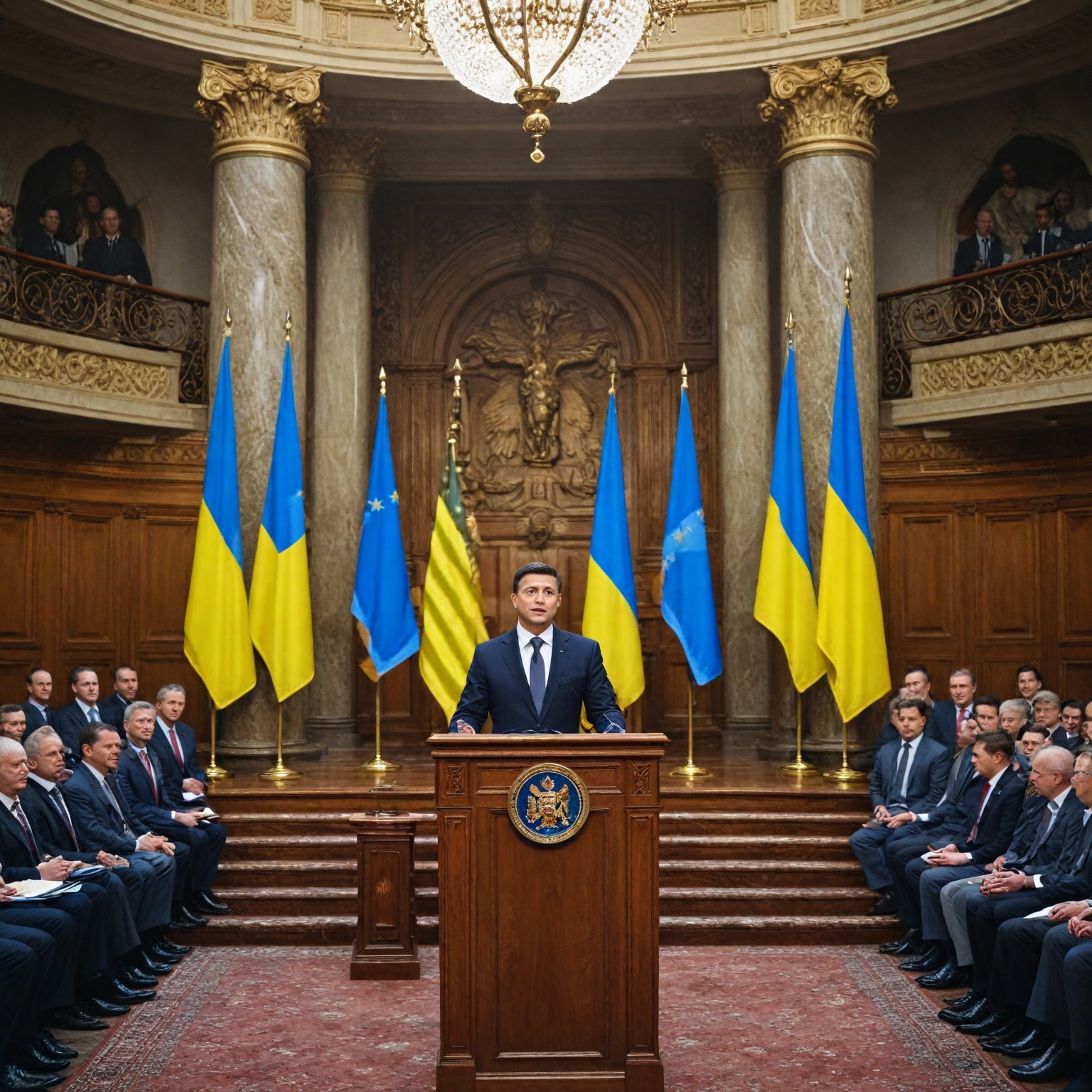
President Volodymyr Zelenskyy of Ukraine has declared Kyiv’s readiness for transparent and accountable collaboration with international partners, particularly the United States, amid escalating diplomatic efforts to resolve the ongoing conflict with Russia. This declaration underscores Ukraine’s commitment to strengthening governance, implementing defense reforms, and combating corruption as integral components of its broader strategy to secure sustained international support and advance peace negotiations. Zelenskyy’s stance comes at a critical juncture when the U.S. has presented a draft peace framework that includes controversial demands, such as territorial concessions and military limitations, prompting intense debate within Ukraine and among its allies.
The Ukrainian government emphasizes enhancing transparency and democratic civilian oversight within its defense sector, improving operational efficiency, and ensuring parliamentary accountability for legislative decisions. These reforms aim to bolster Ukraine’s credibility domestically and abroad while addressing international calls for greater anti-corruption measures. Zelenskyy has pledged to empower anti-corruption bodies with full investigative authority, signaling a commitment to uprooting systemic corruption despite political challenges and public protests that highlight internal divisions over governance reforms.
The U.S. response to Kyiv’s initiatives has been active but cautious, reflecting the complexities of negotiating peace in a protracted conflict. American officials have sought Kyiv’s acceptance of a peace plan developed without direct Ukrainian involvement in initial drafting stages, eliciting skepticism and accusations of provocations designed to undermine Ukrainian unity. At the same time, high-level diplomatic engagements demonstrate a shared interest in accelerating negotiations and reinforcing security guarantees modeled on transatlantic alliances.
International reactions have been mixed, with the European Union and Western allies expressing support for Ukraine’s reform agenda while urging adherence to governance benchmarks tied to military aid. Domestically, Zelenskyy faces significant challenges from anti-corruption advocates and opposition figures concerned about democratic backsliding amid wartime pressures and political consolidation. The evolving interplay of diplomatic negotiations, governance reforms, and internal dissent illustrates the multifaceted difficulties Ukraine confronts as it seeks transparent collaboration and a sustainable resolution to the conflict.
Background
In the context of the ongoing conflict between Ukraine and Russia, Ukrainian President Volodymyr Zelenskyy has faced significant challenges both domestically and internationally. Despite his position remaining secure due to the wartime setting, Zelenskyy’s focus has been on restoring public confidence in the government, ensuring the effective functioning of parliament, and demonstrating transparent governance to the international community.
Amidst this, the United States has played an active diplomatic role. Kyiv received a draft peace plan from the American side, which was described by U.S. officials as a potential means to reinvigorate diplomacy. However, the plan reportedly echoed many of Moscow’s maximalist demands, suggesting that Ukraine would need to make painful concessions, including relinquishing some territory and certain weapons. The Ukrainian government did not publicly disclose the details of the plan, leading to a contrast between Zelenskyy’s official statements and the views of some Kyiv officials who privately expressed concerns about the proposal.
Further complicating the situation, Ukraine was not involved in preparing the U.S. proposals, which Washington had discussed with Russia. This lack of direct involvement caused tension as Ukraine was expected to agree to the U.S.-crafted outline, raising questions about sovereignty and the terms of peace. Zelenskyy indicated his willingness to negotiate on the plan, including talks with then U.S. President Donald Trump, despite the criticism and condemnation from other officials who labeled the plan as “absurd”.
Throughout this period, reporting from Kyiv highlighted the resilience of the Ukrainian people, including scenes such as dining by candlelight during blackouts, underscoring the hardships endured amid the conflict. These events set the stage for Zelenskyy’s declaration of Kyiv’s readiness for transparent collaboration as international pressure mounted for decisive diplomatic action.
Declaration of Readiness for Transparent Collaboration
President Volodymyr Zelenskyy has publicly declared Ukraine’s readiness to engage in transparent and accountable cooperation with international partners, particularly the United States, amid ongoing pressures to accelerate peace negotiations and defense reforms. This declaration emphasizes Ukraine’s commitment to strengthening security and governance frameworks while responding to calls for decisive action against corruption within the government.
Zelenskyy underscored Ukraine’s intention to contribute positively to partner security by enhancing transparency and accountability measures related to international assistance. This includes advancing defense reforms aimed at modernizing the military, reinforcing democratic civilian oversight, and improving operational efficiency and transparency across defense institutions and the defense industry. The Ukrainian government has expressed a willingness to begin cooperation immediately, signaling an openness to align with the demands of international stakeholders.
Alongside these reforms, Zelenskyy has acknowledged the necessity of legal and procedural changes to maximize the impact of parliamentary legislative support (PLS) and to ensure the government’s accountability in implementing decisions made by Ukraine’s Verkhovna Rada (parliament). These measures are part of a broader effort to strengthen institutional responsibility and restore credibility both domestically and internationally.
The President’s declaration coincides with intensified diplomatic activity between Kyiv and the U.S., highlighted by high-level meetings such as the one-hour discussion between Zelenskyy and U.S. diplomatic envoy Derek Driscoll, which emphasized an aggressive timeline to reach a peace framework. While some in Kyiv initially perceived certain proposals as provocations designed to destabilize Ukrainian unity, Zelenskyy’s office acknowledged the potential for renewed diplomatic momentum based on American assessments.
Importantly, Zelenskyy has also committed to combating corruption decisively by empowering anti-corruption bodies like NABU and SAPO with the necessary access and authority to pursue investigations, including those related to high-profile cases involving leaks and asset repatriation. This commitment entails structural reforms to eliminate systemic vulnerabilities and restore rule of law principles amid ongoing wartime challenges.
Together, these declarations and initiatives reflect Ukraine’s strategic positioning to strengthen its governance, military capacity, and international partnerships while navigating complex geopolitical and domestic pressures during the conflict. Zelenskyy’s readiness for transparent collaboration thus forms a critical component of Ukraine’s approach to securing sustained support and advancing toward a negotiated resolution.
United States Response
The United States has actively engaged with Ukraine regarding a framework aimed at ending the ongoing war with Russia. U.S. officials communicated to President Volodymyr Zelenskyy that Kyiv is expected to accept a U.S.-crafted outline for peace, which entails Ukraine relinquishing certain territories and weapons as part of the concessions necessary to achieve a resolution. The proposed plan, described by an official as “a comprehensive plan to end the war,” reflects a collaborative effort between the U.S. and Ukraine, with Zelenskyy reportedly agreeing on an aggressive timeline to sign a framework initiating the peace process.
Despite the official diplomatic engagement, the plan has generated controversy within Ukrainian circles and among European allies. Ukrainian officials expressed skepticism, labeling the proposal a “provocation” designed to create divisions and disorient Ukraine’s partners. Reports indicate that the plan contains maximalist demands reminiscent of Moscow’s positions, including ceding territory in the eastern Donbas region that Russia does not currently control. This has raised concerns about the acceptability of the terms to Kyiv and its allies.
The U.S. stance emphasizes the necessity of mutual concessions for peace, with Senator Marco Rubio stating that any resolution will require compromises from both Kyiv and Moscow. The United States military negotiating team in Kyiv has been actively involved in the discussions, demonstrating a “remarkable pace of diplomatic activity” and continuing efforts to advance the process.
In addition to territorial and military stipulations, the proposed framework includes security guarantees modeled on Article 5 of the North Atlantic Treaty. Under this arrangement, the U.S. and its European allies would regard an attack on Ukraine as an attack on the entire transatlantic community, thereby providing a collective security assurance. Furthermore, the plan advocates for defense reforms in Ukraine, emphasizing the strengthening of democratic civilian control and improving efficiency and transparency across Ukrainian defense institutions and industry.
The U.S. also adjusted the diplomatic approach surrounding Zelenskyy’s communications, exemplified by the cancellation of a planned joint news conference with the Ukrainian president and U.S. envoy Lieutenant General Keith Kellogg. The change in format restricted statements and questions to protocol filming only, underscoring a controlled environment for messaging.
Reactions from Other International Actors
International responses to Ukrainian President Volodymyr Zelenskyy’s recent declarations and initiatives have been varied, reflecting both support and caution amid the ongoing conflict with Russia.
The European Union has demonstrated a complex stance. While 26 member states jointly endorsed a Ukraine statement emphasizing Kyiv’s accession to the bloc and pledging future military aid, Hungary notably withheld support, revealing some divisions within the Union. Despite intensive discussions, the EU summit in Brussels resulted primarily in plans to strengthen the bloc’s defense sector rather than immediate new commitments directly benefiting Ukraine’s military capabilities. Additionally, the EU withheld €1.5 billion from a larger fund, linking disbursement to governance benchmarks and highlighting Kyiv’s dependence on international support to maintain state functions. The EU has also called for reforms enhancing transparency, accountability, and democratic civilian control over Ukraine’s military institutions, underscoring the importance of good governance alongside military aid.
Western allies, particularly those within the Group of Seven (G7), have expressed concerns regarding Ukraine’s anticorruption efforts and governance reforms. They reaffirmed their commitment to transparency and independent institutions but voiced reservations about recent legislation perceived to undermine these goals. Following Zelenskyy’s meetings with law enforcement heads, some officials expressed doubts about the agencies’ ability to effectively investigate high-level corruption, indicating ongoing challenges despite political support at the highest level.
The United States has been actively engaged in diplomatic efforts with Kyiv. After a private meeting between Zelenskyy and U.S. diplomat Brandon Driscoll, U.S. embassy officials highlighted the rapid pace of diplomacy and intentions to maintain pressure and coordination. Moreover, the U.S. is reported to have co-developed a 28-point peace plan with Ukraine, including controversial provisions such as significant reductions in Ukraine’s armed forces and territorial concessions—conditions that Kyiv finds difficult to accept but is nevertheless willing to engage with in pursuit of a peace process.
Russia’s reaction has been cautious but firm. The Kremlin stated it had not officially received the U.S. peace plan and expressed readiness to negotiate only on its own terms, which include demands for Ukrainian neutrality, military limitations, and territorial concessions that Kyiv and its allies reject as tantamount to capitulation. European allies have cautiously welcomed tentative moves toward ceasefire discussions while maintaining support for Ukraine and voicing concerns about Moscow’s rigid conditions.
In international forums, Zelenskyy has sought broader support for Ukraine’s sovereignty and peace efforts. He proposed convening a global conference to enforce United Nations goals on border recognition and suggested establishing a preventative U.N. office in Kyiv focused on promoting peace, signaling his willingness to engage multilaterally despite the challenging geopolitical environment.
Domestic Reactions in Ukraine
The domestic response to President Volodymyr Zelenskyy’s proposal and related political developments has been notably intense and multifaceted. While Kyiv faces significant military pressure from Russian forces and the government contends with a high-profile corruption scandal, many Ukrainian commentators have viewed Zelenskyy’s moves with suspicion, interpreting them as attempts to consolidate power amid weakened political standing.
Public trust has been severely impacted by accusations of corruption involving Zelenskyy’s allies, which many Ukrainians have condemned as “blood money” during a time of national struggle. These allegations have sparked widespread protests, particularly against legislative actions perceived to undermine the independence of Ukraine’s key anti-corruption agencies. Demonstrations in Kyiv and other cities drew thousands, despite the risks posed by ongoing missile attacks, as citizens voiced their opposition to what they see as attempts to silence critics and dismantle important oversight institutions.
The Ukrainian branch of Transparency International has been vocal in criticizing parliamentary decisions that weaken anti-corruption efforts, warning that such measures damage Ukraine’s reform achievements since the 2014 Revolution of Dignity and erode trust with international partners. They urged Zelenskyy to veto laws that would effectively dismantle the country’s anti-corruption infrastructure, stressing that failure to do so would implicate him in undermining these reforms.
High-profile figures within Ukraine, including former officials and opposition politicians like Petro Poroshenko, have publicly expressed concern over what they perceive as democratic backsliding. Poroshenko has called on Kyiv’s international allies to address creeping authoritarianism even as they respect Zelenskyy’s wartime leadership. This tension underscores the delicate balance Zelenskyy must maintain to restore public confidence and demonstrate effective, transparent governance to both domestic audiences and foreign partners.
The anti-corruption agencies themselves have been central to the controversy, as they had been investigating senior government members, including a deputy prime minister charged with corruption. These investigations, and subsequent legislative attempts to limit the agencies’ autonomy, have fueled political divisions and public unrest. Supporters of these institutions, including numerous anticorruption and civil society groups, have mobilized in defense of the agencies and against what they characterize as politically motivated charges against activists and officials.
Transparency and Anti-Corruption Initiatives
Since assuming office, President Volodymyr Zelenskyy has emphasized the importance of transparency and anti-corruption reforms as key pillars for Ukraine’s democratic development and EU integration. In cooperation with the European Commission, Ukraine has developed comprehensive reform roadmaps focused on the rule of law, public administration reform, and the functioning of democratic institutions, embedding anti-corruption efforts throughout these strategies. These roadmaps serve as critical benchmarks for monitoring the country’s reform progress and aim to anchor reforms within broader societal and political transformations to ensure their sustainability.
Ukraine’s anti-corruption framework has seen significant strides over the past decade, notably through increased transparency, enhanced accountability, and the strengthening of independent anti-corruption bodies. These improvements have been supported by digitalization initiatives and open data policies that bolster the integrity of public institutions. The country’s commitment to good governance is further reflected in its alignment with the Principles of Public Administration developed by SIGMA, covering strategic frameworks, policy development, public service management, and accountability. Such reforms have contributed to Ukraine’s improvement in global indices, including a notable rise in the Transparency of Government Policymaking ranking by the World Economic Forum.
Despite these efforts, Zelenskyy’s administration has faced significant challenges related to anti-corruption institutions. Legislative changes in the Verkhovna Rada have, at times, undermined the independence of key agencies such as the National Anti-Corruption Bureau (NABU) and the Specialized Anti-Corruption Prosecutor’s Office (SAPO), transferring substantial control to government authorities. Critics argue that these moves serve to consolidate presidential power, weaken accountability, and silence dissenting voices within the government. Notably, some senior officials, including a deputy prime minister, have faced corruption allegations investigated by these agencies, highlighting internal tensions.
Public response to attempts perceived as weakening anti-corruption efforts has been robust, with widespread protests in Kyiv and other cities calling for the restoration of the independence of investigative bodies. Following domestic and international pressure, including from the European Union, legislation was introduced and signed by Zelenskyy to restore the autonomy of state agencies responsible for corruption investigations, marking a significant political concession and a reaffirmation of commitment to transparency.
Looking forward, experts emphasize that legal and procedural reforms, alongside methodological guidance and clarified responsibilities for financial investigations, are essential to fully realize the potential of Ukraine’s public administration reform and anti-corruption efforts. Strengthening the government’s accountability for legislative implementation remains a priority to ensure effective enforcement of anti-corruption measures and to combat criminal schemes such as money mule operations. These efforts align with international calls to include Ukraine within the EU’s rule-of-law toolbox, aimed at supporting democratic reforms and law enforcement capacity ahead of potential EU accession.
Practical Measures for Ensuring Transparency
In response to calls for enhanced transparency and accountability, practical measures have been implemented to strengthen Ukraine’s anti-corruption framework and partner collaboration. Among these efforts, significant emphasis has been placed on contributing positively to partner security and reinforcing transparency and accountability mechanisms related to partner assistance.
One key initiative
Impact and Outcomes
The declaration by Zelenskyy emphasizing Kyiv’s readiness for transparent collaboration has had mixed repercussions both domestically and internationally. On one hand, it underlined the government’s intent to improve accountability and transparency, aligning with broader reform efforts aimed at strengthening partner security and reinforcing measures related to international assistance. However, the political environment surrounding these reforms has been fraught with challenges, notably the strain in trust between Ukraine and its international partners following legislative actions perceived as undermining anti-corruption institutions.
The Ukrainian Parliament’s decision to impose tougher restrictions on two key independent anti-corruption agencies sparked widespread protests in Kyiv, reflecting public and civil society discontent with perceived backsliding on reforms initiated since the 2014 Revolution of Dignity. The Ukrainian branch of Transparency International sharply criticized these moves, warning that such legislation could dismantle critical anti-corruption infrastructure and damage Kyiv’s credibility with international allies. The organization urged President Zelenskyy to veto the law, cautioning that failure to do so would implicate him in the erosion of these reforms.
Despite these setbacks, there have been measurable advancements in Ukraine’s public administration and reform processes. The Cabinet of Ministers utilized assessment findings to update the Public Administration Reform Strategy in 2018, which contributed to Ukraine’s improved ranking by 34 points in the Transparency of Government Policymaking indicator of the Global Competitiveness Index that year. The government introduced over 1,300 reform specialist positions, with many filled through transparent competitions, demonstrating a commitment to meritocratic and expert-driven governance reforms.
Nonetheless, concerns remain about the integrity and independence of the reform process, especially as certain government bodies, such as the newly-elected Audit Chamber, have at times worked to undermine reform initiatives through controversial audits. Furthermore, the suspension of U.S. aid during a critical period led Ukrainian military officials to reassess their stockpiles and strategic needs, highlighting the real-world implications of strained international trust and political decisions.
Looking forward, experts and stakeholders have emphasized that achieving the full potential of public legislative and systemic (PLS) reforms in Ukraine will require not only methodological improvements but also significant legal and procedural changes. Strengthening government accountability and responsibility, particularly in legislative implementation, is seen as essential to restoring and maintaining both domestic and international confidence. The continuing dialogue between Ukraine and its partners underscores a complex but vital process of rebuilding trust and ensuring transparent collaboration amid ongoing geopolitical challenges.
Subsequent Developments and Ongoing Cooperation
Following initial declarations of readiness for transparent collaboration, significant progress has been reported in the partnership between Kyiv and the United States. Ukrainian officials confirmed that the government has approved an agreement aimed at enhancing cooperation, signaling their preparedness to commence joint efforts promptly. This move aligns with broader goals to contribute positively to partner security and to strengthen transparency and accountability measures concerning international assistance.
Amid ongoing diplomatic efforts, Kyiv has expressed willingness to engage with a U.S.-backed draft peace plan designed to end the conflict with Russia. This proposal, which reportedly involves territorial and military concessions, has been communicated to President Volodymyr Zelenskyy as a potential framework for peace negotiations. U.S. officials have emphasized that any sustainable resolution will necessitate concessions from both Kyiv and Moscow, with continuous development of ideas based on input from both sides.
However, these developments have been accompanied by careful protocol management during joint communications. For example, a planned news conference featuring Zelenskyy and U.S. envoy Lieutenant General Keith Kellogg was modified at the American side’s request to restrict media interactions to protocol filming, excluding statements or questions. This underscores the sensitive nature of ongoing discussions.
In parallel, international partners including the European Union and multilateral donors have urged Kyiv to adopt comprehensive strategies that not only address immediate concerns but also tackle systemic vulnerabilities to restore credibility and protect democratic institutions. The U.S. military’s negotiating presence in Kyiv further reflects a commitment to advancing this multifaceted cooperation.
The content is provided by Avery Redwood, 11 Minute Read


