Summary
The United States–China trade agreement represents a significant diplomatic and economic milestone in the complex and often contentious trading relationship between the two largest global economies. Emerging from years of escalating trade tensions marked by extensive tariffs and retaliatory measures, the agreement outlines mutual tariff reductions and establishes a formal mechanism for ongoing trade consultations. This deal aims to ease economic hostilities, stabilize global markets, and provide a framework for addressing longstanding disputes involving trade imbalances, intellectual property, and market access.
China regards the agreement as a major strategic victory, emphasizing its role in affirming Beijing’s negotiating strength and reinforcing its position as a responsible global power. Chinese officials and state media have portrayed the deal as a vindication of their tough stance, while highlighting commitments to deepen dialogue and cooperation through the newly established trade consultation mechanism. Economically, the agreement aligns with China’s broader goals of technological self-reliance and innovation amid ongoing global uncertainties.
From the United States’ perspective, the deal marks a cautious step toward resolving trade imbalances and reducing the national emergency declared in response to perceived unfair trade practices by China. While the agreement achieves tariff rollbacks and partial rollback of trade restrictions, significant issues—such as technology transfer, export controls, and enforcement—remain unresolved, suggesting that comprehensive resolution will require sustained negotiation.
Despite cautious optimism, the agreement has not been without controversy. Critics on both sides point to unresolved tensions, missed commitments, and the broader geopolitical rivalry underpinning the trade conflict. The trade war has also had far-reaching impacts on global supply chains, market stability, and technological decoupling, underscoring the complexity of US–China economic relations in the 21st century.
Background
The United States and China have had a complex and often contentious trading relationship, marked by significant disputes over trade imbalances, tariffs, and market practices. Historically, the U.S. government has expressed concerns regarding large bilateral trade deficits with China and criticized China’s exchange rate policies. Previous administrations, including those of George W. Bush and Barack Obama, implemented quotas and tariffs on Chinese textiles, accusing China of dumping products at unfairly low prices to protect domestic industries.
Under the Trump administration, tensions escalated into a trade war characterized by the imposition of extensive tariffs. By late 2019, the United States had levied approximately US$350 billion in tariffs on Chinese imports, while China retaliated with tariffs amounting to around US$100 billion on U.S. exports. These measures aimed to address what the U.S. described as unbalanced trade and national security concerns related to China’s trade practices. The trade conflict resulted in economic damage not only in both countries but also globally, causing stock market instability and disruptions in international supply chains. Some countries, however, saw increased manufacturing activity as production shifted away from China.
Efforts to de-escalate the trade war culminated in negotiations that led to agreements on tariff reductions. For instance, in May 2019, the U.S. agreed to reduce tariffs on Chinese goods to 30%, with China reciprocating by lowering tariffs on U.S. products to 10%. Both parties agreed to reassess the arrangement after 90 days. Throughout this period, U.S. officials involved in negotiations, including Treasury Secretary Scott Bessent and Trade Representative Jamieson Greer, indicated that progress was being made, emphasizing that differences might have been less significant than previously thought. They also highlighted the urgency and eagerness on both sides to rebalance trade relations.
The strategic dimension of the trade relationship and its broader implications have been studied extensively. Some economists have suggested that tariff hikes by the U.S. might produce counterintuitive effects, such as increased Chinese exports to the U.S. over the medium and long term, based on analyses of trade data from OECD and BRICS countries. Business leaders, including Matthew Shay, president and CEO of the National Retail Federation, have voiced concerns about the prolonged nature of the trade war and its adverse impacts on American businesses and consumers, urging for a resolution and removal of tariffs.
Negotiations in Geneva involving high-level officials from both countries were closely watched, with both sides signaling “substantial progress” and promising announcements of agreements, although details were initially scarce. The talks reflected a mutual interest in reaching a deal that could address key U.S. concerns while offering positive developments for global trade.
Key Provisions of the Agreement
The trade agreement between the United States and China includes several key provisions aimed at easing tensions and establishing a framework for ongoing economic dialogue. One of the primary measures involves the mutual reduction of tariffs: the United States agreed to lower its additional tariffs on Chinese goods from 145% to 30%, while China cut its tariffs on U.S. goods from 125% to 10%. However, tariffs imposed prior to April 2, including those dating back to the Trump administration, remain largely in place, alongside other restrictions such as the U.S. termination of low-value package tariff exemptions, known as the “de minimis” rule.
In addition to tariff adjustments, the agreement calls for the removal or modification of specific executive orders that had collectively imposed tariffs of up to 115% on imports from China. The deal also includes the removal of certain firms from trade and investment blacklists and the shelving of an anti-dumping probe, signaling a partial rollback of previous trade barriers.
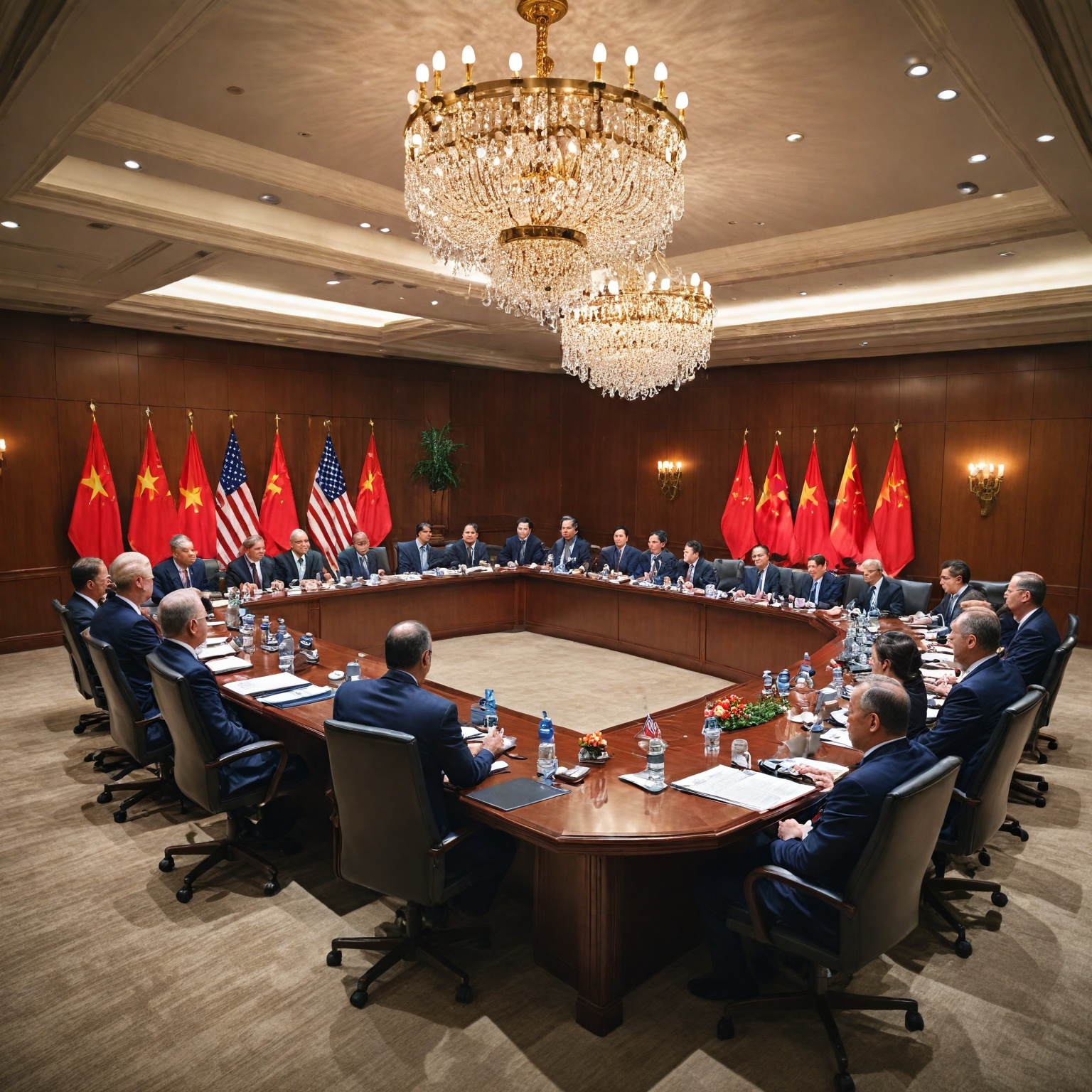
Both parties have agreed to establish a “trade consultation mechanism” to facilitate ongoing dialogue and consultations on economic and trade relations. The Chinese delegation appointed Vice Premier He Lifeng to represent China in these discussions, underscoring the commitment to sustained communication. This mechanism aims to provide a stable foundation for future negotiations and possibly more expansive agreements addressing broader economic issues between the two countries.
While the immediate impact on prices may be limited—given that goods subject to the highest tariffs are already en route to U.S. ports—the agreement marks an important step toward resolving the national emergency declared by the U.S. government in response to the trade dispute. It also reflects a recognition by both sides that, despite significant differences, common ground can be found to reduce trade tensions.
The agreement further strengthens economic cooperation against the backdrop of global financial uncertainties and signals a mutual interest in deepening trade relations, albeit with cautious progress on complex issues such as technology transfer and export controls.
China’s Perspective
China views the trade agreement with the United States as a significant diplomatic and strategic victory. Chinese officials, state-run media, and influencers have portrayed the deal and the accompanying 90-day tariff pause as a vindication of Beijing’s tough negotiating stance, emphasizing that their defiant public posture was instrumental in securing the agreement. The Chinese government framed the talks as “candid, in-depth and constructive,” highlighting mutual agreements to establish a trade consultation mechanism aimed at fostering ongoing dialogue and cooperation.
From Beijing’s perspective, the agreement symbolizes a successful defense against what it perceives as unjust U.S. trade practices and an affirmation of China’s status as a responsible global power. Despite previous rhetoric pledging to “fight to the end,” Chinese officials indicated openness to negotiations contingent upon U.S. sincerity in tariff reductions. The Chinese Ministry of Commerce described the discussions with the U.S. as pragmatic and productive, and Vice Premier He Lifeng underscored the significance of the consensus reached, promising “good news for the world” upon joint statement release.
Economically, China maintains that U.S. actions, including tariffs and trade restrictions, have negatively impacted not only bilateral relations but also the global economy. The Chinese government has blamed the United States for initiating the trade conflict and contends that American policies aim to suppress China’s growth, particularly criticizing U.S. accusations regarding “forced technology transfer” and alleged state capitalism practices. Nevertheless, Chinese leadership has urged calm and deeper mutual understanding between the two nations, especially in light of ongoing economic challenges posed by the COVID-19 pandemic and fluctuating global markets.
While welcoming the agreement, Chinese scholars and officials acknowledge that significant issues remain unresolved and that the negotiation process will continue to test the political acumen and negotiation skills of both sides. The deal aligns with China’s broader strategic goals of technological self-reliance and innovation, as emphasized in its 14th Five-Year Plan (2021–2025), which prioritizes strengthening domestic industries and reducing dependency on foreign technology. This multifaceted approach reflects Beijing’s intent to balance opening certain trade channels with protecting and promoting its domestic economic interests amid a complex international trade environment.
In sum, China interprets the U.S.–China trade agreement not only as a tactical win in a high-stakes negotiation but also as a milestone that reinforces its position on the global stage and supports its long-term economic and technological ambitions.
Impact on US-China Relations
The US-China trade agreement marked a significant moment in the bilateral relationship, with both sides expressing cautious optimism while acknowledging the complexity of unresolved issues. The deal, reached on May 12, involved mutual tariff reductions— the United States agreed to cut tariffs on Chinese goods to 30%, and China reduced tariffs on US products to 10%—which was seen as a de-escalation of trade tensions and a foundation for further dialogue. Both governments committed to establishing a trade consultation mechanism aimed at continuing economic and trade discussions, with high-level representatives such as He Lifeng, Vice Premier of the State Council, appointed to lead the Chinese side.
From Beijing’s perspective, the agreement was celebrated as a major diplomatic victory. Analysts like Wang Wen, dean of the Chongyang Institute for Financial Studies, described the deal as exceeding expectations and rekindling global hope, though they emphasized that many difficult issues remained and that the outcome would test the political wisdom and negotiation capabilities of leaders on both sides. China framed the trade war as a conflict initiated by the United States, accusing Washington of attempting to stifle China’s growth and complicating negotiations.
Despite these developments, underlying tensions persisted. Economic analyses indicated that while the US tariff hikes initially aimed to curb China’s exports, mid- to long-term effects could include an actual increase in Chinese exports to the US, as observed in past trade data from OECD and BRICS countries.
The trade war also had broader global repercussions, causing economic damage in several countries while benefiting others that gained manufacturing shifted from China. Stock market volatility and global economic uncertainty underscored the widespread impact of the conflict. In this context, the new agreement was seen as an important step toward stabilizing relations and setting the stage for more expansive discussions on trade and economic cooperation, though experts noted that comprehensive resolutions would likely require a long-term process.
International Reactions
International responses to the U.S.-China trade agreement have reflected a mixture of cautious optimism and strategic calculation. Officials from both countries expressed eagerness to ease economic hostilities following the weekend talks in Switzerland between U.S. Trade Representative Jamieson Greer and Chinese Vice Premier He Lifeng, describing the discussions as “candid, in-depth and constructive”. The White House announced the deal as a significant development but withheld specific details, indicating that more information would be forthcoming.
U.S. officials emphasized that the agreement aimed to address the perceived national emergency posed by unbalanced trade, with tariffs imposed by the Trump administration as a countermeasure. Greer stated confidence that the deal would contribute to resolving these trade imbalances and potentially pave the way for broader, more comprehensive discussions about the economic relationship between the two nations. However, experts noted that a wide-ranging agreement remains a long-term prospect, given ongoing concerns such as export controls on rare earth materials and technology transfer issues.
Globally, the trade war has induced economic ripple effects, including market instability and shifts in manufacturing bases, prompting various governments to implement measures mitigating the conflict’s impact. Economists remain skeptical about the effectiveness of tariffs in achieving the intended trade goals, highlighting the complex interdependence between the U.S. and China. For instance, U.S. exports to China support over a million American jobs, and significant U.S. investment in China continues, underscoring the intricate economic ties that any agreement must navigate.
Criticisms and Controversies
The US-China trade relationship has been marked by significant criticisms and controversies from both sides. The United States government has repeatedly expressed concerns over the large bilateral trade deficits with China and criticized China’s relatively inflexible exchange rate policies. During the administrations of George W. Bush and Barack Obama, the US imposed quotas and tariffs on Chinese textiles, accusing China of dumping products at unfairly low prices to protect domestic industries. These actions contributed to growing tensions, which culminated in a more extensive trade war under the Trump administration.
In response to US trade measures, the Chinese Communist Party (CCP) under Xi Jinping accused the Trump administration of nationalist protectionism and implemented retaliatory actions. The trade war escalated through 2019, leading to a tense phase-one agreement in January 2020, which China later failed to fully honor by not purchasing the additional $200 billion in imports outlined in the deal. Chinese officials argued that the real objective of the US was to stifle China’s growth, blaming America for initiating the conflict and complicating negotiations, while emphasizing the negative global effects of the trade war.
Controversy also arose from China’s domestic policies in reaction to the trade war. Media reports indicated that China instructed government agencies and public institutions to replace foreign computer equipment and software within three years, a move linked to the “3-5-2” replacement strategy and the broader ITAI initiative aimed at accelerating domestic technological development. This policy was viewed by some as an escalation in the technology decoupling between the two countries.
Despite ongoing tensions, both sides maintained a level of dialogue to manage the agreement’s implementation. The two countries held multiple vice-ministerial and director-general-level meetings focusing on expanding trade, intellectual property rights, financial services, and food and agricultural products. Regular communications through working-level talks and email exchanges aimed to address mutual concerns and operationalize the agreement, which officially came into effect on February 15, 2020. China also provided an extensive public comment period for proposed measures, accommodating domestic and international feedback, demonstrating a willingness to engage transparently.
However, skepticism persisted. Chinese officials had previously vowed to “fight to the end” but indicated openness to negotiations contingent on US tariff reductions, softening their rhetoric following statements by President Trump expressing hopes for a deal with Xi Jinping. Nonetheless, Beijing continued to portray itself as the aggrieved party and sought to maintain an image of responsible global leadership despite the acrimony.
On the US side, there was cautious optimism but tempered expectations ahead of key talks. Officials described Chinese negotiators as diligent and constructive, yet the Trump administration publicly downplayed hopes for a quick resolution, framing meetings as initial steps toward de-escalation rather than definitive breakthroughs. The broader economic context underscored fragility within China’s system and the risks posed by the de facto trade embargo resulting from escalating tariffs.
Moreover, the trade dispute extended beyond economics into security concerns, with cooperation on issues like the fentanyl crisis emerging as a rare positive development. Chinese engagement in addressing fentanyl was highlighted as an unexpected and constructive element amid strained relations.
The content is provided by Avery Redwood, 11 Minute Read