
Summary
The ongoing conflict between Ukraine and Russia has been marked by intense military confrontations and repeated failures to achieve a lasting ceasefire, underscoring deep geopolitical divisions and the complexities of diplomatic negotiations. Despite numerous rounds of talks and international mediation efforts, fundamental disagreements persist, particularly regarding Ukraine’s territorial integrity and Russia’s demands for recognition of annexed regions and security concessions. The conflict has drawn significant international attention due to its implications for European security and the broader global order.
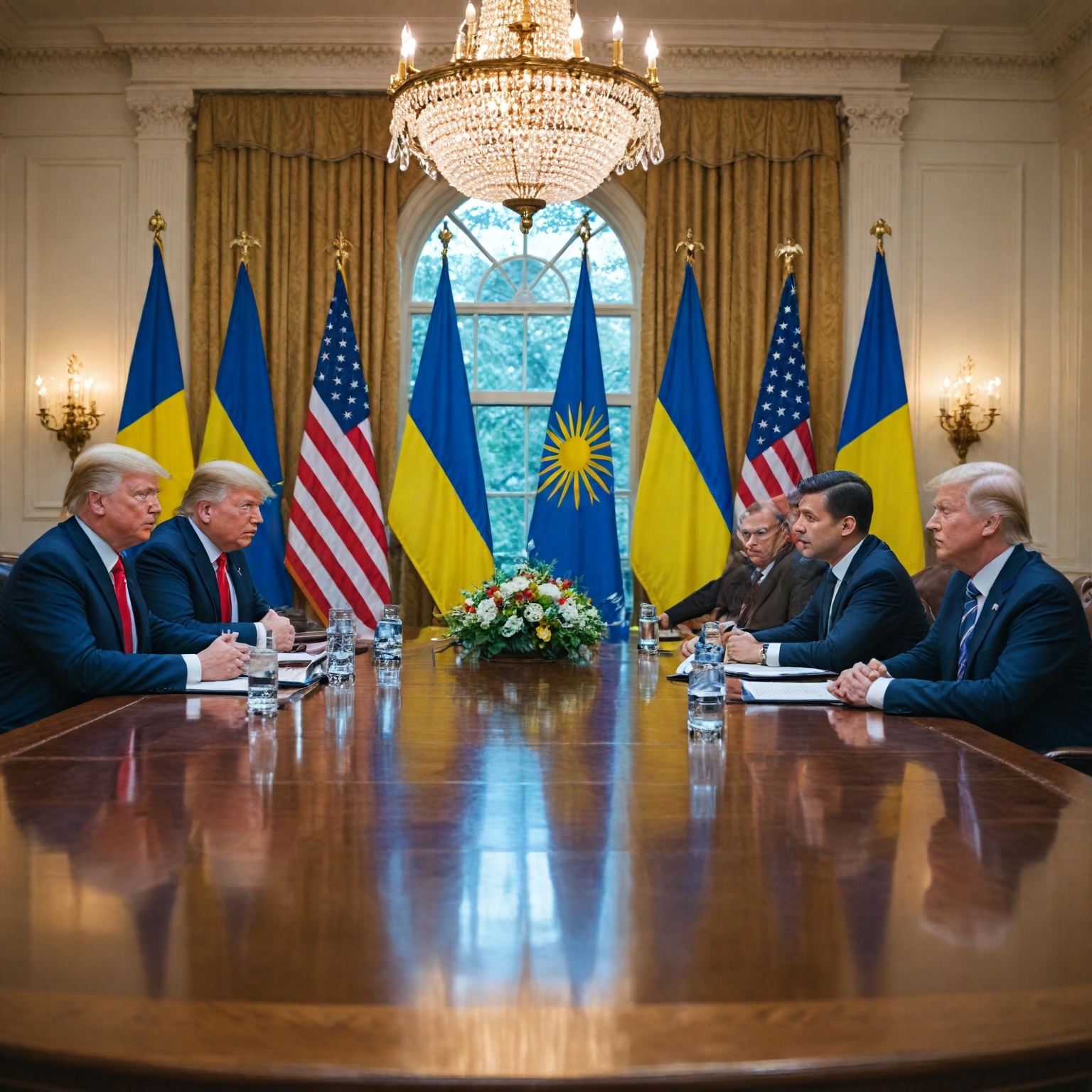
Amid escalating hostilities, Ukrainian President Volodymyr Zelenskyy is scheduled to meet with former U.S. President Donald Trump on the sidelines of the 2025 Group of Seven (G7) summit in Canada. This meeting represents a pivotal moment in transatlantic diplomacy, aiming to explore potential pathways toward de-escalation and renewed support for Ukraine’s defense efforts. Previous encounters between the two leaders have been contentious, reflecting divergent approaches to the conflict, with Zelenskyy emphasizing strong security guarantees and Trump advocating for an expedited ceasefire.
The scheduled Zelenskyy-Trump meeting occurs against the backdrop of stalled peace talks with Russia, whose leadership continues to reject ceasefire proposals and maintain maximalist territorial demands. International actors remain divided, with Western allies generally supporting Ukraine’s sovereignty and security needs, while Russia insists on stringent conditions for any cessation of hostilities. The interplay between military developments, diplomatic efforts, and domestic political considerations in both Ukraine and the United States complicates prospects for a comprehensive resolution.
This high-profile diplomatic engagement highlights the ongoing challenges in resolving the conflict and underscores the strategic importance of U.S.-Ukraine relations in shaping future peace efforts. Observers view the meeting as a test of international commitment to Ukraine’s sovereignty amid persistent violence and geopolitical tension, with significant implications for the trajectory of the war and global security architecture.
Background
Tensions in the conflict between Ukraine and Russia have escalated significantly, complicating efforts to achieve a ceasefire or meaningful peace negotiations. In recent weeks, intensified Russian military offensives, including a new assault west of Orikhiv in the Zaporizhzhia region, have underscored the ongoing violence on the ground. Ukraine responded boldly with a drone attack targeting Russian military airfields deep inside Russia, further straining the prospects for a diplomatic resolution.
The failure to broker a lasting ceasefire has been marked by repeated violations and deep mistrust. Russia’s Defence Ministry accused Ukrainian forces of breaking the ceasefire over a thousand times, citing numerous drone attacks even in Russian border regions such as Crimea, Bryansk, Kursk, and Belgorod. Conversely, peace talks have stalled, with both sides holding incompatible demands. Russia insisted on Ukraine recognizing Russian-occupied Crimea, granting independence to separatist-controlled regions in Luhansk and Donetsk, and undertaking “de-militarisation” and “de-Nazification” measures. Ukraine, meanwhile, called for an immediate ceasefire and the withdrawal of Russian troops, but no immediate agreements were reached during initial rounds of talks.
International involvement has included calls for European solidarity and support for Ukraine. British Prime Minister Keir Starmer hosted the Securing Our Future summit to reassert the UK’s role in European strategic discussions and to coordinate diplomatic and military backing for Kyiv. This gathering, which Starmer termed a “coalition of the willing,” involved sixteen heads of government alongside EU and NATO leaders. Meanwhile, discussions of trilateral talks involving US President Donald Trump, Russian President Vladimir Putin, and Ukrainian President Volodymyr Zelenskyy have surfaced but have yet to materialize. Kremlin spokespersons indicated planned meetings between Putin and Trump without confirming a three-way summit.
Amid this complex and fraught landscape, the scheduled meeting between Zelenskyy and Trump represents a critical next step in transatlantic efforts to support Ukraine and seek potential pathways toward de-escalation, despite the setbacks in direct peace negotiations with Russia.
Failed Ceasefire Negotiations
Attempts to negotiate a ceasefire between Ukraine and Russia have repeatedly failed due to a complex interplay of geopolitical factors and conflicting demands from both sides. Early in the conflict, Ukraine showed willingness to consider a neutral status in exchange for security guarantees from its European allies. However, as Russian attacks on civilian targets intensified, Ukrainian officials rejected neutrality as a viable option, emphasizing that mass war crimes rendered such a position untenable. Ukrainian President Volodymyr Zelenskyy explicitly stated his refusal to accept ceasefires that would effectively freeze the conflict while Russia maintained control over significant portions of Ukrainian territory.
Efforts at direct talks between the two parties have been sporadic and often unproductive. A notable early engagement occurred in March 2022 in Antalya, Turkey, where Russian Foreign Minister Sergey Lavrov and Ukrainian Foreign Minister Dmytro Kuleba met with Turkish mediation to discuss a 24-hour ceasefire intended to aid civilians in Mariupol. Despite these high-level contacts, the negotiations failed to produce a lasting truce. Russian officials have frequently shifted their positions, with Lavrov declaring certain provisional agreements unfeasible and expanding territorial demands beyond the Donbas region. Russia has also denied formal obligations under the Minsk agreements, despite being a signatory, and analysts estimate that Moscow has violated approximately 190 agreements related to the conflict.
The international diplomatic landscape further complicated ceasefire prospects. The Chinese peace proposal, including readouts from a Xi-Zelenskyy call, was criticized by European officials for its perceived attempt to “freeze” the conflict and sow divisions within the Western alliance. Meanwhile, Russia’s maximalist demands, including calls for the complete surrender of Ukraine and the overthrow of its government, have been reiterated by President Vladimir Putin as late as early 2024, underscoring Moscow’s inflexible stance.
Efforts involving the United States also failed to yield a ceasefire. Meetings between President Donald Trump and President Zelenskyy in 2024 and 2025, while described as “long and meaningful,” did not culminate in any tangible ceasefire agreement. A potential deal aimed at ending the war remained uncertain after contentious discussions in the Oval Office, with the negotiations veering towards agreements on raw mineral resource partnerships rather than immediate cessation of hostilities. U.S. Senator Lindsey Graham advised Zelenskyy to prioritize mineral agreements over security guarantees and ceasefire discussions at that stage.
Furthermore, ceasefire proposals brokered by the United States met with Russian reluctance. Moscow rejected a U.S. proposal for a comprehensive, monthlong halt in fighting but showed tentative agreement to a limited ceasefire focused on Black Sea shipping routes. The Kremlin’s early conditions for a ceasefire, revealed in leaked documents, indicated severe demands that underscored the deep inequalities and mistrust at the negotiating table.
Scheduled Meeting Between Zelenskyy and Trump
Ukrainian President Volodymyr Zelenskyy is preparing to meet with U.S. President Donald Trump on the sidelines of the Group of Seven (G7) summit scheduled for June 15-17 in Kananaskis, Alberta. This meeting is being actively arranged as part of ongoing diplomatic efforts, with Zelenskyy’s Chief of Staff, Andriy Yermak, confirming that a delegation from Kyiv recently visited Washington to prepare for the potential encounter. The visit aimed to lay the groundwork for discussions intended to address the escalating conflict in Ukraine and explore possible pathways toward peace.
The planned summit meeting follows a series of high-profile interactions between the two leaders, including a tense February 28 meeting in the White House that many observers saw as a critical moment in transatlantic relations amid the war. Despite previous exchanges marked by public disagreements and sharp rhetoric, the forthcoming G7 encounter is expected to focus on key issues such as security guarantees for Ukraine, ceasefire prospects, and ongoing support from the United States and its allies. Notably, Trump has indicated willingness to provide security assurances, a vital component of Ukraine’s demands alongside ceasefire arrangements.
The context for this meeting is set against continuing military offensives by Russia and Ukraine’s rejection of proposals for immediate ceasefires without comprehensive negotiations that include territorial and security considerations. Zelenskyy has emphasized the importance of coordinated diplomatic efforts, including ongoing dialogues between Ukrainian and American officials to resolve technical aspects of ceasefire implementation and security cooperation. The meeting with Trump represents a strategic opportunity to align U.S. and Ukrainian objectives ahead of broader international discussions on the future of Ukraine’s sovereignty and security.
However, tensions remain high as Russia’s President Vladimir Putin has rejected peace proposals and insists that a ceasefire is “virtually impossible to implement” while Ukrainian forces are advancing on multiple fronts. This unresolved conflict dynamic adds urgency to the scheduled meeting, with both Ukrainian and U.S. leaders facing the challenge of balancing diplomatic negotiations and military realities. The outcomes of the Zelenskyy-Trump meeting at the G7 summit are thus anticipated to have significant implications for the trajectory of the war and the international community’s approach to securing peace in the region.
Political and Diplomatic Context
The political and diplomatic environment surrounding the planned meeting between Ukrainian President Volodymyr Zelenskyy and then-U.S. President Donald Trump was marked by intense complexity and divergent priorities among key stakeholders. Central to the dynamics was Ukraine’s insistence on strong security guarantees before committing to any ceasefire with Russia, reflecting deep mistrust towards Russian President Vladimir Putin, who had previously broken agreements. Zelenskyy’s position was that peace without guarantees was untenable, emphasizing that any cessation of hostilities must be accompanied by assurances against future Russian aggression.
Conversely, the Trump administration prioritized an immediate ceasefire as a means to halt hostilities and initiate broader peace negotiations. Trump’s approach included calls for Ukraine to agree to a ceasefire quickly, a stance that drew criticism both domestically and internationally. Trump had at times implied that Ukraine bore responsibility for the invasion and had made disparaging remarks about Zelenskyy, including labeling him a “dictator,” which he later retracted. These tensions culminated in a highly contentious and widely publicized meeting in the Oval Office on February 28, 2025, which was characterized by a confrontational tone and was described as a “shouting match.” The meeting highlighted Trump’s willingness to deprioritize Ukraine in favor of reestablishing relations with Russia, a stance that drew rebuke from U.S. allies and widespread support for Zelenskyy globally.
International diplomatic efforts were ongoing simultaneously, including negotiations held in Saudi Arabia’s Jeddah involving representatives from Washington and Kyiv aimed at defining terms for peace. These discussions focused on humanitarian concerns such as prisoner exchanges, the release of detainees, and the return of forcibly transferred Ukrainian children during a ceasefire period. However, the peace documents notably lacked provisions regarding sanctions on Russia or security guarantees for Ukraine, instead mentioning the involvement of European allies in the peace process.
Ukrainian leadership viewed the reluctance of Western partners to provide firm security guarantees as a critical impediment to peace. Analysts identified this hesitancy, combined with Ukrainian public outrage over atrocities like those in Bucha and Zelenskyy’s growing confidence in a military solution after Russia’s failed attempt to capture Kyiv, as key factors shaping Ukraine’s stance. Furthermore, some experts argued that focusing on resolving long-term geopolitical security issues without first addressing immediate peace-building measures—such as ceasefires, humanitarian corridors, and troop withdrawals—was overly ambitious and counterproductive.
On the U.S. side, the administration’s internal divisions were evident. Vice President JD Vance, known for his skepticism towards U.S. aid to Ukraine, had been critical of the partnership, reflecting fractures within American political circles over the approach to the conflict. Despite this, Zelenskyy expressed hope for continued strong relations with the United States and worked to coordinate joint views with security officials from Ukraine, Europe, and the U.S., underscoring the complex interplay of diplomacy and military strategy shaping the evolving situation.
Public and Expert Reactions
Reactions to the ongoing conflict and the diplomatic efforts surrounding it have been deeply divided both domestically within Ukraine and internationally. Ukrainian public sentiment was notably inflamed by the Bucha atrocities, which contributed to widespread anger and hardened resolve against Russian advances, complicating prospects for immediate peace negotiations. Ukrainian officials and military representatives have expressed strong criticism of Russian ceasefire proposals, often viewing them with skepticism and responding harshly to perceived insincerity or threats of military retaliation by Russia.
Internationally, nearly all U.S. allies and other global figures voiced support for Ukrainian President Volodymyr Zelenskyy, particularly in contrast to former President Donald Trump’s more confrontational rhetoric during their high-profile meeting. This divide was reflected sharply within the United States, where political lines largely determined the nature of responses to the conflict and peace efforts. Zelenskyy himself emphasized a ceasefire followed by comprehensive negotiations, rejecting concessions on Ukrainian borders guaranteed by international law and the constitution, which remains a key Ukrainian position in peace talks.
Experts have highlighted several factors contributing to the complexity of reaching a ceasefire. These include the reluctance of Ukraine’s Western partners to provide explicit security guarantees, Zelenskyy’s increased confidence in military options following Russia’s failure to capture Kyiv, and a broader tendency to aim too ambitiously at resolving deep geopolitical issues while neglecting more immediate humanitarian concerns such as ceasefires and corridors for aid. Additionally, early peace talks revealed the severity of Kremlin demands, which imposed stringent conditions for halting the invasion, further complicating diplomatic progress.
The Vatican has been proposed as a neutral and appropriate venue for peace talks, with the Holy See’s secretary of state expressing openness to hosting negotiations. Meanwhile, NATO has publicly supported Ukraine’s sovereignty and the pursuit of a peaceful resolution, as evidenced by joint statements from its Secretary General and President Zelenskyy.
Russian official rhetoric has largely called on Kyiv to join ceasefire efforts, while simultaneously warning of “adequate and effective” military responses to any violations, a stance that has been met with distrust and criticism from Ukrainian military sources and commentators. Russian media and officials have praised certain diplomatic developments but also expressed dismay at Zelenskyy’s positions, reflecting the broader tension in international responses to the conflict and peace process.
Aftermath and Continuing Developments
Following the tumultuous meeting between Ukrainian President Volodymyr Zelenskyy and former US President Donald Trump on February 28, significant diplomatic and military developments have continued to shape the trajectory of the conflict and peace efforts. The meeting, marked by interruptions and disagreements, was originally intended to culminate in an agreement granting the US access to Ukraine’s rare earth mineral deposits, highlighting the complex interplay between security and economic interests.
Despite Zelenskyy’s preparations for further high-level talks with Trump and his expressed openness to dialogue, the broader peace process has faced substantial obstacles. Early negotiations between Russian and Ukrainian delegations revealed the Kremlin’s stringent demands, including the complete handover of annexed territories and Ukraine’s neutrality, among other conditions. Ukraine’s proposal for a neutral status coupled with security guarantees akin to NATO’s Article 5 was met with skepticism and a lack of reciprocal willingness, particularly in light of ongoing Russian attacks and the Ukrainian leadership’s firm rejection of ceasefires that would freeze the conflict under current occupation conditions.
International efforts to mediate peace, such as the six-point plan jointly presented by China and Brazil calling for an inclusive international conference, have been criticized by European officials for potentially entrenching the status quo rather than resolving the conflict. Meanwhile, direct talks between Ukrainian and Russian negotiators in Istanbul, though notable for enabling the largest prisoner swap of the conflict, failed to produce a ceasefire or a meeting between the two presidents, underscoring the profound divisions still present.
On the military front, the intensity of Russia’s offensive operations has escalated, with Russia’s Defense Ministry reporting frequent ceasefire violations by Ukrainian forces, including numerous drone attacks targeting
The content is provided by Avery Redwood, 11 Minute Read


