
Summary
The escalating conflict between Iran and Israel in 2024 has intensified longstanding regional tensions, drawing global attention to the potential for a broader Middle Eastern war. Rooted in decades of proxy confrontations and deep-seated hostilities, the conflict has recently seen direct exchanges of missile strikes, targeted assassinations, and attacks on nuclear and military infrastructure, raising fears of widespread devastation. Israel’s military actions aim to curtail Iran’s nuclear program, which it perceives as an existential threat, while Iran has responded with retaliatory measures and stern warnings against foreign interference.
Iran has explicitly cautioned the United States and its allies against intervening militarily in the conflict, characterizing such involvement as a reckless provocation that could lead to all-out regional war. Supreme Leader Ayatollah Ali Khamenei has emphasized that U.S. military action would be met with severe retaliation, threatening significant damage to U.S. assets and infrastructure in the Middle East. Iranian officials hold the U.S. responsible for Israeli strikes on Iranian nuclear and military sites and have vowed unprecedented responses if attacks continue or escalate.
The United States has increased its military presence in the region to protect its personnel and support Israel, while simultaneously urging restraint and diplomacy to avoid further escalation. International actors, including the United Nations and regional powers, have expressed concern over the conflict’s potential to destabilize the Middle East, disrupt global trade routes, and exacerbate humanitarian crises, particularly in Gaza. The situation remains highly volatile, with experts warning that direct U.S. intervention could trigger wider conflict involving Iran’s regional proxies and intelligence networks.
This confrontation represents a critical flashpoint with far-reaching implications for regional security, global geopolitics, and civilian populations. The cycle of attacks and warnings underscores the urgent need for diplomatic engagement to prevent the conflict from escalating into a large-scale war with devastating humanitarian and environmental consequences.
Background
The conflict between Iran and Israel has deep historical roots, dating back to 1985 when the two countries became engaged in a prolonged proxy war that has significantly influenced Middle Eastern geopolitics. This hostility intensified following the collapse of the Soviet Union and the Gulf War, transitioning from a cold peace to overt antagonism in the early 1990s. The escalation reached a critical point in 2024 amidst rising regional tensions triggered by the Gaza war, leading to direct exchanges of missile strikes between Iran and Israel, alongside targeted assassinations carried out by Israel within Iran and Syria.
Israel perceives Iran’s nuclear program as an existential threat, prompting aggressive military actions aimed at halting its progress. Israeli officials have urged the United States to intervene militarily to dismantle Iran’s nuclear capabilities, resulting in some of the fiercest confrontations in the history of their conflict. Despite these efforts, Israel has yet to fully achieve its objectives in neutralizing Iran’s nuclear development. Diplomatic attempts have also been made, with Israel requesting Iran—via Western intermediaries—to cease attacks and reengage in nuclear negotiations. However, tensions remain high, as exemplified by Iran’s cancellation of a funeral procession for Islamic Revolutionary Guard Corps officers killed in recent Israeli strikes.
The ongoing hostilities have led to widespread destruction and loss of life. Iran reports that Israeli strikes have killed more than 200 civilians, including at least 20 children, while Israel maintains that its military operations precisely target Iranian military and nuclear infrastructure. In response to the conflict, Iran’s Foreign Minister Abbas Araghchi condemned Israel’s targeted killings as “clear instances of state terrorism” in correspondence to the United Nations. Meanwhile, Israel prepares for possible retaliatory attacks from Iran or its proxy groups along its borders.
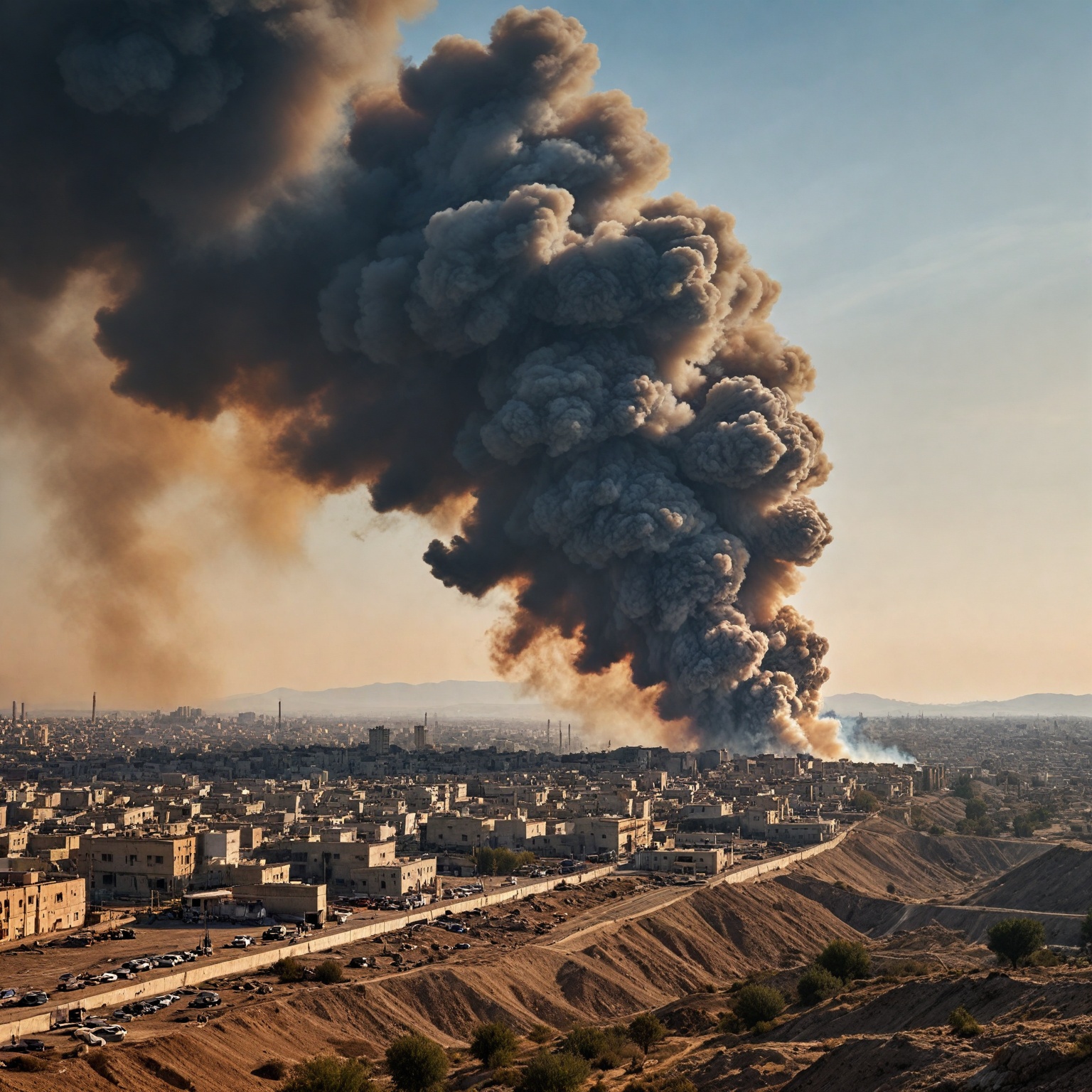
The conflict’s escalation has also drawn in global powers. The United States has deployed additional forces to the Middle East amid fears of Iranian retaliation, including potential threats against American personnel. Analysts warn that direct U.S. involvement could provoke Tehran to mobilize its “Axis of Resistance” militias and intelligence operatives worldwide, further complicating the security landscape. The crisis continues to raise urgent questions about regional stability, the role of international actors, and the broader implications for global security and economics. Smoke from Israeli attacks on Iranian targets, such as the Sharan Oil depot in Tehran, visually underscores the intensity of this ongoing conflict.
Iran’s Warning on US Intervention
Iran has issued stern warnings to the United States and its allies, cautioning them against intervening militarily in the ongoing conflict involving Israel. Iranian officials have explicitly addressed the U.S., France, and the U.K., all of which maintain strategic military assets in the Middle East, urging them not to assist Israel in repelling retaliatory attacks. Esmail Baghaei, spokesman for Iran’s foreign ministry, characterized any U.S. intervention as “a recipe for an all-out war in the region,” deeming such a move “extremely reckless” and “extremely irresponsible” while also indicating that Iran remains open to a negotiated resolution.
The supreme leader, Ayatollah Ali Khamenei, has reinforced these warnings in televised statements, emphasizing that any form of U.S. military involvement “will undoubtedly be met with irreparable harm” and strongly condemning threats by Israel and the United States. Khamenei described Israel’s recent actions as a “huge mistake” that will not be forgotten by the Iranian people, praising their resilience and vowing that those responsible would be punished. While Khamenei has avoided direct mention of the U.S. in some remarks—apparently in hopes of misleading Washington through diplomacy—experts suggest that if the conflict escalates, Iran is prepared to launch multi-pronged retaliatory strikes including missile and drone attacks targeting U.S. assets.
Iranian officials have expressed concern that a war involving the U.S. would severely destabilize the region, exacerbate Iran’s economic difficulties, and potentially trigger domestic unrest. Tehran has further warned that the U.S., as a “backer” of Israel, will be held fully accountable for Israeli strikes on Iranian nuclear and military facilities, which have resulted in the deaths of senior Iranian commanders and scientists. Iran’s Foreign Minister Abbas Araghchi has condemned Israel’s attacks as violations of international law and accused the U.S. of supporting these actions, stating that Israel seeks to sabotage ongoing nuclear negotiations between Iran and the U.S..
Amid these tensions, Iran has vowed an “unprecedented response” should Israel carry out further attacks on its nuclear sites, warning that such an event would engulf the entire region in war and put U.S. forces in the Middle East directly in the line of fire. In response to escalating threats, the U.S. has begun evacuating embassy personnel from Baghdad and other regional countries, with officials acknowledging the increasing danger. Meanwhile, Iran’s strategic calculations include conserving missile arsenals to prepare for the possibility of expanded conflict if the U.S. intervenes directly.
Potential Devastation Outlined by Iran
Iran has issued stark warnings regarding the potential consequences should the United States directly intervene in the ongoing conflict between Iran and Israel. Tehran views any U.S. military involvement not merely as a threat to the Iranian regime but as a direct assault on the Iranian state itself, with the risk of massive damage to critical national infrastructure. This strategic calculation has led Iran to adopt a posture of restraint in its missile strikes, conserving parts of its arsenal for a potential broader conflict involving the U.S.
The Iranian leadership has prepared detailed retaliation plans that could match or exceed the scale of their previous missile barrages, such as the October 2024 assault involving nearly 200 ballistic missiles launched at Israel. This readiness is coupled with heightened alertness among Iran-aligned proxy forces across the region, including Houthi groups in Yemen, who have expressed concerns that any escalation could plunge the entire Middle East into extensive warfare.
Iran’s multi-front conflict with Israel and its allies involves a combination of air and intelligence operations targeting Iranian nuclear and military sites, aiming to diminish Tehran’s retaliatory capabilities. Israeli strikes have targeted ballistic missile and drone installations as well as high-ranking military commanders within Iran’s armed forces, including leaders of the Islamic Revolutionary Guard Corps (IRGC). Despite these actions, Iran continues to maintain a strategic reserve of its missile arsenal, indicating a willingness to escalate if U.S. forces become actively engaged.
The U.S. has responded to the escalating tensions by expanding its military presence in the Middle East, deploying additional forces and forward-positioning military aircraft both in the region and in Europe. This buildup is intended to safeguard U.S. assets and personnel, given concerns about potential Iranian attacks on American bases and commercial shipping in the Gulf. Experts warn that U.S. involvement could provoke a wider conflict, possibly involving Iranian “Axis of Resistance” militias and intelligence sleeper cells operating globally, and could result in hostage situations targeting American citizens.
Furthermore, the conflict raises grave concerns about civilian safety and regional stability. The risk of environmental damage, including oil spills and contamination of water supplies, threatens public health and food security for millions across the Gulf and Iran. Analysts emphasize the need for diplomatic efforts to prevent a full-scale regional war that could cause widespread devastation beyond the immediate military engagements.
US Role and Response
The United States has taken a cautious yet active role in the escalating conflict between Israel and Iran. In response to rising tensions and Iranian missile attacks on Israel, the U.S. has repositioned warships and deployed additional military aircraft to the Middle East to protect American personnel and interests, as well as to support Israel’s defensive operations, including assisting in shooting down Iranian missiles. The Pentagon has expanded its military presence in the region to increase strategic options should U.S. forces come under direct threat. Currently, the U.S. maintains numerous military sites across at least 19 locations in the Middle East, including eight permanent bases in countries such as Bahrain, Iraq, and the United Arab Emirates, with personnel numbering between 40,000 and 50,000.
Despite these deployments, Tehran has so far refrained from launching major attacks against U.S. forces, limiting actions primarily to drone strikes on some bases in Iraq, which Iranian officials characterize as warnings rather than full engagements. However, Iranian leadership has issued stern warnings that any direct U.S. military intervention would provoke severe retaliation, emphasizing that such involvement would threaten not only the regime but the Iranian state itself due to potential damage to critical infrastructure. Iran has also publicly held the U.S. responsible as a “backer” of Israel for Israeli strikes on its nuclear and military facilities, threatening accountability and escalating concerns about broader conflict dynamics.
Diplomatic efforts remain fragile. Iran has accused Israel of sabotaging nuclear negotiations with the United States and called on the U.S. government to distance itself from Israel’s military actions, framing these strikes as violations of international law. Meanwhile, U.S. officials and experts recognize the delicate balance between containing the conflict and preventing further escalation, with the U.S. urged to use its leverage to prioritize diplomacy over military confrontation to protect civilian lives and regional stability.
The U.S. response also includes strategic communications, such as warnings from government and military leaders about the potential consequences of escalation, as well as support for Israel’s calls to the international community to recognize and address the threat posed by Iran’s nuclear ambitions and military actions. Nevertheless, some analysts caution that unilateral Israeli strikes and limited U.S. involvement may not be sufficient to deter Iran’s nuclear program or prevent retaliatory attacks, underscoring the risk of a wider regional conflict.
Historical Precedents of Iran’s Warnings and Retaliations
Iran’s issuance of warnings against U.S. and allied involvement in its conflict with Israel is rooted in a history of regional tensions and retaliatory actions that have shaped the current geopolitical landscape. The longstanding hostility between Iran and Israel, fueled by ideological opposition and proxy conflicts, has often led to direct and indirect confrontations that set precedents for the current warnings and potential escalations.
Since the early 2000s, Iran and Israel have engaged in a shadow conflict involving support for opposing factions in regional civil wars, such as those in Syria and Yemen, alongside cyberattacks and sabotage targeting each other’s critical infrastructure, including nuclear facilities and oil tankers. This covert struggle has exacerbated mutual distrust and led to a cycle of attacks and retaliations. Israel views Iran as an existential threat due to Tehran’s rhetoric, its backing of proxy groups like Hamas, and its broader strategy of destabilizing Israeli security through regional proxies.
Iran has frequently responded to Israeli strikes or assassinations of its officials and scientists with warnings of retaliation. For instance, following Israel’s targeted killings—deemed by Iran as “clear instances of state terrorism”—Iranian leadership vowed revenge, heightening regional tensions and prompting widespread anticipation of further violence. The escalation of attacks on Iran’s nuclear sites, notably at Natanz and Isfahan, has been particularly provocative, prompting Iran to officially notify the U.S., France, and the U.K. of its intentions to launch large-scale retaliatory attacks on Israel. Tehran’s warnings explicitly include threats against any state assisting Israel in repelling these attacks, highlighting a willingness to target regional bases of collaborating countries.
These warnings echo prior Iranian statements and actions following perceived aggressions. In past episodes, Iran has demonstrated its capacity and willingness to mobilize its “Axis of Resistance”—a network of allied militias and intelligence assets across the Middle East—in retaliation against U.S. and Israeli interests. The possibility of hostage-taking and asymmetric attacks against U.S. forces has also been noted as a potential Iranian response should direct American involvement occur.
International organizations have underscored the risks involved in targeting nuclear facilities. The International Atomic Energy Agency (IAEA) has condemned attacks on nuclear sites as violations of international law, emphasizing that such strikes escalate conflict risks and set dangerous precedents regardless of the nature of the nuclear programs involved. This international context further complicates the conflict dynamic, as attacks on Iran’s nuclear infrastructure have consistently triggered severe Iranian warnings and preparations for counterattacks.
The cycle of action and reaction is underscored by the deployment of U.S. military assets to the Middle East and Europe, reflecting the gravity with which Western powers view the threat of broader conflict stemming from the Iran-Israel standoff. These deployments coincide with increased Iranian missile attacks on Israeli targets and Iran’s declaration that it would respond robustly to any intervention by U.S. or allied forces.
Moreover, heightened tensions have prompted advisory warnings to maritime traffic in the Persian Gulf region, as commercial and military interests brace for potential escalations that could impact regional stability and global trade routes. Both Iranian and Israeli efforts have included precautions such as prior warnings to civilians near targeted sites, indicating an awareness of the conflict’s potential for broader humanitarian consequences.
Reactions within Iran
Iranian officials have expressed profound concern over the possibility of a war involving Israel and the United States, warning that such a conflict could destabilize the country, worsen its already fragile economy, and potentially spark a new domestic uprising. Supreme Leader Ayatollah Ali Khamenei has underscored the severity of any U.S. military intervention, stating that it would be met with “irreparable harm,” reflecting the regime’s determination to resist external aggression.
The Iranian leadership has vowed revenge following Israeli strikes, with government and military officials reportedly convening to strategize their response to potential further attacks. This resolve is heightened by the history of escalating tensions since the election of hardliner Mahmoud Ahmadinejad, during which proxy conflicts and covert operations between Iran and Israel intensified.
Despite these threats, some analysts highlight that Iran’s Supreme Leader would likely view any capitulation as an “unthinkable humiliation,” suggesting that the conflict could escalate and persist. Iranian national security infrastructure has reportedly been deeply penetrated by Israeli intelligence, raising fears that targeted strikes on Iran’s political leadership could provoke a devastating retaliatory response, possibly akin to an “Armageddon-like” scenario.
Within Iran, the warnings extend beyond immediate military consequences, as the risk of environmental damage, public health crises, and broader societal disruption loom large, threatening food security and access to
International Reactions
The escalating conflict between Israel and Iran has elicited a wide range of international responses, highlighting concerns over regional stability and global security. Several countries and organizations have expressed apprehension about the potential consequences of U.S. military involvement in the conflict.
The United States has taken precautionary measures by repositioning warships and military aircraft in the Middle East to respond to any escalation. U.S. officials have emphasized maintaining a defensive posture aimed at protecting personnel and interests in the region, including aiding Israel in intercepting Iranian missiles. Despite this, Iran has explicitly warned that any form of U.S. military intervention would be met with severe retaliation, labeling the U.S. as a “backer” of Israel and holding it fully accountable for Israeli strikes on Iranian targets.
The United Kingdom, through its maritime trade agency, issued a public advisory warning commercial vessels transiting key waterways such as the Persian Gulf, Gulf of Oman, and Strait of Hormuz to exercise heightened caution due to increased tensions and the risk of military escalation affecting mariners. This advisory reflects broader concerns about the conflict’s potential impact on international shipping and trade.
Russia’s stance has been cautious and pragmatic. Initially, Moscow offered to mediate between Iran and Israel, seeking to leverage the conflict to influence broader geopolitical dynamics, including the resumption of nuclear talks between Iran and the U.S. However, Iranian rejection of mediation offers and heightened tensions have pushed Russia into a crisis-management posture, wary of losing one of its key regional allies amid ongoing instability.
Arab states face a complex dilemma as the conflict intensifies. Analysts have debated whether these countries will actively assist in defending against Iranian retaliation or choose to avoid involvement, reflecting the fragile and shifting alliances in the Middle East.
The United Nations has also been engaged, with Israel’s foreign minister sending letters to the UN Security Council and Secretary-General António Guterres regarding the conflict. Meanwhile, the U.N. Mission to Iran condemned the Israeli strikes targeting Iranian military and nuclear officials, warning that such actions pose a serious threat to international security.
Analysis and Commentary
The escalating conflict between Israel and Iran has prompted widespread analysis regarding the potential consequences of U.S. involvement. Experts warn that direct U.S. military intervention would likely provoke severe retaliation from Iran, resulting in extensive damage to critical infrastructure and heightened regional instability. Iranian leaders have explicitly stated that any U.S. military action in support of Israel would be met with “irreparable harm,” signaling a strong resolve to escalate retaliatory measures against U.S. interests and allies in the Middle East.
The strategic implications of the conflict are significant. Iran’s response is expected to mirror or surpass its October 2024 missile barrage on Israel, indicating the potential for a large-scale missile exchange that could exacerbate regional tensions. Moreover, Iran-aligned groups such as the Houthis in Yemen have entered a state of high alert, increasing the risk of the conflict spreading beyond Israel and Iran’s immediate borders. This broader regional escalation threatens to engulf neighboring states and destabilize global maritime trade routes, as reflected in British maritime advisories cautioning vessels transiting the Persian Gulf, Gulf of Oman, and Strait of Hormuz.
Commentators have underscored the dire humanitarian and environmental consequences of an expanded conflict. Military strikes risk causing oil spills, water contamination, and widespread infrastructure damage that would severely impact civilian populations in both Iran and the Gulf region. Food security, access to medical care, and basic human dignity are all at stake, emphasizing the urgency for diplomatic solutions aimed at de-escalation.
Political analysts have highlighted the delicate balancing act faced by the U.S. and its allies. While the U.S. has a strategic interest in supporting Israel, its involvement carries the risk of becoming one of the most significant national security catastrophes in recent decades if it leads to full-scale war. Regional powers and global actors are closely watching whether Arab states might either defend against or tacitly permit Iranian retaliation, adding complexity to an already fragile geopolitical landscape.
The potential for the conflict to exacerbate the ongoing humanitarian crisis in Gaza further complicates the situation. There is concern that Israeli bombardments might intensify as a consequence of Iranian retaliation, prolonging the war in Gaza and escalating civilian suffering. The interconnectedness of these regional conflicts underscores the importance of urgent international diplomatic engagement to prevent wider devastation.
The content is provided by Harper Eastwood, 11 Minute Read


