
Summary
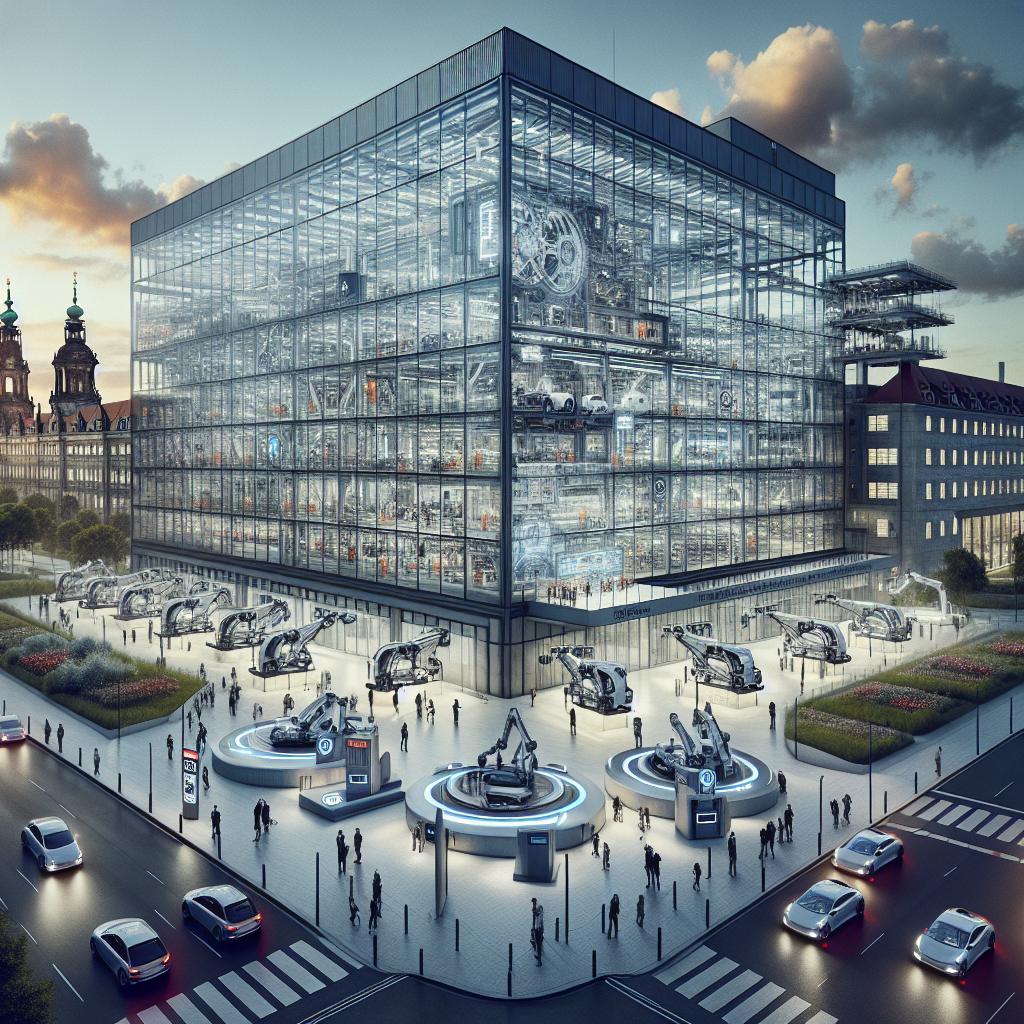
The Volkswagen Transparent Factory in Dresden, established in 2002, has been a distinctive site combining vehicle production with public engagement and technological showcase. Located near Dresden’s city center, the plant gained recognition for its innovative approach, producing models such as the luxury Phaeton sedan and later pioneering electric vehicle manufacturing with the e-Golf and ID.3. Over its two decades of operation, the facility not only served as a production site but also as a center for innovation, offering visitor tours, co-construction opportunities, and interactive experiences that highlighted Volkswagen’s commitment to advanced mobility technologies.
Despite its symbolic importance and forward-looking mission, the Dresden plant struggled with commercial viability due to limited production scale, intense global competition, high operating costs, and market challenges including tariffs and shifting demand in key regions such as China. These factors, combined with Volkswagen’s broader ‘Future Volkswagen’ strategy to reduce German production capacity and streamline operations, led to the decision in 2023 to cease vehicle manufacturing at Dresden by the end of 2025. CEO Thomas Schäfer characterized the closure as an economically necessary step amid complex industry and economic conditions.
Following the end of production, Volkswagen plans to transform the Transparent Factory into a research and innovation hub focused on emerging technologies like artificial intelligence, robotics, and chip design. This transition will be carried out in partnership with the Saxony state government and the Dresden University of Technology, aiming to preserve the site’s legacy of innovation while aligning with future mobility and technological advancements.
The closure has significant implications for the local workforce and regional economy, prompting Volkswagen to offer job guarantees, severance, and transfer options to affected employees. While the decision has elicited mixed reactions, it underscores the challenges facing traditional automotive manufacturing in Germany and Volkswagen’s strategic pivot towards electrification and digitalization. The Dresden plant’s evolution from a flagship production facility to a cutting-edge research campus reflects broader trends in the global automotive industry’s transformation.
Background
The Volkswagen Transparent Factory in Dresden was established in 2002 with the vision of serving not only as a vehicle production site but also as a flagship exhibition facility showcasing the company’s technological capabilities. Unlike many older automotive plants, which were initially located far from city centers and later surrounded by urban expansion, the Dresden plant was deliberately situated close to the city center on prime real estate adjacent to the Dresden Great Garden, highlighting its strategic and symbolic importance.
The factory initially produced the Volkswagen Phaeton and later the ID.3 electric vehicle. The Transparent Factory was the first Volkswagen brand site to be fully converted to electric mobility, manufacturing the e-Golf from 2017 until 2020. Throughout its operation, the plant offered a unique visitor experience, including production tours, customer test drives, and co-construction of vehicles, positioning itself as a center for innovation and customer engagement.
Despite its symbolic role and innovative approach, neither the Phaeton nor the ID.3 models achieved significant commercial success, which, combined with broader economic challenges such as fierce global competition, tariffs, high energy costs, and complex bureaucratic and labor environments in Germany, led Volkswagen to reconsider the plant’s future. In 2023, Volkswagen announced the decision to end vehicle production at the Dresden plant by the end of 2025, a move described by CEO Thomas Schäfer as economically necessary after more than two decades of operation.
Following the cessation of vehicle manufacturing, Volkswagen plans to repurpose the Transparent Factory as a research hub focusing on emerging technologies such as artificial intelligence, robotics, and chip design. This transition will be carried out in partnership with the government of Saxony and the Dresden University of Technology, aiming to leverage the plant’s innovative legacy while adapting to the evolving demands of the automotive industry and mobility future.
Reasons for Closure
Volkswagen’s decision to close the historic Dresden plant stems from a combination of economic, strategic, and market-driven factors. Foremost among these is the company’s broader initiative, the ‘Future Volkswagen’ programme, which aims to reduce German production capacity by approximately 730,000 vehicles annually and cut 35,000 jobs in Germany by 2030 to adapt to shifting market conditions and improve efficiency.
Economically, the Dresden plant’s production was deemed marginal and no longer viable for large-scale manufacturing. Attempts to scale up production were considered not worthwhile, leading to the conclusion that continuing vehicle production there was unsustainable from a financial perspective. Volkswagen’s CEO Thomas Schäfer emphasized that while the decision was difficult, it was necessary due to economic realities.
Market challenges have played a critical role in the closure. Volkswagen has faced mounting pressures from tariffs, particularly those imposed by the United States, which the company attributed to a $1.5 billion loss in one quarter and expected to cost over $5 billion in the year. Additionally, the slowdown in China’s economy, a vital market for Volkswagen, has dampened sales of higher-end vehicles, intensifying competition from domestic Chinese electric vehicle manufacturers.
The transition to electric vehicles (EVs) and the associated reorganization of production capacities have also influenced the closure. While the Dresden plant was the first Volkswagen brand site to fully convert to electric mobility, producing models such as the e-Golf and later the ID.3, it was unable to compete with larger, more volume-oriented plants like the Zwickau facility. Volkswagen is focusing on ramping up production of the ID family and MEB platform in these high-volume locations domestically and internationally, such as in China.
Furthermore, structural issues within Germany, including high energy costs, strong labor rights, complex bureaucracy, and internal administration, have added to the challenges faced by the Dresden plant. These factors, combined with Volkswagen’s strategic pivot to research and innovation, led to the decision to repurpose the facility into a research hub for artificial intelligence, robotics, and chip design in cooperation with Dresden University of Technology.
Operational History and Production Details
Volkswagen opened the Transparent Factory in Dresden in 2001, initially producing the luxury Phaeton sedan. The plant was designed not only as a production facility but also as a showcase of Volkswagen’s technological capabilities, situated in the historic baroque city center of Dresden, known for its arts and craftsmanship. The factory handled final assembly of vehicles, while operations such as stamping, welding, and painting were carried out at the Zwickau plant. Painted bodies were transported by truck to Dresden, and over 1,200 parts along with 34 preassembled components were delivered via CarGoTrams running on Dresden’s public transport tracks.
Until 2006, the facility also assembled Bentley Continental Flying Spur vehicles for the European market, with final assembly taking place in Dresden and other processes conducted at Bentley’s Crewe plant in England. Production of the Bentley Flying Spur resumed briefly in late 2013 but was eventually discontinued at this location. The factory’s vehicle production ceased in March 2016 but restarted in 2017 with the introduction of the e-Golf hatchback, making Dresden the first Volkswagen location to switch fully to electric vehicle production. Since 2021, the plant has been producing the Volkswagen ID.3 electric car, sharing production responsibilities with the Zwickau-Mosel Plant.
Over its operational history, the Dresden plant has produced more than 165,500 vehicles. The final ID.3 produced before the plant’s announced closure was a red ID.3 GTX, which has been signed by all employees and will remain at the facility as a commemorative exhibit. The factory has also served as a public attraction, offering multimedia experiences such as virtual test drives, interactive configurators, and tours demonstrating Volkswagen’s production and technological innovations.
In addition to manufacturing, the Transparent Factory has played a strategic role in Volkswagen’s transition toward electromobility and digitalization. Since 2017, it has collaborated with external startups focusing on digital and AI technologies for production and logistics. The facility also houses the “Future Mobility Campus,” opened in 2018, which provides education and training for employees, dealers, and school groups, contributing to Volkswagen’s broader innovation goals and customer engagement efforts.
Workforce and Employment Impact
Volkswagen’s decision to end ID.3 production at its historic Dresden plant marks a significant shift in the workforce structure and employment landscape. Currently, the facility employs around 205 workers who produce approximately 6,000 ID.3 units annually. However, with the transition away from vehicle manufacturing toward research and innovation, only about 135 employees are expected to have prospects for continued employment at the site, reflecting a considerable reduction in workforce needs due to the differing qualifications required for the new roles.
The company has guaranteed job security for Dresden employees until 2030, providing a measure of stability amidst the restructuring. Starting in early 2026, these employees will also benefit from inclusion in Volkswagen’s collective bargaining agreement, which promises higher wages and improved employment conditions. Despite these assurances, Volkswagen has reached an agreement with the works council to offer the remaining 230 workers severance or retirement packages, or options to transfer to other company locations, including Zwickau, Chemnitz, and Wolfsburg. Transfers to Wolfsburg come with relocation bonuses of €30,000 to support employees willing to move.
This workforce adjustment is part of Volkswagen’s broader ‘Future Volkswagen’ program, which aims to reduce German production capacity by approximately 730,000 vehicles annually by 2028 and to implement around 35,000 socially responsible job reductions by 2030. The transition at the Dresden plant also includes a strategic focus on transforming the site into a research and innovation hub, shifting from mass production to pioneering projects in small series that can later be scaled at larger Volkswagen facilities. This evolution reflects a broader commitment to shaping the future of mobility while managing the socioeconomic impact on the workforce through job guarantees, transfer opportunities, and retirement schemes.
Economic and Regional Impact
The closure and repurposing of Volkswagen’s Dresden plant carry significant economic and regional implications. The plant, which began operation in 2002 and was uniquely situated close to the city center on prime real estate, has long served as both a production site and a symbol of modern automotive manufacturing with its glass-walled “Transparent Factory”. Its transition from vehicle production to a research hub marks a shift in Volkswagen’s strategic focus toward emerging technologies such as artificial intelligence, robotics, and microchip design, in partnership with the state government of Saxony and the Dresden University of Technology.
Economically, the plant’s production halt reflects broader challenges faced by Volkswagen and the German automotive sector, including rising costs, tariffs, and a slow transition to electric vehicles. These difficulties contributed to Volkswagen’s announcement to cut 35,000 jobs in Germany by 2030 and reduce production capacity, signaling industry-wide contraction in traditional manufacturing regions. The Dresden facility employed approximately 380 people, and while the site’s vehicle handover operations were set to increase, the cessation of production inevitably affects local employment and supply chain activities.
Regionally, the shift impacts Dresden’s economy and urban landscape. The plant’s integration into the city contrasts with older factories that were originally remote from urban centers but later enveloped by city growth. The planned leasing of the facility to the Dresden University of Technology for research and development purposes aims to transform the site into a hub for innovation, which may mitigate job losses and foster new economic opportunities in high-tech industries. Additionally, the plant area, including Dresden’s largest public and partly solar-powered e-mobility station established in 2017, continues to contribute to the city’s reputation as a center for sustainable and advanced mobility solutions.
Response and Reactions
The announcement of the closure of the Transparent Factory in Dresden after more than two decades of vehicle production elicited significant responses from both Volkswagen executives and the plant’s workforce. Thomas Schäfer, chief executive of the Volkswagen brand, emphasized that the decision was not made lightly but was deemed necessary from an economic standpoint. He acknowledged the impact on employees and highlighted Volkswagen’s commitment to offering affected workers severance packages, retirement options, or transfers to other locations as part of an agreement with the works council representing German employees.
The workforce, numbering approximately 250 at the time of the announcement, faced uncertainty, but efforts were made to retain some employees at the Dresden site. Earlier in the year, VW brand chief Schäfer and group works council chairwoman Daniela Cavallo visited the factory to confirm that around 155 employees would remain. To encourage voluntary relocation, Volkswagen introduced a signing bonus of €30,000 for workers willing to transfer to its Wolfsburg plant, located roughly 300 kilometers away. In addition to Wolfsburg, transfer offers were extended to the Zwickau and Chemnitz plants, along with partial retirement schemes and termination agreements, all designed to support a socially responsible transition for the affected workforce.
The closure of the Dresden plant is part of Volkswagen’s broader ‘Future Volkswagen’ strategy, which aims to reduce German production capacity by approximately 730,000 vehicles annually by 2028 and to decrease the workforce by 35,000 employees through socially responsible measures by 2030. This strategic reorientation focuses on optimizing production facilities and expanding innovative projects at other locations, including small-series manufacturing and research initiatives previously associated with the Dresden site.
Transition and Future Plans for the Dresden Site
Volkswagen’s historic Dresden plant, known as the Transparent Factory, is set to cease vehicle production by January 2026 as part of a significant transformation. After 24 years of manufacturing, including producing approximately 3,500 ID.3 electric vehicles in 2025 alone, the facility will transition from a production site into a dedicated research and innovation hub by 2027.
The conversion will focus on emerging technologies such as artificial intelligence, robotics, and chip design, positioning the site as a key center for Volkswagen’s technological advancement efforts. This shift is being undertaken in partnership with the Saxony state government and the Dresden University of Technology (TU Dresden), creating an innovation campus aimed at fostering collaboration between industry, academia, and public stakeholders.
Since 2017, the Transparent Factory has played an active role in promoting electromobility and digitalization in Dresden, serving as a model city for sustainable urban mobility. The site hosts the largest public and partly solar-powered e-mobility station in the city and has been involved in incubator programs and cooperative projects with start-ups focusing on digitalization and AI applications in production and logistics. The launch of the “Future Mobility Campus” in 2018 further expanded the factory’s role in education and training for employees, dealers, and school classes, enhancing its status as an innovation and knowledge center.
Beyond its industrial functions, the Transparent Factory has also been a unique visitor attraction and event location, featuring interactive exhibits like the Vision World multimedia theater and virtual test drives, which underline its dual role as a production site and public engagement platform. As Volkswagen phases out production activities, the site’s future as a research hub will build on this legacy, combining technological development with continued community interaction.
Impact on Volkswagen’s Global Production Network
Volkswagen’s decision to close the historic Dresden plant marks a significant shift in its global production strategy amid mounting competitive pressures and evolving market demands. The Dresden facility, known as the Transparent Factory, was initially established to showcase Volkswagen’s technological capabilities and began production with the premium Phaeton sedan before transitioning fully to electric mobility with models like the e-Golf and the ID.3. Despite its symbolic importance and innovative production methods, the plant struggled to deliver substantial commercial success, leading to the decision to cease manufacturing operations as part of a broader realignment.
This closure reflects Volkswagen’s response to several external challenges including intense competition from Chinese automakers, tariffs imposed by the United States, high energy costs, and the complexity of Germany’s bureaucratic and labor environments. The company is reallocating production capacity away from Dresden and other German plants by a total of approximately 734,000 vehicles to better position itself within the global market and focus on electrification. This shift is also driven by Volkswagen’s strategy to ramp up production in other key locations, notably its electric
Legacy and Significance
The Volkswagen Dresden plant holds a unique position in the company’s history, representing both an ambitious vision for the future of mobility and a tangible connection to technological innovation. Originally established as an exhibition facility to showcase Volkswagen’s technological capabilities, the plant combined production with visitor engagement, offering immersive experiences such as the Virtual Test Drive and a multimedia “Vision World” designed by BRC Imagination Arts. This approach highlighted Volkswagen’s commitment to blending advanced manufacturing with interactive public outreach.
Production at the plant notably included the Phaeton luxury sedan and later the ID.3 electric vehicle, both emblematic of Volkswagen’s strategic efforts to pioneer new segments in the automotive market. Despite these efforts, the models produced at Dresden did not achieve substantial commercial success, underscoring the challenges faced by Volkswagen amid shifting market dynamics and increasing competition, particularly from Chinese EV manufacturers.
Beyond manufacturing, the Dresden facility served as a research and innovation hub, spearheading projects focused on electromobility and digitalization. Since 2017, the plant has actively collaborated with external start-ups and incubator programs, emphasizing developments in artificial intelligence, production logistics, and small-series innovation for future large-scale applications within the Volkswagen brand. The establishment of the “Future Mobility Campus” further reinforced the site’s role in education and training for employees, dealers, and school groups, positioning Dresden as a model city for future-oriented mobility solutions.
Volkswagen’s decision to close the Dresden plant reflects broader challenges within the company, including rising costs, evolving global market demands, and the need to streamline operations amid competitive pressures. However, the legacy of the Dresden site endures through plans to repurpose the facility as a research campus affiliated with the Dresden University of Technology, focusing on artificial intelligence, robotics, and microchip development. This transition ensures the plant remains a landmark for innovation and contributes to the ongoing evolution of automotive and technological research.
The content is provided by Jordan Fields, 11 Minute Read


