
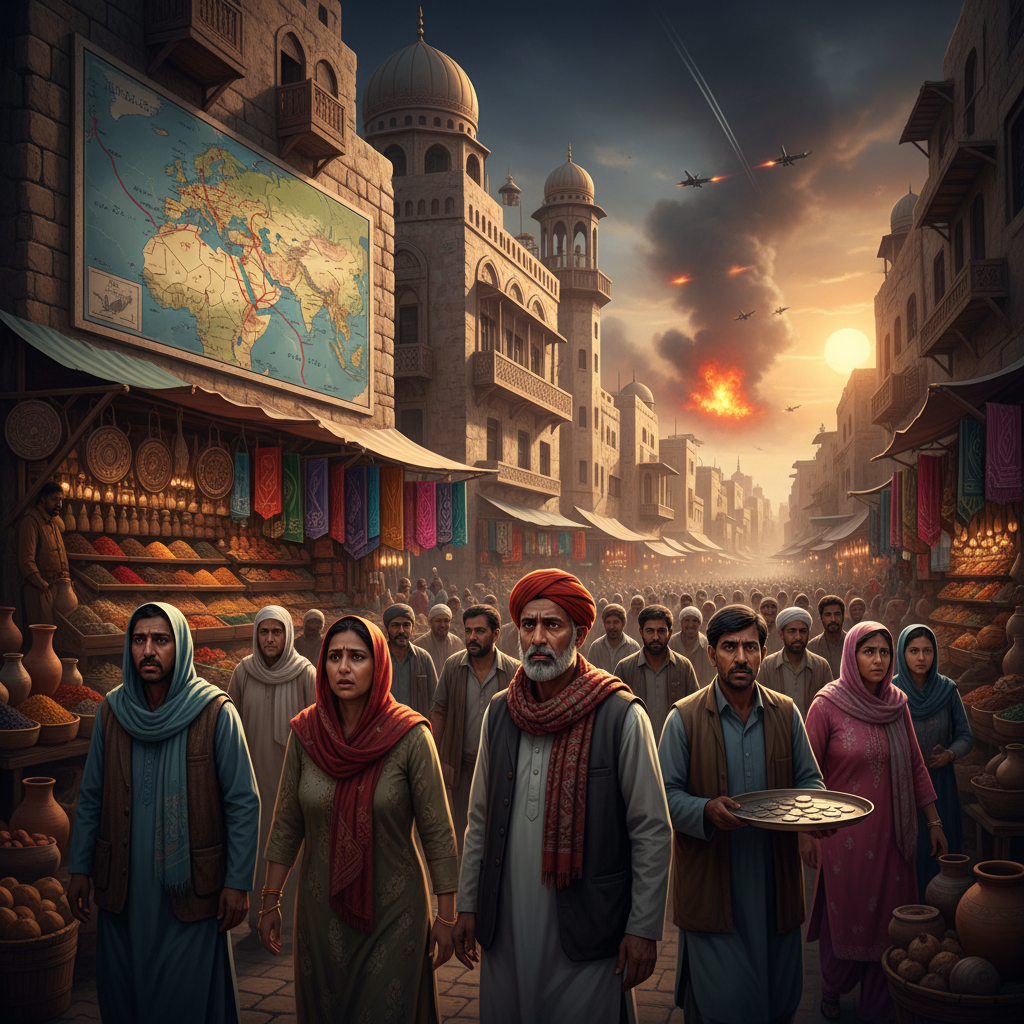
Implications for India in the US-Israel-Iran Conflict
The conflict among the United States, Israel, and Iran poses significant diplomatic, economic, security, and social challenges for India. With its strategic partnerships with Israel, economic ties to Iran, and dependency on Middle Eastern energy supplies, India must carefully navigate these tensions. The escalation of violence in 2026, marked by US strikes on Iran and Iran’s responses, impacts India’s energy security and trade routes, threatening the safety of many Indian expatriates in the region.
Economic Vulnerabilities
India’s reliance on energy imports, particularly through the Strait of Hormuz, makes its economy vulnerable to disruptions caused by the ongoing conflict. A significant portion of India’s oil and liquefied natural gas supplies passes through this precarious chokepoint, and any conflict-related disruptions could lead to spikes in global prices, inflating India’s import costs and contributing to domestic inflation.
Moreover, India’s exports, such as basmati rice to Iran and Iraq, face challenges from potential shipping disruptions and increased costs. As trade routes become insecure, market confidence may wane, calling for India to reassess and diversify its trading relationships to safeguard against future incidents.
Strategic Foreign Policy Adjustments
India’s response to this geopolitical landscape highlights its commitment to strategic autonomy, striving to maintain cooperation with Israel while preserving diplomatic relations with Iran. The growth of defense and technological partnerships with Israel is significant, underscoring India’s intent to enhance its security capabilities amidst regional volatility.
Engaging in dialogue and fostering stability remains pivotal for India’s foreign policy, as it balances relations with both Israel and Iran without aligning exclusively with one side. With a large diaspora in the Gulf, Indian leadership emphasizes protecting its citizens and addressing security threats through proactive diplomacy.
Domestic Social Reactions
The conflict reverberates within India, raising concerns about expatriate safety and prompting political expressions of solidarity or dissent. Public reactions may reflect broader national sentiments, making it crucial for Indian authorities to ensure the wellbeing of their citizens abroad while managing domestic political dynamics.
Long-Term Geopolitical Considerations
As the conflict continues, India’s strategic interests in the Middle East are at a critical juncture. The instability threatens not only economic interests but also essential infrastructure projects like the India-Middle East-Europe Economic Corridor, which could enhance regional connectivity and trade. Monitoring developments, adjusting policies, and ensuring strategic flexibility are vital for India to navigate this complex landscape effectively.
Ultimately, India’s diplomatic posture must focus on preserving sovereignty, stability, and safety. The ongoing unrest and its broader implications will require careful management as India seeks to maintain its interests amidst heightened global scrutiny in a rapidly changing multipolar world.
The content is provided by Sierra Knightley, 11 Minute Read


