
Summary
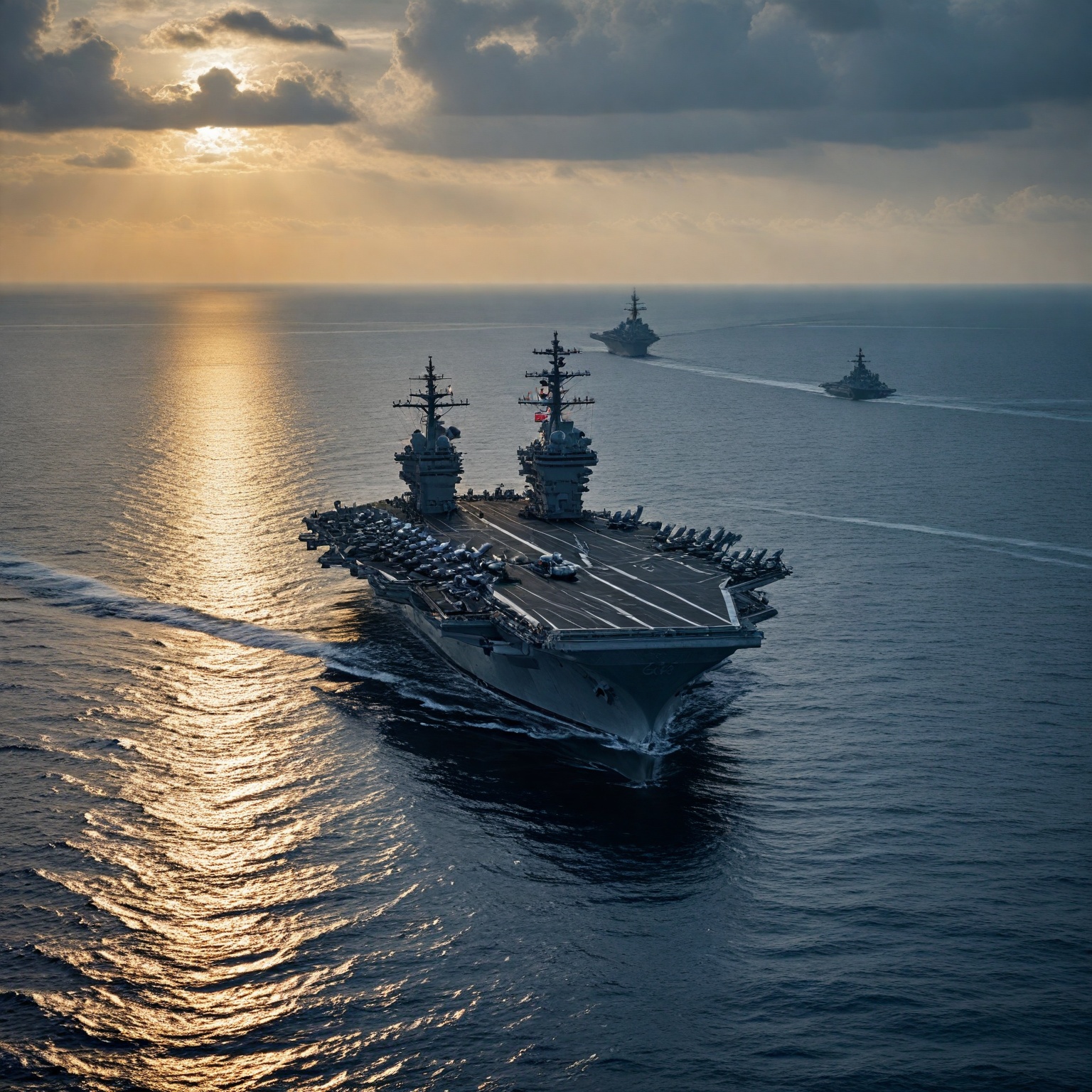
The United States has significantly expanded its military presence in South America and the Caribbean with the deployment of the USS Gerald R. Ford Carrier Strike Group, marking one of the most powerful maritime combat formations ever assembled in the region. This deployment reflects a strategic shift under the Trump and Biden administrations toward reinforcing U.S. influence in the Western Hemisphere, countering transnational criminal organizations, and addressing the growing geopolitical footprints of China, Russia, and Iran in Latin America. The carrier strike group, accompanied by multiple warships, a nuclear submarine, and advanced aircraft including F-35s, is primarily tasked with disrupting drug trafficking networks and supporting regional security efforts.
The U.S. Southern Command’s 2018 strategy outlines the complex challenges facing the region, including narcotics interdiction, combating transnational crime, and deterring authoritarian regimes such as Venezuela’s government under Nicolás Maduro. While emphasizing counter-narcotics operations, the deployment also serves as a geopolitical signal of American resolve to maintain hemispheric dominance and counter foreign influence, thereby contributing to a broader great-power competition framework. Despite no official indication of plans for land-based interventions, the enhanced naval presence underscores a willingness to use military force if deemed necessary to protect U.S. interests.
The deployment has elicited mixed reactions regionally and internationally. Several Latin American governments and political actors have criticized it as a manifestation of U.S. interventionism, reminiscent of historical doctrines that have long shaped U.S.-Latin American relations. Critics contend that the military buildup under the pretext of drug interdiction masks broader objectives related to geopolitical competition and regional hegemony, raising concerns about sovereignty and the militarization of internal security forces. Meanwhile, supporters argue that the enhanced U.S. military presence is vital for combating the transnational threats that destabilize the region and threaten U.S. national security.
Operationally, the deployment of the Gerald R. Ford Carrier Strike Group represents a qualitative and quantitative escalation of U.S. naval power projection in South America. The carrier’s advanced capabilities, including cutting-edge radar and electronic warfare systems, support sustained air and maritime operations across the Caribbean basin. However, increased deployment tempo presents logistical challenges, as the Navy balances maintenance demands and readiness requirements to sustain a forward presence. Looking forward, the U.S. military footprint in South America is expected to remain robust and possibly intensify as part of a long-term strategy to secure regional dominance amid evolving security and geopolitical dynamics.
Background
For decades, the United States has maintained a strategic military presence in regions of geopolitical interest, including the Middle East and Latin America. Traditionally, U.S. administrations from both Republican and Democratic parties have dispatched aircraft carriers to the Middle East as a demonstration of military power and geopolitical resolve. However, recent shifts in national security priorities under President Trump’s second administration have placed a greater emphasis on securing the U.S. homeland and the Western Hemisphere, reflecting a strategic pivot towards the Americas.
The U.S. Southern Command (SOUTHCOM) released a comprehensive strategy in March 2018 outlining the principal threats and challenges facing the region over the following decade. Key concerns highlighted include the influence of Cuba, Venezuela, and Bolivia, the ongoing struggle against drug trafficking and transnational criminal organizations (TCOs), as well as the growing presence of China, Russia, and Iran in Latin America and the Caribbean. Additionally, SOUTHCOM emphasized the importance of disaster response capabilities and the role of regional security forces in maintaining internal, regional, and international order.
While the global “war on terror” has spurred significant U.S. military buildups in many parts of the world, Latin America has seen comparatively limited escalation in direct counterterrorism operations, aside from specific areas such as Colombia where concerns over groups with suspected ties to Hezbollah or ISIS exist. Instead, the fight against TCOs and the associated challenges of organized crime and migrant flows have become the primary focus of U.S. security assistance in the region.
Recently, the United States has increased its maritime force presence off the coast of Venezuela to address threats posed by Latin American drug cartels. This augmentation includes the deployment of a powerful aircraft carrier strike group, such as the USS Gerald R. Ford and its accompanying vessels, signaling an enhanced naval posture in the Caribbean and surrounding waters. Despite the increase in personnel and naval assets, U.S. officials have not indicated any intention of conducting a land invasion, and analysts largely dismiss the likelihood of such an operation.
Veteran military leaders, including Admiral James Stavridis, a former head of SOUTHCOM, have noted that the current naval deployment represents one of the most powerful U.S. maritime combat groups ever assembled in the Caribbean region, underscoring the significance of this strategic realignment. This shift reflects a broader recognition of evolving security challenges in the Western Hemisphere and the need for a robust U.S. military presence to counter diverse threats ranging from narcotics trafficking to the influence of rival powers.
National security correspondents such as Phil Stewart and Eric Schmitt have extensively reported on these developments, providing insights from multiple countries and conflict zones, underscoring the global implications of U.S. military strategy adjustments.
Deployment Details
The deployment of the Gerald R. Ford Carrier Strike Group to the Caribbean marks a significant escalation of the U.S. military presence in the region, aimed primarily at intensifying operations against suspected drug smuggling networks and countering regional threats. This deployment is part of a broader military buildup under the Trump administration, which includes the addition of eight warships, a nuclear submarine, and F-35 aircraft in the area.
The Gerald R. Ford, the lead ship of a new class of nuclear-powered aircraft carriers, carries a nuclear reactor and can accommodate more than 75 military aircraft. Its air wing consists of four squadrons of F/A-18 Super Hornet jets capable of striking targets hundreds of miles inland, EA-18G Growlers designed for electronic warfare, two helicopter squadrons, and propeller-driven E-2 Hawkeye early-warning aircraft that provide advanced surveillance and command capabilities. The carrier strike group, known as Carrier Strike Group 12, is also supported by an array of escort ships including destroyers and potentially a fast-attack submarine, though the latter’s presence is rarely disclosed publicly.
In addition to its air power, the Gerald R. Ford is equipped with cutting-edge technology such as the AN/SPY-3 and AN/SPY-4 active electronically scanned array radars and the Ship Self-Defense System (SSDS) Mk2 Baseline 10, which significantly enhance its defensive and command capabilities. This advanced platform represents a leap forward from the previous Nimitz-class carriers, offering improved operational performance and sustainability during extended deployments.
The strike group’s deployment is strategically positioned within the U.S. Southern Command’s area of responsibility, which encompasses Latin America and the Caribbean. The enhanced force presence aligns with a regional security strategy that focuses on combating drug trafficking, disrupting transnational criminal networks, and countering the influence of countries like Venezuela, Cuba, and Bolivia. This strategy also responds to increased activities by foreign powers such as China, Russia, and Iran in the region, as well as fulfilling humanitarian and disaster response roles.
The deployment cycle for aircraft carriers such as the Gerald R. Ford is complex and influenced by maintenance, training, and operational demands. The Navy has been adjusting deployment lengths and turnaround times to ensure carriers can maintain a forward presence while remaining prepared for surge deployments in response to emergent threats. The Gerald R. Ford’s participation in this deployment reflects ongoing efforts to optimize carrier readiness and operational tempo despite challenges posed by maintenance and personnel demands.
Strategic Objectives
The deployment of the USS Gerald R. Ford Carrier Strike Group to the U.S. Southern Command (USSOUTHCOM) area of responsibility marks a significant escalation in the United States’ military presence in Latin America and the Caribbean. This move aligns with a broader strategy to confront various regional challenges, including drug trafficking, transnational criminal organizations, and the increasing influence of geopolitical rivals such as China, Russia, and Iran.
A central objective of this deployment is to dismantle narcotics trafficking networks and counter narco-terrorism, which are viewed as direct threats to regional stability and U.S. interests. The strike group, supported by nuclear submarines, F-35 aircraft, and multiple warships, is expected to enhance existing capabilities to disrupt and degrade these criminal organizations effectively. This mission also reflects the Trump administration’s intensified efforts to pressure the Venezuelan government, accused by Washington of harboring drug traffickers and undermining democratic institutions.
Beyond counter-narcotics operations, the U.S. strategy involves maintaining and reinforcing regional order through military presence and partnerships. The Southern Command administers approximately 76 U.S. military bases across South America and the Caribbean, using a combination of peacekeeping, training, and strategic military installations to project power and influence. The messaging conveyed through this deployment emphasizes that the United States is committed to pursuing specific objectives and is prepared to use military force against governments or leaders that fail to align with its interests in the region.
This strategic posture also serves to counterbalance the growing footprint of other global powers in Latin America. The U.S. defense strategy in the 2020s increasingly focuses on great-power competition, supporting allied governments and denying access to rivals such as China. The use of maneuverable, multi-dimensional naval strike forces—including carrier strike groups augmented by unmanned platforms—is designed to exploit maritime control and conduct overpowering air and missile operations from unexpected directions, reinforcing the U.S. position in the hemisphere.
Collectively, these objectives underscore a comprehensive approach by the United States to maintain regional dominance, combat illicit activities, and safeguard its strategic interests amid evolving geopolitical challenges in South America.
Regional and International Reactions
The deployment of the powerful U.S. aircraft carrier group, including the Ford-class carrier alongside eight warships, a nuclear submarine, and F-35 aircraft, has generated significant regional and international responses, reflecting the broader strategic contest in South America and the Caribbean. This military escalation is seen by many as a clear demonstration of U.S. intent to reaffirm and expand its influence in the Western Hemisphere amid rising tensions with countries such as Venezuela.
In Latin America, the move has been met with concern and criticism by several governments and political actors who view it as a manifestation of continued U.S. interventionism reminiscent of historical policies like the Monroe Doctrine. The reemergence of this doctrine has been explicitly referenced by U.S. officials warning about the growing commercial and strategic presence of China and Russia in the region, positioning the deployment as a countermeasure to these perceived threats. This has contributed to the perception that the United States aims to consolidate a hostile front against Venezuela while safeguarding its hegemonic interests and control over the region’s abundant economic resources.
Several Latin American countries have experienced an increasing militarization of their internal security policies, often with U.S. encouragement and support. By the late 2010s, 23 of 31 countries in the U.S. Southern Command’s area had authorized their armed forces to assist law enforcement in combating transnational organized crime. This trend has accelerated concerns over civil-military relations and the potential erosion of civilian oversight, particularly in countries like Mexico, where the military has taken over numerous civilian duties since 2018. The renewed U.S. military presence in the region is therefore viewed by some as bolstering these internal security dynamics, while also serving broader geopolitical objectives.
Internationally, the deployment signals a shift in U.S. defense strategy toward great-power competition, highlighting Latin America’s renewed importance amid rising tensions with China, Russia, and Iran in the hemisphere. The Biden administration’s continuation of this approach reflects an attempt to curtail the expanding influence of these powers in the region through a combination of military presence, strategic partnerships, and joint security operations with regional governments. Former U.S. Southern Command commanders have underscored the significance of this naval group as an unprecedented show of American naval power in the Caribbean, intended to demonstrate geopolitical resolve and deter adversaries.
At the same time, the increased U.S. military footprint has sparked debates about sovereignty, interventionism, and the implications for regional stability. Critics argue that the presence of foreign military forces, combined with the historical legacy of U.S. intervention in Latin America, exacerbates mistrust and fuels anti-American sentiment. The complexity of balancing national defense interests, cooperation against transnational threats, and respect for national sovereignty remains a contentious issue in the discourse surrounding this deployment and broader U.S. strategy in South America.
Comparative Analysis with Previous US Military Deployments
The recent deployment of the USS George Washington to South America represents a significant escalation in the U.S. military’s presence in the region, adding to an existing contingent that includes eight warships, a nuclear submarine, and F-35 aircraft. This deployment aligns with a pattern of strategic positioning aimed at countering perceived threats from Venezuela and other regional actors. Unlike routine, pre-planned exercises such as the previous USS George Washington deployment, this operation underscores an intensified focus on disrupting illicit activities and enhancing regional security in the Western Hemisphere.
Historically, the United States has maintained a robust global military presence through its six geographically distributed combatant commands, including the Southern Command (SOUTHCOM) responsible for Latin America and the Caribbean. SOUTHCOM’s strategy, articulated in 2018, has centered on countering drug trafficking, transnational criminal networks, and the influence of rival powers such as China, Russia, and Iran in the region. Efforts have also encompassed peacekeeping, military training, and disaster response, illustrating a multifaceted approach to maintaining influence and stability.
Comparatively, earlier U.S. military deployments emphasized sustained low-intensity operations characterized by frequent but limited engagements. The current deployment cycle and naval readiness, however, face challenges rooted in maintenance demands and personnel tempo. The Navy’s Optimized Fleet Response Plan (OFRP), designed to establish a 36-month cycle for carrier strike groups involving maintenance, training, deployment, and sustainment phases, has struggled to maintain material readiness and operational tempo. This has resulted in tactical skill degradation and reduced preparedness, particularly evident in carriers like the Eisenhower and Theodore Roosevelt, thereby impacting the Navy’s ability to respond swiftly and effectively.
In contrast, the present deployment strategy reflects an adaptation to strategic demands, including extending deployment lengths and reducing turnaround times to ensure carrier availability in critical theaters. These adjustments support a posture aligned with the Department of Defense’s broader shift toward great-power competition, particularly against China and Russia, reversing previous trends of U.S. military disengagement in Latin America. The message to regional capitals is clear: the United States intends to use its military power decisively to uphold its interests and deter adversarial influence.
Thus, while the U.S. military footprint in South America has been a consistent feature of regional security dynamics, the current deployment of a powerful carrier strike group signifies both a quantitative and qualitative enhancement in force projection. It demonstrates a transition from low-intensity, support-oriented operations to more assertive, readiness-driven deployments aimed at maintaining strategic dominance in the Western Hemisphere.
Political and Diplomatic Context
The deployment of the Gerald R. Ford Carrier Strike Group to the U.S. Southern Command (USSOUTHCOM) area of responsibility occurs within a broader political and diplomatic framework marked by the United States’ strategic objectives in Latin America and the Caribbean. Central to these objectives is the expansion of U.S. military presence in the region to safeguard hemispheric hegemony, establish a hostile front against Venezuela, and maintain control over vast economic resources. This strategy reflects a resurgence of interventionist policies reminiscent of the Monroe Doctrine, with U.S. officials explicitly warning against the growing commercial and strategic influence of China and Russia in the area.
USSOUTHCOM’s updated strategy, released in 2018, identifies several principal threats, including drug trafficking, transnational criminal organizations (TCOs), and the increasing presence of global powers such as China, Russia, and Iran. These factors underscore the complexity of regional security challenges and the role assigned to local security forces in managing internal and transnational order. The strategy emphasizes collaboration beyond Colombia, advocating for a comprehensive South American plan to unite regional partners in addressing shared security concerns.
The United States’ broader geopolitical posture also involves countering perceived authoritarian and expansionist policies by China, particularly in relation to cyberespionage, regional aggression, and its handling of the COVID-19 pandemic. This has intensified tensions between Washington and Beijing, influencing U.S. military planning and prioritization of worst-case scenarios
Military Operations and Activities
The United States has continued to strengthen its global military presence through various means, including peacekeeping operations, military training, and the establishment of extensive offshore military complexes. Its extraterritorial military operations are organized under six geographically distributed commands: Northern Command (NORTHCOM), Southern Command (SOUTHCOM), Africa Command (AFRICOM), European Command (EUCOM), Central Command (CENTCOM), and Indo-Pacific Command (INDOPACOM). The military footprint in South America, under the purview of SOUTHCOM, has seen significant expansion in recent years.
A notable development in the region is the deployment of the USS Gerald R. Ford Carrier Strike Group (CSG) to South American waters. Previously operating in the Mediterranean Sea, the USS Ford and its accompanying destroyers, including the USS Winston Churchill, USS Bainbridge, and USS Mahan, have been redirected to the Caribbean and surrounding areas to support efforts aimed at dismantling Transnational Criminal Organizations and countering narco-terrorism. This deployment marks a substantial escalation, representing the pinnacle of U.S. naval power projection and signaling increased military engagement in the region.
Although the official rationale for these operations emphasizes combating drug trafficking, analysts suggest a broader strategic intent. Regional experts argue that the military presence serves as a deterrent and a signal of U.S. willingness to use force against governments and actors who oppose its interests, particularly targeting regimes such as Venezuela’s under Nicolás Maduro. The deployment includes thousands of Marines, special operations forces, and land-based fighter jets already stationed in the Caribbean, enhancing the United States’ capability to conduct airstrikes and other military actions if necessary.
The U.S. military’s intensified operations off the coast of South America have coincided with a series of targeted strikes against suspected drug traffickers, involving the destruction of multiple drug boats near Venezuela and Colombia since early September. While these actions focus on narcotics interdiction, experts view them as part of a larger campaign of political signaling intended to pressure and destabilize regimes perceived as hostile.
Despite the expansion and increased tempo of military activities, the Carrier Strike Groups face challenges such as maintenance delays and diminished tactical readiness due to sustained operational demands and limited shipyard capacities. These factors can impact the Navy’s ability to conduct high-level training and maintain optimal combat preparedness.
In addition to direct military operations, the United States has fostered increased collaboration with regional armed forces. By late 2015, most countries within SOUTHCOM’s area of responsibility had directed their militaries to support law enforcement in combating transnational organized crime. This civil-military integration has deepened, with some countries, such as Mexico, expanding military roles into formerly civilian domains, raising concerns about civil-military relations in the region.
Controversies and Criticisms
The deployment of a powerful U.S. aircraft carrier group to South America has sparked significant controversy and criticism, both regionally and internationally. One of the primary points of contention is the perception that drug trafficking is often used as a pretext for broader U.S. strategic objectives in the region. As noted by Dickinson, an often-heard phrase in regional capitals is “Drugs are the excuse,” implying that the U.S. pursues specific political and military goals under the guise of combating narcotics. This has led to skepticism about the true intentions behind the increased military presence.
Furthermore, the deployment must be viewed within the context of the U.S. Southern Command’s broader ten-year strategy, which identifies threats not only from drug trafficking and criminal networks but also from the growing influence of China, Russia, and Iran in Latin America and the Caribbean. Critics argue that the military buildup serves to counter these global powers rather than solely addressing regional security concerns, which raises questions about sovereignty and the balance of power in the hemisphere.
The issue of sovereignty is particularly sensitive due to the historical precedent of U.S. extraterritorial military bases in the region, such as the long-standing presence at Guantanamo Bay, Cuba, established during the Spanish-American War. This history fuels concerns that current deployments may infringe upon the autonomy of host nations under the guise of mutual security benefits, deepening mistrust toward U.S. intentions.
Domestic political reactions in the United States have been mixed but include strong support from some Republican lawmakers who view the deployment as a firm stance against drug cartels and regional instability. However, the emphasis on military solutions has also drawn criticism for potentially escalating tensions and neglecting underlying socio-economic issues that contribute to drug trafficking and violence.
Finally, from a military logistics and operational standpoint, the increased deployment tempo required to maintain a persistent carrier presence poses challenges. Studies indicate that shortening maintenance cycles to allow more frequent deployments may strain naval resources and reduce the carrier’s availability for emergent missions, raising questions about the sustainability of this approach. This operational complexity adds another layer to the debate on the efficacy and consequences of the U.S. military footprint in South America.
Future Outlook
The future outlook for the U.S. military presence in South America indicates a continued expansion and intensification of operations in the region. The deployment of powerful assets such as the aircraft carrier U.S.S. Gerald R. Ford and its escort group represents a significant escalation of U.S. military firepower in Latin America, far surpassing previous counter-narcotics efforts. This build-up aligns with a broader strategic shift in U.S. defense policy that emphasizes great-power competition, particularly in light of increasing influence from countries such as China, Russia, and Iran in the Western Hemisphere.
The U.S. Department of Defense’s regional commands, including the Southern Command (SOUTHCOM), are expected to play a pivotal role in shaping the security environment over the next decade. SOUTHCOM’s strategy highlights key threats such as transnational criminal organizations, drug trafficking, and the geopolitical challenges posed by foreign actors expanding their foothold in Latin America and the Caribbean. This evolving threat landscape has prompted the U.S. to reassess and potentially shorten maintenance cycles of its naval assets, thereby increasing deployment availability to maintain forward presence, albeit with trade-offs in operational readiness and flexibility.
Furthermore, Washington’s defense strategy suggests increased military support for regional governments that cooperate with U.S. objectives, particularly those that restrict access to rival powers. The continued use of military training, peacekeeping operations, and the establishment of offshore military facilities will likely remain central to U.S. efforts to consolidate influence and address both traditional and emerging security challenges in South America. Overall, the trend points toward a sustained and possibly heightened U.S. military footprint in the region, aimed at countering illicit activities and projecting power amid a complex geopolitical environment.
The content is provided by Harper Eastwood, 11 Minute Read


