
Summary
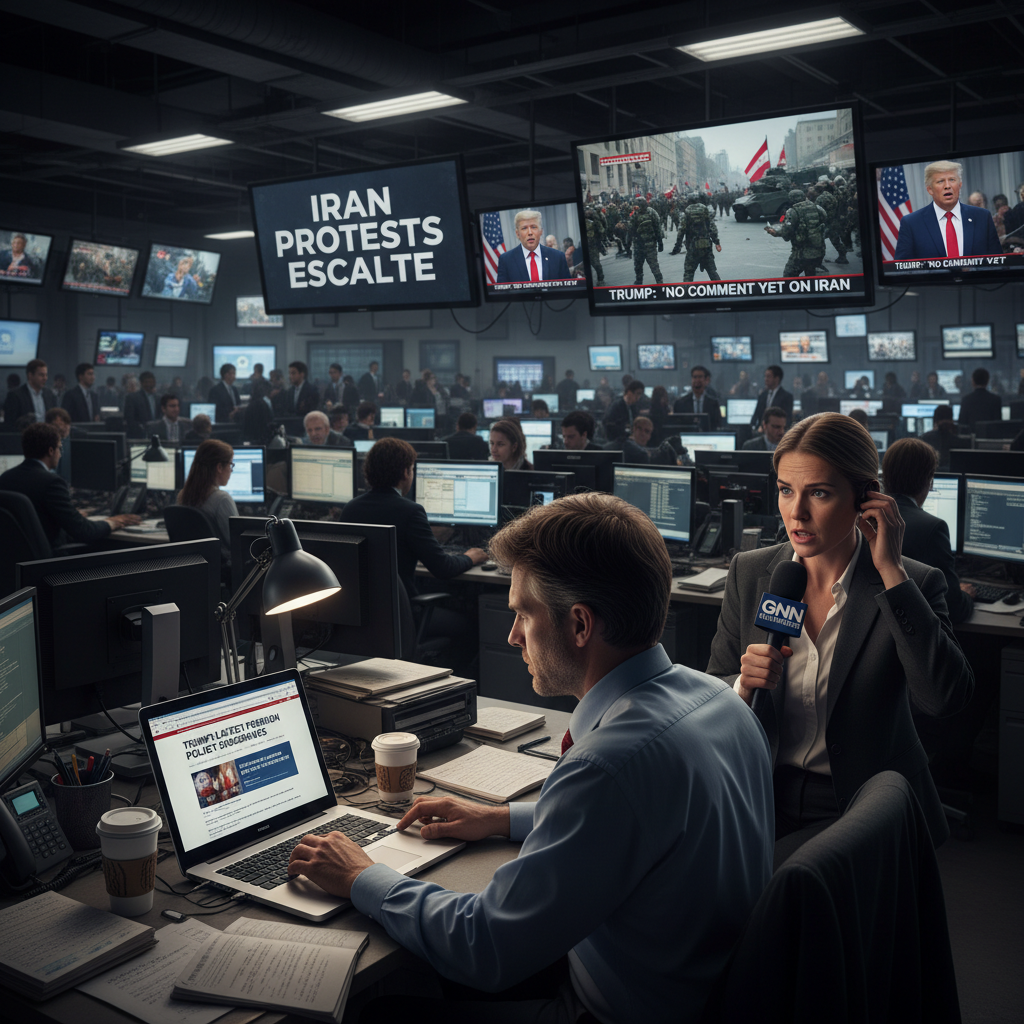
The violent crackdown on protesters in Iran during late 2025 sparked widespread international concern and escalated tensions between Tehran and the United States. The protests, the largest since the 2022 demonstrations triggered by the death of Mahsa Amini, originated from severe economic hardships including rampant inflation, currency devaluation, and energy shortages, but quickly broadened to encompass demands for political reform and greater social freedoms. Demonstrators voiced opposition to the Iranian government with slogans calling for regime change, while authorities responded with harsh repression, including lethal force, mass arrests, and intensified restrictions on women and marginalized groups.
Amid the escalating violence, then-President Donald Trump issued a direct and unprecedented threat of U.S. military intervention should Iranian security forces continue to kill peaceful protesters. Trump’s declaration, made during a period of heightened conflict that included U.S. airstrikes on Iranian nuclear facilities and ongoing Israeli military operations, represented one of the most explicit U.S. warnings of intervention in recent years. This stance added a volatile international dimension to what began as a domestic crisis, raising fears of broader regional instability and drawing sharp rebukes from Iranian officials, who warned against foreign interference and vowed stern retaliation.
The crackdown in Iran involved systematic human rights abuses documented by international organizations, including the use of live ammunition against civilians, arbitrary arrests, censorship, and targeted discrimination against women, ethnic and religious minorities, and the LGBTI community. The government enforced compulsory hijab laws with increased surveillance and punitive measures, contributing to widespread social repression amid the unrest. Despite some conciliatory rhetoric from officials, the overall government response was characterized by intensified security measures and suppression of dissent.
International reactions to the crisis have been mixed but largely condemnatory of Iran’s use of excessive force, with calls for respect of human rights and peaceful resolution. The U.S. stance under Trump, marked by threats of intervention and military actions, deepened geopolitical tensions, while European and Russian responses reflected strategic divisions and concerns over escalation. The situation remains volatile, with the potential for further conflict amid ongoing domestic unrest and international confrontations.
Background
In 2025, Iran experienced its largest wave of protests since the 2022 nationwide demonstrations triggered by the death of Mahsa Amini, a 22-year-old woman who died in police custody after being arrested for allegedly improperly wearing her hijab. These protests rapidly escalated, encompassing calls for both economic relief and political change, with demonstrators chanting slogans such as “Death to the Dictator,” “Pahlavi will return,” and “Long live the Shah,” expressing deep dissatisfaction with the government’s handling of the economic crisis and broader political grievances. The protests initially began with shopkeepers in Tehran closing their stores and were soon joined by students, bazaar merchants, and truck drivers, the latter having staged strikes earlier in the year over low wages and rising costs.
The economic backdrop to the unrest was severe, marked by sharp inflation, a devalued currency, and energy shortages that led to frequent electricity and gas disruptions. The rial lost approximately 40 percent of its value following the Iran–Israel war, compounded by declining oil revenues due to intensified U.S. sanctions. Inflation reached rates as high as 42.2 percent year-on-year, exacerbating widespread poverty and diminishing public faith in the government. Iranian President Masoud Pezeshkian issued apologies for the hardships faced by the population, highlighting the severity of the crisis.
The government responded to the protests with a heavy crackdown, marked by arrests of prominent dissidents and an increase in executions, the highest in nearly four decades. Human rights organizations and U.S. officials reported systematic discrimination and violence against women, girls, ethnic and religious minorities, and the LGBTI community. The authorities intensified enforcement of compulsory veiling laws and restricted freedoms of expression, assembly, and association. Media censorship and internet restrictions further limited the flow of information within the country.
At the same time, the international context intensified tensions. The U.S. had conducted military strikes against Iranian nuclear sites in June 2025, which followed Israel’s engagement in a 12-day conflict with Iran. These actions heightened Iran’s hostility toward the U.S. and Israel and underscored the geopolitical stakes in the region. Anti-Israeli sentiment was visible in Iran, exemplified by banners in Tehran showing solidarity with Palestinian resistance. The U.S. government expressed concern over the Iranian crackdown, urging the Iranian authorities to cease violence against protesters and calling attention to human rights abuses.
Against this backdrop, then-President Donald Trump publicly threatened U.S. intervention should protesters be killed, marking one of the most direct U.S. statements of support for the Iranian opposition in recent years. His remarks came amid heightened tensions, including months of American airstrikes on Iranian nuclear facilities and a pledge to back Israeli military action if Iran advanced its missile and nuclear programs. This stance introduced a volatile international dimension to what began as a domestic economic and political crisis.
Iranian officials, while at times expressing conciliatory language toward peaceful protests, issued firm warnings against attempts to exploit the unrest for acts of violence or foreign interference. Prosecutor General Mohammad Movahedi-Azad cautioned that turning economic protests into tools of insecurity or externally designed scenarios would provoke a stern government response.
Overview of the Protests
The protests in Iran, which began in late December 2025, represent the most significant wave of unrest since the nationwide uprising of 2022–2023 triggered by the death of Mahsa Amini in police custody. The immediate catalyst for the recent demonstrations was the worsening economic conditions, including a drastic drop in the value of the Iranian currency and rising living costs, which have pushed increasing numbers of Iranians below the poverty line. Initial protests were sparked by Tehran shopkeepers rallying against the economy, with students and other groups soon joining in multiple cities across the country.
Demonstrators voiced anti-government slogans such as “Death to the Dictator,” “Pahlavi will return,” and “Long live the Shah,” expressing broad grievances against those in power, not only for the economic crisis but also for wider political demands. The scale of the protests quickly grew, marking the largest outbreak of unrest since the Mahsa Amini protests, which had involved tens of thousands of arrests and extensive participation by women and schoolchildren advocating for women’s rights and systemic political change.
The protests followed earlier strikes and road blockades, such as those by truck drivers in May 2025 who protested low wages, high insurance costs, and anticipated fuel price hikes. The involvement of shopkeepers and market traders recalls their influential role during the 1979 Islamic Revolution, when they mobilized significant public support that contributed to the overthrow of the monarchy.
The Iranian government responded with a severe crackdown, including widespread arrests, use of live ammunition against protesters, and suppression of freedom of expression and assembly. Women defying compulsory veiling laws, ethnic and religious minorities, and other vulnerable groups faced intensified discrimination and violence during this period. Security forces have been reported to engage protesters mercilessly, turning protest sites into violent battlegrounds.
In an apparent attempt to quell unrest, the government declared a public holiday midweek, creating a four-day break that included a religious holiday and the anniversary of General Qassem Soleimani’s killing. This move was seen as a strategy to reduce protest momentum while preparing for heavy security presence on significant dates. Meanwhile, the international community, including the U.S. State Department, expressed concern over the violent repression of protesters, condemning intimidation and arrests and calling for an end to the crackdown.
Violent Crackdown
Since the onset of widespread protests in Iran, the government has implemented a severe and multifaceted crackdown targeting protesters, particularly women and marginalized groups. Increased security patrols and enforcement measures have subjected women and girls to harassment, violence, and severe restrictions on their freedoms. This crackdown included barring women from universities, using dangerous car chases to stop women drivers, mass confiscation of vehicles, forced “morality” classes, imprisonment, and flogging. The authorities also intensified the enforcement of compulsory veiling laws through the Noor Plan, which employed digital surveillance methods such as facial recognition technology, further violating women’s social, economic, cultural, civil, and political rights and severely restricting their freedom of movement.
Security forces have used lethal force against protesters, with numerous videos showing gunfire amid smoke-filled streets and injured demonstrators being carried away. Reports describe the situation as a battlefield, with security forces firing mercilessly at crowds. At least 551 people, including women and minors, have been killed as of September 2023, according to Iran Human Rights, while state-affiliated media confirm fatalities among both protesters and security personnel. The government has arrested thousands of demonstrators across more than 130 cities and universities, including many female protesters and schoolchildren who have played a significant role in the movement. These protests differ from previous ones in their broader demands, calling for increased women’s rights and the overthrow of the Islamic Republic.
In response to the unrest, Iranian authorities have cracked down on freedoms of expression, association, and peaceful assembly. Systemic discrimination and violence have extended to LGBTI people, ethnic and religious minorities, and Afghan refugees and migrants. The government has engaged in censorship, jamming satellite channels, blocking mobile apps and social media platforms, and enforced disappearances, torture, and other forms of ill-treatment are reported to be widespread and systematic. Punitive policies against women defying dress codes have intensified, including hefty fines, banking restrictions, business closures, jail time, forced labor, travel bans, and even being diagnosed as mentally ill. In spring 2023 alone, around 150 cafés and shops were shuttered for failing to enforce hijab laws. The morality police were reinstated to the streets in mid-July, accompanied by widespread internet outages coinciding with their return.
Despite some conciliatory language from government officials recognizing the public’s right to protest and initiating talks with certain groups, warnings remain firm. Iranian authorities continue to characterize protests as threats to security and have responded with closures of government offices and universities under the pretext of cold weather and energy saving, while issuing stern warnings against any perceived external interference. The UN and international human rights organizations have condemned Iran’s excessive and lethal use of force against protesters and the systemic human rights violations occurring in the country.
US Involvement
The United States’ involvement in the escalating unrest and conflict surrounding Iran has been marked by a series of direct threats, military actions, and political responses under former President Donald Trump. Trump issued a clear warning on social media stating that if Iran were to “shoot and violently kill peaceful protesters,” the United States would intervene to protect them, emphasizing that the U.S. was “locked and loaded and ready to go”. This declaration came amid widespread protests in Iran, which initially began as economic demonstrations but have increasingly faced brutal crackdowns by Iranian security forces.
Trump’s threat represented one of the most explicit indications of potential U.S. intervention in Iran’s internal affairs in recent years, following months of heightened tensions that included American airstrikes on Iranian nuclear facilities during the summer and support for Israeli military actions against Iran’s missile and nuclear programs. The U.S. military response has been tangible, with strikes such as Operation Midnight Hammer targeting Iranian nuclear sites in June 2025, an event that killed nearly 1,100 Iranians including senior military personnel and scientists. These attacks provoked retaliatory missile strikes from Iran, escalating the conflict further.
In response to these developments, Iran’s political and military leaders issued stern warnings against foreign interference. Supreme Leader Khamenei’s adviser Ali Shamkhani warned that any attempt at intervention in Iran’s security would be met with decisive action, asserting that any “hand of intervention” would be “cut off before it can act”. Iranian officials framed the protests as legitimate social expressions while simultaneously threatening severe repercussions against any attempts to exploit them for destabilization or external agendas.
Domestically, the U.S. response to the threat of war and intervention in Iran revealed deep political divisions. Democratic leaders displayed a wide range of reactions, from calls for Congressional approval before any strikes to cautious support of actions aimed at deterring Iranian aggression. Some prominent Democrats criticized Trump for his role in escalating tensions, pointing to his 2018 withdrawal from the Iran nuclear deal as a factor contributing to the crisis. Meanwhile, Trump adhered to the legal framework by notifying Congress of limited military strikes, describing them as “limited in scope and purpose” aimed at deterring future Iranian aggression and minimizing casualties.
Despite these notifications, skepticism remained among lawmakers regarding the immediacy of the threat posed by Iran. Nevertheless, the U.S. military maintained a significant presence in the Middle East, with repositioning of forces and assets to defensive postures in the region, further underscoring the volatile environment. Iran’s officials, including former Parliament Speaker Ali Larijani, warned that continued U.S. military presence and interventions would lead to regional chaos and harm American interests, urging the U.S. public to be mindful of the risks faced by soldiers deployed in the Middle East.
The dynamic between U.S. military actions, political rhetoric, and Iranian responses has created a precarious situation, with the potential for further escalation as the U.S. grapples with the balance between intervention and restraint amidst Iran’s internal unrest and broader geopolitical conflict.
International Response
The international response to the violent crackdown on Iranian protesters and the escalating tensions in the region has been marked by a mixture of diplomatic interventions, strategic posturing, and widespread concern over the potential for further conflict. The United States, under the Trump administration, has taken a particularly aggressive stance, with President Trump openly threatening intervention and demanding Iran’s “unconditional surrender,” escalating fears of a broader military confrontation. This posture has been met with strong warnings from Iranian officials, who cautioned that U.S. involvement would lead to “chaos in the entire region” and jeopardize American interests and the safety of U.S. troops stationed in the Middle East.
European reactions have revealed deep divisions and strategic vulnerabilities. Following U.S. airstrikes on Iranian nuclear sites, European leaders found themselves in an untenable position, criticized for their lack of unified response and perceived subservience to U.S. policy decisions. The European Union’s reaction has been described as exposing not only hypocrisy but also a “vassalization” to Washington, undermining both international law and Europe’s own strategic interests. This dynamic has led to skepticism regarding the effectiveness of European diplomacy amid the crisis.
Russia has played a complex and increasingly assertive role. Moscow formally intervened diplomatically to request that the U.S. halt the pursuit of an oil tanker allegedly heading to Venezuela, highlighting the intensifying friction between Washington and Moscow over enforcement actions in the Americas. Additionally, Russian officials, including Deputy Foreign Minister Sergei Ryabkov, have advised against U.S. direct involvement in the conflict, emphasizing the risks of further escalation after weeks of deadly clashes in Iran and Israel.
International human rights organizations and the United Nations have also responded to the crackdown on protesters in Iran. The UN Human Rights Council convened a special session to address the Iranian authorities’ use of excessive and lethal force, and the UN General Assembly later adopted a resolution condemning Iran’s human rights abuses, including the violent suppression of demonstrations. Meanwhile, activists and eyewitness reports highlight ongoing brutal repression, with security forces employing live ammunition and other harsh measures against civilians.
Within Iran, the protests initially sparked by economic grievances have been exacerbated by the compounded pressures of U.S. sanctions and the threat of foreign military intervention. Demonstrators remain skeptical of dialogue prospects, remembering prior crackdowns, and continue to face intensified security measures, particularly targeting women, who have endured harassment, restrictions on education and mobility, and punitive actions such as imprisonment and flogging. This volatile situation continues to draw international attention and concern over the potential for wider regional instability.
Media Coverage
Media outlets across the political spectrum in the United States extensively covered former President Donald Trump’s statements threatening military intervention in Iran amid the violent crackdown on protesters. The Independent highlighted Trump’s warning on Truth Social,
Aftermath and Impact
The aftermath of President Donald Trump’s threat to intervene in Iran amid the violent crackdown on protesters significantly heightened tensions both within Iran and internationally. The Iranian government responded with strong warnings against any foreign interference, emphasizing that any attempt to undermine Iran’s security would be met with force. Senior officials cautioned that U.S. intervention could destabilize the entire Middle East region and pose risks to American military personnel stationed there, underlining the volatile geopolitical situation surrounding the unrest.
Domestically, the protests—initially sparked by economic grievances such as currency devaluation, inflation, and the rising cost of living—escalated into widespread demonstrations with political overtones, including calls for regime change. The unrest spread across multiple cities, with protesters chanting slogans like “Death to the Dictator” and “Pahlavi will return,” reflecting deep dissatisfaction not only with economic conditions but also with the political system. Iranian authorities intensified their crackdown, employing lethal force against demonstrators and arresting thousands, including women defying compulsory hijab laws, ethnic and religious minorities, and activists, further exacerbating human rights concerns.
International human rights organizations reported systematic abuses in response to the protests, including unlawful detentions, torture, enforced disappearances, and harsh punishments such as flogging and increased executions, which were perceived as tools of political repression. The government also restricted freedom of expression by censoring media, jamming satellite channels, and blocking numerous social media platforms, aiming to curb the flow of information and coordination among protesters.
The economic crisis fueling the protests remained dire, with many Iranians living below the poverty line and facing energy shortages, repeated electricity and gas disruptions, and an overall lack of hope for improvement. While the government offered limited dialogue and concessions, it simultaneously issued firm warnings to deter further escalation, notably refraining from cutting nationwide internet access, a tactic used in previous unrest.
The threat of U.S. intervention added a volatile dimension to the crisis, with some experts warning that it could escalate regional conflict and complicate diplomatic efforts. European actors expressed concern over the potential for a broader conflict following recent U.S. airstrikes on Iranian nuclear sites and the heightened rhetoric surrounding Iran’s missile and nuclear programs. Meanwhile, U.S. states took precautionary measures, monitoring potential security threats linked to the international tension sparked by the situation in Iran.
The content is provided by Sierra Knightley, 11 Minute Read


