Trump and Irans President Pezeshkian Unite: A Landmark Memorandum to End Conflict!
Summary
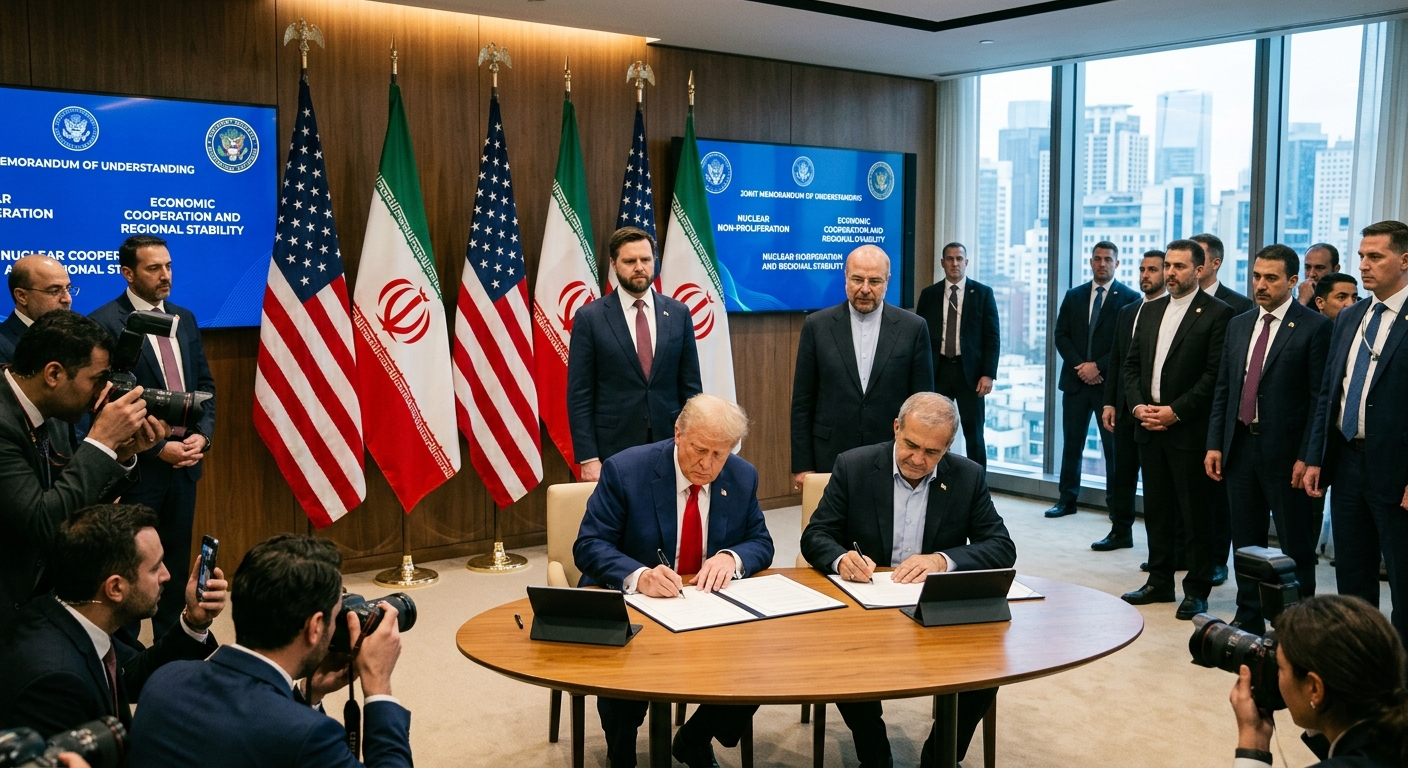
The 2024 memorandum of understanding (MoU) between former U.S. President Donald Trump and Iranian President Masoud Pezeshkian aims to end decades of hostilities and includes key commitments on nuclear non-proliferation and economic cooperation. This 14-point agreement highlights Iran’s pledge to refrain from acquiring nuclear weapons, enhance IAEA monitoring, and cease military operations in conflict zones like Lebanon. It also proposes a $300 billion reconstruction fund for Iran, supported by regional partners, contingent on Iran’s compliance with agreed terms.
However, doubts about the MoU’s sustainability remain due to ongoing IAEA verification challenges and political opposition in both nations. In particular, the Iranian hardliners and U.S. Republicans have expressed skepticism, alongside complications from Israel’s military position in Lebanon. Moreover, the MoU’s non-binding nature raises questions regarding enforceability and long-term effectiveness, increasing the need for validation and thorough consideration of feasible solutions to ensure lasting peace.
Background
The U.S.-Iran relationship has been fraught with tension and indirect diplomatic communications since formal interactions ceased in 1980. Over time, confrontations, including military encounters in the Gulf and the assassination of General Qasem Soleimani, have exacerbated these tensions. A cautious diplomatic thaw occurred in 2023 with a prisoner exchange and partial unfreezing of Iranian funds, signaling a changing dynamic leading to the critical digital signing of the MoU.
Amidst this backdrop, Iran’s nuclear program remained a focal point, with the IAEA monitoring compliance and facing challenges in verification. As political factions in Iran contend for influence, the election of reformist Masoud Pezeshkian as president suggests a potential shift toward engaging in negotiations and political reform, despite historical tensions within the Islamic Republic. Understanding these dynamics is essential for evaluating the MoU’s potential impact and future negotiations.
The Memorandum of Understanding
The MoU articulates commitments between the U.S. and Iran, primarily emphasizing Iran’s pledge to remain free of nuclear weapons. Provisions also outline a management mechanism for enriched uranium stockpiles, monitored by the IAEA, to mitigate proliferation risks. The agreement also aims for a permanent cessation of military activities while fostering economic recovery through a proposed $300 billion development fund, supported by regional partners.
Sanctions relief is a critical element, where the U.S. will lift various sanctions based on Iran’s compliance with the agreement. Despite this, the MoU’s framework is designed to promote compliance through economic incentives rather than strict compliance mechanisms. This raises important considerations regarding the reliability of the agreement and the realistic expectations for both diplomatic engagement and enforcement going forward.
Political and Diplomatic Lead-Up
The historical complexities of U.S.-Iran relations have shaped the context surrounding the MoU. Following diplomatic fluctuations characterized by disputes and military tensions, the path to the MoU involved cautious preparation and negotiations, amid mixed responses from U.S. leadership. The agreement’s digital signing reflects ongoing diplomatic engagement and political maneuvering, particularly amid skepticism from some Republican factions regarding the detailed provisions of the agreement.
While some political leaders exhibit caution, others express optimism about the potential for diplomatic breakthroughs. This polarization illustrates a critical need for ongoing dialogue and transparency to navigate the evolving political landscape as both nations endeavor to formalize their commitments and expectations.
Implementation and Enforcement
The MoU aims for a comprehensive end to hostilities while granting the IAEA an essential role in verifying compliance with Iran’s nuclear commitments. Despite strong oversight measures, challenges remain regarding Iran’s transparency and commitment to fulfilling its obligations. The political nature of the MoU—rather than a binding treaty—raises questions about enforceability, necessitating scrutiny regarding how effectively both parties will adhere to the terms agreed upon.
As verification mechanisms and sanctions relief are pivotal for the agreement’s success, fostering cooperation among regional actors is equally important. This complexity underscores the need for ongoing evaluation of diplomatic relations amidst prevailing regional tensions, ensuring both parties meet their commitments to achieve lasting peace.
Reactions and Responses
The MoU’s announcement elicited mixed reactions, with Iranian leaders expressing cautious optimism while hard-liners criticized the negotiations as insufficient. In the U.S., sentiments echoed similar divisions among lawmakers, influencing the discourse surrounding the agreement. These responses signal the ongoing volatility in U.S.-Iran relations, emphasizing the importance of carefully crafted communications and strategies for successful diplomatic engagement.
In the broader regional context, this agreement could influence dynamics, particularly as Iran seeks to stabilize relations with key allies like Saudi Arabia. Understanding these patterns enables a comprehensive evaluation of how the MoU might reshape diplomatic efforts and foster cooperation among involved nations.
Criticism and Support
The reception of the MoU reflects marked divisions, particularly within the Republican Party, fueled by concerns over transparency and adherence to expectations. Iranian dissident groups have also expressed disappointment, highlighting a perceived abandonment of support for those seeking political change. This response demonstrates the challenges in balancing diplomatic initiatives with domestic political realities that affect support for the agreement.
Conversely, some reformist figures in Iran and Western observers express optimism about the potential for political engagement and reform, viewing the MoU as a possible catalyst for broader positive developments. Such perspectives contribute to a complex landscape where balancing varying interests and support plays a crucial role in shaping the future of U.S.-Iran negotiations.
Aftermath and Long-term Impact
The MoU’s signing marks a critical juncture in U.S.-Iran relations, leading to commitments for negotiations on creating a substantial reconstruction fund for Iran. Initial actions like the U.S.–Iran prisoner swap and easing of sanctions have highlighted these transformative diplomatic efforts. However, the challenges ahead remain significant, necessitating thorough examination and validation of mutual commitments to achieve longer-term stability and peace.
Reflecting on the agreement’s implications prompts the need for sustained engagement and transparency to navigate the complexities inherent in the ongoing geopolitical landscape. As both parties work to bridge gaps and adhere to commitments, future developments will undoubtedly shape the trajectory of U.S.-Iran relations in the long term.
The content is provided by Avery Redwood, 11 Minute Read