
Summary
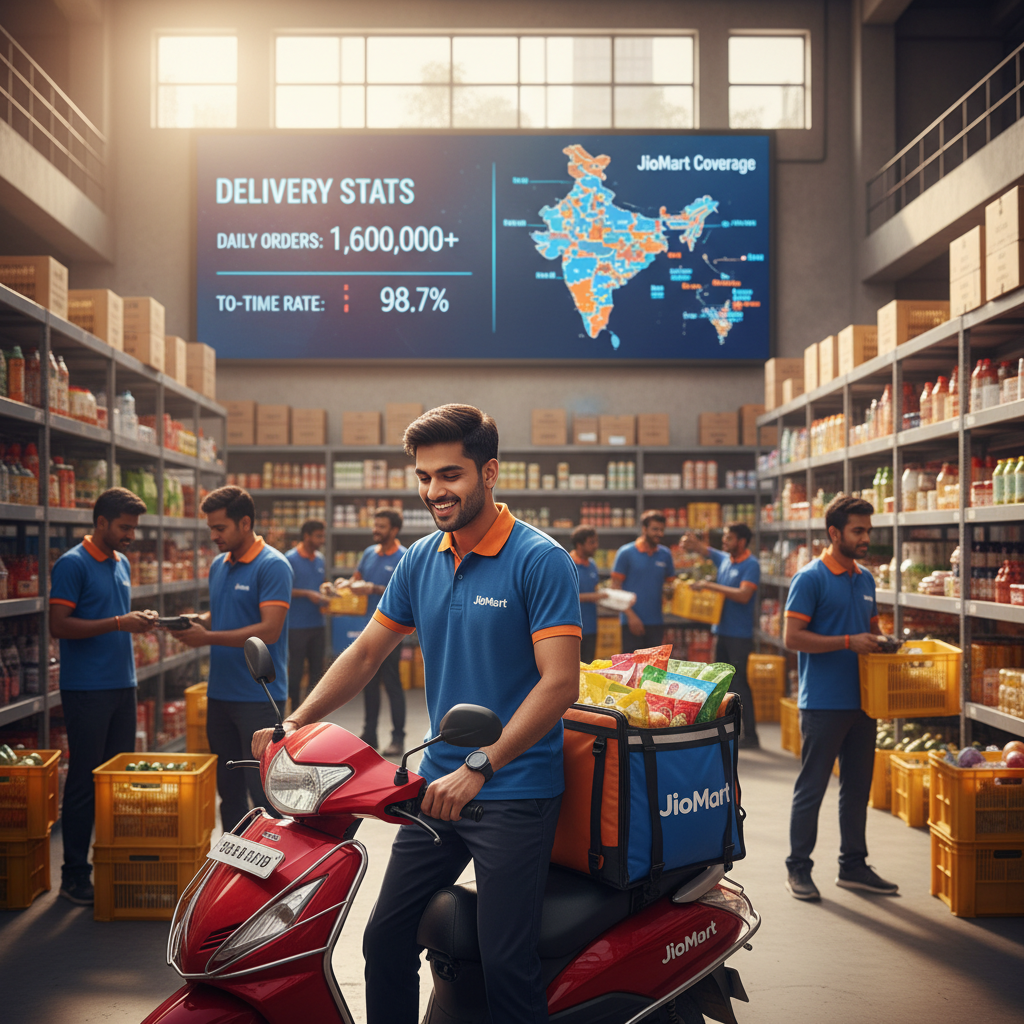
Reliance Retail has quickly become a key player in India’s quick commerce sector with its JioMart platform, offering deliveries within 10 to 30 minutes. Since its launch in October 2024, the company has expanded its service to over 5,000 pin codes across 1,000 cities, leveraging a network of nearly 20,000 stores and 600 dark stores. The company has seen average daily orders reach approximately 1.6 million, reflecting significant overall retail growth despite challenges such as app performance and fierce competition from established players like Blinkit and Zepto.
Company Overview
By entering the quick commerce market, Reliance Retail has leveraged its vast inventory to offer a broader range of products compared to competitors. The company has garnered strong traction, achieving notable growth through an integrated strategy combining dark stores and physical outlets. However, challenges remain in penetrating traditional e-commerce markets and managing rapid operational growth while maintaining user focus and service quality.
Growth in Quick Commerce
Reliance’s quick commerce services have expanded beyond groceries to include value fashion and electronics. They focus on providing hyper-local commerce, aiming for sub-30-minute delivery times. Noteworthy growth has been observed in grocery and electronics sales as reliance on traditional scheduled deliveries shifts towards quick commerce. The company plans to open more dark stores to enhance service coverage and increase operational capacity.
Order Volume Surge
Recent quarters have shown a dramatic increase in daily order volumes, marking a pivotal growth phase for Reliance. With a 200% year-on-year increase, the expansion of Reliance’s delivery network and the operationalization of dark stores have played crucial roles in meeting consumer demand and achieving significant revenues across various product categories, especially in tier-2 and tier-3 cities.
Supply Chain and Inventory Management
Reliance employs a sophisticated supply chain system to ensure efficient inventory management, minimizing costs while meeting consumer demand. By integrating real-time data for inventory management, optimizing last-mile delivery, and utilizing technologies like RFID for inventory accuracy, the company is poised to scale rapidly while mitigating common operational challenges in quick commerce.
Last-Mile Delivery Network
The company has strengthened its last-mile delivery capabilities with over 600 dark stores and nearly 20,000 retail points, enabling efficient service across 5,000 pin codes. This network expansion has been instrumental in fulfilling orders quickly, with the reach extending into under-served markets in urban and semi-urban areas.
Technology in Payment Processing
Reliance’s payment infrastructure supports seamless transactions across its retail ecosystem. By integrating digital platforms with its extensive physical network, the company maintains real-time inventory accuracy and efficient payment processes, reinforcing its capacity to handle increased order volumes effectively.
Competitive Landscape
Reliance’s rapid market entry elevates competitive pressures in a sector largely dominated by Blinkit, Zepto, and Swiggy Instamart. While these established competitors prioritize growth, Reliance aims to leverage its vast resources to challenge existing market dynamics, which will influence pricing, service quality, and operational efficiency across the industry.
Financial Impact
Reliance Retail’s growth in quick commerce has been essential for its overall financial success, with substantial revenue increases reported in recent years.
Challenges Ahead
Despite rapid growth, Reliance Retail faces significant challenges, including app performance issues, operational complexities, and intense competition. Addressing these hurdles is critical for customer retention and long-term success, as the sector is characterized by tight margins and high operational costs.
Future Prospects
With its strong infrastructure and commitment to technology innovations, Reliance is well-positioned for future growth in quick commerce. By enhancing its delivery capabilities and investing in advanced logistics technologies, the company aims to further penetrate the last-mile delivery market, responding to evolving consumer expectations for quick and efficient service.
The content is provided by Sierra Knightley, 11 Minute Read


