
Summary
Mining Executives Enthusiastically Tap into the Surging Demand for Rare Earths in the Middle East explores the rapidly growing involvement of Middle Eastern countries in the rare earth elements (REEs) sector, driven by escalating global demand for these critical minerals. Rare earth elements, comprising 17 metals essential for advanced technologies including electric vehicles, renewable energy systems, electronics, and defense applications, have become strategically vital amid concerns over supply concentration—particularly China’s dominant control of global production and processing. The Middle East is emerging as a key player seeking to diversify global supply chains, capitalizing on its substantial mineral reserves and ambitious government-led initiatives.
Middle Eastern countries such as Saudi Arabia, Jordan, and Qatar have launched comprehensive policies and investment strategies aimed at developing domestic rare earth mining and processing capabilities. These efforts are aligned with broader economic diversification goals, such as Saudi Arabia’s Vision 2030, and involve fostering international partnerships, updating mining laws, and attracting foreign capital and technology transfers. Industry leaders, including executives from regional giants like Ma’aden and international mining firms, express strong optimism about the Middle East’s potential to establish integrated rare earth value chains that reduce dependence on China while supporting global clean energy transitions.
However, the region faces significant challenges including infrastructure limitations, regulatory delays, environmental concerns, and the need for stringent sustainability governance. Rare earth processing is resource- and water-intensive and produces hazardous waste, raising environmental and social governance (ESG) issues that require careful management to avoid replicating the adverse impacts seen in other mining regions worldwide. While efforts are underway to implement responsible mining standards and develop supportive infrastructure such as water desalination and waste treatment, critics emphasize the necessity of stronger enforcement and transparent practices to ensure the sector’s long-term viability and social license to operate.
The geopolitical and economic implications of the Middle East’s growing rare earth sector are substantial. By offering alternative sources to China-dominated supply chains, the region enhances global mineral security amid rising geopolitical tensions and trade uncertainties. Strategic collaborations with Western and international partners further position the Middle East as a critical hub for critical minerals, reinforcing its influence in global energy transitions and industrial innovation. This emerging role underscores the dynamic interplay between resource wealth, economic diversification, and geopolitical strategy in the 21st-century global minerals landscape.
Background
Rare earth elements (REEs) are a group of 17 chemical elements critical to the production of advanced consumer products, renewable energy technologies, industrial applications, and defense systems. These elements are typically classified into three groups: light rare earth elements (LREEs), middle rare earth elements (MREEs), and heavy rare earth elements (HREEs), each with distinct physical and chemical properties that enable their use in cutting-edge technologies such as permanent magnets, medical imaging, electronic devices, and hybrid transportation systems. The global demand for REEs is expected to increase more than fivefold by 2030, driven primarily by the energy transition and the expansion of renewable energy and electric vehicle markets.
Currently, the supply chain for rare earths is highly concentrated, with China dominating global production. As of 2017, China produced approximately 81% of the world’s rare-earth supply, mainly from Inner Mongolia, despite holding only 36.7% of global reserves. This dominance has geopolitical implications, as China’s control over these critical materials allows it to influence global supply chains and exert strategic leverage. The Chinese government’s early initiatives, including the formation of a rare earth society in the 1990s and the encouragement of large-scale manufacturing, helped propel China to the forefront of the rare earth industry. This has made rare earths a geopolitical “hot potato” and a central focus of international relations and political economy discussions.
Given the risks associated with supply concentration and geopolitical tensions, diversification of rare earth sources has become a global priority. The Middle East and Africa are emerging as key players in this regard, with their rare earth minerals markets expected to play pivotal roles in global supply chains by 2031. Governments in the region are implementing policies to boost domestic production, including subsidies, grants, exploration partnerships, and stockpiling strategies aimed at reducing dependency on imports and enhancing supply chain resilience. Developing local processing capabilities is also a strategic goal, as it adds value within the region, creates employment opportunities, and strengthens economic development.
The importance of diversified sourcing is recognized by major world economies, which are expanding partnerships with Middle Eastern producers to mitigate supply risks. For instance, the United Kingdom’s establishment of the Critical Minerals Intelligence Centre reflects the heightened global awareness of rare earth elements’ strategic value and the need for sustainable, secure supply chains. Despite challenges, such as environmental hazards and community impacts associated with rare earth extraction and processing observed in other regions, the Middle East’s growing involvement offers a promising avenue to balance global supply and demand dynamics.
Rare Earth Mining Industry in the Middle East
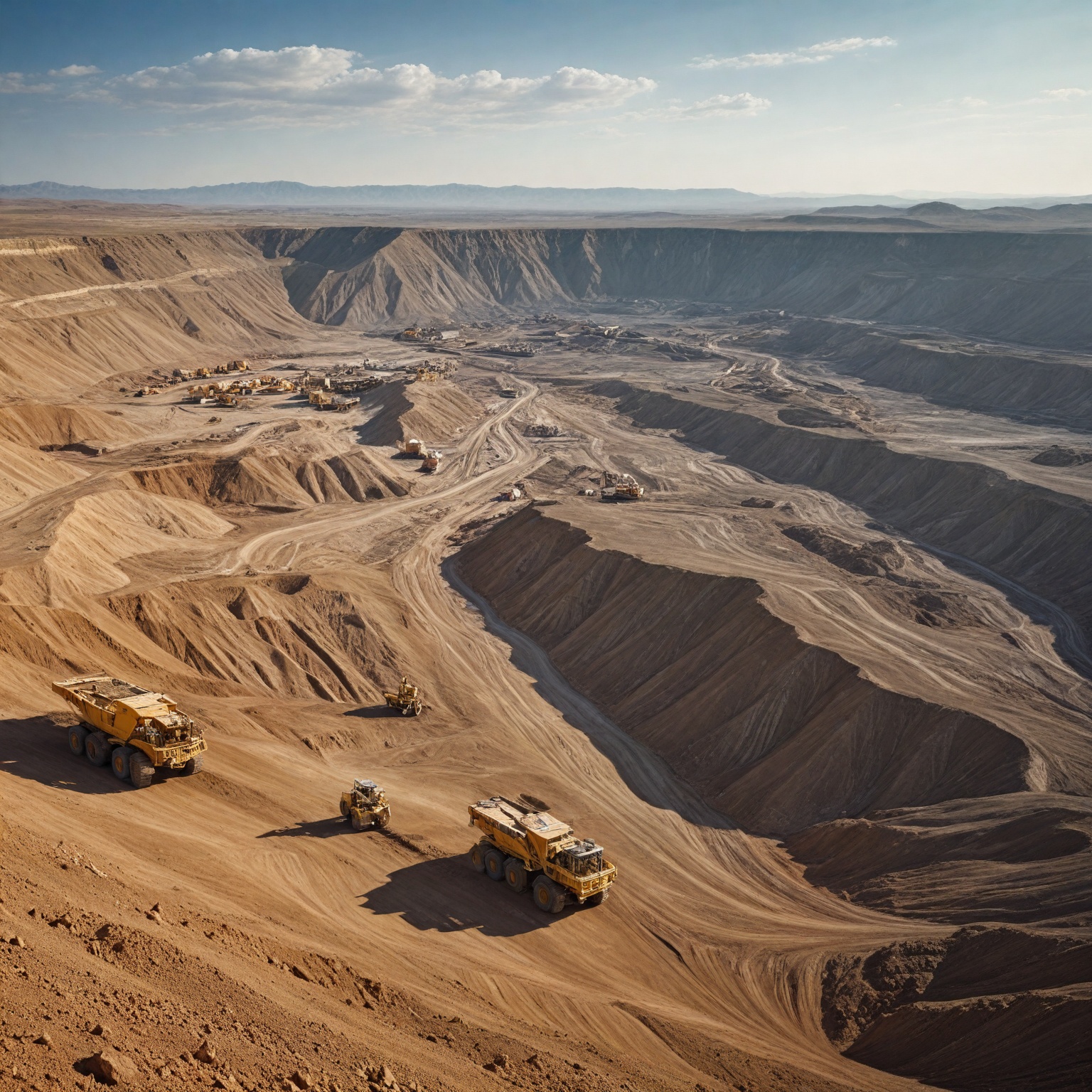
The Middle East is emerging as a significant player in the global rare earth mining industry, driven by the region’s substantial mineral reserves and growing demand for advanced materials used in clean energy and high-tech industries. By 2031, the Middle East and Africa’s rare earth minerals market is expected to play a pivotal role in global supply chains, fueled by expanding demand from electric vehicles and renewable energy sectors.
Countries such as Saudi Arabia, Jordan, and Qatar are actively pursuing strategies to develop their rare earth resources. Saudi Arabia’s western Arabian Shield contains considerable reserves of precious metals alongside critical industrial metals including aluminum, copper, and notably rare earth elements like tantalum and niobium, which are essential for electronics, aerospace, and defense applications. Jordan is similarly positioning itself as a major supplier of vital components for renewable energy technologies. Doha in Qatar has taken early steps by signing mining agreements with Nigeria and emphasizing cooperation in critical minerals with international partners.
The region’s approach to developing its mineral sector combines attracting foreign investment, updating mining laws, and fostering international partnerships to integrate into global supply chains. Governments are offering competitive fiscal terms, streamlining approval processes, and ensuring investor-friendly policies to incentivize private sector participation. These efforts are supported by joint ventures and technology transfers aimed at adopting advanced and sustainable mining technologies to minimize environmental impacts.
Despite these ambitions, challenges remain. Large-scale investments are necessary to build extraction and refining infrastructure, which can be hindered by geopolitical complexities, such as international sanctions affecting countries like Iran. Furthermore, while Saudi Arabia has introduced progressive mining legislation under its Vision 2030 plan to enhance local processing and industrial value addition, gaps persist in sustainability governance and enforcement of environmental and social safeguards. Experts emphasize the critical need for strict environmental standards and energy-efficient processes to ensure ethical and sustainable mining practices in the region.
The Middle East’s strategic entry into the rare earth market offers a diversification opportunity for global supply chains, reducing reliance on dominant suppliers like China. This diversification is especially important given recent disruptions such as port congestion in China and export limits imposed by Beijing. The growing global demand for rare earths—projected to increase at an annual rate of 8–12% through 2030—is primarily driven by electric vehicle production and renewable energy deployment, underscoring the long-term importance of the Middle East’s contributions to this sector.
Increasing Demand for Rare Earth Elements in the Middle East
The Middle East has witnessed a growing demand for rare earth elements (REEs) driven primarily by the region’s expanding renewable energy infrastructure and its strategic ambitions to diversify economic portfolios beyond oil and gas. Countries within the Gulf Cooperation Council (GCC) are investing heavily in oil and gas refineries as well as renewable energy projects such as wind turbines, both of which require substantial quantities of rare earth magnets and catalysts. This shift is partly motivated by rising geopolitical tensions and the global transition toward clean energy technologies, which have cast a spotlight on critical minerals including lithium, cobalt, and rare earths.
Historically reliant on fossil fuels, Middle Eastern governments recognize the urgent need to reduce dependency on imports of these vital materials. As a result, numerous national initiatives have been launched to encourage domestic exploration and refining of rare earth minerals. These initiatives encompass subsidies, grants, and public-private partnerships designed to boost local production capacity and create more resilient supply chains. Additionally, stockpiling strategies are being adopted to ensure long-term supply stability in the face of global market volatility.
The increasing demand for REEs in the Middle East is also linked to the broader global energy transition. The region’s oil-rich economies are positioning themselves as emerging players in the critical minerals sector, aiming to capitalize on the accelerating growth in electric vehicle production, renewable energy technologies, and advanced electronics that rely heavily on these materials. This proactive stance aligns with efforts by major world economies to diversify their sourcing of rare earths and other critical minerals, enhancing supply security and reducing dependence on dominant producers such as China.
Mining Executives and Industry Leadership
Mining executives have expressed strong enthusiasm regarding the significant increase in investor interest from the Middle East, particularly as Gulf states aim to expand their critical mineral ambitions and challenge established global players. This surge in activity is characterized by a series of targeted acquisitions and international partnerships that form the backbone of the regional strategy to position Gulf states as alternative partners to Western nations.
Tony Sage, CEO of the U.S.-listed rare earths miner Critical Metals Corp, highlighted the “phenomenal” level of interest from Middle Eastern investors, reflecting the broader business momentum seen at events like Saudi Arabia’s Future Investment Initiative (FII) in Riyadh, often referred to as “Davos in the Desert”. Critical Metals itself has entered a strategic partnership with Saudi Arabia’s Obeikan Group to establish a large-scale lithium hydroxide processing facility within the kingdom, demonstrating active collaboration between international mining firms and regional stakeholders.
A central figure in the Middle East’s industry leadership is Ma’aden, Saudi Arabia’s flagship mining company, which stands as the largest metals producer in the Middle East and one of the fastest-growing mining companies in Saudi history. Ma’aden is currently evaluating potential collaborations with leading global rare earth companies, including MP Materials (USA), Shenghe Resources (China), Lynas Rare Earths (Australia), and Neo Performance Materials (Canada), with an emphasis on developing a comprehensive rare earths value chain encompassing mining, separation, refining, and magnet production. This effort aligns with the Saudi government’s public goal of becoming a leader not only in rare earth element extraction but also in the manufacturing of critical components vital for advanced technologies such as robotics and aerospace.
The leadership approach in the Middle East’s mining sector also emphasizes the importance of foreign investment, technology transfer, and regulatory reforms. Governments are updating mining laws to attract international expertise and capital by offering competitive fiscal terms, predictable regulations, and streamlined approval processes. Experts stress the need for strict environmental and social safeguards alongside improvements in energy efficiency, recognizing the energy-intensive nature of mineral refining processes. Saudi Arabia’s sovereign wealth fund, the Public Investment Fund (PIF), plays a pivotal role by financing both Vision 2030 initiatives and strategic developments within the mineral resource sector, supporting public-private partnerships to sustain long-term private sector growth.
Operational Challenges and Infrastructure Limitations
The development of rare earth element (REE) processing hubs in the Middle East and beyond faces significant operational challenges and infrastructure constraints that hinder project execution and timely production. One of the primary obstacles is permitting delays, which have notably impacted projects such as Lynas Rare Earths’ planned heavy rare earth element (HREE) processing facility in Seadrift, Texas. Construction was halted due to delays in securing a critical wastewater disposal permit, directly jeopardizing the facility’s targeted operational date and creating potential bottlenecks in global supply chains.
Beyond regulatory hurdles, water resource management remains a critical issue for rare earth processing facilities. Although countries like Canada possess abundant freshwater resources, with nearly 20 percent of the world’s supply, they continue to invest in advanced water recycling and reuse technologies to mitigate environmental impacts associated with REE extraction and processing. In contrast, Middle Eastern nations such as Saudi Arabia are actively expanding their water infrastructure to support burgeoning industrial demand, announcing plans for multiple desalination projects and water storage facilities valued at over $1.3 billion. Similarly, Indonesia has committed $1.7 billion toward improving water infrastructure to accommodate increased needs resulting from mineral processing activities following its mineral export ban.
In addition to water concerns, rare earth processing is associated with hazardous and radioactive pollutants that have historically caused environmental degradation in mining regions worldwide, including Bayan Obo in China and Mountain Pass in the United States. Local communities near mining sites, such as Norra Kärr in Sweden, often express apprehension over water access and quality due to the use of chemicals like sulphuric acid in mineral separation processes. These environmental risks emphasize the necessity for stringent environmental, social, and governance (ESG) safeguards in mining operations to ensure sustainable practices and maintain social license to operate.
Infrastructure limitations extend beyond water supply to encompass transportation and waste management systems crucial for the viability of mineral processing hubs. Efficient transportation networks, including major railways and ports, are essential to facilitate the movement of raw materials and finished products. The concentration of such infrastructure, along with access to energy and specialized human capital, enables economies of scale and streamlined regulatory processes that are vital for competitive operations. However, many emerging REE producers outside China struggle to match the technical expertise and established infrastructure that China currently dominates, particularly in complex solvent extraction processes critical for REE separation.
The combination of regulatory delays, environmental challenges, and infrastructure gaps underscores the complexity of establishing robust rare earth supply chains in the Middle East. While the region possesses the potential to become a significant player in the critical minerals market, addressing these operational and infrastructural limitations is essential for realizing sustainable and competitive REE production capabilities.
Environmental and Sustainability Considerations
The surge in rare earth mining activities in the Middle East has brought environmental and sustainability concerns to the forefront. Mining and processing these critical minerals require advanced technologies and responsible practices to minimize ecological impacts. As such, Middle Eastern countries are increasingly recognizing the need for sustainable mining that balances economic growth with environmental stewardship.
One of the key challenges is the management of waste generated by rare earth extraction. It is estimated that producing one metric ton of rare earth elements can create approximately 2,000 metric tons of waste, which often includes toxic and radioactive materials such as uranium and thorium. The presence of these hazardous elements demands strict adherence to environmental protection standards to prevent contamination of land and water resources, which are vital concerns for local communities affected by mining projects.
Globally, regulatory frameworks and international standards are shaping the sustainable development of rare earth mining. Enterprises involved must comply with laws concerning mineral resource management, energy conservation, environmental protection, and safety protocols. Countries like China have made significant strides by promoting “green” mining technologies, improving recovery rates, and emphasizing comprehensive resource utilization to reduce environmental footprints. Similarly, jurisdictions such as the EU, the United States, and Canada have established stringent regulations addressing emissions, ecosystem restoration, and indigenous rights to ensure mining operations are environmentally and socially responsible.
In the Middle East, efforts to implement environmental, social, and governance (ESG) criteria are underway, but gaps remain in standards setting and enforcement, particularly in Saudi Arabia’s mining sector and supply chains. To address these issues, infrastructure investments are being made, such as Saudi Arabia’s plans for desalination and water storage projects, aimed at supporting the water-intensive processes involved in mineral processing while reducing environmental strain.
Furthermore, ethical sourcing and transparency initiatives like the Extractive Industries Transparency Initiative (EITI) and the EU’s Critical Raw Materials Act emphasize traceability and circular economy models, reflecting a global push for responsible mining that mitigates human rights violations and environmental degradation commonly associated with rare earth operations. The integration of energy-efficient processing technologies also plays a critical role in reducing the carbon footprint of these mining activities.
Government Policies, National Strategies, and Incentives
Governments across the Middle East and Africa have launched a variety of policies aimed at reducing dependency on rare earth element (REE) imports and fostering domestic production capabilities. These national strategies often include subsidies, grants, and public-private partnerships to encourage exploration and refining projects, alongside stockpiling initiatives to ensure long-term supply stability in response to growing global demand driven by renewable energy and advanced technologies.
In Saudi Arabia, the mining sector has been prioritized as a key pillar of its Vision 2030 economic diversification plan, aiming to reduce the kingdom’s reliance on oil and gas revenues by
Economic and Geopolitical Implications
The surging demand for rare earth minerals in the Middle East has significant economic and geopolitical ramifications, driven by both the global strategic value of these resources and regional ambitions to diversify economies beyond fossil fuels. Rising geopolitical tensions, particularly concerns over China’s dominant role in the processing of critical minerals, have intensified efforts worldwide to secure alternative supply chains. China’s control over much of the rare earth processing capacity has become a potent instrument of economic and geopolitical leverage, prompting major economies to expand ties with resource-rich regions such as the Middle East to mitigate supply risks.
Economically, Middle Eastern countries are actively repositioning themselves as key players in the global minerals market by not only extracting but also processing minerals domestically. This strategic pivot aims to add value locally, create jobs, develop skills, and retain greater portions of the value chain within the region. Governments are updating mining laws to attract foreign investment and expertise, offering tax incentives, streamlining regulatory approvals, and adopting investor-friendly policies to foster joint ventures, technology sharing, and international partnerships. Such measures are designed to integrate the Middle East’s mineral sector more fully into global supply chains while promoting sustainable and ethical mining practices.
Geopolitically, the region’s ability to work with a broad range of international partners—including Western nations—positions it as a vital alternative source for critical minerals amid concerns over supply disruptions. Events such as port congestion in China and export restrictions on rare earths have underscored the vulnerabilities of over-reliance on limited suppliers. Consequently, the Middle East’s substantial mineral reserves are seen as crucial for enhancing global energy security and supporting the transition to clean energy technologies. Responsible development of these resources, in collaboration with international stakeholders, offers the potential for more resilient, affordable, and reliable global supply chains while fostering sustainable economic growth in the region.
In sum, the Middle East’s growing role in rare earth mineral processing not only diversifies global supply but also elevates the region’s geopolitical significance, enabling it to leverage mineral wealth as a tool for economic diversification and international influence in an increasingly resource-competitive world.
Future Outlook
The future outlook for rare earth mining and processing in the Middle East is characterized by significant growth potential fueled by rising global demand, strategic policy initiatives, and increasing regional investments. Rare earth elements (REEs), critical for applications ranging from electric vehicles to renewable energy technologies, are witnessing an annual demand growth projected between 8% and 12% through 2030. This surge is primarily driven by rapid electrification, technological advancement, and industrialization, particularly in North America, China, and India, which further underscores the importance of diversifying global supply chains.
Middle Eastern countries, led by Saudi Arabia and supported by state-owned enterprises such as Ma’aden, are positioning themselves as emerging global players in the critical minerals sector. This effort aligns with broader strategic goals to reduce geopolitical dependencies on traditional suppliers, notably China, which has historically dominated rare earth mining and processing. Saudi Arabia’s Vision 2030 framework, backed by the Public Investment Fund (PIF), facilitates public-private partnerships aimed at enhancing local expertise, technology transfer, and downstream industrial development in the mining sector.
To realize these ambitions, Middle Eastern countries are investing heavily in comprehensive infrastructure development essential for establishing mineral processing hubs. These hubs are designed to leverage economies of scale by integrating mining, processing, and smelting operations while streamlining regulatory frameworks to facilitate foreign investment and technology transfer. Key infrastructural elements include transportation networks such as railways and ports, water supply systems, and waste management facilities, all critical for efficient and sustainable operations.
The regional approach emphasizes sustainable and responsible mining practices to mitigate environmental impacts and social resistance that have historically accompanied rare earth extraction worldwide. Countries are updating mining laws to include investor-friendly policies, tax incentives, and stricter environmental and safety regulations aligned with international standards. This is vital not only for attracting foreign investment but also for addressing the socio-environmental challenges associated with rare earth supply chains, such as toxic waste management and indigenous community rights.
Furthermore, strategic partnerships and joint ventures with global stakeholders play a pivotal role in the Middle East’s push into mineral processing. Collaborative initiatives aim to facilitate technology sharing, capital influx, and integration of the region into the global supply chain for critical minerals. Gulf states, including the United Arab Emirates and Qatar, are actively pursuing acquisitions and alliances to present themselves as reliable alternative partners to Western nations, thereby enhancing their geopolitical and economic standing in the rare earth sector.
The content is provided by Avery Redwood, 11 Minute Read


