
Summary
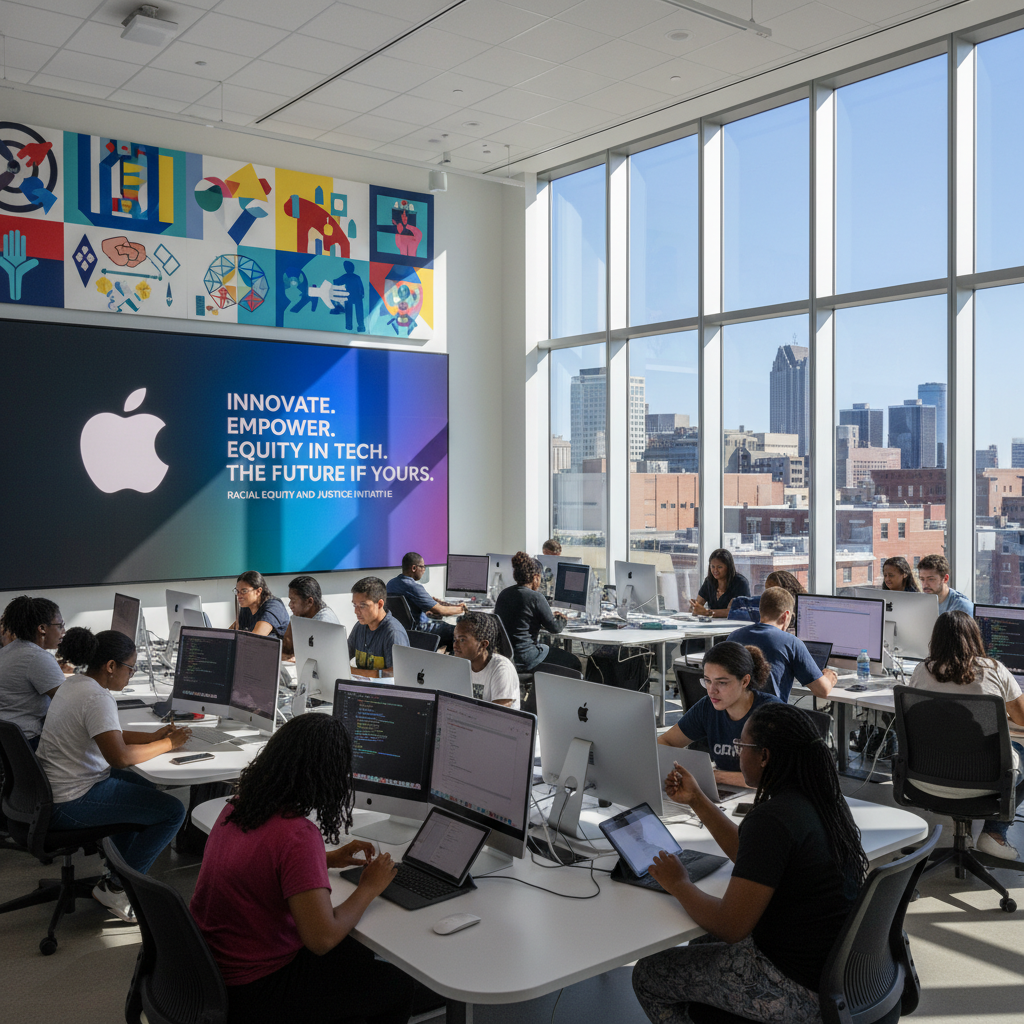
The Apple Developer Academy in Detroit is a pioneering technology education initiative launched as part of Apple’s $200 million Racial Equity and Justice Initiative, which was created in response to the Black Lives Matter movement’s call for racial justice and economic empowerment. Opened in Detroit in collaboration with Michigan State University and supported by philanthropic partners such as the Gilbert Family Foundation and Rocket Companies, the academy aims to expand opportunities for underrepresented communities in the tech sector by providing comprehensive training in iOS app development, design, entrepreneurship, and workforce readiness.
As the first Apple Developer Academy in the United States, the Detroit program serves as a transformative platform for diverse learners—ranging in age and backgrounds—to gain practical skills that contribute to local economic development and social equity. The academy’s curriculum emphasizes hands-on experience, including real-world projects with community organizations such as the Detroit Historical Museum and the Michigan Black Business Alliance, fostering both technical expertise and client engagement. Graduates have successfully transitioned into careers with prominent employers or launched their own ventures, highlighting the academy’s role in bolstering Detroit’s growing technology ecosystem.
Despite widespread acclaim for its mission and community impact, the academy has faced some criticism regarding the adequacy of its training relative to the investment made, with questions about employment outcomes compared to the program’s costs and scalability. Nonetheless, ongoing support from Apple, Michigan State University, and philanthropic partners sustains the academy’s efforts to continuously adapt and expand, including new programming aimed at workplace skills and broader workforce development.
Looking forward, the Apple Developer Academy in Detroit is positioned as a key contributor to Detroit’s resurgence as a technology hub, with plans to deepen local engagement, scale career pathways, and align with broader equity-focused initiatives such as the Propel Center for Historically Black Colleges and Universities (HBCUs). The program exemplifies a collaborative model of technology education and community investment aimed at dismantling systemic barriers and creating sustainable economic opportunity for Black and Brown communities.
Background
The Apple Developer Academy in Detroit was established as part of Apple’s $200 million Racial Equity and Justice Initiative, a program launched in response to the Black Lives Matter (BLM) movement and its global call for racial justice and equality. The initiative aims to address systemic racism and expand opportunities for communities of color across the United States, particularly in underinvested urban areas like Detroit. The academy represents the first of its kind in the U.S., following earlier launches in Brazil and Italy, and is a direct effort to increase diversity and inclusion within the technology sector.
Detroit was selected for the academy due to its vibrant entrepreneurial spirit, which is characterized by creativity and a strong sense of community inclusion. The academy operates in a custom-designed facility located in the First National Building in downtown Detroit, providing an environment specifically tailored to foster collaboration and engagement among its students. Michigan State University partnered with Apple to support the program, with additional funding provided by the Gilbert Family Foundation and Rocket Companies to sustain and expand its reach in the region.
The curriculum focuses on equipping participants with the skills and tools necessary to design and build iOS applications that benefit local businesses and communities, thereby fostering economic development and innovation within Detroit. This mission resonates deeply with the goals of the BLM movement, which advocates for economic empowerment and justice for African American communities historically marginalized in American society.
Alumni like Pastor Jerome Warfield and videographer Mario Crippen highlight the transformative impact of the academy. Warfield, who previously worked in diverse fields including as a pharmaceutical sales representative and parole officer, embraced coding later in life thanks to the academy’s inclusive approach. Crippen emphasized the rarity and value of opportunities that help Black Americans gain tech skills and enter the industry. The academy thus serves as both a catalyst for personal growth and a beacon of broader social change in Detroit’s evolving tech ecosystem.
Mission and Educational Goals
The academy aims to provide participants not only with technical skills in app development but also with entrepreneurial guidance, workforce readiness training, and financial literacy education, supported by partnerships with community organizations such as the MSU Federal Credit Union.
Its mission centers on empowering students from underinvested communities to create meaningful economic opportunities and contribute positively to their neighborhoods. This is reflected in its collaboration with local entities like the Detroit Historical Museum and design firms such as Parini, which offer hands-on experience and real-world project engagement. Graduates have pursued diverse pathways including launching startups, developing innovative apps in healthcare and cryptocurrency, and becoming mentors within the academy itself, illustrating the transformative impact of the training on individuals and the broader community.
With a graduation rate of approximately 70 percent—higher than typical adult education programs—the academy emphasizes preparing students for a “next step,” whether that is employment or continued education. The learning environment is intentionally designed to foster collaboration and engagement, housed in the custom-designed facility in downtown Detroit supported by philanthropic partners like the Gilbert Family Foundation and Rocket Companies. Leadership from Apple and Michigan State University expresses strong commitment to nurturing local talent and facilitating economic mobility, reinforcing the academy’s role in promoting racial equity and social justice through technology education.
Programs and Curriculum
The Apple Developer Academy in Detroit offers two primary programs designed to equip learners with the skills necessary to thrive in the iOS app economy. The first is a comprehensive 10-month Academy Program delivering intensive training in coding, design, marketing, project management, and an expanding curriculum focused on artificial intelligence. This full program prepares aspiring developers to build their own apps and businesses, providing a robust foundation in app development as well as entrepreneurial skills.
Complementing the Academy Program is the Foundation Program, a four-week introductory course covering essential topics such as research, design, user experience, prototyping, and an introduction to coding with Swift. The Foundation Program serves as a stepping stone for individuals considering careers in the app economy, offering a practical overview of Apple tools and development processes.
Students benefit from a unique learning environment that intersects creativity and technology, fostering skills not only in coding but also in business and design with an emphasis on inclusivity and community impact. Mentors and instructors, experts in their fields, support learners in cultivating the capabilities necessary to innovate within Detroit’s vibrant tech ecosystem.
Additionally, in the second year, selected graduates participate in the Renaissance program, applying their skills to real-world challenges by developing apps and technological solutions for local organizations, such as the Detroit Historical Museum and the Michigan Black Business Alliance. This hands-on experience enhances client relations and problem-solving abilities, preparing graduates for immediate impact in the tech industry.
Future expansions of the curriculum include virtual programming aimed at teaching vital workplace skills such as project management and manufacturing process optimization, broadening opportunities for workforce development in Detroit’s evolving economy.
Together, these programs reflect a commitment to breaking down systemic barriers and creating pathways for a diverse group of Detroiters to become leaders in technology, entrepreneurship, and innovation.
Community Engagement and Impact
The Apple Developer Academy in Detroit stands as a powerful example of how academic rigor, industry support, and community investment converge to create meaningful opportunities. The program reflects Detroit’s emergence as a hub for innovation, equipping students with skills in app development, coding, design, marketing, and project management that prepare them for careers in tech or entrepreneurship.
A key aspect of community engagement is hands-on collaboration with local organizations. Participants work on real-world projects for partners such as the Detroit Historical Museum and the Michigan Black Business Alliance, gaining valuable client relations experience while contributing directly to the city’s cultural and business ecosystems. These collaborations not only enhance student learning but also foster a reciprocal relationship benefiting Detroit’s broader community.
The academy’s inclusive philosophy emphasizes economic mobility and workforce readiness. Through partnerships with entities like the MSU Federal Credit Union and support from the Gilbert Family Foundation, students receive guidance in entrepreneurship, financial literacy, and professional development. The Gilbert Family Foundation’s $500 million, 10-year philanthropic commitment, alongside the Rocket Community Fund, underscores a broader mission to dismantle systemic barriers and expand economic opportunity throughout Detroit.
Graduates have leveraged their education to secure employment with prominent companies such as Apple, Accenture, and Little Caesars, as well as influential local organizations like Code 313 and Michigan State University, illustrating the academy’s role in bolstering the regional tech ecosystem. Moreover, approximately 50 graduates are invited to continue for a second year to deepen their skills by developing apps for community clients, fostering ongoing engagement and leadership within Detroit.
The program’s location in the First National Building, a custom-designed space in downtown Detroit, physically roots the academy within the city’s revitalization efforts, creating an environment tailored to collaboration and innovation. This setting, combined with sustained funding from Apple, Michigan State University, and the Gilbert Family Foundation, ensures the academy’s continued growth aligned with Detroit’s economic and social development goals.
Leaders from multiple sectors recognize the academy’s impact. Michigan’s Governor Garlin Gilchrist II and MSU Interim Provost Thomas Jeitschko have praised the program for expanding economic opportunity and fostering community reinvestment through technology and business solutions developed by graduates. As Detroit’s tech landscape evolves, the Apple Developer Academy exemplifies how targeted educational initiatives can serve as catalysts for community empowerment and sustainable development.
Partnerships and Collaborations
The Apple Developer Academy in Detroit is built upon strategic partnerships and community collaborations that enhance its educational offerings and extend its impact beyond the classroom. Central to its success is the collaboration between Apple and Michigan State University (MSU), supported significantly by the Gilbert Family Foundation. This partnership allows the academy to reach nearly 750 participants annually from the Detroit metropolitan area, providing both short-term and long-term programs focusing on coding, design, project management, marketing, and iOS app development.
Community organizations and local businesses play a crucial role in the academy’s operations. For instance, the Renaissance program connects students with local institutions such as the Detroit Historical Museum and design firms like Parini, offering hands-on experience in app development and client relations, preparing students for real-world challenges. The program also benefits from support in entrepreneurship, workforce readiness, and financial literacy, provided by partners like the MSU Federal Credit Union and other community organizations.
Philanthropic investments have deepened the academy’s roots within Detroit. The Gilbert Family Foundation, in partnership with Rocket Companies, has committed substantial funding as part of a $500 million, 10-year initiative to promote economic mobility and educational opportunities in the city. This investment enables growth of career pipelines and expansion of programming, including the four-week Foundation course that introduces basic coding concepts to community partners such as the Boys & Girls Clubs of Southeastern Michigan and the College for Creative Studies.
Moreover, the academy’s location in a custom-designed space in the First National Building downtown provides an environment tailored for collaboration and engagement, further supported by its network of community and industry partners. Additional efforts tied to this initiative include the Propel Center, a global innovation hub for Historically Black Colleges and Universities (HBCUs), and venture capital funding aimed at Black and Brown entrepreneurs, reflecting a broader commitment to equity and economic development in Detroit.
Alumni and Success Stories
Michigan State University (MSU) alumni have played a pivotal role at Detroit’s Apple Developer Academy, bringing their expertise and innovation to shape future leaders in technology and app development. The 2023 graduating class included over 160 students ranging in age from 18 to 70, reflecting the academy’s commitment to inclusivity and diverse backgrounds encompassing varied educational, professional, and personal experiences. MSU Interim Provost Thomas Jeitschko emphasized that the growing number of graduates illustrates the positive momentum of the partnership between MSU and the academy, as well as MSU’s dedication to fostering community engagement in Detroit.
Graduates receive comprehensive training in app development, coding, design, marketing, and project management, equipping them to enter the competitive tech workforce or pursue entrepreneurial ventures. The program offers hands-on experience through collaborations with local institutions such as the Detroit Historical Museum and design firms like Parini, alongside mentorship and support in entrepreneurship, workforce readiness, and financial literacy provided by community organizations including the MSU Federal Credit Union. Alisha Johnson Wilder, Apple’s senior director of Environment, Policy, and Social Initiatives, expressed pride in the accomplishments of students during their time at the academy.
Outcomes for alumni indicate that approximately 71% of graduates from the past two years have transitioned into full-time employment across various industries. While this employment rate aligns with many coding bootcamps, some critics have noted it may be modest compared to the program’s higher cost relative to typical community college spending per student. Nevertheless, the academy continues to create pathways for Detroiters from all backgrounds to develop skills, confidence, and connections necessary for successful tech careers. The Gilbert Family Foundation actively supports graduates by connecting them with internships, mentors, and career opportunities throughout Detroit, further strengthening the academy’s impact on the local tech ecosystem.
Challenges and Criticisms
The Apple Developer Academy in Detroit has faced scrutiny regarding the effectiveness of its training programs and the overall value for money they provide. Some critics have questioned whether the academy’s curriculum adequately equips participants with the necessary skills to compete in the rapidly evolving tech job market. Despite these concerns, supporters emphasize the strategic investment made by both Apple and Michigan State University, noting that Apple contributed approximately $11.6 million during the academy’s first four years, signaling a significant financial commitment to the initiative.
While the funding structure has generally been viewed positively for fostering alignment between stakeholders, the challenge remains to continuously demonstrate tangible outcomes that justify the investment. Additionally, the academy must address the evolving needs of Detroit’s diverse population by ensuring its programs remain accessible and relevant to learners with varying levels of prior experience and backgrounds. Balancing the promise of opportunity with measurable impact continues to be a focal point in ongoing assessments of the academy’s role in Detroit’s technology ecosystem.
Funding and Investment
The Apple Developer Academy in Detroit benefits from a robust funding and investment framework designed to support its mission of increasing economic mobility and educational opportunities within the community. Central to this framework is the philanthropic commitment from the Gilbert Family Foundation, part of a broader $500 million, 10-year investment initiative alongside the Rocket Community Fund. This partnership aims to break down systemic barriers and foster economic opportunity in Detroit, with the Academy serving as a key component of this vision.
Funding for the Academy is primarily shared between the hosting university, Apple Inc., and the Gilbert Family Foundation—the philanthropic organization of Michigan billionaire Dan Gilbert, founder of Quicken Loans and Rocket Mortgage. Apple’s investment in the Academy’s first four years totaled approximately $11.6 million, reflecting the company’s sustained commitment to equipping Detroit residents with the skills necessary to compete in the technology sector. The university’s involvement, both financially and administratively, has been praised for creating healthy alignment and a vested interest in the Academy’s success.
In addition to monetary contributions, the Academy supports learners through a structured program that includes a Foundation Program—a four-week introduction to app development and Apple tools—which is part of the overall learning experience. Approximately 50 graduates are invited to continue into a second year, where they engage in client relations and develop apps for local organizations such as the Detroit Historical Museum and the Michigan Black Business Alliance, further extending the impact of the Academy’s investment in skill development.
This collaborative funding approach has been integral to maintaining a high graduation rate—about 70 percent, which surpasses typical figures for adult education—and ensuring that graduates are prepared for subsequent employment or educational opportunities in tech fields. The sustained financial support from both public and private sectors highlights the Academy’s role as a transformative initiative within Detroit’s broader efforts toward economic and social advancement.
Future Directions and Expansion Plans
The Apple Developer Academy in Detroit is positioned at the forefront of a broader initiative aimed at fostering innovation, inclusivity, and economic empowerment within the tech industry, particularly for Black and Brown communities. As Detroit continues to grow as a national technology hub, the academy plans to deepen its engagement with local talent by expanding career pipelines and providing students with opportunities extending well beyond the classroom experience. This aligns with the academy’s founding mission under Apple’s Racial Equity and Justice Initiative,
The content is provided by Harper Eastwood, 11 Minute Read


