
Summary
Market Movers on Dalal Street: Reliance and Airtel Shine as Seven of the Top Ten Companies Gain ₹1.28 Lakh Crore
Dalal Street, the financial nerve center of India and home to the Bombay Stock Exchange (BSE), recently witnessed a significant surge in market capitalization among the country’s largest firms. In a notable market upswing, seven of the top ten Indian companies collectively added over ₹1.28 lakh crore to their valuation, underscoring robust investor confidence and positive equity market sentiment. Leading this growth were Reliance Industries and Bharti Airtel, which emerged as the primary drivers of this market momentum, reflecting their strong financial performance and strategic business expansions.
Reliance Industries, India’s most valuable company, saw its market capitalization rise sharply, fueled by a 10.9% year-on-year revenue increase in its core Oil-to-Chemicals (O2C) segment during Q4 FY24 and sustained capital investments totaling over ₹32,000 crore. The company’s diversified portfolio spanning hydrocarbons, petrochemicals, retail, and telecommunications, coupled with its investments in renewable energy initiatives, has reinforced its market leadership and resilience amid global economic challenges. Meanwhile, Bharti Airtel’s significant valuation gains reflect its expanding footprint across 18 countries and growth in digital services such as broadband and Internet of Things (IoT), positioning it as a formidable competitor in India’s telecom sector.
Despite broad-based gains, some companies, including Bajaj Finance, LIC, and ICICI Bank, experienced minor valuation declines, illustrating intermittent market volatility within an overall bullish trend. Analysts caution that while recent performance has been strong, investors should consider factors like corporate fundamentals, sectoral trends, and macroeconomic indicators to navigate potential fluctuations in market dynamics.
This period of pronounced market activity on Dalal Street highlights the critical role of India’s capital markets in channeling investment into key sectors and companies, which in turn drives broader economic growth. The sustained leadership of Reliance and Bharti Airtel not only reflects their operational strengths but also underscores evolving market trends and regulatory developments influencing India’s financial landscape.
Overview of Dalal Street
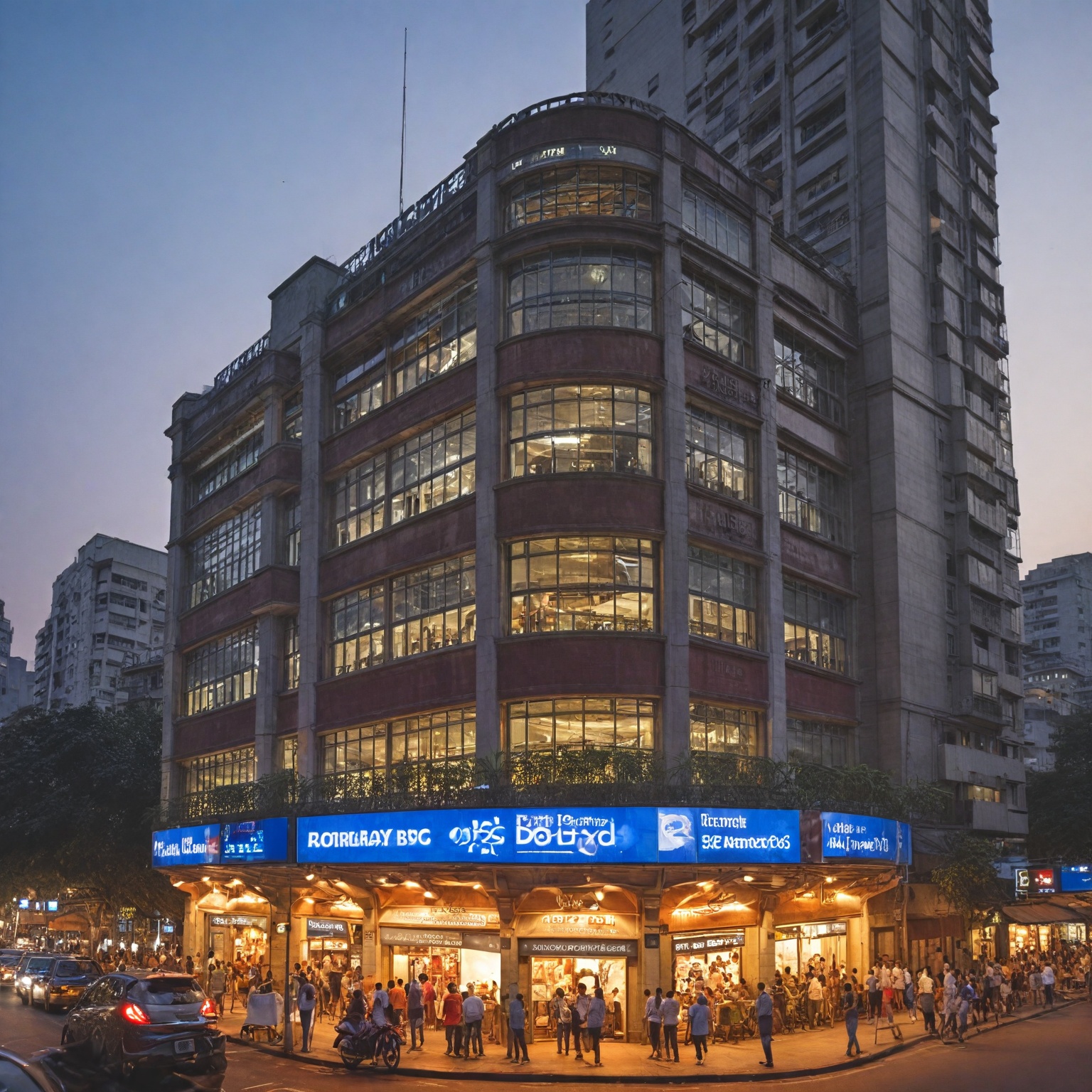
Dalal Street is widely recognized as the financial hub of India, serving as the central location for most financial activities in the country. It houses the Bombay Stock Exchange (BSE), which was established in 1875 and has played a pivotal role in facilitating financial growth by creating an efficient marketplace for raising capital. The street acts as a critical bridge between companies seeking capital and investors looking for investment opportunities. One notable example is Reliance Industries, whose successful initial public offering (IPO) was supported by brokers and intermediaries operating on Dalal Street, enabling the company to raise substantial capital.
Market capitalization on Dalal Street is determined by multiplying the current share price by the number of shares outstanding for each company listed on the exchange. The overall market cap associated with Dalal Street stands at Rs 12.31 crore. The activities on Dalal Street are closely followed by investors and analysts who monitor share prices, trading volumes, and corporate announcements to make informed decisions. Detailed information such as historic price charts, financial reports, earnings forecasts, and analyst recommendations are readily available to market participants.
Dalal Street’s significance is underscored by the substantial market value of India’s leading firms. For instance, seven out of the top ten Indian companies recorded a combined value addition exceeding Rs 1,28,000 crore, with Reliance Industries and Bharti Airtel being the top contributors to this surge. The Bombay Stock Exchange and the National Stock Exchange (NSE) indices have recently shown positive momentum, reflecting the robust performance of key players on Dalal Street.
Recent Market Movement and Capitalization Gains
Last week witnessed a significant upswing in the market capitalization of India’s top companies, with seven of the top ten firms collectively adding over Rs 1.28 lakh crore to their market value. This surge was in alignment with positive equity market sentiments, reflected by the BSE benchmark index rising by 0.79% during the week. The top contributors to this market capitalization boost were Reliance Industries and Bharti Airtel, which led the gains and reinforced their positions among the most valued firms in the country.
Reliance Industries, under the leadership of Mukesh Ambani, demonstrated notable financial resilience and growth. The company’s core oil-to-chemicals (O2C) segment showed a 10.9% year-on-year revenue increase in the fourth quarter of financial year 2024, reaching ₹1.42 lakh crore, up from ₹1.29 lakh crore in the previous year’s corresponding quarter. Additionally, Reliance reported a capital expenditure of Rs 32,259 crore for the quarter ended December 31, 2024, reflecting continued investment in growth and infrastructure. The company also marked the 25th anniversary of its Jamnagar refinery, highlighting its long-term operational strength.
While most major firms experienced valuation gains, a few companies such as Bajaj Finance, LIC, and ICICI Bank witnessed slight declines in their market values during the same period. The positive market environment was also supported by the Bombay Stock Exchange’s role in providing an efficient marketplace for capital raising, contributing to overall financial growth on Dalal Street.
These market movements underscore the dynamic nature of India’s equity landscape, where fluctuations in stock prices and broader economic factors continuously influence company valuations. Investors are advised to consider not only current market trends but also the financial health, growth prospects, and industry developments when forecasting future stock performance.
Top Performing Companies on Dalal Street
Dalal Street witnessed robust momentum recently, with seven of the top ten most valued Indian companies collectively adding over ₹1.28 lakh crore to their market capitalization. The surge was led predominantly by Reliance Industries and Bharti Airtel, which emerged as the largest contributors to this significant increase in market value.
Reliance Industries retained its position as the most valuable firm in India, with its market capitalization rising by as much as ₹36,673 crore to reach approximately ₹20.92 lakh crore. On a global scale, Reliance’s market cap stood at $233.67 billion as of November 2025, making it the 66th most valuable company worldwide. The company’s diversified business operations span hydrocarbon exploration and production, petroleum refining and marketing, petrochemicals, retail, and telecommunications. Notably, its Oil to Chemicals (O2C) business, which includes refineries and petrochemical units, continues to leverage technology and integrated operations to drive sustainability and value creation. Reliance is also focused on scaling new energy and materials businesses, aiming to establish a self-sufficient green ecosystem with the development of multiple giga factories in Jamnagar to support India’s energy transition.
Bharti Airtel, another major market mover, saw its market capitalization jump by ₹36,579 crore to approximately ₹12.33 lakh crore. The company operates in 18 countries across India, Africa, Bangladesh, and Sri Lanka, offering services across mobile, broadband, Direct-to-Home (DTH), and banking segments. During the financial year 2024, Bharti Airtel reported revenues of ₹1,49,982 crore, outpacing competitors like Reliance Jio, which posted ₹1,00,891 crore in revenue. Airtel’s growth drivers include strong expansion in its business segment, particularly digital services such as Internet of Things (IoT), cybersecurity, and an increasing user base in its broadband and postpaid mobile services. The company continues to invest strategically in broadband rollout and emerging digital opportunities to sustain its growth trajectory.
Other notable gainers on Dalal Street included Tata Consultancy Services (TCS), Infosys, HDFC Bank, ICICI Bank, State Bank of India (SBI), and Bajaj Finance, all of which recorded substantial market capitalization increases, contributing to the overall positive market sentiment. For instance, TCS’s market cap surged by over ₹30,970 crore to exceed ₹11.33 lakh crore, while Infosys added ₹28,125 crore to reach ₹6.29 lakh crore. HDFC Bank and ICICI Bank also experienced notable gains, with HDFC Bank’s valuation climbing by ₹25,135 crore and ICICI Bank’s by ₹11,252 crore in earlier periods, although ICICI Bank’s market cap showed some recent fluctuations.
Despite the strong uptrend across most major firms, a few companies such as Bajaj Finance, LIC, and ICICI Bank saw minor declines in their valuations during certain weeks, reflecting intermittent market volatility. However, the overall trend on Dalal Street remained firmly bullish, supported by positive equity market sentiment and rising benchmark indices.
Factors Driving Market Capitalization Increase
The recent surge in market capitalization of seven out of the top ten Indian companies, amounting to over Rs 1.28 lakh crore, can be attributed to several key factors influencing investor sentiment and company performance. Positive equity market sentiments were reflected in the BSE benchmark index rising by 0.79% over the week, signaling broad-based investor confidence.
A major contributor to the gains was Reliance Industries, which retained its position as the nation’s most valued firm. The company benefitted from strong global demand for fuels and limited flexibility in the refining system worldwide, which supported margins and profitability in its oil-to-chemicals (O2C) segment, as highlighted by Mukesh Ambani. Despite increasingly challenging market conditions in the downstream chemical industry, Reliance’s strategic focus on leveraging technology and maximizing crude conversion into chemicals and materials aims to create a sustainable and circular materials business, which has further bolstered investor confidence.
Bharti Airtel also emerged as a significant driver of market capitalization growth, benefiting from its robust industry position alongside Reliance Jio. The telecommunications sector’s performance contributed meaningfully to the overall market upswing. Meanwhile, other top gainers on the NSE Nifty 50 index included UltraTech Cement, Grasim, and Britannia Industries, indicating a sectoral breadth to the rally.
While most major companies experienced valuation gains, certain firms such as Bajaj Finance, LIC, and ICICI Bank saw slight declines, reflecting selective market dynamics within the broader upward trend. Overall, the combination of strong corporate fundamentals, favorable sectoral trends, and positive macroeconomic indicators drove the significant increase in market capitalization among India’s leading companies last week.
Economic Impact
The recent performance of major companies on Dalal Street, particularly Reliance Industries and Bharti Airtel, has significantly influenced the Indian equity market. Together, seven out of the top ten Indian firms witnessed a cumulative value addition exceeding ₹1,28,000 crore, reflecting robust investor confidence and positive market sentiment. This surge contributed to the BSE benchmark index rising by more than 0.79% over the week, highlighting the broader economic optimism fueled by these key players.
Reliance Industries, under the leadership of Mukesh Ambani, demonstrated a strong recovery in its core oil-to-chemicals (O2C) business, with the segment’s revenue growing 10.9% year-on-year to ₹1.42 lakh crore in the fourth quarter of FY24. This growth not only boosted the company’s earnings but also underpinned its position as a market leader capable of weathering geopolitical and economic challenges through a diversified crude sourcing strategy. UBS forecasts further growth in Reliance’s O2C operating profit, projecting an increase to ₹34,000 crore in the second half of FY26 from ₹29,500 crore in the first half.
Furthermore, the role of Dalal Street as a critical financial bridge between companies and investors has been underscored by Reliance’s successful capital raising efforts, which facilitated its expansion and market leadership. This underscores the stock market’s broader economic impact by channeling investment into corporate growth and innovation, contributing to overall economic development.
However, investors are advised to consider additional factors such as the financial health of companies, industry trends, and macroeconomic indicators like GDP and industrial production data, as these variables can influence stock market volatility and future performance. Nonetheless, the recent uptrend led by Reliance and Bharti Airtel highlights the pivotal economic role of these corporations in driving market capitalization growth and reinforcing positive market dynamics on Dalal Street.
Expert Analysis and Market Outlook
Market experts emphasize that forecasting the future stock performance of Reliance Industries Ltd (RIL) requires consideration of multiple factors beyond current market capitalization. These include the company’s financial health, growth prospects, prevailing industry trends, and broader economic conditions, all of which can significantly influence stock price fluctuations within a single trading day.
The overall market outlook remains cautious amid upcoming macroeconomic data releases such as GDP and Index of Industrial Production (IIP) figures, which are expected to impact volatility ahead of the derivatives expiry. Analysts are flagging the potential for increased market fluctuations during this period, underscoring the need for investors to remain vigilant.
Optimism around RIL is particularly supported by the positive trend in its Oil-to-Chemicals (O2C) earnings. UBS, for instance, has maintained a ‘buy’ recommendation on Reliance shares, setting a target price of Rs 1,820. This recommendation is driven by anticipated growth in O2C earnings, underpinned by robust refining margins that currently outperform benchmarks such as the Singapore crude oil price. UBS highlights that the Singapore benchmark does not fully capture the actual refining margins, especially for refiners focused on diesel, thereby reinforcing bullish views on RIL’s near-term earnings potential.
Investors are encouraged to seek expert advice and monitor the latest developments and key investment strategies through trusted financial news platforms, which provide timely updates on market trends and brokerage recommendations. Staying informed helps investors build resilient portfolios that can capitalize on market movements. Additionally, the company’s recent financial presentations for Q2, Q3, and Q4 of the 2023-2024 fiscal year offer valuable insights into its performance trajectory and strategic direction.
Related News and Developments
In recent developments, the Indian telecom sector has witnessed significant legislative and market activities that impact major players like Reliance Jio and Bharti Airtel. The Government of India enacted the Indian Telecommunication Act, 2023, which consolidates and modernizes the regulatory framework for telecom services, alongside the Digital Personal Data Protection Act, 2023, aimed at safeguarding digital personal data of Indian citizens. These laws are expected to shape the operational landscape for telecom companies in the country, though the detailed implementation guidelines remain pending notification.
Additionally, the spectrum auctions conducted in June 2024 allowed key players to expand their bandwidth holdings. Reliance Jio notably acquired additional spectrum in the 1800MHz band for Bihar and West Bengal, increasing its total spectrum footprint to 26,801 MHz. Jio’s investment in indigenously developed technologies and next-generation networks is poised to sustain its competitive edge and facilitate market share growth domestically and globally.
The Indian telecom market remains largely dominated by Reliance Jio and Bharti Airtel, with each pursuing distinct strategies in network coverage, pricing, and service quality. While both companies have amassed substantial user bases, their differing visions highlight a competitive yet evolving sector. Bharti Airtel has recently benefited from strategic portfolio optimization by investors such as Singtel, who have redirected capital towards core business areas following Airtel’s strong quarterly financial performance.
Reliance Jio’s rapid growth has been propelled by innovative marketing strategies that disrupted the Indian telecom sector, contributing to its prominent market position. These developments, coupled with broader economic growth on Dalal Street and historic expansions in Indian capital markets, underscore the dynamic environment in which these companies operate.
The content is provided by Jordan Fields, 11 Minute Read


