
Summary
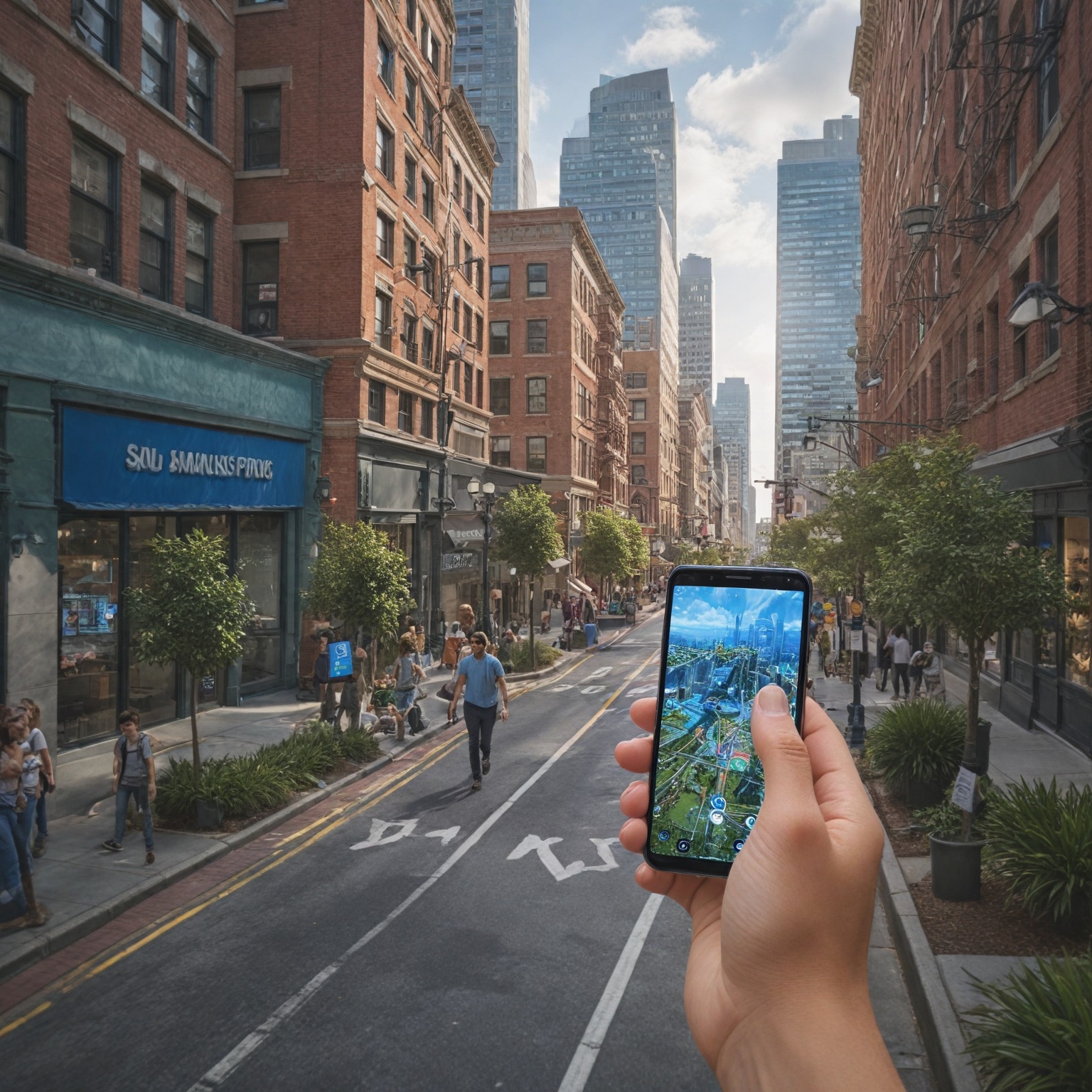
Niantic, Inc., an American software company renowned for pioneering augmented reality (AR) mobile games such as Ingress and Pokémon GO, announced a major strategic shift with the sale of its gaming division to mobile game developer Scopely in early 2025. Founded in 2010 as a Google startup and spun off as an independent company in 2015, Niantic gained international acclaim for blending geospatial data with AR technology to create interactive, location-based gaming experiences that promote outdoor exploration and social engagement. The $3.5 billion deal transfers ownership of Niantic’s key gaming franchises, including Pokémon GO, Pikmin Bloom, and Monster Hunter Now, as well as community apps like Campfire and Wayfarer, to Scopely, while Niantic retains control over certain titles and pivots towards advancing geospatial artificial intelligence (AI) and mixed reality technologies.
The decision to sell reflects challenges Niantic faced in maintaining the commercial momentum following the breakthrough success of Pokémon GO, including multiple project cancellations, studio closures, and significant layoffs between 2023 and 2024. Under CEO John Hanke—whose background in geospatial technologies dates back to his leadership of Keyhole and contributions to Google Earth and Maps—Niantic aims to refocus on its foundational expertise by spinning off a new entity, Niantic Spatial, dedicated to developing real-world 3D mapping and spatial computing platforms. This strategic realignment positions Niantic as a leader in the emerging “real-world metaverse,” emphasizing AR applications that enhance social interaction and engagement with physical environments beyond gaming.
The sale has generated mixed reactions from the gaming community and industry observers. While many players remain enthusiastic about Niantic’s games, concerns have been raised regarding Scopely’s reputation for aggressive monetization and the potential impact on beloved franchises. Niantic has reassured users that popular titles like Pokémon GO will continue with minimal disruption, and that the company’s broader vision remains focused on innovation in augmented reality and geospatial AI. The transition underscores the evolving dynamics of the mobile gaming market and reflects Niantic’s intent to leverage its core technological strengths to shape the future of AR experiences.
Looking forward, Niantic plans to expand its Lightship AR platform, enabling both internal teams and external developers to create immersive, location-based applications. Through Niantic Spatial, the company seeks to build the infrastructure for a more natural and socially connected AR ecosystem, integrating real-world spatial data with artificial intelligence to redefine how users interact with digital content in physical spaces. Meanwhile, Scopely’s acquisition of Niantic’s gaming division is expected to bring new resources and operational focus to the games themselves, aiming to sustain and grow the player communities established over the past decade.
Background
Niantic, Inc. is an American software development company headquartered in San Francisco, best known for creating augmented reality (AR) mobile games such as Ingress and Pokémon GO. The company originated in 2010 as Niantic Labs, an internal startup within Google, before becoming an independent entity in October 2015 during Google’s restructuring under Alphabet Inc. Named after a 19th-century whaling vessel, Niantic initially focused on developing AR experiences that overlay digital information onto the real world in a non-obtrusive manner, a vision articulated by CEO John Hanke.
John Hanke, a pivotal figure in Niantic’s history, had previously co-founded and served as CEO of Keyhole, a geospatial data visualization company that played a critical role in early mapping technologies and received investments from Sony, In-Q-Tel, and NVIDIA. His work at Keyhole laid the foundation for much of Niantic’s geospatial expertise, later leveraged to create location-based games that encouraged outdoor exploration and social interaction.
Niantic’s breakthrough came with the launch of Pokémon GO in 2016, a game that combined augmented reality and geo-location technology to create an unprecedented interactive experience. Pokémon GO built upon the data, player safety lessons, and concepts developed through Ingress, which had served as a proof-of-concept for scalable AR gaming. The success of Pokémon GO was transformative for the company, driving the majority of its revenue and cementing its position in the AR gaming industry.
Beyond gaming, Niantic has pursued additional AR initiatives, including LEGO-themed minigames, 3D scanning technologies, and virtual clothing try-ons, reflecting its broader ambitions to innovate in AR experiences and brand partnerships. The company has also expanded globally, maintaining offices in cities such as Bellevue, Los Angeles, Tokyo, and London.
Despite the success of Pokémon GO and other titles like Pikmin Bloom and Monster Hunter Now, Niantic has faced challenges in replicating the same level of excitement and commercial success with newer releases. These difficulties have influenced its strategic decisions, including the recent sale of its gaming division to mobile games leader Scopely for $3.5 billion. This transition aims to empower Niantic’s game development teams while allowing the company to focus on its geospatial artificial intelligence and mixed reality technology, which will be spun off into a new entity called Niantic Spatial under John Hanke’s leadership.
Corporate History and Milestones
John Hanke, the founder and CEO of Niantic, Inc., played a pivotal role in the evolution of geospatial technology and augmented reality gaming. His journey began in 2001 when he co-founded Keyhole, a geospatial data visualization company backed by early funding from Sony’s corporate venture group, the CIA’s venture capital firm In-Q-Tel, and NVIDIA. Keyhole’s innovative mapping technology garnered significant attention, especially through its application in media reporting during the early stages of the Iraq War.
In 2004, Keyhole was acquired by Google for $35 million in stock, leading Hanke to join Google as Vice President of Product Management for the Geo division. During his tenure, he oversaw the transformation of Keyhole’s technology into widely recognized products such as Google Earth and Google Maps, as well as negotiating the inclusion of Google Maps on the iPhone. Other Google Geo products launched under his leadership included Street View, SketchUp, and Panoramio.
Within Google, Niantic began as an internal startup focused on creating innovative mobile games that leveraged geospatial data. In 2012, Niantic Labs released Field Trip, a location-based app that guided users to interesting and hidden sites around them, integrating content from over 300 publishing partners. The company also explored emerging technologies such as Google Glass, launching Field Trip on this platform.
Niantic became an independent entity in October 2015 when Google restructured under Alphabet Inc. Post-independence, the company expanded its global presence with additional offices in locations including Bellevue, Los Angeles, Tokyo, and London. Early strategic investments came from Google, Nintendo, and The Pokémon Company, supporting the growth of Niantic’s portfolio.
The company’s breakthrough came with the launch of Pokémon GO in 2016, which was built upon the technology and data developed for its predecessor game, Ingress. Pokémon GO exemplified Niantic’s mission to encourage exploration, exercise, and real-world social interaction, reaching players in over 190 countries and becoming one of the biggest mobile game launches of all time. Niantic’s unique approach positioned it as one of the few gaming companies with two top 10 mobile games, including the later release of MONOPOLY GO!
Niantic continued to innovate with the development of the Lightship platform, an augmented reality game engine and software development kit (SDK) launched in 2021. Lightship enables developers to create AR experiences without building their own computer vision algorithms. The platform has been utilized internally and by notable external partners such as Historic Royal Palaces, Coachella, and Led Zeppelin. In conjunction with this launch, Niantic raised $300 million in Series D funding at a $9 billion valuation, led by Coatue Management.
Despite its successes, Niantic has faced challenges in recapturing the widespread excitement generated by Pokémon GO. In response, the company made the strategic decision to sell its games division to Scopely Inc., a move confirmed in 2023 following earlier rumors. This transition aims to sustain the legacy of Pokémon GO while enabling Niantic to focus on its broader ambitions around augmented reality and the “real-world metaverse”.
Decision to Sell the Gaming Division
In early 2025, Niantic made the strategic decision to sell its gaming division to Scopely, a prominent mobile game developer backed by the Saudi Arabia-based Savvy Games Group. The deal, valued at approximately $3.5 billion, marked a significant shift for Niantic, which had previously been known for its blockbuster augmented reality games such as Pokémon GO, Pikmin Bloom, and Monster Hunter Now. The acquisition also included Niantic’s community-building applications, Campfire and Wayfarer, while Niantic retained ownership and development rights to certain titles like Ingress Prime and Peridot, with development duties transitioning to the newly formed Niantic Spatial.
This sale was part of a broader corporate restructuring. Niantic’s CEO John Hanke announced that the company would split into two separate entities: the newly independent Niantic Spatial, focused on advancing geospatial artificial intelligence, and the gaming division now owned by Scopely. The restructuring led to job cuts, including the layoff of 68 employees at Niantic Spatial, as confirmed by the California Worker Adjustment and Retraining Notification (WARN) report. Despite concerns among players regarding Scopely’s reputation for aggressive monetization, Niantic assured that popular games like Pokémon GO would continue without major changes under the new leadership.
The decision to sell the gaming division came after several challenges for Niantic, including the closure of its Los Angeles studio, cancellation of two gaming projects, and layoffs of over 230 employees in 2023. According to Hanke, the spin-out process began earlier in the year and was extended to seven months, reflecting a careful evaluation of Niantic’s business and a focus on immersive real-world gaming experiences powered by technology. The sale allowed Niantic to concentrate on its core expertise in geospatial AI, while Scopely would provide support and resources to empower the gaming team to pursue its ambitious roadmap.
This move aligns with Niantic’s historical roots, as John Hanke, who previously led Google’s geospatial projects like Google Maps and Google Earth, has steered the company toward innovation in augmented reality and location-based services since its inception. The sale to Scopely not only reflects the evolving dynamics of the mobile gaming industry but also Niantic’s strategic pivot toward leveraging geospatial technology beyond gaming.
Impact on Niantic
The decision to sell Niantic’s gaming division to Scopely marks a significant strategic shift for the company, signaling a retreat from its recent focus on augmented reality (AR) games toward its foundational expertise in geospatial technology. This move follows several challenging years, during which Niantic experienced notable setbacks, including the cancellation of multiple game projects such as Harry Potter: Wizards Unite, NBA, and Marvel titles, alongside substantial layoffs amounting to hundreds of employees.
By divesting its gaming segment, Niantic aims to concentrate on developing real-world 3D mapping and geospatial artificial intelligence through a new independent entity called Niantic Spatial, which will continue to be led by founder and CEO John Hanke. The creation of Niantic Spatial reflects the company’s commitment to delivering on the promise of geospatial AI, an area where Hanke has extensive experience dating back to his leadership roles at Google on projects like Google Earth, Maps, and Street View.
The sale to Scopely also entails a transfer of all employees working on Niantic’s games to the acquiring company, allowing Niantic to streamline its workforce and focus resources on advancing geospatial AI technology. Although the gaming division was responsible for the majority of Niantic’s revenue, primarily driven by the massive success of Pokémon Go, the recent decline in its game portfolio’s performance and increasing layoffs highlighted the necessity for this strategic pivot.
Despite concerns from the player community about potential changes to Pokémon Go under Scopely’s management, Niantic representatives have assured that the game will remain largely unaffected in the near term. Meanwhile, Niantic continues to experiment with AR applications beyond gaming, exploring opportunities such as LEGO minigames, 3D scanning of real-world objects, and virtual clothing try-ons as part of its broader vision to integrate AR with real-world spatial data.
Reception and Analysis
The announcement of Niantic’s decision to sell its gaming division, including titles such as Pokémon GO, has elicited a mixed reception from both the community and industry observers. While some members of the community continue to share positive stories and experiences related to Niantic’s products independently, indicating ongoing enthusiasm, others have noted a significant decline in the popularity of Niantic’s games compared to their peak years.
Industry analysis suggests that the move represents a strategic pivot for Niantic, as the company aims to refocus on its core competency in geospatial technology rather than maintaining a broad portfolio of gaming titles. The sale to Scopely, a firm known for supporting gaming franchises, is seen as a way to empower the Niantic game team with additional resources to pursue their roadmap while allowing Niantic to concentrate on shaping future interactive experiences based on location data.
Niantic’s emphasis on fostering real-world social connections through its live events and community-driven platforms remains a distinctive aspect of its brand identity. Pokémon GO live events have historically attracted millions of attendees, demonstrating the company’s unique position in creating in-person engagement through augmented reality experiences. Moreover, Niantic Wayfarer continues to enable community members to contribute to the expansion of local points of interest within Niantic’s ecosystem, reinforcing user participation in content creation.
Despite these positive aspects, some skepticism remains regarding the long-term impact of the transition. Critics point out that leadership under CEO John Hanke is closely tied to shareholder interests and that community opinions have limited influence on strategic decisions. This dynamic has contributed to frustration among some fans, particularly given the cancellations and declining visibility of several titles under Niantic’s gaming division.
Future Outlook
Niantic’s future vision centers on advancing augmented reality (AR) technology to create more natural and immersive experiences that encourage people to engage with the real world rather than remain tethered to their devices. CEO John Hanke envisions AR as a tool to enhance real-world interactions and social connectivity, moving away from screen-bound immersion toward fostering exploration and communication among players. This philosophy underpins Niantic’s strategic shift following the sale of its gaming division to Scopely, as the company focuses on building the infrastructure for a “real-world metaverse”.
A key component of Niantic’s forward-looking strategy is the development of real-world 3D mapping technology, spearheaded by a new standalone entity called Niantic Spatial, led by Hanke himself. Niantic Spatial is tasked with creating a spatial computing platform that will underpin future AR experiences, and it has secured a $250 million cash infusion to support this mission. By retaining ownership and development rights to titles like Ingress Prime and Peridot, Niantic ensures that these games will continue to evolve under the guidance of Niantic Spatial, integrating cutting-edge spatial technologies.
In parallel, Niantic is expanding its Lightship platform, an AR development kit designed to simplify the creation of augmented reality applications for both internal projects and external partners. Lightship offers tools such as the Augmented Reality Developer Kit (ARDK) and Visual Positioning System (VPS), allowing developers to build AR experiences without developing complex computer vision algorithms from scratch. The platform has attracted collaborations with organizations like Historic Royal Palaces, Coachella, and Led Zeppelin, demonstrating Niantic’s ambition to position itself as a leading provider of AR infrastructure and enable a wide range of branded AR experiences.
Looking ahead, Niantic plans to introduce new features and improve social mechanisms in its AR products, particularly focusing on enhancing real-world interaction and community building. The company’s emphasis on “building a better social mechanism” aligns with Hanke’s goal to create AR experiences that enrich, rather than distract from, real-world engagement. Through these initiatives, Niantic aims to maintain its pioneering role in AR while shaping the future metaverse as an extension of physical reality rather than a separate digital realm.
Meanwhile, the partnership with Scopely is designed to empower the Niantic game team with additional support and resources to continue delivering beloved gaming experiences. Both companies have expressed commitment to preserving the core qualities of Niantic’s games and providing players with consistent, high-quality experiences as the games transition to new operational management. This approach reflects Niantic’s strategic focus on innovation in AR technology while entrusting its established game franchises to experienced operators.
The content is provided by Blake Sterling, 11 Minute Read