
Summary
The ongoing India–United States trade negotiations represent a significant phase in the evolving economic partnership between the two countries, aiming to establish a comprehensive bilateral trade agreement. Building on a history marked by trade imbalances and strategic diplomacy, the talks seek to address longstanding issues such as tariff barriers, market access, and regulatory challenges. A key milestone in this relationship was the 2025 announcement of the U.S.-India COMPACT, which set ambitious goals to more than double bilateral trade from $210 billion in 2024 to $500 billion by 2030 through enhanced cooperation in goods, services, technology, and defense sectors.
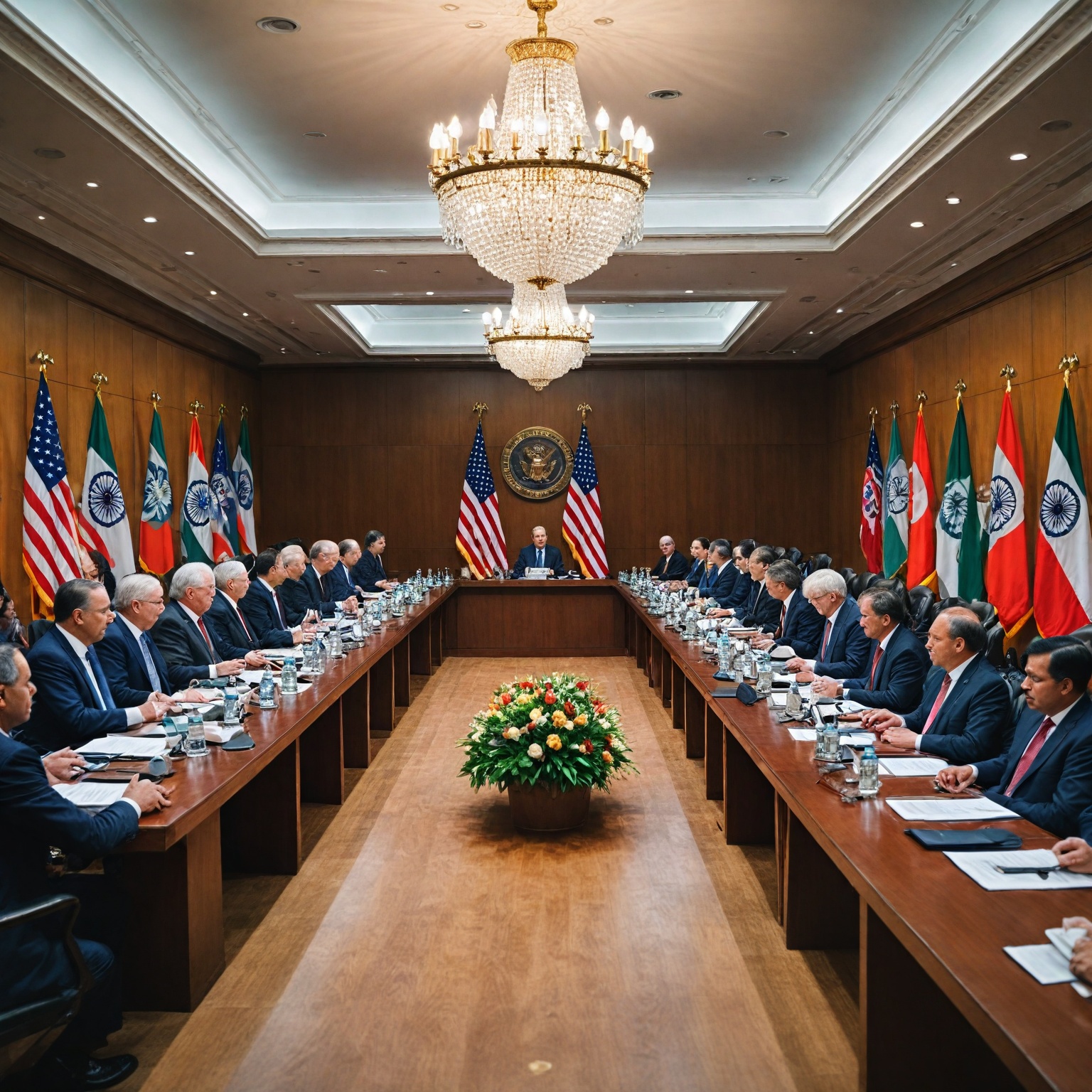
In July 2025, an Indian delegation led by Chief Negotiator Rajesh Agrawal arrived in Washington, D.C., to advance negotiations focused on an interim “mini-deal” targeting tariff reductions and strategic commitments ahead of impending tariff expirations. The talks cover diverse sectors including agriculture, automobiles, pharmaceuticals, medical devices, and gems and jewelry, as well as cooperation on emerging technologies such as semiconductors, artificial intelligence, and biotechnology. Both sides have emphasized transparent regulatory practices and the elimination of forced labor in supply chains as part of their broader trade agenda.
Despite progress, the negotiations face significant challenges, particularly regarding India’s protection of its agricultural sector and sensitive industries, which has drawn criticism from some domestic political groups concerned about rural livelihoods. Tariff disputes and non-tariff barriers remain sticking points, with the United States pushing for expanded market access while India seeks meaningful concessions for labor-intensive exports. These tensions highlight the delicate balance between economic opportunity and domestic political considerations shaping the talks.
The India–U.S. trade discussions are closely watched for their potential to reshape bilateral economic relations and set a precedent for future trade frameworks. While a comprehensive agreement remains elusive, both countries remain committed to a phased, win-win approach that could enhance market integration, diversify supply chains, and deepen strategic cooperation amid broader geopolitical and economic shifts.
Background
The ongoing India-US trade negotiations build upon a history of complex economic interactions marked by significant trade imbalances and strategic diplomatic efforts. In 2024, India maintained a trade surplus of US$45.7 billion with the United States, a situation that has historically been a point of contention, particularly under the previous Trump administration which prioritized more favorable bilateral trade terms for the US and exhibited skepticism toward large trade deficits. The Trump administration’s prior experience with renegotiating NAFTA into the USMCA underscored its preference for deals that enhance American economic interests, influencing its approach to the India-US trade relationship.
In February 2025, a major diplomatic milestone was reached when Indian Prime Minister Narendra Modi met with then US President Donald Trump, resulting in the announcement of the “U.S.-India COMPACT (Catalyzing Opportunities for Military Partnership, Accelerated Commerce & Technology) for the 21st Century.” This initiative aimed not only to strengthen defense and technology ties but also to address critical economic concerns such as India’s high tariffs and the substantial US trade deficit with India. The COMPACT set ambitious goals to more than double bilateral trade in goods and services—from $210 billion in 2024 to $500 billion by 2030—and launched negotiations for a comprehensive, multi-sector Bilateral Trade Agreement (BTA).
India’s exports to the US are diverse, including engineering goods, electronic products, gems and jewellery, pharmaceuticals, crude oil, and electrical items. In FY24, bilateral trade reached a record US$118.2 billion, demonstrating strong economic engagement despite ongoing trade barriers. Negotiations have proceeded with a strategic, phased approach: initial talks have focused on agenda-setting and procedural issues led by advance teams, while senior officials prepare to tackle substantive topics such as tariff reductions and sectoral challenges in agriculture and automobiles.
Although there is consideration for an interim or “mini-deal” focusing on tariff cuts and strategic commitments, broader issues—such as services trade, intellectual property rights, and digital regulations—are slated for later phases of negotiation. Both countries remain committed to a win-win agreement that addresses trade barriers while promoting sustained economic growth and cooperation.
Delegation Details
The Indian trade delegation arriving in Washington, D.C., is led by Chief Negotiator Rajesh Agrawal, who is also the Additional Secretary in the Department of Commerce and was appointed as the next commerce secretary in April 2024. Alongside Agrawal, the delegation includes senior officials from India’s commerce ministry and is accompanied by Commerce Minister Piyush Goyal, who has actively participated in high-level trade discussions, including recent meetings at the World Trade Organization.
The delegation’s visit marks a significant step in the ongoing bilateral trade talks between India and the United States, aimed at finalizing an interim trade deal before the expiration of temporary tariff protections on 9 July. Prior to this in-person meeting, the Indian officials engaged in multiple virtual discussions with their U.S. counterparts, facilitating groundwork for more comprehensive face-to-face negotiations.
The talks cover a broad range of issues, including tariff reductions, easing non-tariff barriers, technical regulations, public health standards, import requirements for IT hardware, restoration of India’s beneficiary status under the U.S. Generalized System of Preferences program, and cooperation in the biofuels sector. Both sides have expressed commitment to transparent regulatory practices, the elimination of forced labor in supply chains, and resolving outstanding trade issues through continued dialogue.
This delegation’s visit is viewed as a major advancement in progressing towards a mutually beneficial trade agreement between India and the United States.
Objectives of the Visit
The primary objective of the Indian delegation’s visit to Washington, D.C. is to advance discussions on a possible trade agreement between India and the United States. This visit is seen as a significant step forward in progressing from preliminary meetings to more detailed and comprehensive face-to-face talks aimed at establishing a broad-based trade agreement as well as targeted trade arrangements to resolve key bilateral issues. The negotiations focus on tariff reductions and strategic commitments while leaving broader Free Trade Agreement (FTA) issues—such as services trade, intellectual property rights, and digital regulations—for future discussions.
A critical aspect of the talks involves facilitating the development and trade of strategic technologies in sectors such as semiconductors, space, telecommunications, quantum computing, artificial intelligence, defense, and biotechnology. Both governments are reviewing bilateral export control regulations with the objective of building and diversifying resilient supply chains for these technologies. Additionally, cooperation in sectors like medical devices and pharmaceuticals is a key area, with both sides aiming to address challenges related to standards, pricing, and supply chain diversification, particularly concerning Active Pharmaceutical Ingredients and Key Starting Materials.
The visit also aims to address specific trade barriers, including tariff issues on industrial goods, automobiles (especially electric vehicles), and agricultural products like apples, tree nuts, and genetically modified crops. India is simultaneously seeking duty concessions for labor-intensive goods such as textiles, engineering, leather, and gems and jewelry, while protecting sensitive sectors like agriculture and dairy to safeguard small farmers and rural livelihoods. Negotiators are working towards predictable tariff and regulatory landscapes to encourage long-term investments and facilitate smoother logistics.
Both countries are committed to transparent regulatory practices, eliminating forced labor in global supply chains, and resolving outstanding trade issues through existing mechanisms like the Trade Policy Forum (TPF). The broader vision behind the visit aligns with the shared goal of doubling bilateral trade to $500 billion under the Mission 500 initiative, with pharmaceuticals and gems and jewelry being critical sectors for enhancing market access.
Negotiation Process
The negotiation process between India and the United States for a trade deal has been marked by a structured and phased approach aimed at advancing a comprehensive agreement. Indian negotiators recently arrived in Washington, D.C., following preliminary discussions held from June 26 to July 2, signaling a major step forward in the talks. The early arrival of an advance team before the chief negotiator reflected a systematic strategy where initial meetings focused on setting the agenda and procedural issues, paving the way for substantive negotiations by senior officials.
Both countries have expressed a commitment to finalizing the first phase of the trade deal by the fall, with the possibility of packaging any completed components as an interim agreement while continuing discussions on outstanding matters. The negotiations are broad-based, targeting key sectors such as agriculture, automobiles, critical minerals, high-tech products, and supply chains. These areas were highlighted as priorities for enhanced cooperation under the Trade Policy Forum (TPF) framework, which also emphasizes transparent regulatory practices, elimination of forced labor, and resolution of trade frictions.
A central challenge in the talks lies in reconciling differing tariff regimes and non-tariff barriers. India’s protective stance on agriculture, characterized by relatively high tariffs to safeguard its rural economy, contrasts with the U.S. push for greater market access, especially for farm products like maize, soya bean, and cotton. The U.S. is also keen on addressing India’s growing set of Quality Control Orders and other technical regulations that restrict imports, which are perceived as significant obstacles to trade. Conversely, India is exploring tariff cuts on select U.S. farm imports, suggesting the possibility of a “mini-deal” focused on tariff reductions and strategic commitments, while deferring broader issues such as services trade and intellectual property rights to future negotiations.
The ongoing dialogue reflects a mutual interest in deepening trade ties despite the complexities and obstacles inherent in the negotiations. Both sides aim for a win-win pact that balances domestic sensitivities with economic opportunities, recognizing that the evolving trade relationship will likely face challenges but ultimately progress toward a meaningful agreement. Additionally, collaboration on emerging technologies including semiconductors, AI, and biotechnology, as well as efforts to streamline export controls, form an important part of the negotiation agenda.
Impact and Reactions
The renewed phase of India-US trade negotiations has elicited a spectrum of reactions from various stakeholders, reflecting both optimism about potential economic benefits and concerns over specific sectoral impacts. Indian trade officials and government sources have highlighted progress in discussions, particularly regarding tariff reductions and easing non-tariff barriers, which are seen as critical for advancing the bilateral trade agreement. The focus on fast-tracking negotiations for 19 out of 24 categories of goods underscores a strategic approach to addressing less contentious sectors first, while deferring complex issues such as certain farm products and military equipment to later stages.
However, the talks have also exposed persistent challenges, notably in agriculture, dairy, and auto sectors. India remains firm on protecting its farmers and small rural livelihoods, resisting full market opening to US imports in these sensitive areas. Opposition voices within India, including political leaders and regional agricultural representatives, have expressed skepticism about the government’s ability to safeguard domestic interests, warning that concessions—particularly in agriculture—could jeopardize millions of livelihoods and provoke political backlash. The Indian National Congress and state officials have stressed the importance of consulting state governments before finalizing any sectoral commitments that affect agriculture.
Tariff disputes continue to be a significant sticking point, especially concerning Indian exports of garments, footwear, and steel. India demands meaningful tariff relief across these labor-intensive and MSME-linked sectors, arguing that without such concessions, the Free Trade Agreement (FTA) would appear unbalanced and politically untenable. Similarly, the US has pushed for concessions in automotive components, which New Delhi views as potentially harmful to its domestic manufacturing base.
On a broader scale, both countries have underscored the importance of collaboration in strategic and technological domains such as semiconductors, space, and biotechnology, aiming to build resilient supply chains and enhance cooperation beyond traditional trade issues. This multidimensional engagement reflects mutual recognition of the economic and national security imperatives tied to manufacturing and technology supply chains.
Despite the complexities, the ongoing negotiations have raised hopes of a “mini-deal” that could establish tariff reductions and strategic commitments, providing a foundation for addressing more challenging issues like services trade, intellectual property, and digital regulations in future talks. The extended deadlines and continued high-level dialogues signal both sides’ commitment to reaching a mutually beneficial agreement, although sensitive sectors will likely require sustained negotiation and careful balancing of interests.
Projected Outcomes and Economic Implications
The ongoing India-US trade negotiations aim to significantly enhance bilateral trade, with an ambitious target to more than double trade in goods and services from $210 billion in 2024 to $500 billion by 2030. To achieve this, both countries plan to negotiate a multi-sector Bilateral Trade Agreement (BTA) by the fall of 2025, focusing on mutually beneficial outcomes across various industries.
However, the negotiations face substantial challenges stemming from differing domestic priorities and market access issues. The United States has pushed for greater access to the Indian agricultural sector, particularly seeking to expand exports of maize, soybean, cotton, and corn to help narrow a sizable $45 billion trade deficit with India. Conversely, India has been cautious in opening its agricultural markets, as tariff concessions could pressure the country to weaken key protections like minimum support prices (MSP) and public procurement systems that safeguard farmers against price volatility.
Trade asymmetries further complicate the negotiations. The U.S. economy is relatively open to imports, yet many of its trading partners, including India, maintain non-tariff barriers and higher tariffs that restrict reciprocal market access. These structural imbalances have contributed to the persistent U.S. goods trade deficit and affect U.S. producers’ incentives to export. As a result, experts anticipate that the final agreement might resemble a limited trade pact similar to the US-UK mini trade deal, with India potentially cutting tariffs on select industrial goods, including automobiles, and offering limited agricultural market access through targeted tariff reductions and quotas on products such as ethanol, almonds, walnuts, apples, raisins, avocados, olive oil, spirits, and wine.
In the pharmaceutical and medical device sectors, both countries have expressed a commitment to address challenges like standards, pricing, and supply chain dependencies. The collaborative effort includes tackling the overreliance on specific Active Pharmaceutical Ingredients (APIs) and promoting diversification to reduce risks in the global pharmaceutical supply chain. While India’s pharmaceutical exports to the U.S. have been largely spared from tariffs, a 27% tariff on medical devices remains a significant barrier, with India’s exports to the U.S. medical device market valued at $714.38 million in 2023-24 against imports from the U.S. at $1.52 billion. Industry groups like AiMeD advocate for balanced tariff and regulatory policies to ensure sustainable growth for India’s medical device sector and maintain competitiveness globally.
Tariff reductions in the gems and jewellery sector also hold promise for India, which is among the world’s largest exporters of these goods. The U.S. is a major importer of Indian polished diamonds and gold jewellery, with trade valued at nearly $10 billion in 2023-24. Enhanced market access through tariff concessions in this sector is viewed as critical for both signaling strong trade ties and driving substantial economic value.
Labor-intensive Indian exports such as textiles, engineering goods, leather, and gems and jewellery are seeking duty concessions to sustain and expand market presence in the U.S. Any failure to reach an agreement could lead to the reinstatement of higher tariffs, potentially hampering trade growth. Meanwhile, American companies increasingly regard India as a vital market for their international expansion, underscoring the strategic importance of the negotiations.
Future Prospects
The ongoing India-US trade negotiations hold significant promise but also face considerable challenges. Observers note that the upcoming week could be decisive in determining whether the two countries reach a limited “mini-deal” or pause discussions for the time being, with agriculture emerging as the most contentious issue. Despite such hurdles, both India and the United States have a strong interest in concluding an agreement, reflecting the resilience and strategic importance of their bilateral relationship.
Preparations for the talks have been methodical, as evidenced by the advance team’s early arrival in Washington, which suggests a structured negotiation process. Initial discussions are expected to focus on setting the agenda and procedural matters before senior officials engage in substantive talks, targeting key sectors such as
The content is provided by Sierra Knightley, 11 Minute Read


